Our Top Picks
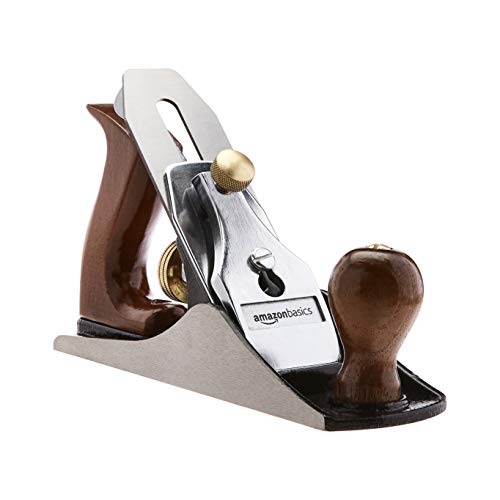 Amazon Basics No.4 Adjustable Precision Smoothing Bench Hand(Pack of 1)10 x 5.5 x 2.6 inches3.82 poundsCheck on Amazon
What's inside
As an Amazon Associate I earn from qualifying purchases. This post may contain affiliate links at no extra cost to you.
- Top Pick: STANLEY No. 4 Adjustable Bench Plane (12-404)
- Runner-up: Amazon Basics No. 4 Adjustable Smoothing Bench Plane
- Also consider: JORGENSEN No. 5 Jack Plane
A good hand plane turns rough, wavy lumber into flat, smooth stock with nothing more than sharp steel, steady pressure, and patience. Bench planes do the heavy lifting in this group: short smoothing planes refine faces, a mid-length jack plane handles flattening and edge work, and long soles true up edges for tight joints. A small block plane rounds out the kit for end grain and small trimming jobs.
This guide compares five planes you can buy today: three No. 4 smoothing planes, one No. 5 jack plane, and one block plane. Each entry sticks to facts from the maker listing, covering plane type and number, body material, and blade details, so you can match a tool to the work on your bench.
As an Amazon Associate, we earn from qualifying purchases.
Contents
Quick answer
For final smoothing, the STANLEY No. 4 Sweetheart pairs a cast iron body with a thick A2 steel blade. For general flattening and edge jointing, the JORGENSEN No. 5 jack plane brings a longer sole and an O1 steel blade. The Amazon Basics No. 4 and STANLEY 12-404 cover everyday smoothing, while the STANLEY 12-220 block plane handles end grain and small edges.
How to choose
Plane numbers follow sole length. A No. 4 smoothing plane is short, so it follows the surface and refines faces that are already close to flat. A No. 5 jack plane is longer, so it bridges low spots, flattens boards, and gives straighter edges for jointing. A block plane is a one-hand tool for end grain, chamfers, and fitting small parts.
Body material matters for weight and durability. Cast iron bodies add heft that helps a plane push through grain, and ductile iron castings resist damage from drops. Check how the sole and sides are finished: precision-ground or lapped surfaces slide true and register square against an edge.
Blade facts matter just as much. Thicker blades resist flexing, and steels such as A2 and O1 are named by makers for edge holding and sharpening behavior. Look for a depth adjustment and a lateral lever so you can set the cut evenly, and follow the maker guidance for setup and sharpening rather than guessing. Every blade here is sharp enough to cut skin, so keep fingers behind the cutting edge, retract or guard the blade for storage as the maker directs, and wear eye protection where the maker advises it.
STANLEY No. 4 Sweetheart Smoothing Bench Plane (12-136)
The Sweetheart is STANLEY’s premium No. 4, built around a one-piece base and frog cast from iron. That single casting supports the blade along its length, and the listing credits the design with reducing chatter during the cut. The blade is A2 steel at 1/8 inch thick, a step up in thickness from basic bench plane irons, and the maker points to that thickness for edge retention.
Adjustment comes from a Norris-type adjuster with a lateral locking feature, so depth and sideways alignment are set with one mechanism and then locked. An adjustable throat plate lets you close the mouth for fine work on tricky grain or open it for heavier shavings. Cherry wood handles complete the build. For smoothing faces and cleaning up panels before finishing, this is the most refined tool in the group.
Specs:
– Plane type: No. 4 smoothing bench plane
– Model: 12-136
– Body material: Cast iron, one-piece base and frog
– Blade: A2 steel, 1/8 inch thick
– Adjuster: Norris-type with lateral locking feature
– Throat: Adjustable throat plate
– Handle material: Cherry wood
STANLEY No. 4 Adjustable Bench Plane (12-404)

The 12-404 is the classic Bailey-pattern No. 4 that many woodworkers learn on. Its gray cast-iron base has precision-ground sides and a bottom machined smooth and true, so the sole tracks flat and the sides can register against a shooting board edge. The cutter is 2 inches wide, the standard width for a No. 4 smoother.
Depth and lateral adjustment follow the familiar Bailey layout, which makes setup easy to learn from the maker instructions. This plane suits smoothing drawer sides, door panels, and tabletop sections where a short sole and a fine cut matter more than raw flattening power. It is a straightforward, widely supported design, and replacement cutters for the model are a standard catalog item for the brand.
Specs:
– Plane type: No. 4 smoothing bench plane
– Model: 12-404
– Body material: Gray cast iron base
– Sole and sides: Precision ground, bottom machined smooth and true
– Blade: 2-inch cutter
Amazon Basics No. 4 Adjustable Smoothing Bench Plane
Amazon Basics offers a No. 4 with a cast iron body and base, wooden handles, and a 2-inch blade. The listing gives the tool at 10 inches long and 3.82 pounds, so it carries the weight expected of an iron bench plane while staying compact on the bench. The brown finish and wood handles give it a traditional look.
An adjustable design lets you set blade depth for lighter or heavier shavings, which is the core skill in smoothing: advance the blade in small steps, check the shaving, and back off when the surface shines. For a first smoothing plane or a spare for the toolbox, this model covers the basics with standard No. 4 dimensions and common construction.
Specs:
– Plane type: No. 4 smoothing bench plane
– Model: DS-WPAMZ002
– Body material: Cast iron body and base
– Blade: 2-inch blade
– Handles: Wooden
– Dimensions: 10 inches long by 2.6 inches wide by 5.5 inches high
– Weight: 3.82 pounds
JORGENSEN No. 5 Jack Plane
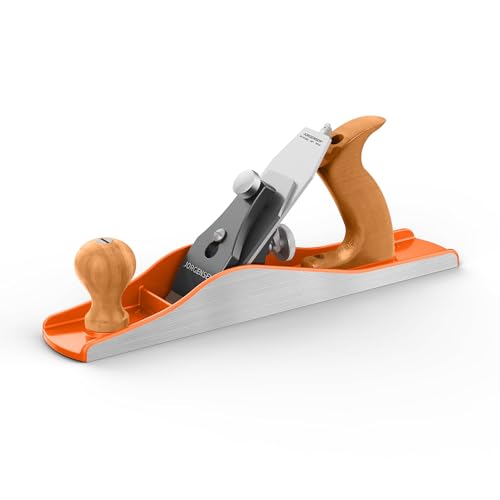
The No. 5 is the general-purpose size, and the JORGENSEN version leans into that role. Its longer sole rides over high spots instead of dipping into hollows, which is what flattens a board face and produces a straight edge for jointing two boards together. The listing describes an O1 steel blade, beech handles, and a Bedrock-style frog, the pattern where the frog seats fully on the body for firm blade support.
At 6.21 pounds, this is the heaviest plane in the group, and that mass helps it carry momentum through the cut when you are removing milling marks or leveling a glued panel. Set the blade deeper for flattening work, then ease it back and the same tool can take fine shavings. If you buy one bench plane for mixed work, the No. 5 size is the usual answer, and this model brings modern blade steel to it.
Specs:
– Plane type: No. 5 jack plane
– Blade: O1 steel
– Frog: Bedrock-style
– Handles: Beech
– Weight: 6.21 pounds
STANLEY Block Plane (12-220)

A block plane earns its place on end grain, and the 12-220 is STANLEY’s long-running design. The cutter rests at a 21-degree angle, a low bedding that suits cross-grain planing, and the cutter adjusts for both depth of cut and alignment. The gray cast-iron base has precision-ground sides and bottom, with machined sides for grip and registration.
A durable epoxy coating protects the body, and a finger rest at the front adds comfort and control during one-hand use. At 7.7 inches long and under two pounds, it fits in an apron pocket or toolbox tray, ready for easing edges, trimming end grain flush, and fitting small parts. The listing notes the model carries a limited lifetime warranty from the maker.
Specs:
– Plane type: Block plane
– Model: 1-12-220
– Body material: Gray cast iron base with epoxy coating
– Cutter angle: 21 degrees, adjustable for depth and alignment
– Features: Machined sides, front finger rest
– Dimensions: 7.7 inches long by 2.4 inches wide by 4.1 inches high
– Weight: 1.83 pounds
Who should skip
Skip this group if your work is mostly sheet goods and power-tool surfacing, since a thickness planer or a sander handles that faster. Skip the No. 4 smoothers if your boards arrive rough and twisted, because a short sole follows dips instead of flattening them; you would want the jack plane first, or a longer jointer plane for wide panels and long edges. Skip the block plane if you need to flatten faces, since it is a trimming tool only. And skip hand planes entirely if you are not willing to learn sharpening, because every plane here depends on a keen edge.
FAQ
Which plane should I buy first, a No. 4 or a No. 5?
The No. 5 jack plane is the more versatile first purchase because its longer sole flattens boards, joints edges, and can be set fine for light smoothing. Add a No. 4 later when you want a dedicated smoother for final surfaces.
How do I keep a plane blade sharp and safe?
Follow the maker guidance for sharpening and setup, working the bevel on stones or a guided system and keeping the back flat. Treat every blade as sharp at all times, keep hands behind the cutting edge, and store the plane with the blade retracted or guarded as the maker directs.
What does the plane number mean?
The number reflects sole length in the traditional Stanley system. Lower numbers are shorter planes for smoothing, the No. 5 is the mid-length jack plane, and higher numbers are longer planes for jointing long edges. Blade width grows with the number as well.
Can a block plane replace a bench plane?
No. A block plane like the 12-220 is built for end grain, chamfers, and small trimming with one hand. Its short sole cannot flatten a board face or true a long edge, so it complements a bench plane rather than replacing one.
Final verdict
For a balanced bench, pair the JORGENSEN No. 5 jack plane for flattening and jointing with the STANLEY No. 4 Sweetheart for final smoothing, and keep the STANLEY 12-220 block plane within reach for end grain. The STANLEY 12-404 and the Amazon Basics No. 4 are sound, simpler smoothers for everyday work. Whichever you choose, learn the maker setup and sharpening guidance, store each blade guarded, and the plane will serve for years.
Related guides
More from Amazon
Programs that pair well with the guide above. Offers and eligibility are set by Amazon and may change.
A free business account with business pricing and bulk-buying tools for work, shop or home office.
Create a business accountFree shipping on eligible items, Prime Video and more. Eligible new members can start with a free trial.
Start a Prime free trialAudiobooks and podcasts to listen to on the go. Eligible new members can start with a free trial.
Try Audible freeAd-free music streaming. Eligible new subscribers can start with a free trial.
Try Music Unlimited freeAs an Amazon Associate we earn from qualifying purchases.