Our Top Picks
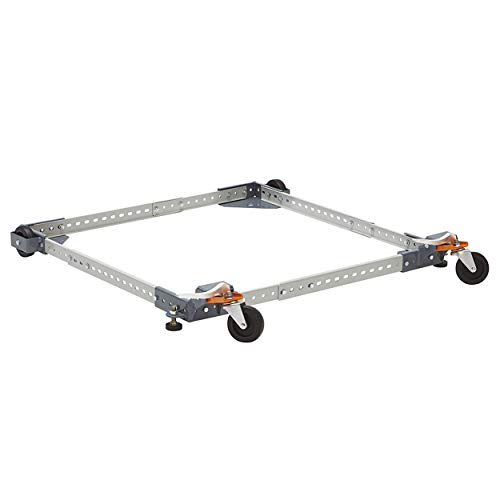 BORA Universal Mobile Base for Shop Equipment and18.81 x 6.14 x 3.85 inches12.9 poundsCheck on Amazon
What's inside
As an Amazon Associate I earn from qualifying purchases. This post may contain affiliate links at no extra cost to you.
- Top Pick: Bora Portamate PM-1000 Universal Mobile Base
- Runner-up: Bora Portamate PM-1100 Customizable Mobile Base Kit
- Also consider: HTC-2000 Adjustable Mobile Base
A small shop asks a lot of its floor. The table saw lives against one wall, the planer hides under a bench, and the band saw only comes out when a long board needs cutting. A mobile base turns that shuffle into a calm routine. Bolt the machine down once, roll it out when you need it, and lock it in place before the blade spins.
The five bases below cover the usual range of shop machines, from a light benchtop tool to a heavy cabinet saw. Each one adjusts to a different footprint, and each one carries a different load ceiling from its maker. Measure your machine first, compare the numbers as listed, and pick the base that fits the tool you actually own.
As an Amazon Associate, we earn from qualifying purchases.
Contents
Quick answer
For most home shops, a 400 pound universal base handles a benchtop or contractor saw with room to spare, while a 600 pound base suits heavier machines like a cabinet saw or a large planer. Match the base to the footprint of your machine, keep the load under the maker’s listed ceiling, and lock every caster before you switch the tool on.
How to choose
Begin with the footprint. Measure the length and width of your machine’s base at floor level, including legs, feet and any bolt-down flanges. A mobile base must adjust to that size, with the machine sitting flat on the frame rather than hanging over an edge. The listed sizes below come from each maker’s own record, so compare them against your tape measure before anything else.
Next, weigh the machine. The load ceiling on a mobile base is a ceiling, never a target. Add the weight of anything bolted to the machine, such as an extension wing or a dust hood, and keep the total comfortably under the listed figure. A base that runs near its ceiling all the time will feel stiff, and its casters will wear sooner.
Look at the casters. Two fixed wheels plus two swivel casters roll straight and turn in a gentle arc, which suits a long machine in a narrow shop, while four swivel casters turn in place for tight corners. Foot-operated levers lock and release the base without bending down. Sweep the path first, lock the casters at the working spot, and confirm the machine sits steady before you switch it on. Follow the maker’s assembly guidance, keep bolts loose until the frame sits square, then tighten. Bolt the machine to the base before first use, and never run a machine while the base sits in its raised, rolling position.
Bora Portamate PM-1000 Universal Mobile Base

The PM-1000 is the classic entry point in the Bora range, and it suits the machines most home shops own. It adjusts from 12 by 12 inches up to 32 by 32 inches square, and it stretches to a 17 by 48 inch rectangle for longer machines. That range covers a benchtop table saw, a small band saw, a drill press and many jointers, all on the same frame.
Its three inch medium duty poly wheels and stem casters roll smoothly on a clean concrete floor, and the foot levers lock the base with a tap. The steel frame is powder coated, which helps it shrug off the knocks and scrapes of daily shop life. Set the rails to your machine’s footprint, square the corners, and tighten the hardware.
Specs:
– Capacity: 400 pounds as listed
– Footprint: 12 by 12 inches to 32 by 32 inches square, or 17 by 48 inches as a rectangle
– Casters: 3 inch medium duty poly wheels and stem casters
– Model: PM-1000
Bora Portamate PM-1100 Customizable Mobile Base Kit

The PM-1100 takes the same idea as the PM-1000 and stretches it much further. It adjusts from a 12 by 12 inch square all the way out to a 60 by 48 inch rectangle, which covers machines that no fixed-size base can hold, such as a long workbench, a wide cabinet or a large assembly table. The kit form is the point: you size the rails to the machine, and the base grows to fit.
It uses the same three inch medium duty poly wheels and stem casters as the PM-1000, and the same 400 pound ceiling. The difference is range, not strength. A long, light machine sits happily on the PM-1100, while a short, heavy machine still belongs on a stronger base. The kit does not include plywood, so plan for a plywood platform if your machine needs a solid deck under it.
Specs:
– Capacity: 400 pounds as listed
– Footprint: 12 by 12 inches minimum to 60 by 48 inches maximum
– Casters: 3 inch medium duty poly wheels and stem casters
– Model: PM-1100
– Note: Assembly required; plywood not included
HTC-2000 Adjustable Mobile Base

The HTC-2000 has been a shop staple for years, and its appeal is simple: a sturdy adjustable frame that fits a wide range of machines without fuss. It adjusts to suit power tools and large machinery alike, and its 500 pound ceiling sits a useful step above the 400 pound bases, which gives extra headroom for a mid-size planer, a heavy band saw or a contractor saw with an extension wing.
The frame uses a straightforward rail and corner design. You set the length and width to match the machine, bolt the machine down, and the base is ready to roll. The casters lock with foot levers, so you can settle the machine in place without bending down. The powder coated steel frame holds up to the bumps of a busy shop, and the design has stayed in production for years because it keeps working.
Specs:
– Capacity: 500 pounds as listed
– Fit: Adjustable frame for power tools and large machinery
– Model: HTC2000
– Finish: Powder coated steel
JET Universal Mobile Base (JMB-UMB)

The JET JMB-UMB is the heavyweight of this group, and it shows in its build. With a 600 pound ceiling and a footprint that adjusts from 18 by 18 inches to 28 by 28 inches, it suits the machines that smaller bases cannot hold: cabinet saws, large planers, heavy jointers and big drill presses. The frame is built to carry that load without flexing, and the casters are sized to match.
The square adjustment range keeps the design simple. You set the four sides to your machine, square the corners, and bolt the machine down. The casters lock firmly, and the base sits low, which keeps the machine’s working height close to where it was on the floor. That low profile matters for tall machines, where even a small lift changes how the tool feels to use.
Specs:
– Capacity: 600 pounds as listed
– Footprint: 18 by 18 inches to 28 by 28 inches
– Model: JMB-UMB
– Brand: JET
POWERTEC 17002R Workbench Caster Kit

The POWERTEC 17002R takes a different approach from the frame bases above. Instead of a full rail frame, it is a set of four retractable stepdown casters with quick-release plates. You mount one plate to each corner of a workbench, a table or a stand, and the casters lift the whole thing onto wheels when you need to move it, then step down again to rest the bench on its own legs.
That design suits benches and stands that already have a solid structure. A workbench with a heavy vise, a tool stand with a cabinet base, or a custom assembly table all gain mobility without a new frame underneath. The three inch wheels roll on a smooth floor, and the quick-release plates let you lift the casters off entirely when the bench stays put for a long stretch.
Specs:
– Capacity: 400 pounds as listed
– Contents: Set of 4 casters with quick-release plates
– Wheels: 3 inch retractable stepdown casters
– Model: 17002R
Who should skip
Skip a mobile base entirely if your machine never moves. A machine that lives in one spot works better bolted to the floor or on a fixed stand, with no casters to wear and no frame to flex. A mobile base adds height, however small, and a machine that never rolls gains nothing from it.
Skip the lighter 400 pound bases if your machine weighs more than their ceiling, even by a little. A base run at its limit will feel stiff and its casters will wear out early, so step up to a stronger pick instead. Skip any base that cannot adjust to your machine’s footprint: too small and the machine overhangs, too large and it wastes floor space. And never run a machine while it rolls. Lock the casters, lower the support feet, confirm the machine sits steady, and only then switch it on.
FAQ
How do I measure my machine for a mobile base?
Measure the length and width of the machine’s base at floor level, including legs, feet and any bolt-down flanges. Compare both numbers with the listed minimum and maximum sizes of the base. The machine must sit fully inside the frame, with no overhang on any side.
Can one mobile base hold a machine plus an extension wing?
Only if the combined weight stays under the maker’s listed ceiling and the footprint still fits inside the frame. Add the wing to the machine’s weight, keep the total comfortably below the ceiling, and choose a stronger base if the numbers sit close to the limit.
Do I need to bolt the machine to the base?
Yes. Every maker in this guide calls for the machine to be bolted to the base before use. Bolts keep the machine from shifting while it rolls and from sliding off the frame if a caster catches on a crack in the floor. Use the hardware the maker supplies, and check the bolts from time to time.
Why does my mobile base feel hard to roll?
The usual causes are a dirty floor, a load near the ceiling, or casters that need a clean. Sweep the path, check the total weight against the listed ceiling, and clear sawdust from the caster wheels. If the base still feels stiff, check that the frame sits square and no bolt has worked loose.
Final verdict
A mobile base earns its place in a small shop by making heavy machines easy to move and easy to park. The Bora PM-1000 covers most benchtop and contractor machines, the PM-1100 stretches to long and awkward footprints, the HTC-2000 adds headroom in the middle, the JET JMB-UMB carries the heaviest machines here, and the POWERTEC 17002R gives a solid bench wheels without a full frame. Measure your machine, keep the load under the listed ceiling, and lock the casters before you work.
Related guides
More from Amazon
Programs that pair well with the guide above. Offers and eligibility are set by Amazon and may change.
A free business account with business pricing and bulk-buying tools for work, shop or home office.
Create a business accountFree shipping on eligible items, Prime Video and more. Eligible new members can start with a free trial.
Start a Prime free trialAudiobooks and podcasts to listen to on the go. Eligible new members can start with a free trial.
Try Audible freeAd-free music streaming. Eligible new subscribers can start with a free trial.
Try Music Unlimited freeAs an Amazon Associate we earn from qualifying purchases.