Our Top Picks
What's inside
As an Amazon Associate I earn from qualifying purchases. This post may contain affiliate links at no extra cost to you.
- Top Pick: Conclusion
- Runner-up: Conclusion
- Also consider: Conclusion
The best scroll saw blade for most woodworkers is a mid-size plain end blade in the #5 range with a reverse or skip tooth pattern, because it balances cutting speed, control and a clean finish in the half-inch to one-inch stock used for most projects. If you cut a wide mix of work, the Flying Dutchman Ultra Reverse variety pack covers five sizes in one pouch. If your saw only takes pin end blades, the FOXBC pin end assortment and the Proxxon metal cutting blades below are the picks to look at first.
As an Amazon Associate, we earn from qualifying purchases.
Blade choice matters more than most scrollers expect. The same saw will wander, burn and splinter with the wrong blade, then track a pattern line cleanly once the tooth pattern and size match the wood. This guide covers the five packs worth stocking, then explains how to match blade size, teeth per inch and end type to your material.
Contents
Table of Contents
- Quick Picks
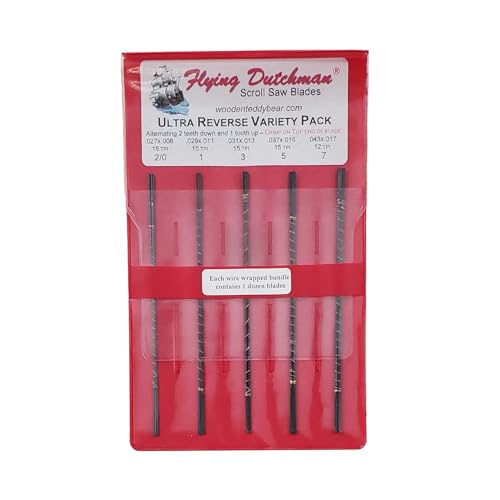
- 1. Flying Dutchman Ultra Reverse Variety Pack
- 2. Olson Reverse Tooth Assortment FR49202
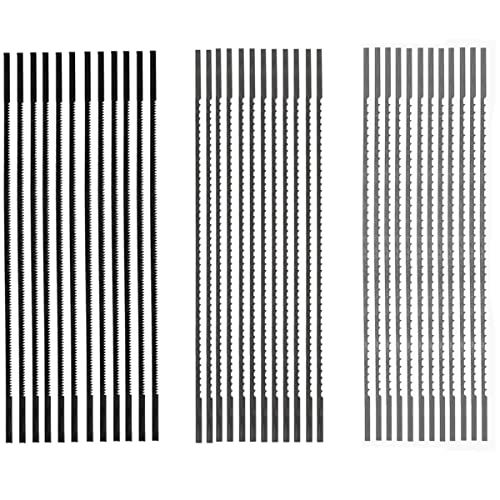
- 3. FOXBC Plain End Scroll Saw Blade Set
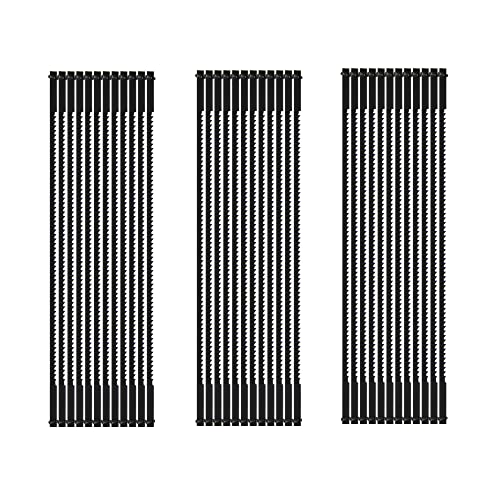
- 4. FOXBC Pin End Scroll Saw Blades 36 Pack
- 5. Proxxon 28745 Pin End Metal Cutting Blades
- How to Choose Scroll Saw Blades
- FAQ
- Conclusion
- Product and ASIN Reference
Quick Picks
- Best overall: Flying Dutchman Ultra Reverse Variety Pack — sixty pinless blades in five sizes, with reverse teeth that leave the underside of the work nearly splinter-free.
- Best for clean fretwork finishes: Olson Reverse Tooth Assortment FR49202 — a 36-blade plain end assortment from an American blade maker founded in 1918.
- Best budget assortment: FOXBC Plain End Scroll Saw Blade Set — 36 plain end blades split across 28, 12 and 10 teeth per inch for fine, medium and fast cutting.
- Best for pin end saws: FOXBC Pin End Scroll Saw Blades 36 Pack — four tooth counts that fit WEN, Craftsman and other 15-inch and 16-inch saws.
- Best for metal and very fine cuts: Proxxon 28745 — high speed steel pin end blades at 25 teeth per inch for thin metal.
1. Flying Dutchman Ultra Reverse Variety Pack
Flying Dutchman blades are milled rather than stamped, and the maker says that process produces a sharper cutting edge that stays true instead of drifting to one side. The Ultra Reverse pattern is the headline feature here: most teeth point down in the usual way, but every third tooth is reversed, so the blade also cuts on the upstroke at the bottom of the workpiece. That arrangement clears sawdust like a skip tooth blade while leaving the underside of the wood far cleaner, which means less sanding on fretwork, puzzles and intarsia where both faces show.
This five dozen pack spreads sixty blades across five sizes, from the fine #2/0 up to the heavier #7, so one purchase covers thin plywood detail work and thicker hardwood stock alike. The smaller sizes suit tight inside corners and delicate veining, while the #5 and #7 handle general cutting in stock up to around an inch and beyond. The blades are hardened steel, produced in Germany, and the pack ships in a reusable pouch that keeps the sizes separated on the bench.
Specs
- Pack count: 60 blades
- Blade length: 5 inches
- End type: pinless (plain end)
- Tooth pattern: ultra reverse, every third tooth reversed
- Sizes included: #2/0, #1, #3, #5 and #7
- Material: hardened steel, milled teeth
- Origin: made in Germany
- Storage: reusable pouch included
- Tier: premium
2. Olson Reverse Tooth Assortment FR49202
Olson has manufactured saw blades in the United States for more than a century, and its reverse tooth line is a staple in scroll saw shops. The FR49202 assortment gathers 36 plain end blades in a spread of the company’s reverse tooth sizes, so you can move from finer blades for thin stock to sturdier blades for thicker material without ordering separate packs. Reverse tooth blades place a section of upward-facing teeth at the bottom of the blade, which shears the fibers on the underside of the workpiece and sharply reduces the fuzzy, splintered bottom edge that standard blades leave behind.
That clean bottom edge is the reason to choose this assortment for fretwork plaques, ornaments and layered projects that will be seen from both sides. Olson publishes a detailed selection chart for its blade range, rating these blades for hard and soft wood, plywood, veneer and non-ferrous metals sandwiched between waste boards, which makes the pack a flexible shop staple at the standard five-inch length most scroll saws use.
Specs
- Pack count: 36 blades
- Blade length: 5 inches
- End type: plain end (pinless)
- Tooth pattern: reverse tooth assortment
- Model number: FR49202
- Manufacturer: Blackstone Industries (Olson Saw)
- Suitable materials: hard wood, soft wood, plywood, veneer, non-ferrous metals between waste boards
- Origin: made in the USA
- Tier: mid-range
3. FOXBC Plain End Scroll Saw Blade Set
The FOXBC plain end set is the straightforward budget assortment: 36 blades in three clearly labeled tooth counts. You get a dozen blades at 28 teeth per inch for fine, intricate shapes in thin material, a dozen at 12 teeth per inch for general work, and a dozen at 10 teeth per inch for faster cutting in thicker stock. Because the three groups span the range most hobby projects actually use, the set works well as a first assortment while you learn which tooth counts suit your patterns.
FOXBC makes these blades from high-carbon steel and precision sharpens them for cutting fine shapes in wood, plastic and non-ferrous metal. The plain end design clamps into the blade holders fitted to most modern scroll saws, at the standard five-inch length. Fine blades in this tier are consumables, and the generous count means snapping a 28 TPI blade while learning feed pressure is a minor event rather than a project stopper.
Specs
- Pack count: 36 blades
- Blade length: 5 inches
- End type: plain end (pinless)
- Teeth per inch: 28, 12 and 10 (12 blades of each)
- Material: high-carbon steel
- Model number: FOX-Plain-36PC
- Suitable materials: wood, plastic and non-ferrous metals
- Tier: budget
4. FOXBC Pin End Scroll Saw Blades 36 Pack
Many entry-level and older scroll saws, including popular WEN and Craftsman 15-inch and 16-inch models, accept only pin end blades, and this FOXBC pack is built for exactly those machines. The cross pins at each end hook into the saw’s blade holders, so changes are fast and need no clamping technique, which is why pin end blades remain popular for straightforward cutting, craft work and teaching shops.
The 36-pack mixes four tooth counts — 10, 15, 18 and 24 teeth per inch — giving pin end users a similar spread to the plain end assortments above. The coarser blades handle thicker softwood and general shapes, while the 24 TPI blades smooth out work in thinner stock, all at the standard five-inch length. Pin end blades cannot pass through the tiny drilled starter holes used for the finest interior fretwork, so they suit outside contours and larger interior cutouts best.
Specs
- Pack count: 36 blades
- Blade length: 5 inches
- End type: pin end
- Teeth per inch: 10, 15, 18 and 24
- Material: high-carbon steel
- Model number: FOX13218T
- Compatibility: WEN, Craftsman and other 15-inch and 16-inch scroll saws
- Tier: budget
5. Proxxon 28745 Pin End Metal Cutting Blades
Most scroll saw blades are made for wood, and cutting metal with them dulls the teeth quickly. The Proxxon 28745 set is the specialist in this roundup: a set of 12 pin end blades made from high speed steel with 25 teeth per inch, designed for sawing thin metal cleanly. The fine tooth count keeps several teeth engaged in thin sheet at all times, which is the key to cutting brass, copper, aluminum and thin steel without grabbing or ragged edges.
Proxxon is a German maker best known for precision miniature tools, and these five-inch blades fit the pin end holders on its own scroll saws as well as other pin end machines. Jewelry work, model engineering, clock parts and thin inlay metal all fall in this blade’s territory, and the same fine pitch also produces very smooth cuts in thin wood and plastic. Because the teeth are fine and the blades narrow, feed pressure needs to stay light, especially in harder metals.
Specs
- Pack count: 12 blades
- Blade length: 5 inches
- End type: pin end
- Teeth per inch: 25
- Material: high speed steel
- Model number: 28745
- Intended use: cutting thin metal sheet and fine precision work
- Tier: mid-range
How to Choose Scroll Saw Blades
Start with the end type, because it is decided by your saw, not by preference. Check the manual: pin end blades hook onto holders with a cross pin, while plain end blades clamp flat in the holder. Plain end blades come in far more sizes and tooth patterns, and they pass through much smaller drilled holes, which is why serious fretwork is almost always done with them. Many mid-range and premium saws accept plain end blades only, while entry-level machines are often pin end only.
Next, match the blade size to the thickness and hardness of the wood. Blade numbers run from #3/0 at the finest up to #12 and beyond. Small numbers suit thin, delicate stock and tight turns; a #5 is the general-purpose middle ground for stock around half an inch to an inch thick; and #9 to #12 blades stand up to thick hardwood and stack cutting. A blade that is too fine will wander and overheat, while one that is too coarse will tear out detail and refuse tight corners.
Teeth per inch works together with size. Higher tooth counts cut more slowly but leave a smoother edge in thin material; lower counts clear sawdust faster in thick stock. At least three teeth should contact the material at all times, which is why thin veneer needs a fine blade and thick hardwood needs a coarse one.
Finally, pick the tooth pattern for the finish you need. Skip tooth blades are the fast, general-purpose default. Reverse and ultra reverse patterns add upward teeth at the bottom of the blade to protect the underside face. Spiral blades cut in every direction for awkward workpieces, and precision ground tooth blades trade a little speed for straighter tracking. Treat blades as consumables: a fresh blade is the cheapest fix for wandering cuts, burning and torn edges.
FAQ
What is the difference between pin end and plain end scroll saw blades?
Pin end blades have a small cross pin at each end that hooks into the saw’s blade holders, so they change quickly but come in fewer sizes and need a larger starter hole for interior cuts. Plain end blades are smooth strips clamped into the holders; they are made in many more sizes and tooth patterns and fit through small drilled holes, which makes them the standard choice for detailed fretwork.
What size scroll saw blade should I use for plywood?
For plywood between an eighth and a quarter inch thick, a #3 to #5 blade works well, with a reverse or ultra reverse tooth pattern if the bottom face will be visible, because plywood veneer splinters easily on the underside. For thicker plywood panels, move up to a #5 or #7 so the blade can clear the glue lines and sawdust without overheating or wandering off the line.
How often should scroll saw blades be replaced?
Replace a blade as soon as cutting slows noticeably, the blade starts drifting to one side, or edges come out burned or rough. Fine blades used on hardwood may last only a single project session, while coarser blades in softwood last longer. Pushing a dull blade is the most common cause of broken blades and spoiled patterns, so swap early rather than forcing the cut.
Can scroll saw blades cut metal?
Yes, with the right blade. Fine blades with a high tooth count, such as the 25 TPI high speed steel Proxxon blades in this guide, are made for thin brass, copper, aluminum and mild steel sheet. Keep the speed moderate and the feed pressure light, and expect slower progress than in wood. Standard wood blades will cut very thin soft metal in a pinch, but they dull quickly doing it.
Conclusion
Stocking the right blades turns a scroll saw from a frustrating machine into a precise one. The Flying Dutchman Ultra Reverse pack is the best single purchase for most scrollers, covering five sizes with a tooth pattern that protects both faces of the work. The Olson FR49202 is the alternative for clean fretwork finishes, the two FOXBC sets cover plain end and pin end saws at a budget tier, and the Proxxon 28745 handles metal cutting. Match the end type to your saw first, then let material thickness choose the size.


Related guides
More from Amazon
Programs that pair well with the guide above. Offers and eligibility are set by Amazon and may change.
A free business account with business pricing and bulk-buying tools for work, shop or home office.
Create a business accountFree shipping on eligible items, Prime Video and more. Eligible new members can start with a free trial.
Start a Prime free trialAudiobooks and podcasts to listen to on the go. Eligible new members can start with a free trial.
Try Audible freeAd-free music streaming. Eligible new subscribers can start with a free trial.
Try Music Unlimited freeAs an Amazon Associate we earn from qualifying purchases.