Key takeaways
- Compare five bench stones for chisel and plane iron care, from a coarse repair stone and a combo water stone to diamond plates and a fine polisher.
What's inside
As an Amazon Associate I earn from qualifying purchases. This post may contain affiliate links at no extra cost to you.
- Top Pick: Shapton Kuromaku #320 Ceramic Water Stone
- Runner-up: Shapton Kuromaku #12000 Ceramic Water Stone
- Also consider: DMT W6EFC Diamond Whetstone Kit
A chisel or plane iron that has gone dull tears fibers instead of slicing them, and the fix begins at the bench stone. The five stones below cover the full arc of edge care for woodworking hand tools: repairing a nicked bevel, routine sharpening, and final polishing. They span water stones, diamond plates, and a classic oil stone, so the roundup suits shops that soak stones in a tub and shops that prefer to keep water away from the bench. Each pick lists only the grits, sizes, and details given on its product page.
Grit numbers below follow the scale printed by each maker, and they are not interchangeable across brands. A 1000 grit water stone, a 600 mesh diamond plate, and a fine India stone all sit in a similar working range, yet each cuts and wears in its own way. Read the guidance under each stone, keep the bevel flat on the surface, and move through grits in order rather than jumping from a coarse repair stone straight to a polisher. Work slowly, keep fingers behind the cutting edge, and follow the directions packed with the stone you choose.
As an Amazon Associate, we earn from qualifying purchases.
Contents
Quick answer
For most bench chisels and plane irons, begin with a medium grit near 1000, refine near 6000, and add a coarse stone near 320 only when an edge is nicked or badly dull. Diamond plates stay flat and cut quickly, while an India oil stone gives a durable, low-upkeep option for routine care in the shop.
How to choose
Match the stone to the job in front of you. Edge repair — grinding out a nick, squaring a chipped corner, or re-forming a bevel that has been rounded over — calls for a coarse stone in the 220 to 400 range. Routine sharpening of a sound edge lives near 1000 grit. Honing and polishing follow at 4000 and above, with the finest stones reserved for the last few strokes before the tool goes back to the wood.
Water stones cut quickly and are soaked or splashed with water before use; they also wear into a shallow hollow over time and need periodic flattening on a flat reference surface. Diamond plates stay flat, work with water or dry, and keep cutting for years. Oil stones are the slow, durable middle path: an India stone asks only for honing oil, shrugs off years of shop use, and suits woodworkers who sharpen often and briefly.
Size matters more than many buyers expect. A stone 8 inches long and at least 2 inches wide gives a plane iron room to travel without running off the end, and narrow stones can tip a wide iron. Whatever you pick, add a honing guide if freehand angles are new to you, and plan a flattening method for any stone that can dish.
King KW65 1000/6000 Combination Water Stone
The King KW65 pairs the two grits most bench work needs in a single block. The 1000 grit face handles routine sharpening: it raises a burr along a chisel bevel and brings a plane iron back from dull to working order. Flip the stone over and the 6000 grit face refines that edge for paring and final planing strokes. The maker directs users to soak the stone in water and keep it wet while working, and the included plastic base holds the stone steady on the bench. It will not grind out deep nicks quickly, and like other water stones it needs flattening now and then, so pair it with a coarse stone if repair work is common.
Specs:
– Grit: 1000 on one face and 6000 on the other, as listed
– Type: combination water stone; soak before use and keep wet in use, as listed
– Base: plastic base included, as listed
– Brand: King
Shapton Kuromaku #320 Ceramic Water Stone

When an iron drops on the floor or a chisel meets a hidden nail, a medium stone takes forever to remove the damage. The Kuromaku #320 is the repair step: its coarse ceramic abrasive removes steel quickly so a nicked or badly dulled bevel can be ground back to a clean line, ready for a 1000 grit stone to refine. Shapton’s ceramic stones are hard for water stones, so the face holds its shape well during heavy work, and the storage case doubles as a holder at the bench. The blue-black color marks the grit within the Kuromaku range. It is a specialist: far too coarse for final edges, and it leaves scratches that finer stones must remove, so it earns its place only in a set that also includes medium and fine stones.
Specs:
– Grit: #320, coarse, as listed
– Model: K0709
– Size: 210 x 70 x 15 mm, as listed
– Material: ceramic abrasive, as listed
– Color: blue-black, as listed
– Case: plastic storage case included
Shapton Kuromaku #12000 Ceramic Water Stone

The #12000 Kuromaku is the final step in a water stone sequence, used after medium and fine stones have done the shaping. At this grit the stone polishes the bevel and the flat back of an iron, refining the edge for clean paring cuts and smooth planing in difficult grain. Shapton lists this stone as a finishing stone, and the maker originally designed the #12000 for fine woodworking tools. It removes very little steel, so it cannot rescue a dull or damaged edge on its own; it rewards a bevel that arrives already sharp. The ceramic body is hard and slow-wearing for a water stone, and the case serves as a holder while you work.
Specs:
– Grit: #12000, finishing, as listed
– Model: K0705
– Size: 210 x 70 x 15 mm, as listed for the Kuromaku line
– Material: ceramic abrasive, as listed
– Origin: made in Japan, as listed
DMT W6EFC Diamond Whetstone Kit
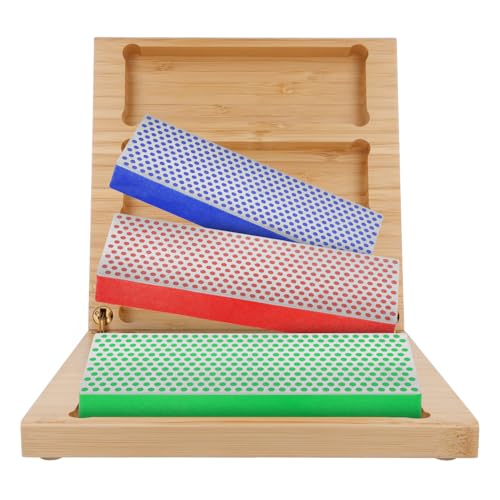
This boxed set holds three 6 by 2 inch diamond stones that cover repair, sharpening, and refining without any soaking. The coarse stone, listed at 45 micron / 325 mesh, restores neglected edges; the fine stone at 25 micron / 600 mesh does the everyday sharpening; and the extra-fine stone at 9 micron / 1200 mesh polishes the edge afterward. DMT lists chisels and plane irons among the woodworking edges these stones address. Diamond plates stay flat, so there is no dishing to correct, and the listing says they can be used dry or with water. The hardwood box keeps the set together in a drawer. Six inches is shorter than an 8 inch bench stone, so wide irons take a little more care to keep fully on the surface.
Specs:
– Contents: three diamond whetstones in a hardwood box, as listed
– Stone size: 6 x 2 in each, as listed
– Grits: coarse 45 micron / 325 mesh; fine 25 micron / 600 mesh; extra-fine 9 micron / 1200 mesh, as listed
– Abrasive: micronized monocrystalline diamond, as listed
– Use: dry or with water, as listed
Norton India IB6 Combination Bench Stone
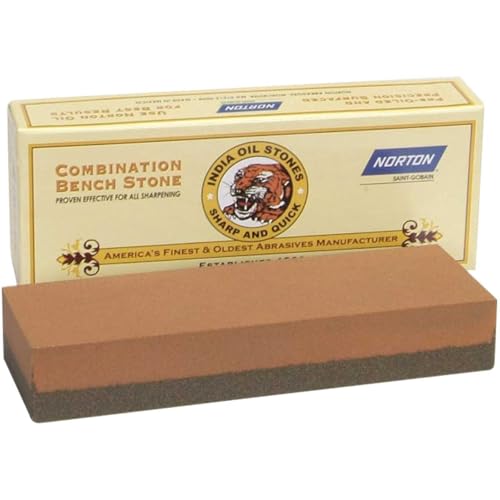
The India stone is the old shop standby: an aluminum oxide bench stone used with honing oil rather than water. The IB6 is 6 inches long with a coarse face for bringing up a dull edge and a fine face for refining it, so one stone handles the routine cycle for chisels and plane irons. India stones wear slowly and hold their shape for years, which suits a bench where the stone lives within reach and gets used in short sessions. It cuts more slowly than a diamond plate or a fresh water stone, and six inches is compact for the widest plane irons, so strokes need care at the ends of the travel.
Specs:
– Size: 6 x 2 x 1 in, as listed
– Abrasive: aluminum oxide, India stone, as listed
– Grit: coarse on one face, fine on the other, as listed
– Lubricant: honing oil, per maker guidance
– Model: IB6, as listed
Who should skip
Skip this roundup if your sharpening is mostly kitchen knives; several of these stones work for knives too, but the sizes and grits here were chosen around chisel bevels and plane iron backs. Skip the coarse Shapton if your tools never suffer nicks, and skip the #12000 stone if your routine ends at a working edge rather than a polished one. Anyone who wants a guided system with a fixed angle jig, or a powered sharpener, will not find one here: every pick is a freehand bench stone. Finally, if oil near wood finishes bothers you, pass on the India stone and stay with water or diamond.
FAQ
How often should a chisel or plane iron be sharpened?
Hone little and often. A brief session on a fine stone as soon as cuts begin to tear or need extra force keeps the edge in the working range and avoids long repair sessions on a coarse stone. The exact rhythm depends on the wood and the hours of use, so let cut quality be the guide.
Do water stones need to be soaked?
It depends on the stone. The King KW65 listing directs a soak before use and keeping the stone wet while working. Shapton’s ceramic stones need only a brief soak before the very first use and splashes of water after that, per maker guidance. Always follow the directions packed with your stone.
Can one stone do everything?
A combination stone covers routine sharpening and honing for edges in good shape, and the King and Norton picks both pair two grits in one block. Repair work and final polishing sit outside that range, which is why this roundup adds a coarse stone near 320 and a finishing stone at 12000.
How do I keep a stone flat?
Pencil a grid of lines across the face, then rub the stone on a known flat surface, such as a diamond plate or a sheet of abrasive fixed to glass, until the lines vanish evenly. Diamond plates need no flattening at all, which is part of their appeal for small shops.
Final verdict
For a first bench stone, the King KW65 covers the sharpening and honing steps most chisels and plane irons need, at the soak-and-go rhythm of a classic water stone. Add the Shapton #320 when repair work shows up, and the #12000 when a polished bevel is the goal. The DMT kit suits woodworkers who want flat, low-upkeep plates and no soaking tub, while the Norton India IB6 remains the durable oil stone for short, frequent sessions. Any of the five will serve well; match the pick to the work your tools actually see, keep edges away from fingers, and follow maker guidance.
Related guides
More from Amazon
Programs that pair well with the guide above. Offers and eligibility are set by Amazon and may change.
A free business account with business pricing and bulk-buying tools for work, shop or home office.
Create a business accountFree shipping on eligible items, Prime Video and more. Eligible new members can start with a free trial.
Start a Prime free trialAudiobooks and podcasts to listen to on the go. Eligible new members can start with a free trial.
Try Audible freeAd-free music streaming. Eligible new subscribers can start with a free trial.
Try Music Unlimited freeAs an Amazon Associate we earn from qualifying purchases.