Our Top Picks
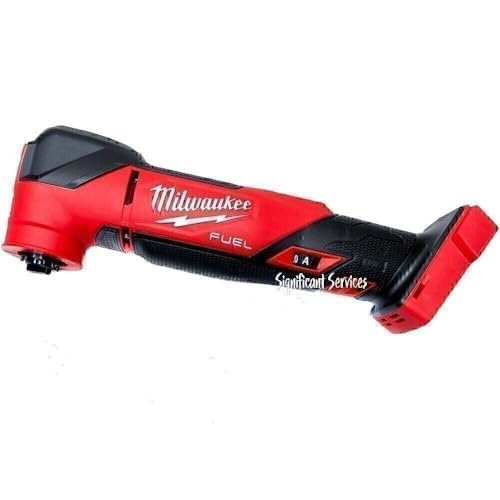 Milwaukee 2836-20 M18 FUEL Brushless Lithium-Ion Cordless Oscillating13x5x3 inches13 x 5 x 3 Inches3.09 PoundsCheck on Amazon
 Makita XMT03Z 18V LXT® Lithium-Ion Cordless Multi-ToolPack of 13.9 x 12.2 x 4.9 inches4 PoundsCheck on Amazon
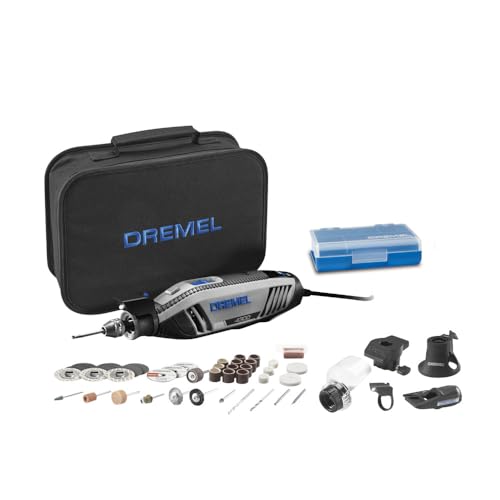 Dremel 4300-5/40 Rotary Tool Kit w/LED Light31875 in15.5 x 10.25 x 2 Inches1.2 poundsCheck on Amazon
What's inside
As an Amazon Associate I earn from qualifying purchases. This post may contain affiliate links at no extra cost to you.
Contents
Table of Contents
- The Short Answer
- How Each Tool Actually Works
- Where an Oscillating Tool Wins
- Where a Rotary Tool Wins
- The Five Tools Compared
- How to Choose Between Them
- Who Should Skip Each Tool
- FAQ
- Conclusion
- Product and ASIN Reference
An oscillating tool and a rotary tool are both compact, one-handed power tools that swap accessories to handle dozens of small jobs, which is why they are so often confused with each other. The resemblance ends at the handle, though. An oscillating multi-tool swings its blade or pad side to side in a tiny, fast arc, while a rotary tool spins a small bit at very high speed like a miniature die grinder. That single mechanical difference decides almost everything about what each tool does well: the oscillating tool is the one that plunge-cuts door jambs, undercuts trim, scrapes adhesive and sands into corners, while the rotary tool is the one that carves, engraves, grinds, polishes and makes freehand cuts in small workpieces.
As an Amazon Associate, we earn from qualifying purchases.
The Short Answer
If your work list is mostly remodeling and repair — flush-cutting trim, cutting drywall openings, removing grout, scraping old caulk, sanding in corners — buy the oscillating tool first, because no other tool covers those jobs as cleanly. If your work list is mostly small-scale shaping — carving wood, engraving, sharpening, polishing, cutting small hardware, cleaning up detail work — buy the rotary tool first. Many woodworkers eventually own both, because the overlap between them is smaller than the shared “multi-tool” label suggests. Below, three oscillating tools and two rotary tools show what the current cordless and corded lineups look like on each side.
How Each Tool Actually Works
The oscillating tool moves its accessory back and forth through a small angle, typically between about 3 and 4.2 degrees, at speeds rated in oscillations per minute (OPM). Because the blade barely travels, it can start a cut in the middle of a surface, cut flush against a wall or floor, and work without the kick or wandering of a spinning blade. Accessories mount on a flat interface — common patterns include OIS and Starlock — and most modern tools change them without a wrench.
The rotary tool spins its accessory on a straight shaft at speeds rated in revolutions per minute (RPM), usually somewhere between 5,000 and 35,000 RPM. Accessories are small — bits, burrs, grinding stones, cut-off wheels, sanding drums and polishing pads, most on a 1/8-inch shank held by a collet or a small chuck. The spinning action is what makes a rotary tool good at grinding, carving and detail cutting, and it is also why a rotary tool cannot plunge-cut a door jamb or sand a corner flat: the geometry simply does not allow it.
Where an Oscillating Tool Wins
- Plunge and flush cuts. A flat blade pushed straight into drywall, trim or flooring starts exactly where you place it, and the same blade cuts flush against an adjacent surface.
- Undercutting. Trimming the bottom of door casing so flooring slides underneath is the classic oscillating-tool job.
- Grout and adhesive removal. Segmented and carbide-grit blades work grout lines and scrape residue without a spinning wheel throwing debris.
- Corner sanding. Triangular detail pads reach into corners that orbital and sheet sanders cannot touch.
- Controlled cutting near finished surfaces. The tiny stroke makes the tool forgiving around pipes, wiring and surfaces you cannot afford to gouge.
Where a Rotary Tool Wins
- Carving and shaping. Burrs and carving bits remove wood in small, controlled passes for detail work no blade-based tool can match.
- Engraving and etching. Fine bits at high RPM handle lettering, marking and decorative work on wood, metal and glass.
- Grinding and sharpening. Small stones dress edges, sharpen garden tools and mower blades, and grind down screw points or burrs.
- Polishing and cleaning. Felt pads and brushes with polishing compound restore small metal parts and clean tight spaces.
- Small cut-off work. Thin abrasive wheels cut small bolts, screws, cable and hardened pins where a larger saw cannot fit.
The Five Tools Compared
1. Milwaukee M18 FUEL Oscillating Multi-Tool (2836-20) — Premium Oscillating Pick
Milwaukee’s FUEL multi-tool is built around cutting speed. Its published oscillation angle is 4.2 degrees — the widest in this group — and a wider arc moves more material per stroke, which the maker pairs with a brushless motor and a variable-speed range of 10,000 to 20,000 OPM. An auto-load feature raises speed when the tool senses resistance, and blade changes are tool-free. It runs on the M18 battery platform and is sold as a bare tool, so it makes the most sense for a shop already holding M18 batteries.
Specs:
– Type: Cordless oscillating multi-tool
– Battery platform: Milwaukee M18 (tool only)
– Speed range: 10,000–20,000 OPM, variable-speed dial
– Oscillation angle: 4.2 degrees
– Motor: Brushless
– Blade change: Tool-free
– Extras: 180-degree LED work light, vibration dampening
2. Makita 18V LXT Cordless Multi-Tool (XMT03Z) — Mid-Range Oscillating Pick
Makita’s XMT03Z covers the widest speed range of the three oscillating tools here, from 6,000 to 20,000 OPM on a variable-speed dial, which helps when dropping down for delicate scraping or sanding and winding up for aggressive cutting. The oscillation angle is 3.2 degrees, accessories clamp with a lever-style tool-less system, and the listing notes adapters are included to fit most competitive accessories. The small-diameter barrel grip is a published design point aimed at control in tight spots. It is a tool-only LXT model, so a Makita 18V battery and charger are needed if you do not already own them.
Specs:
– Type: Cordless oscillating multi-tool
– Battery platform: Makita 18V LXT (tool only)
– Speed range: 6,000–20,000 OPM, variable-speed dial
– Oscillation angle: 3.2 degrees
– Accessory change: Tool-less lever clamp, adapters included for most competitive accessories
– Grip: Small-diameter barrel grip (2-3/8 inches)
3. DEWALT ATOMIC 20V MAX Oscillating Tool (DCS354B) — Budget Oscillating Pick

The DCS354B is the compact entry in DEWALT’s 20V MAX line. It uses a brushless motor, a dual-grip variable-speed trigger, and a speed range of 0 to 18,000 OPM, and accessories swap through a quick-change system with a universal adapter that accepts most brands of oscillating accessories. A built-in LED light covers work inside cabinets and closets. As a bare tool in the ATOMIC line it is the lightest way into oscillating cutting for a shop already running DEWALT 20V MAX batteries, and its smaller body suits overhead and in-cabinet work.
Specs:
– Type: Cordless oscillating multi-tool
– Battery platform: DEWALT 20V MAX (tool only)
– Speed range: 0–18,000 OPM, dual-grip variable-speed trigger
– Motor: Brushless
– Accessory change: Quick-change system with universal accessory adapter
– Extras: LED work light
4. Dremel 4300-5/40 High Performance Rotary Tool Kit — Premium Rotary Pick
The Dremel 4300 is the corded flagship of the rotary side. Its 1.8-amp motor runs from 5,000 to 35,000 RPM with variable speed and electronic feedback that holds speed under load, and the universal three-jaw chuck accepts every Dremel accessory shank size without collet changes. The 5/40 kit bundles five attachments — including a pivot light and a flex shaft — plus 40 accessories and a storage case, which makes it the most complete starting point here for carving, engraving, grinding and polishing. Being corded, it trades portability for unlimited runtime at the bench.
Specs:
– Type: Corded rotary tool kit
– Motor: 1.8 amp with electronic feedback
– Speed range: 5,000–35,000 RPM, variable speed
– Chuck: Universal three-jaw chuck, tool-less accessory changes
– Kit contents: 5 attachments and 40 accessories, storage case
– Extras: Pivot LED light attachment, EZ Twist nose cap
5. Milwaukee M12 Cordless Rotary Tool (2460-20) — Budget Rotary Pick

Milwaukee’s M12 rotary tool takes a different route: instead of a proprietary hobby battery, it runs on the same M12 packs used across Milwaukee’s compact tool line. Published specs give a speed range of 5,000 to 32,000 RPM on a dial, a 1/8-inch collet, and a 9.5-inch body that weighs about 1.3 pounds, with grinder-style touches such as protected front bearings and an LED light. It ships as a bare tool with five cutting wheels, a mandrel and a wrench. For a woodworker who already owns M12 batteries, it adds rotary capability — cutting, grinding, sanding and polishing — without a new battery system.
Specs:
– Type: Cordless rotary tool
– Battery platform: Milwaukee M12 (tool only)
– Speed range: 5,000–32,000 RPM, variable-speed dial
– Collet capacity: 1/8 inch
– Length: 9.5 inches
– Included: 5 cutting wheels, mandrel, wrench
– Extras: LED light, protected front bearings
How to Choose Between Them
Start with the jobs, not the tools. Write down the five tasks you actually expect to do in the next year. If three or more of them involve cutting into installed material — trim, flooring, drywall, grout, casing — the oscillating tool covers them and the rotary tool mostly cannot. If three or more involve shaping, finishing or repairing small objects at the bench, the rotary tool is the natural fit.
Next, look at the accessory system, because that is where the ongoing cost and convenience live. Oscillating accessories follow a few common interfaces, and most tools here either accept the common patterns directly or include an adapter; rotary accessories are dominated by the 1/8-inch shank standard, so bits and burrs interchange freely across brands.
Then consider power source. Cordless oscillating tools make sense on battery platforms you already own, which is why all three picks above are bare tools on major platforms. Rotary tools split: a corded model like the Dremel 4300 suits a fixed bench and never needs charging, while a cordless model like the M12 tool follows you around the shop and house.
Finally, match the speed control to the work. Oscillating tools are rated in OPM and benefit from a wide, dial-controlled range for switching between cutting and sanding. Rotary tools are rated in RPM and benefit from low-end control for polishing and plastics work, where too much speed melts rather than cuts.
Who Should Skip Each Tool
Skip the oscillating tool if your work is almost entirely at the bench on small pieces: it cannot carve, engrave or polish, and its sanding pads are for corners and details, not for finishing furniture panels. Skip the rotary tool if your projects are room-scale remodeling: it will not undercut a door jamb, remove grout lines efficiently or make controlled plunge cuts in drywall, and forcing it into those jobs produces poor results. Skip both, for now, if the real gap in your shop is a primary cutting or sanding tool — these are problem-solvers that complement a saw and a sander, not replacements for them.
FAQ
Can a rotary tool do what an oscillating tool does?
Only at the margins. A rotary tool with a small saw blade or cut-off wheel can make small freehand cuts, but it cannot plunge-cut flush against a surface, undercut trim, or sand into a corner, because the accessory spins on a shaft instead of swinging flat against the work.
Can an oscillating tool carve or engrave wood?
Not in any practical sense. Its blades cut straight lines and its pads sand flat areas; it has no way to hold the small burrs and bits that carving and engraving require. That work belongs to the rotary tool.
Which tool is better for removing grout?
The oscillating tool, fitted with a segmented or carbide-grit grout blade. The flat blade follows the grout line and the short stroke limits damage to tile edges, which is why grout removal is one of the most common reasons remodelers buy one.
If I can only buy one, which should it be?
For a homeowner or remodeler, the oscillating tool usually earns its place first because the jobs it covers — flush cuts, undercuts, drywall openings, scraping — come up in almost every project. For a hobbyist focused on small craft, carving or model work, the rotary tool is the better first buy.
Conclusion
Oscillating tool vs rotary tool is less a contest than a division of labor. The oscillating tool owns installed-material work: plunge cuts, flush cuts, grout, scraping and corner sanding, with the Milwaukee M18 FUEL as the premium pick, the Makita XMT03Z as the wide-speed-range mid-range option and the DEWALT DCS354B as the compact budget route. The rotary tool owns small-object work: carving, engraving, grinding, sharpening and polishing, with the corded Dremel 4300-5/40 kit as the complete bench setup and the Milwaukee M12 2460-20 as the cordless pick for shops already on that battery platform. Choose by the jobs on your list, and the right tool is the obvious one.
Related guides
More from Amazon
Programs that pair well with the guide above. Offers and eligibility are set by Amazon and may change.
A free business account with business pricing and bulk-buying tools for work, shop or home office.
Create a business accountFree shipping on eligible items, Prime Video and more. Eligible new members can start with a free trial.
Start a Prime free trialAudiobooks and podcasts to listen to on the go. Eligible new members can start with a free trial.
Try Audible freeAd-free music streaming. Eligible new subscribers can start with a free trial.
Try Music Unlimited freeAs an Amazon Associate we earn from qualifying purchases.