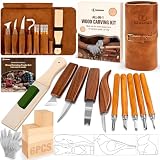
Our Top Picks
 Wood Carving Kit Whittling Kit: Wood Carving KnifeWiddle Kit6 x 4 x 8 inches2.3 PoundsCheck on Amazon

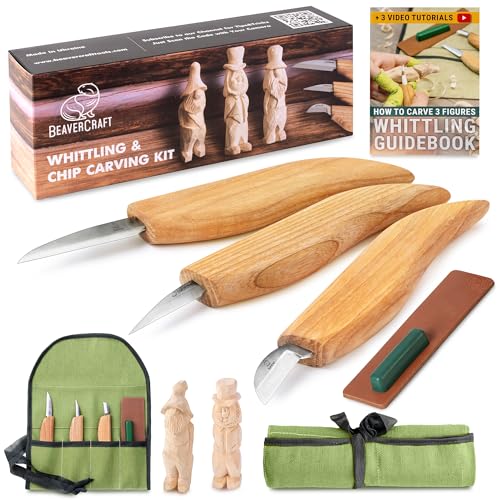


What's inside
As an Amazon Associate I earn from qualifying purchases. This post may contain affiliate links at no extra cost to you.
If you want the most dependable first set of whittling knives, the BeaverCraft S15 is a strong starting point: it pairs a detail knife, a chip knife and a roughing-style whittling knife with a leather strop and polishing compound so the blades stay sharp. Anyone who prefers a bigger multi-tool bag should look at the 24-piece and 25-piece kits, and anyone who wants fewer, better knives should consider the Flexcut three-knife set. A whittling knife set is a small group of fixed-blade knives built to shape wood by hand, with different blade shapes for removing stock, cutting clean curves and adding fine detail.
Contents
Quick List
- 24-Piece Whittling Kit with Templates – best for a first project kit with practice wood included
- Leather-Case Deluxe Whittling Kit – best for a gift-ready kit that stores neatly
- BeaverCraft S15 Whittling Kit – best for three core knives plus a strop
- SakerNeo 25-Piece Carving Kit – best for trying gouges and chisels alongside knives
- BeaverCraft Deluxe S18X Set – best for spoon carving and walnut-handled knives
- Flexcut Starter Set of 3 – best for a small set of high-carbon, ash-handled knives
Which One Is Right for You?
| If you… | Choose |
|---|---|
| want a few quality knives and a strop, not a pile of accessories | BeaverCraft S15 |
| are carving your first spoons and want a gouge in the box | BeaverCraft Deluxe S18X |
| prefer the fewest tools, with a high-carbon steel blade you will sharpen yourself | Flexcut starter set of 3 |
| want practice blocks and templates so you can start today | 24-piece kit with templates |
| need something that looks good as a present and stores in a case | Leather-case deluxe kit |
| want to explore knives, gouges and chisels before committing | SakerNeo 25-piece kit |
The simplest rule is that fewer knives with better edges beat a big kit of unknown blades, but a larger kit can be a fine way to learn what you like. Match the set to your first three projects, whether that is small figures, a spoon or simple decorative cuts.
All 6 Picks in Detail
1. 24-Piece Whittling Kit with Templates and Basswood Blocks – Best for a Ready-to-Start Kit
As an Amazon Associate we earn from qualifying purchases at no extra cost to you.

This unbranded listing is built around getting a beginner started on day one. In addition to the carving tools, the kit includes four templates and six basswood blocks, so there is something to carve straight away. Basswood is a soft, fine-grained wood widely used for learning because it cuts cleanly across and with the grain.
- 24 pieces, per the listing name
- Storage bag included
- Four templates
- Six basswood blocks
- Marketed for DIY beginners (the rest of the listing name is cut off)
Pros
- Practice wood and patterns remove the first obstacle for newcomers
- Bag keeps everything together for travel or storage
- A wide mix of pieces makes it easy to explore different cuts
Cons
- The piece count includes accessories, so the number of true knives may be modest; confirm on the page
- Steel type and blade lengths are not in the listing name
Versus the leather-case kit, this one leans on included practice wood rather than on presentation.
Most of the learning value in a kit like this is in the blocks and templates, because they let you practice a stop cut, a push cut and a pull cut on identical material. Plan on stropping the blades before your first session and again after about half an hour of carving, since factory edges on starter kits vary. Check whether a strop or compound is included on the listing page, because if it is not, you will want to add one.
One more consideration for the first set is how quickly you will outgrow it. A kit packed with templates is perfect for the first month, but you will probably want to move to your own wood, so look at whether the knives themselves feel good in the hand. If the blades are comfortable and take an edge after stropping, you can keep using them long after the blocks are gone.
2. Leather-Case Deluxe Whittling Kit – Best for a Gift-Ready Set

This kit is described as a deluxe woodworking hobby kit for beginners, adults and kids, packed in a leather case. It suits someone who wants an attractive, organized set to open at a birthday or keep on a shelf, with enough variety to try basic whittling and carving. The listing wording also leans toward relaxation, which fits the hobby for many people.
- Leather case for storage
- Whittling knife and carving tool selection
- Marketed for beginners, adults and kids
- Deluxe hobby kit positioning
- Exact tool count and steel are cut off in the listing name
Pros
- Case keeps tools organized and protects the edges
- Broad audience makes it a flexible gift
- Easy to store and transport
Cons
- Tool details are not clear from the name, so confirm what is in the box
- Kits aimed at all ages may include shorter or simpler blades
Pick this over the 24-piece kit if presentation and storage matter more than practice wood.
Because the listing mentions kids, treat young carvers as supervised users. Sharp knives need clear rules: sit down, keep the blade pointed away from yourself and anyone nearby, and wear a cut-resistant glove on the hand that holds the wood. A leather case is nice, but always dry and re-oil carbon steel blades before closing it, since leather holds moisture.
This is also a sensible set for gifting to a teenager or adult who has expressed interest but has never held a carving knife. A case, a short list of tools and a clear hobby identity do half the work. Pair it with a pack of basswood blanks and a cut-resistant glove if the kit does not already include them.
3. BeaverCraft S15 Whittling Kit – Best for Three Core Knives and a Strop
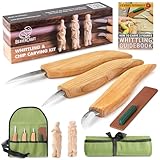
BeaverCraft focuses on carving tools, and the S15 is its entry-level whittling kit for beginners and kids. According to the manufacturer, it contains a detail knife, a chip carving knife and a roughing-type whittling knife, plus a leather strop, polishing compound, a canvas tool roll and a step-by-step guide. That covers the three jobs most beginners need: removing wood, cleaning up curves and adding small details.
- Detail knife, chip knife and sloyd or roughing-style whittling knife
- High-carbon steel blades, per manufacturer information
- Leather strop and polishing compound
- Tutorial material included
- Canvas tool roll for storage (confirm contents on the listing)
Pros
- Strop and compound are included, so you can maintain the edge
- Three distinct blade shapes cover most beginner tasks
- A focused set is easier to learn than a large mixed kit
Cons
- No gouge, so spoon bowls are out of reach
- Handles are plainer than the deluxe versions
It sits between the Flexcut starter set (fewer tools) and the S18X (more tools and walnut handles).
The workflow with this kit is simple: rough the shape with the larger knife, refine with the detail knife and use the chip knife for decorative notches. Strop after every session, and keep a small tin of oil handy for the blades. If you plan to carve mostly small animals, ornaments or letters, the S15 may be the only set you need for a long time.
Beginners often ask whether three knives are really enough. For small figures, spoons and ornaments they are, and the S15 proves the point by keeping the job simple. A useful habit is to label your first project in advance, such as a small bird or a wooden fork, and carve it with only the roughing and detail knives before reaching for the chip knife.
4. SakerNeo 25-Piece Carving Kit – Best for Exploring Gouges and Chisels
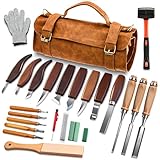
SakerNeo’s 25-piece kit comes with a leather storage bag and, according to the listing, includes gouges, chisels and knives. That mix suits a curious beginner who wants to know whether relief carving, chip carving or spoon work appeals before buying specialized tools. It is more of a carving kit than a pure whittling set, so it gives the widest range of cuts for exploration.
- 25 pieces, per the listing name
- Leather storage bag
- Includes gouges, chisels and knives
- Marketed as a whittling and carving kit
- Steel and handle details are not in the listing name
Pros
- Multiple tool types let you try different carving styles
- Bag keeps tools together
- Good fit for hobbyists who may move beyond knives
Cons
- Gouges and chisels need more sharpening skill than a simple knife
- With 25 pieces, quality may vary between tools; confirm what is included
Compared with the S15, this kit offers more variety but less guidance and fewer maintenance supplies unless the page lists them.
Gouges are sharpened differently from knives, using slip stones or a shaped strop, so plan on learning a second sharpening method. A mallet is often useful with chisels, and you should clamp work firmly rather than holding it in a hand that is near the edge.
With so many pieces, take the first session to sort the tools by job. Put the knives in one group, the gouges in another and the chisels in a third, and start with a knife only. Add the other tool types one at a time, so you learn how each one cuts before combining them on a single project.
5. BeaverCraft Deluxe S18X Set – Best for Spoon Carving and Walnut Handles

The S18X is BeaverCraft’s deluxe set with walnut handles and a spoon-carving focus. The manufacturer describes a roughing knife, a whittling knife, a sloyd knife, two chip carving knives, a detail knife, a spoon knife and a gouge, supplied with a leather tool roll, a strop and sharpening compound. Sources differ on the exact tool count, so confirm the contents on the listing page before buying.
- Walnut handles, per manufacturer information
- Includes spoon knife and gouge
- Blades listed as high-carbon steel
- Leather tool roll, strop and compound
- Large whittling kit positioning
Pros
- Covers whittling, chip carving and spoon carving in one box
- Strop and compound are included
- Walnut handles are comfortable and look the part
Cons
- More tools than a first project needs
- Tool count varies across descriptions, so check what ships
It is the natural step up from the S15 for anyone who wants a spoon knife and gouge.
Spoon carving uses a hooked blade to hollow the bowl, which is why this set stands out from the simpler kits. Work green or soft wood, keep a firm grip on the spoon blank and always carve away from your body.
A gouge and a different set of knives also let you try relief work, such as carving a simple leaf pattern into a flat board. Use light taps rather than heavy blows, keep both hands behind the cutting edge and let the sharp tool do the work. If you only want to whittle small figures, the added tools may sit unused, which is where the S15 makes more sense.
6. Flexcut Starter Set of 3 – Best for a Small Set of High-Carbon Knives

Flexcut is a long-standing brand in hand carving, and its starter set is the minimalist option here. The listing names three woodcarving knives with 1095 high-carbon steel blades and ergonomic ash handles. According to the manufacturer, the three are a cutting knife, a detail knife and a roughing knife, which is a classic trio for whittling.
- Three knives
- 1095 high-carbon steel blades, per the listing name
- Ergonomic ash wood handles
- Cutting, detail and roughing knife shapes, per manufacturer information
- Strop or compound inclusion: confirm on the listing
Pros
- Few, well-chosen tools make the learning curve simple
- High-carbon steel takes a keen edge
- Comfortable ash handles suit longer sessions
Cons
- High-carbon steel rusts if neglected
- No storage roll or practice wood in the listing name
Compared with the S15, it has similar scope, but you buy your own strop and practice wood.
Wipe the blades dry after each session and apply a light film of oil. A 1095 blade responds well to stropping, which often is the only maintenance needed for weeks of light use.
A set this small is easy to maintain, and that matters more than it sounds. Three knives can each get a proper edge and regular stropping, whereas a bag of twenty-plus pieces tends to leave half the tools dull. If you already own a strop, this may be the best value-for-learning option on the list.
Specs Compared
| Set | Contents (per listing) | Steel | Handle and storage | Extras |
|---|---|---|---|---|
| 24-Piece Kit with Templates | 24 pieces; confirm knife count | Confirm on listing | Storage bag | 4 templates, 6 basswood blocks |
| Leather-Case Deluxe Kit | Whittling and carving tools; count: confirm on listing | Confirm on listing | Leather case | Marketed for beginners and kids |
| BeaverCraft S15 | Detail, chip and whittling knives | High carbon (manufacturer) | Canvas tool roll | Strop, compound, tutorials |
| SakerNeo 25-Piece | 25 pieces including gouges, chisels, knives | Confirm on listing | Leather storage bag | Wide tool variety |
| BeaverCraft S18X | Multiple knives, spoon knife, gouge; count: confirm on listing | High carbon (manufacturer) | Walnut handles, leather roll | Strop, compound |
| Flexcut Starter Set of 3 | 3 knives | 1095 high carbon | Ash handles | Confirm strop on listing |
How We Chose These
This guide comes from desk research rather than workshop trials. We looked at the whittling and carving sets in the current catalog and weighed what each listing states: the number and type of knives, steel type, handle material, storage and included maintenance supplies. We gave weight to kits from brands that publish clear specifications, then separated true knife sets from multi-tool kits with extras. Where product names are cut off or silent on a detail, we flag it and point you to the product page rather than filling gaps with guesses.
What to Look For
Blade Shapes and What They Do
Most beginner sets revolve around three shapes. A roughing or sloyd knife has a longer blade for removing wood quickly, typically around two inches. A detail knife has a short, pointed blade, often around an inch or so, for eyes, fingers and tight corners. A chip carving knife has an angled tip for geometric cuts. A spoon knife has a curved blade for hollowing bowls. If you want a single all-purpose knife, a medium blade with a pointed tip covers most small projects. When you see a large piece count, check how many of the pieces are actually blades.
Steel and Edge Care
High-carbon steels such as 1095 take a very sharp edge and are easy to resharpen, but they rust if left damp. Stainless steels resist rust and are lower maintenance, though many hobbyists find they are slightly harder to get razor sharp. Whichever you choose, the edge matters more than the label. A dull knife is more dangerous than a sharp one because it needs more force and slips more easily. Plan to strop frequently, using a leather strop with polishing compound, and sharpen on stones only when stropping no longer restores the edge. A general guideline for carving knives is a bevel angle of roughly 15 to 20 degrees.
Handles and Grip
Handles should fill your palm without forcing the blade away from your hand. Ash and walnut are common in better sets. Look for smooth, finished wood with no sharp seams, and a shape that lets you rotate the knife in your grip. A handle that is too thin tires the hand; one that is too fat reduces control. Rounded handles are fine for pull cuts, while oval ones resist twisting in the hand during push cuts.
Safety Gear and Technique
Wear a cut-resistant glove on the hand that holds the wood, and consider a thumb guard when learning the push cut. Always cut away from your body, never toward a hand or leg, and keep your wood supported on a stable surface. Use a stop cut before a long slice so the knife does not run past the line you want. Sit down, keep the work in your lap with a cutting apron or a tabletop mat, and put the knife down when you are interrupted. Young carvers need an adult close by at all times. If a knife folds or the handle loosens, stop using it.
Sharpening Routine in Four Steps
First, inspect the edge under a bright light: a dull spot reflects light as a thin white line. Second, if the edge is only slightly dull, strop it on leather loaded with compound, laying the bevel flat and pulling the blade away from the cutting edge for ten to twenty strokes per side. Third, if stropping does not restore the edge, use a fine stone or a sharpening board, keeping the same bevel angle. Fourth, finish on the strop again to remove the burr. Always pull the edge away from you, never push into the leather, and keep your fingers clear of the blade.
Choosing a Set by Project
For small figures, ornaments and animals, a roughing knife plus a detail knife covers nearly everything. For decorative geometric patterns, add a chip carving knife. For spoons, scoops and bowls, look for a spoon knife or a hooked blade and a gouge. For relief carving on flat boards, gouges and chisels are the main tools and a knife plays a supporting role. If you do not yet know which interests you, start with a compact trio and add specialized tools when a project demands them.
Wood and Practice Plan
Basswood is the standard learning wood because it is soft, fine-grained and forgiving. Butternut and some pines are also used, while hardwoods like maple and oak are much tougher and best left for later. As a worked example, start with a two-inch cube and carve a simple chick: a rounded body, a small beak and two shallow eye cuts. That teaches roughing, shaping and detail in about an hour. Then move on to a small spoon blank if your kit includes a spoon knife.
Questions
What is the best wood for beginners to whittle?
Basswood is the most common recommendation because it is soft and has a tight, even grain. It carves easily in all directions and holds fine details well. Many beginner kits include basswood blocks for that reason.
How often should I strop my whittling knife?
Strop at the start of a session and again every 15 to 30 minutes of carving, or whenever the knife starts to drag. Frequent light stropping keeps an edge keen with very little effort. Only go to stones when stropping no longer brings the edge back.
Do I need a full kit or just a few knives?
A few knives are enough for most whittling: a roughing knife, a detail knife and a strop. Larger kits are useful if you want to try gouges or spoon carving. Choose by project rather than by piece count.
Are whittling kits safe for kids?
Some kits are marketed for children, but any real knife can cause serious cuts. Kids should be supervised closely, wear a cut-resistant glove and learn basic rules before starting. Check the manufacturer’s age guidance for the exact set.
How do I keep high-carbon steel from rusting?
Wipe the blade dry after use and apply a thin film of mineral oil or camellia oil before storing it. Avoid leaving blades in damp leather or a closed bag. Check for spots every few weeks and remove light rust with a fine abrasive pad.
What is the difference between whittling and wood carving?
Whittling usually means shaping wood with a knife alone, often by hand and without a mallet. Wood carving is broader and can include gouges, chisels and mallets. Many kits cover both, which is why the terms get mixed in product names.
Update History
- October 20, 2026 – Initial publication; product set drawn from current catalog listings.
- Check the product page for current specifications and availability before buying.
Sources
- Manufacturer product pages for BeaverCraft and Flexcut, covering knife types, steel and handle materials
- Retailer listing titles and specification fields for each set in this guide
- General hand-tool safety and sharpening guidance from woodcarving suppliers