Our Top Picks
What's inside
As an Amazon Associate I earn from qualifying purchases. This post may contain affiliate links at no extra cost to you.
- Top Pick: WEN 3923 16-Inch Variable Speed Scroll Saw
- Runner-up: WEN 3921 16-Inch Two-Direction Scroll Saw
- Also consider: RYOBI SC165VS 16-Inch Variable Speed Scroll Saw
The best scroll saw for a beginner is a 16-inch variable-speed model with easy blade changes, a tilting table and a work light. The WEN 3923 is the strongest starting point for most new scrollers because its easy-access blade change design removes the most frustrating part of learning the tool. The WEN 3921 is the budget-friendly alternative with a two-direction blade mount, the Shop Fox W1713 adds cast iron stability, the RYOBI SC165VS brings a long warranty from a familiar name, and the DEWALT DW788 is the premium step-up pick for beginners who already know they will scroll for years.
A scroll saw is usually the first stationary power tool a new woodworker buys for decorative work, and the learning curve is gentle when the machine is set up well. Blade changes happen constantly during fretwork, because every interior cut starts with threading the blade through a drilled hole. A saw that makes that step fast and tool-free keeps practice sessions moving, which is why blade change design and variable speed matter more for a beginner than raw power.
As an Amazon Associate, we earn from qualifying purchases.
Contents
Table of Contents
- Quick Picks
- WEN 3923 16-Inch Variable Speed Scroll Saw
- WEN 3921 16-Inch Two-Direction Scroll Saw
- Shop Fox W1713 16-Inch Variable Speed Scroll Saw
- RYOBI SC165VS 16-Inch Variable Speed Scroll Saw
- DEWALT DW788 20-Inch Variable Speed Scroll Saw
- How to Choose
- FAQ
- Conclusion
- Product and ASIN Reference
Quick Picks
| Product | Best for | Tier |
|---|---|---|
| WEN 3923 | Best overall for beginners | Budget |
| WEN 3921 | Two-direction blade on a budget | Budget |
| Shop Fox W1713 | Cast iron stability | Mid-range |
| RYOBI SC165VS | Warranty and brand support | Mid-range |
| DEWALT DW788 | Premium step-up pick | Premium |
WEN 3923 16-Inch Variable Speed Scroll Saw
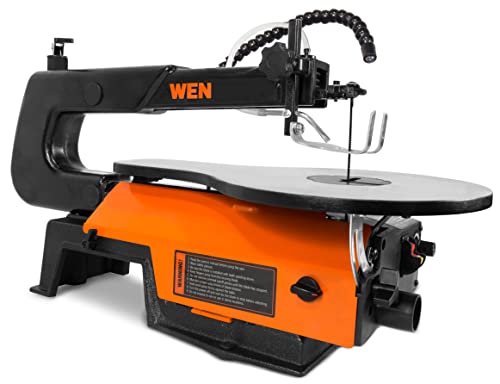
The WEN 3923 is built around the one feature beginners feel most: blade changes. Its easy-access design lets a new scroller swap or re-thread a blade quickly, so interior cuts in fretwork, puzzles and ornaments stop being a chore. That matters because early projects involve frequent blade swaps, and a saw that slows that process down tends to sit unused.
Beyond the blade system, the 3923 covers the core beginner checklist. The 16-inch throat handles the center of workpieces up to about 32 inches wide when the piece is rotated, which covers nearly every starter pattern book project. Variable speed from 550 to 1,600 strokes per minute lets a beginner slow down for tight turns and delicate stock, then speed up for straight runs in thicker material. The saw cuts stock up to 2 inches thick, so practice boards, hardwood blanks and stacked cuts are all within reach.
A flexible work light, a dust port and onboard storage round out a package that needs nothing extra to start scrolling beyond blades and wood. For a first scroll saw, the 3923 is the easiest recommendation on this list.
Specs
- Throat depth: 16 inches
- Cutting capacity: up to 2 inches thick
- Speed: variable, 550 to 1,600 strokes per minute
- Motor: 1.2 amp
- Table: bevels up to 45 degrees to the left
- Blades: accepts pinned and pinless blades, easy-access blade change design
- Extras: flexible LED work light, dust port, onboard blade storage
WEN 3921 16-Inch Two-Direction Scroll Saw
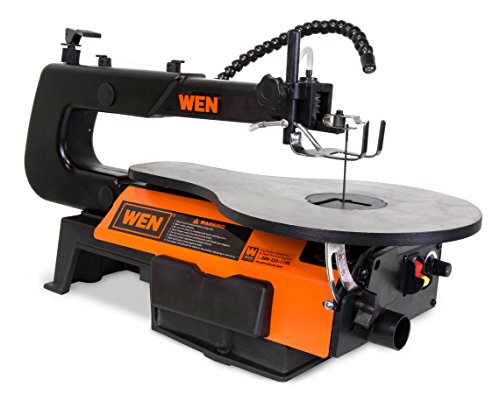
The WEN 3921 shares the same beginner-friendly foundation as the 3923 and adds one unusual trick: the blade mounts in two directions. In the standard position it behaves like any 16-inch scroll saw, but rotating the blade 90 degrees lets long boards pass through for extended ripping cuts that a fixed throat would normally block. Beginners who plan to cut long name signs or narrow strips will appreciate that flexibility.
The speed range starts lower than the 3923, running from 400 to 1,600 strokes per minute, which gives new users a gentler setting for very delicate work in thin plywood or veneer stacks. The 16 by 11 inch table bevels up to 45 degrees to the left for angled cuts, and the saw handles stock up to 2 inches thick with its 9/16 inch stroke.
A flexible work light, an air pump that blows dust off the cut line and a dust port are all included. At 25.5 pounds the 3921 is light enough to move off the bench when space is tight, though bolting it down is the published recommendation for reducing vibration at higher speeds. It sits in the budget tier and remains one of the most popular first scroll saws sold.
Specs
- Throat depth: 16 inches
- Cutting capacity: up to 2 inches thick
- Speed: variable, 400 to 1,600 strokes per minute
- Motor: 1.2 amp
- Stroke length: 9/16 inch
- Table: 16 by 11 inches, bevels up to 45 degrees to the left
- Blades: mounts in two directions, standard and 90 degrees
- Weight: 25.5 pounds
- Extras: flexible work light, air pump, dust port
Shop Fox W1713 16-Inch Variable Speed Scroll Saw
The Shop Fox W1713 is the pick for beginners who would rather buy a heavier, steadier machine once than upgrade later. Its cast iron construction puts about 35 pounds on the bench, and that mass works in the user’s favor: cast iron absorbs vibration instead of passing it into the workpiece, which helps keep a fine blade on the line during slow, careful cuts.
The variable speed range of 550 to 1,650 strokes per minute is the widest top end among the 16-inch saws here, and the saw accepts both pin-end and plain-end blades, so beginners can start with easy pinned blades and move to finer pinless blades as their patterns get tighter. The table tilts up to 45 degrees for bevel cuts and compound work.
A gooseneck work lamp is fitted in place of a flexible light, which many users prefer because it stays exactly where it is aimed. The 1/8 horsepower motor is modest on paper but well matched to the saw’s cutting capacity, and the overall design has been sold for many years with a reputation for simple, durable mechanics. This is the mid-range choice for a beginner setting up a permanent scrolling station.
Specs
- Throat depth: 16 inches
- Speed: variable, 550 to 1,650 strokes per minute
- Motor: 1/8 horsepower, 120 volt
- Construction: cast iron body and table
- Table: tilts up to 45 degrees
- Blades: accepts pin-end and plain-end (pinless) blades
- Extras: gooseneck work lamp, dust port
- Weight: about 35 pounds
RYOBI SC165VS 16-Inch Variable Speed Scroll Saw
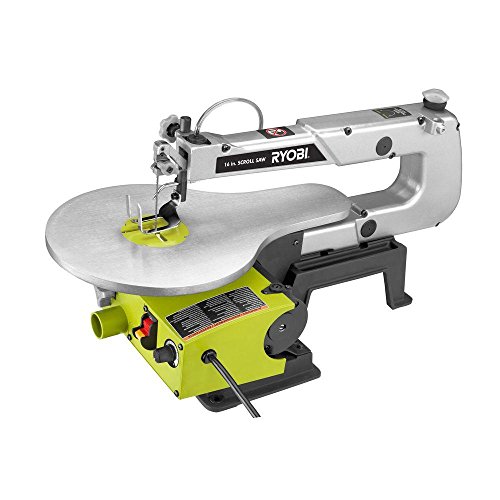
The RYOBI SC165VS appeals to beginners who want a familiar tool brand and the longest warranty in this group. RYOBI backs the saw with a 3-year limited warranty, and the brand’s wide retail presence makes blades, support and documentation easy to find for a first-time owner.
The specification sheet is straightforward and well matched to learning the craft. A 1.2 amp motor drives variable speeds from about 550 to 1,600 strokes per minute, the 16-inch throat covers standard pattern sizes, and the saw cuts stock up to 2 inches thick. The cast aluminum table keeps the weight to 27 pounds, so the saw is manageable to store between sessions while still feeling planted during use.
RYOBI keeps the control layout simple, which suits a beginner who wants to focus on feeding technique rather than machine setup. There is no integrated work light, so plan on good bench lighting or an add-on lamp. For new scrollers who value warranty length and brand support over extra features, the SC165VS is a sensible mid-range pick.
Specs
- Throat depth: 16 inches
- Motor: 1.2 amp, 120 volt, 144 watt
- Speed: variable, 550 to 1,600 strokes per minute
- Cutting capacity: up to 2 inches thick
- Table: cast aluminum
- Weight: 27 pounds
- Warranty: 3-year limited warranty
DEWALT DW788 20-Inch Variable Speed Scroll Saw
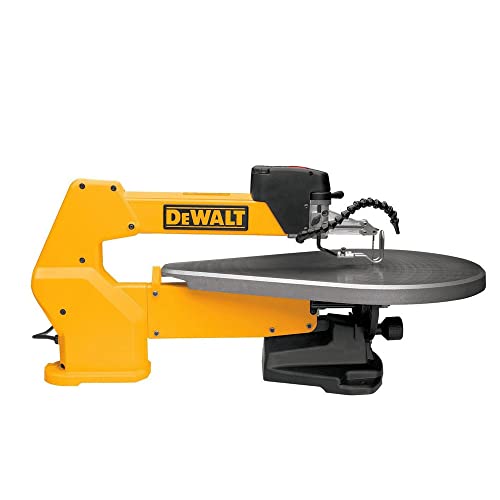
The DEWALT DW788 is the premium option, and it earns that place through its arm design. The double parallel-link arm keeps the blade moving in a near-vertical path and dramatically reduces vibration and noise compared with entry-level saws. For a beginner, less vibration means the blade follows the pattern line instead of wandering, and results improve faster.
The 20-inch throat is the largest here, opening up bigger panels, wide signs and large fretwork panels that a 16-inch saw cannot reach the center of. Variable speed runs from 400 to 1,750 strokes per minute, controlled at the front of the upper arm along with the on/off switch and the blade-tension lever, so adjustments happen without reaching around the machine. Tool-free blade clamps make changes quick, and the table tilts 45 degrees in both directions, left and right, which no other saw on this list offers.
At 56 pounds this is a fixed-station saw, not a portable one, and it sits firmly in the premium tier. Beginners who are confident scrolling will become a long-term hobby often choose the DW788 first and never need to upgrade. DEWALT backs it with a 3-year limited warranty.
Specs
- Throat depth: 20 inches
- Motor: 1.3 amp
- Speed: variable, 400 to 1,750 strokes per minute
- Arm design: double parallel-link, reduced vibration and noise
- Blade changes: tool-free blade clamps
- Table: tilts 45 degrees left and right
- Cutting capacity: up to 2 inches thick
- Weight: 56 pounds
- Warranty: 3-year limited warranty
How to Choose
Start with throat depth, because it sets the largest workpiece the saw can reach the middle of. A 16-inch throat is the standard beginner size and covers most patterns, ornaments and small signs. Move to a 20-inch saw only if large panels are already on the project list.
Variable speed is the second feature to insist on. Slow settings give control in tight curves and thin stock, while faster settings clear waste in thicker hardwood. Every saw on this list has it, and a fixed-speed saw is best avoided for learning.
Blade changes shape the whole experience. Fretwork requires removing and re-threading the blade for every interior cut, so tool-free or easy-access blade systems save real frustration. Beginners usually start with pinned blades because they seat quickly, then adopt pinless blades for finer detail once basic control is in place. Choosing a saw that accepts both types protects that progression.
Finally, think about stability and setup. Heavier cast iron saws vibrate less, lighter saws store more easily, and any saw benefits from being bolted to a solid bench. Add a bright work light and dust blowing or extraction, and a beginner setup is complete. Match the tier to commitment: budget saws teach the craft well, mid-range saws add stability and support, and the premium tier buys smoothness that lasts for decades of projects.
FAQ
What size scroll saw is best for a beginner?
A 16-inch variable-speed scroll saw is the best starting size for most beginners. It reaches the center of workpieces up to about 32 inches wide when the piece is turned, which covers the vast majority of published beginner patterns, while staying compact and affordable. A 20-inch saw only becomes necessary for large panels.
Should a beginner use pinned or pinless blades?
Start with pinned blades, because they install quickly and stay seated while basic feeding technique develops. Move to pinless blades once patterns get finer, since pinless blades come in smaller sizes, cut tighter turns and fit through smaller drilled entry holes for interior fretwork cuts.
What speed should a beginner run a scroll saw at?
Beginners should start in the slower half of the speed range, roughly 600 to 900 strokes per minute, for tight curves and thin stock. Slower speeds reduce blade breakage and burning while control develops. Faster settings suit straight cuts and thicker hardwood once feeding feels steady.
How thick can a beginner scroll saw cut?
The saws in this roundup are rated to cut stock up to 2 inches thick. In practice, beginners get cleaner results in material between 1/4 inch and 3/4 inch thick, which matches most ornaments, puzzles and signs. Thicker cuts simply need a slower feed rate and a coarser blade.
Conclusion
For most beginners, the WEN 3923 is the right first scroll saw: its easy-access blade changes, variable speed and work light remove the friction that stops new scrollers from practicing. The WEN 3921 matches it closely on value and adds a two-direction blade mount for long cuts. The Shop Fox W1713 brings cast iron calm to a permanent bench, the RYOBI SC165VS adds brand support and a 3-year warranty, and the DEWALT DW788 is the premium machine a committed beginner can grow into for years. Pick the tier that matches how sure the hobby feels, keep blades fresh, and start with simple patterns that build control quickly.
Related guides
More from Amazon
Programs that pair well with the guide above. Offers and eligibility are set by Amazon and may change.
A free business account with business pricing and bulk-buying tools for work, shop or home office.
Create a business accountFree shipping on eligible items, Prime Video and more. Eligible new members can start with a free trial.
Start a Prime free trialAudiobooks and podcasts to listen to on the go. Eligible new members can start with a free trial.
Try Audible freeAd-free music streaming. Eligible new subscribers can start with a free trial.
Try Music Unlimited freeAs an Amazon Associate we earn from qualifying purchases.