What's inside
As an Amazon Associate I earn from qualifying purchases. This post may contain affiliate links at no extra cost to you.
Contents
Best Concrete Vibrators for Construction
The best concrete vibrator for most small crews and serious DIYers is a cordless 1-1/4 in. to 1-1/2 in. poker vibrator on an 18V/20V battery platform — typically the Milwaukee MX FUEL or DeWalt 20V MAX pencil vibrator if you’re already on those batteries, or a corded 1300W unit like the Makita XRV02-style equivalent (Makita’s cordless X2) if you’re pouring near power. For one-off fence posts and footings, a budget electric handheld under $100 does the job. Below: the specs that actually matter, a head-to-head comparison, and picks by pour type.
What Vibration Specs Actually Mean
Concrete vibrators remove entrapped air so the mix consolidates fully around rebar and into form corners. Three numbers determine whether a unit fits your job:
As an Amazon Associate we earn from qualifying purchases at no extra cost to you.
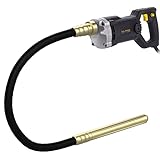


- Vibration frequency (VPM/Hz): Effective consolidation needs roughly 9,000–14,000+ VPM (150–230 Hz). Low-frequency units (under 8,000 VPM) leave honeycombing in stiff mixes; higher frequencies suit low-slump structural concrete.
- Head diameter: The radius of influence is roughly 8–10× head diameter. A 1 in. (25mm) head consolidates about a 16–20 in. circle per dip; a 2 in. head covers slabs far faster but won’t fit between tight rebar in columns and walls.
- Shaft length: Must reach the bottom of your deepest lift. A 4 ft shaft handles slabs and footings; walls and columns over 4 ft need 7–14 ft shafts or multiple pours in lifts.
Quick Comparison: Top Picks by Type
| Model / Type | Power | Head Dia. | Shaft Length | Frequency | Weight (tool) | Typical Price | Best For |
|---|---|---|---|---|---|---|---|
| Milwaukee MX FUEL Backpack Vibrator | Battery (MX FUEL) | 2 in. heads (kit options) | 7–14 ft | ~11,500–12,500 VPM | ~14 lbs (backpack) | $1,600–$2,200 | Slabs, walls, all-day pours |
| Makita XRV01/XRV02 (18V X2) | Battery (36V) | 1 in. | 4 or 8 ft | ~13,000 VPM | ~11 lbs | $450–$700 (kit) | Footings, ICF walls, columns |
| DeWalt DCE531 20V MAX Pencil Vibrator | Battery (20V) | 1-1/8 in. | 4 ft | ~14,000 VPM | ~8 lbs | $350–$550 | Small pours, tight rebar |
| OZTEC / Wyco corded electric + flexible shaft | 120V AC | 1–2-1/2 in. (swap heads) | 7–21 ft shafts | 10,000–12,500 VPM | ~12–18 lbs | $700–$1,400 | Contractors, interchangeable heads |
| Northrock / Honda gas backpack | Gas engine | 1-1/2–2-3/8 in. | 10–21 ft | ~10,500–12,000 VPM | ~25–30 lbs | $900–$1,500 | Remote sites, large slabs |
| Budget corded handheld (generic 1100–1500W) | 120V AC | 1–1-3/8 in. | 4–6 ft | 11,000–13,000 VPM | ~12–15 lbs | $60–$150 | One-off posts, footings |
Pick by Your Situation
| Your Situation | Recommendation | Why |
|---|---|---|
| DIY, a few pours per year, under $150 | Budget corded handheld, 1-1/4 in. head | Cost per use stays low; no battery platform needed |
| Already own DeWalt/Makita batteries | Matching cordless pencil vibrator | Tool-only price; true portability on ladders and in forms |
| Small crew pouring slabs weekly | MX FUEL backpack or corded OZTEC | Bigger head + longer shaft = faster coverage, less labor |
| Tall walls, columns, ICF | 8–14 ft shaft, 1–1-1/4 in. head | Reach bottom lifts; slim head fits between rebar |
| No power on site, remote pours | Gas backpack or cordless | Gas runs all day with refueling; cordless for ~30–45 min/pack |
How Coverage Math Affects Your Choice
A 1 in. head consolidates roughly 2 sq ft per insertion and must be dipped on a grid every 12–18 in., held 5–15 seconds per point. On a 10×10 ft slab, that’s ~50+ insertions — about 10–15 minutes of vibrating. A 2 in. head roughly doubles the radius of influence, cutting insertions in half. If you’re pouring anything over ~150 sq ft regularly, the larger head pays for itself in labor within a few pours.
Runtime math for cordless: A 1 in. pencil vibrator typically runs 20–40 minutes continuous per 5–8Ah battery — enough for one 1–2 yard pour. Plan one charged pack per cubic yard as a rule of thumb, plus a spare.
Using It Correctly (Where Most Pours Go Wrong)
- Insert vertically, pull out slowly (~3 in./second) so the hole closes behind the head. Yanking it out fast leaves a void channel.
- Vibrate in lifts under ~18 in. deep and dip 4–6 in. into the previous lift to knit layers together.
- Don’t drag the head sideways to move concrete — that causes segregation. Place concrete near its final position first.
- Stop when the surface goes glossy and air bubbles stop rising. Over-vibration bleeds water to the top and weakens the finish; 5–15 seconds per point is typical.
- Never let the head touch forms — it leaves burn marks and can loosen form ties.
Ownership Realities: What Wears First
- Flexible shafts are the consumable. Grease the inner core regularly (per the manual — usually every 20–50 hours) or it overheats and snaps. Replacement shafts run $80–$250.
- Heads wear at the tip from aggregate abrasion. Inspect after every few pours; a worn head loses amplitude before it fails visibly.
- Cleaning matters most: rinse the head and shaft immediately after each pour. Hardened concrete on the head kills vibration transfer and corrodes the casing. Never submerge the motor unit.
- Common mistake: buying a head too big for the rebar spacing. Measure your tightest gap and subtract an inch — the head must pass freely, not be forced.
- Gas units: expect spark plug, air filter, and carb maintenance like any small engine; budget ~$30/year in consumables plus fuel.
FAQ
Is a concrete vibrator really necessary for small pours?
For anything structural — footings, columns, walls — yes. Honeycombed concrete can lose 30%+ of its strength. For fence posts and small pads, a rebar rod worked up and down achieves partial consolidation, but a $70 vibrator is cheap insurance.
Cordless vs. corded vs. gas?
Cordless wins on portability and setup speed but limits runtime to battery capacity. Corded is cheapest per hour of runtime for continuous work near power. Gas suits remote sites and all-day commercial pours where batteries would need constant swapping.
What size head for rebar-heavy columns?
1 in. or smaller pencil head. Check that it clears your minimum bar spacing with room to insert and withdraw vertically.