What's inside
As an Amazon Associate I earn from qualifying purchases. This post may contain affiliate links at no extra cost to you.
The short answer: choose a garden arbor by the job you want it to do. For a grand entrance with a gate, pick a sturdy wood or steel arbor with deep footings. For a pretty frame over a path that carries climbing roses or clematis, a lighter metal or cedar arbor is plenty. For a seasonal or event structure, a lightweight vinyl or powder-coated kit is easiest. Whatever the style, favor a wide opening (at least four feet inside), a height that clears you comfortably with plants in full growth, and legs that are properly anchored, because the biggest failure of arbors is not rot but wind.
What an arbor is, and what it is not
An arbor is a freestanding garden frame, usually two uprights joined by an overhead span, that marks a transition: a gate to the backyard, the start of a path, the entrance to a vegetable garden or the spot where a bed ends and a lawn begins. Many arbors have trellis sides for climbing plants, and some include a seat or a hinged gate.
People use the words arbor, pergola, trellis and arch loosely, but the differences help when you shop. A trellis is a flat panel of lattice. An arch is a curved frame, narrower and often metal. A pergola is larger, with rafters that create shade over a patio or seating area. An arbor sits between them in scale: it is usually walk-through, narrow in depth and meant to frame a view or a plant rather than shelter a table. Knowing which you actually need keeps you from buying a delicate arch where a sturdy structure is required or an oversized pergola where a modest entry will do.
Be clear about the purpose first. An arbor that carries a heavy wisteria or grape vine must be built like a small structure, while one that merely frames a path can be light. That single decision narrows your choice of style and material more than any other.
Arbor styles
Classic flat-top arbors
Two posts, a flat or slightly arched top beam and cross rafters. This is the most common wooden form, and it offers the most overhead support for climbers. It suits traditional gardens and is easy to build or assemble.
Arched and gothic-top arbors
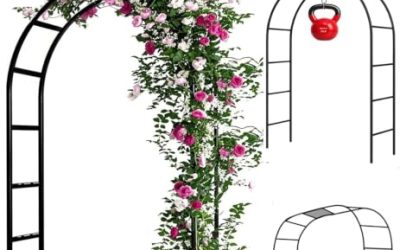
The curved or pointed top softens the look and sheds snow and rain a little better. Metal versions are very common, and wooden ones usually cost more to produce because of the curved parts. They look elegant with roses.
Gated arbors
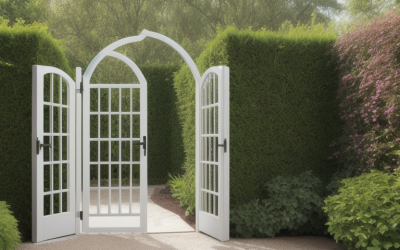
These include a hinged gate between the posts, turning the arbor into an actual entrance. The gate adds side load, so posts need to be larger and set deeper. A gate also demands square posts and a level threshold so it swings freely.
Arbors with benches
A built-in seat makes the arbor a destination rather than a passage. They are heavier and wider, and the bench needs a firm, level base. Check the seat rating if more than one person will sit.
Wide or double arbors and arbor-pergola hybrids
Wider versions span a path with room for two people, or a pair of beds. Their longer spans need stronger beams, so be wary of thin lumber over a wide opening.
Event and temporary arbors
Lightweight frames for weddings or seasonal décor. They are not meant for heavy plants or windy sites unless secured well.
| Style | Best use | Strength demand | Notes |
|---|---|---|---|
| Flat-top | Climbing plants over a path | Moderate | Simple and sturdy |
| Arched or gothic | Cottage and rose gardens | Low to moderate | Softer look; many metal options |
| Gated | Garden or yard entrances | High | Needs deep footings and square posts |
| With bench | Seating nook | High | Heavier; needs a level base |
| Wide or hybrid | Broad paths, two beds | High | Check beam size over long spans |
| Event or temporary | Weddings, seasonal use | Low | Needs ballast or stakes against wind |
Materials compared
Cedar and other rot-resistant woods
Cedar and redwood resist decay and insects naturally and are comfortable to work with. They weather to gray unless sealed. Their weak point is the portion of the post in or near the ground, which is where any wood will fail first.
Pressure-treated lumber
Ground-contact-rated treated lumber is the standard choice for posts that go into the soil. It is heavy and may twist as it dries. Use only lumber rated for ground contact for the buried parts, and follow label guidance for handling. Around edible plants, avoid old railroad ties and other creosote-treated timber, which are unsuitable for food gardens.
Powder-coated steel and wrought iron
Steel gives slender, graceful lines and carries climbers well. The coating must stay intact, because scratches rust. Hollow tube frames can bend under the weight of a mature vine, so check thickness.
Aluminum
Light, rustproof and easy to move. It can be less rigid and may need extra anchoring in wind.
Vinyl and composite
These need almost no upkeep and never need painting. They can flex, and white vinyl can yellow or chalk over many years. Look for internal reinforcement or metal inserts in larger models.
Bamboo and rustic branch arbors
Beautiful and inexpensive but short-lived. Best for temporary or light-duty use.
| Material | Durability | Maintenance | Weight | Best with |
|---|---|---|---|---|
| Cedar or redwood | High above ground | Seal or stain every few years | Light to medium | Roses, clematis, vines |
| Ground-contact treated pine | High | Moderate | Heavy | Posts and heavy plants |
| Steel | High if coated | Touch up scratches | Heavy | Roses, gates |
| Aluminum | High | Very low | Light | Light vines |
| Vinyl or composite | High | Very low | Medium | Modest climbers |
| Bamboo or branches | Low | High | Light | Annual climbers, events |
How to choose
Begin with plants and purpose. Sweet peas and beans make a seasonal screen on a light frame. Roses and clematis want sturdy support with horizontal bars to tie to. Wisteria and mature grapes are heavy and can crush a flimsy arbor, so they call for thick posts and a robust top. If you want a gate, favor wood or steel with substantial posts.
Next, look at style and surroundings. A formal brick path suits a symmetrical, painted arbor; a cottage garden suits weathered wood or iron. Match the arbor to the house or fence color rather than trying to make it a loud focal point.
Think about climate and wind. In windy or snowy regions, pick a heavier frame and plan deep anchoring. In very wet climates, favor metal or rot-resistant wood. And weigh your tolerance for maintenance: a painted wood arbor looks wonderful but needs recoating, while aluminum or vinyl asks for little.
Features that matter
- Interior width. Four feet or more lets two people pass and leaves room for foliage.
- Overhead clearance. Aim for at least seven feet inside so plants do not brush heads in later years.
- Climbing surfaces. Lattice, horizontal slats or wire give plants something to grip. Smooth tubular metal is hard for many climbers to hold without ties.
- Post thickness. Thicker posts and braces resist racking. Corner brackets add stiffness.
- Anchoring options. Look for post bases that bolt to concrete, spikes for soil or holes for setting posts.
- Hardware quality. Exterior-rated screws and bolts prevent streaks and failure.
Sizing and placement
Scale the arbor to what it frames. Over a narrow path, an arbor around four feet wide and seven to eight feet tall reads as proportionate. Over a wide gate or double border, go wider, but remember that span and strength trade off. Depth, the distance from front to back, is usually between one and two feet for a simple arbor and more for models with seats.
Leave room for plants. A rose or clematis grows thick over time, so a path edge that seems wide today may feel tight in five years. Also leave clearance on both sides for mowing or for a wheelbarrow to pass.
Place it where it makes sense visually: at a break in a fence or hedge, at the start of a path, or centered on a view so the frame draws the eye. Avoid placing it so that morning sun is blocked from a bed that needs it, and avoid tree roots, which make footings difficult. Keep it a sensible distance from overhead power lines and from the house if you plan to train heavy plants that might stress siding or gutters.
Installation, footings and anchoring
Before you dig, call your local utility locating service, which in many places is free and legally expected, so that buried gas, electric, water, sewer and communications lines are marked. Do not guess. Mark the arbor footprint, then check for irrigation lines you installed yourself, which will not appear on any utility map.
Also check local rules. Many places exempt small garden structures from permits, but height limits, setback rules and homeowner association covenants can still apply, particularly for taller or gated structures near property lines. A quick call or look at the rules before you buy is cheaper than moving an arbor later.
For the most secure installation, set posts in the ground. Dig holes below the frost line where frost is a concern and deep enough that roughly a third of the post length is buried for a tall structure. Place gravel at the bottom for drainage, set the post plumb, brace it and backfill with compacted soil or concrete. For concrete, shape the top so water runs away from the post instead of pooling around it. Let it cure per the manufacturer’s directions before adding load.
On a patio or deck, use surface-mount post anchors bolted into concrete with suitable anchors, or fixings into deck framing, never just into the decking boards. On soil, ground spikes can hold a light arbor, but they are weak in wind and loose soil. For lightweight kits, tie down with extra stakes or weight the legs. Level each post with a spirit level in two directions, and check square by measuring diagonals. Tighten bolts after a few weeks, as wood settles.
Treat the structure as a sail. A lattice arbor covered in leaf catches more wind than it appears to, so anchoring should be generous rather than minimal.
Plants, care and safety
Choose plants to match the strength of the frame. Light, annual climbers such as sweet peas and runner beans suit any arbor. Climbing roses and clematis need a sturdy surface and regular tying in. Honeysuckle and jasmine are vigorous and will need pruning. Wisteria is beautiful but very heavy and can twist and break thin frames, so reserve it for a very solid structure and plan on regular pruning. Be mindful of thorny roses over a path where people walk, and of plants that attract many bees near a seating spot if anyone is allergic.
For food, a grape or hardy kiwi on a stout arbor makes a productive shade. If you grow edibles over the arbor, avoid preservatives or finishes not intended for gardens, and let new finishes cure. Many gardeners choose cedar or a plant-friendly sealant for that reason. Wear gloves and eye protection when drilling or cutting treated lumber and wash up afterward.
Keep the structure healthy. Seal or paint wooden arbors on schedule, paying attention to end grain and joints. Touch up scratches on metal promptly. Prune climbers so air flows through the framework, because dense wet foliage keeps wood damp. Check fasteners each spring and after storms. Remove heavy snow from light arbors. If a post has softened at ground level, replace it before it fails. Never allow children to climb an arbor, which is not designed as play equipment.
Common mistakes
- Underestimating plant weight. A mature vine can exceed the strength of a light frame.
- Skipping anchoring. Arbors blow over more often than they rot.
- Burying untreated wood. Use ground-contact material below grade.
- Making the opening too narrow. Foliage shrinks the usable width.
- Digging without a locate. Buried utilities are a real hazard.
- Ignoring local rules. Height and setback limits can force a redo.
- Choosing smooth tubes for climbers without ties. Many plants cannot grip them.
Who should choose what
| If you want… | Consider | Reason |
|---|---|---|
| A romantic rose entrance | Arched steel or cedar arbor | Graceful shape, good tie points |
| A working garden gate | Heavy wood or steel gated arbor | Resists side load from the gate |
| Low maintenance | Aluminum or reinforced vinyl | No painting or sealing |
| A wedding or event backdrop | Lightweight kit with ballast | Easy to set up and take down |
| A seat among the plants | Arbor with bench on a level base | Creates a destination |
| Heavy vines such as wisteria | Large-section wood on deep footings | Needs real structural strength |
| A woodworking project | Build in cedar with mortise or bolted joints | Custom size and fit |
To compare dimensions and weight limits, you can browse garden arbors and match the listed opening width and height to your measured space.
Checklist
- Decide the main purpose: entrance, path frame, seating or event.
- Pick the climbing plants first, then match frame strength.
- Measure the planned spot, including clearance for growth.
- Call the utility locating service before digging.
- Check permit, setback and HOA rules.
- Choose ground-contact material for any buried posts.
- Verify an interior width of about four feet or more.
- Plan footings or bolt-down anchors, not just spikes.
- Select exterior-rated fasteners and a plant-safe finish.
- Schedule yearly inspection and recoating.
Frequently asked questions
What size garden arbor is best?
For a walk-through path, an opening of about four feet wide and seven to eight feet tall is a comfortable baseline. Go wider for two-person paths or double borders, and plan stronger beams as the span grows.
Do I need a permit to install an arbor?
Often no, since small garden structures are commonly exempt, but this varies. Height limits, setbacks and HOA rules can apply, so check with your local office or association before building.
How deep should arbor posts be set?
For a tall structure, a common guideline is to bury about a third of the post length, deeper where frost is a concern. Follow local guidance and the manufacturer’s directions, and use gravel for drainage.
Is wood or metal better for an arbor?
Neither wins everywhere. Wood is sturdy, warm and easy to repair; metal is slender and long-lived if coated well. Choose by plant weight, style and how much upkeep you want.
Which plants suit a garden arbor?
Roses, clematis, honeysuckle, jasmine, grapes, hardy kiwi, beans and sweet peas are common. Wisteria needs an especially strong structure.
Can I use pressure-treated wood for an arbor?
Yes, and ground-contact-rated lumber is a good choice for buried posts. Follow the label, wear gloves when cutting and avoid creosote-treated timbers around food plants.
How do I keep an arbor from blowing over?
Anchor posts in concrete or bolt them to a solid base, brace until set and avoid relying on short spikes alone. Prune dense foliage that acts like a sail.
How long does an arbor last?
It depends on material, climate and care. Well-maintained rot-resistant wood and coated metal can last many years, while untreated softwood and bamboo wear out much sooner.
Conclusion
A good arbor starts with a clear purpose, a realistic view of the plants it will carry and a site that has been checked for utilities and local rules. Choose a style and material that suit your climate and upkeep tolerance, allow generous width and height, and anchor it as if a storm is coming. When you are ready to shop, look at cedar arbors or a metal arbor with a gate, then compare dimensions against the spot you measured.
Disclosure: As an Amazon Associate, we earn from qualifying purchases made through links on this page, at no extra cost to you.
Related guides
More from Amazon
Programs that pair well with the guide above. Offers and eligibility are set by Amazon and may change.
A free business account with business pricing and bulk-buying tools for work, shop or home office.
Create a business accountFree shipping on eligible items, Prime Video and more. Eligible new members can start with a free trial.
Start a Prime free trialAudiobooks and podcasts to listen to on the go. Eligible new members can start with a free trial.
Try Audible freeAd-free music streaming. Eligible new subscribers can start with a free trial.
Try Music Unlimited freeAs an Amazon Associate we earn from qualifying purchases.