What's inside
As an Amazon Associate I earn from qualifying purchases. This post may contain affiliate links at no extra cost to you.
Contents
Best Lightweight Vacuums for Hardwood and Carpet
The best lightweight vacuums for hardwood and carpet are usually cordless stick vacuums with a powered brush-roll that can be switched off, but the right choice depends on whether you value low weight, deep rug cleaning, quiet operation, or long runtime most.
A vacuum that feels effortless on bare flooring may lack the agitation needed for medium-pile carpet. Conversely, a powerful carpet cleaner can feel awkward on stairs and may scatter debris across hardwood unless its brush roll can be controlled. The comparisons below focus on the details that matter in daily ownership: carry weight, floorhead movement, hard-floor safety, usable battery life, filtration, and storage.
As an Amazon Associate we earn from qualifying purchases at no extra cost to you.
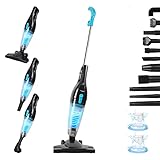


Quick comparison: lightweight vacuum specifications
Weights and runtimes are manufacturer-published figures or commonly listed specifications. Battery life is normally measured in a low-power mode; powered-floorhead operation generally reduces it.
| Vacuum | Approx. weight | Runtime claim | Dust capacity | Best fit |
|---|---|---|---|---|
| Bissell Featherweight 2033 | 2.6 lb | Corded | 0.67 L | Lowest-cost quick cleaning on hard floors and low rugs |
| Eureka RapidClean Pro cordless | About 5.3 lb | Up to 40 minutes | 0.7 L | Budget cordless cleaning in smaller homes |
| Shark Stratos Cordless | About 8.9 lb | Up to 60 minutes | About 0.7 L | Homes needing stronger carpet pickup and a flexible wand |
| Dyson V8 | 5.6 lb | Up to 40 minutes | 0.54 L | Simple, compact cordless cleaning at a midrange price |
| Dyson V12 Detect Slim | 5.2 lb | Up to 60 minutes | 0.35 L | Frequent cleaning where low hand weight matters |
| Miele Classic C1 canister | About 10.6 lb for the canister | Corded | 4.5 L bag | Long sessions, quiet operation, and excellent tool storage |
These numbers are not directly interchangeable. A cordless stick’s listed weight may include its wand and floorhead, while a canister’s figure usually refers only to the canister body. With a canister, you carry the body separately and pull it behind you, so its handling feels different rather than simply heavier.
Best picks by situation
Best for the lightest possible cleaning: Bissell Featherweight
The corded Bissell Featherweight 2033 is difficult to beat for short jobs because it weighs roughly 2.6 pounds and converts into a handheld vacuum. It is particularly useful for crumbs, workshop debris, entryways, and smooth floors. Its limitations are just as important: it has a basic floor nozzle, no cordless freedom, and less effective agitation than a full-size powered brush roll. Choose it for frequent touch-ups, not as the only vacuum in a home with thick carpet.
Best lightweight cordless balance: Dyson V8
The Dyson V8 remains a practical middle ground. At about 5.6 pounds in its complete cleaning configuration, it is light enough for stairs and overhead edges while offering more useful agitation than an ultra-basic stick vacuum. Its compact bin fills quickly in homes with pets or dusty rugs, and the quoted 40-minute runtime applies to lower-power use. Expect substantially less time when using the motorized head at higher power.
Its main ownership advantage is a broad ecosystem of replacement filters, batteries, and attachments. Its main drawback is age: newer models offer better dust sensing, more efficient motors, or larger controls, but usually cost more.
Best for the lowest hand fatigue: Dyson V12 Detect Slim
The V12 Detect Slim weighs about 5.2 pounds and uses a smaller, slimmer floorhead than many full-size cordless models. That makes it easy to steer around chair legs and carry between floors. It is a strong choice for hardwood, low-pile carpet, and frequent maintenance cleaning.
The small 0.35-liter bin is the trade-off. If your floors collect sawdust, pet hair, or tracked-in grit, you may empty it during every session. Its quoted 60-minute runtime is a maximum figure, so plan around a shorter powered-head runtime in normal use. The built-in particle display can be useful for showing where cleaning is still needed, but it is not a substitute for checking the floorhead and filter.
Best for more demanding rugs: Shark Stratos Cordless
The Shark Stratos Cordless is heavier than the Dyson stick models, at approximately 8.9 pounds, but that extra mass accompanies a more substantial floorhead and stronger carpet-oriented design. It is better suited to homes with medium-pile rugs, frequent pet hair, and larger debris.
Its brush-roll system is useful on mixed flooring because the cleaner can adjust agitation rather than treating delicate hardwood and carpet identically. The flexible wand is also helpful under furniture. The compromise is maneuverability: the head can feel less nimble in tight rooms, and carrying it up stairs is more noticeable than carrying a 5-pound stick vacuum.
Best for long, quiet sessions: Miele Classic C1
A Miele Classic C1 canister vacuum is not lightweight in the hand, but it can be the easiest option for cleaning an entire home because the canister rolls behind you and uses a large 4.5-liter bag. It is a sensible choice when you prefer corded suction, do not want to manage battery charging, or need a generous capacity for frequent cleaning.
For hardwood, use a parquet or hard-floor tool with soft bristles. For rugs, select the appropriate carpet tool rather than dragging a stiff brush across finished wood. The bagged design contains dust neatly and reduces the need to wash a dusty bin, though bags and filters become recurring consumables.
What matters on hardwood and carpet
Brush-roll control
A powered brush roll helps lift embedded hair and grit from rugs, but continuous spinning can scatter debris on hard floors and may push grit across a delicate finish. Look for a dedicated hard-floor mode, a brush-roll on/off switch, or separate floorheads. A suction-only setting is useful for large particles such as rice, wood shavings, and litter that a fast roller may fling forward.
Maneuverability and weight distribution
Two vacuums with the same listed weight can feel very different. A top-heavy motor and bin create wrist fatigue, while a lower-mounted design tracks more naturally but may be harder to reach under furniture. For stairs, measure the weight in the complete handheld configuration, not the motor unit alone. Swivel steering helps around furniture, but an overly loose swivel can make straight passes on rugs less controlled.
Filtration
Washable pre-motor filters reduce ongoing cost, but they must be dried completely before replacement. A damp filter can restrict airflow and create odors. Sealed filtration is preferable when fine dust is a concern because it reduces the amount of air escaping around the bin and joints. No filter eliminates the need to empty the dust container outdoors or clean clogged screens.
Battery life and coverage
Manufacturers usually quote the longest possible runtime with accessories removed and power set low. A realistic planning estimate is often 50% to 70% of the headline figure when a powered floorhead is used.
For example, suppose a vacuum advertises 40 minutes and delivers 24 minutes in normal powered-head use. If your home takes 8 minutes per pass, that gives you three complete passes before charging. A 60-minute model producing 36 practical minutes gives roughly four and a half passes. That extra capacity matters more in a large home than a one-pound weight difference.
Decision matrix
| Your situation | Recommended type | Why | Watch out for |
|---|---|---|---|
| Small apartment, daily crumbs | Basic cordless stick or Featherweight | Fast storage and low carry weight | Small bins and limited deep-carpet cleaning |
| Several hardwood rooms and low rugs | Light cordless stick with selectable brush roll | Good control and easy transitions between surfaces | Advertised battery life may be optimistic |
| Medium-pile rugs or pet hair | Heavier cordless model with powered agitation | More effective embedded-hair pickup | Greater hand and stair-carry fatigue |
| Large home and frequent whole-house cleaning | Bagged canister or cordless model with spare battery | Capacity or runtime prevents repeated interruptions | Cord management or battery replacement cost |
| Limited closet space | Wall-dockable stick vacuum | Small vertical footprint | Requires a nearby outlet and clear wall area |
Maintenance that protects performance
- Empty a cordless bin before debris reaches the filter area; overfilled bins reduce airflow.
- Cut wrapped hair from the brush roll regularly, especially at the end caps where it can strain the bearing.
- Wash washable filters according to the manual and allow at least 24 hours to dry fully.
- Inspect the floorhead for small stones, screws, and wood splinters before they scratch hardwood or jam the roller.
- Store the vacuum with its wand and tools supported. Leaning a top-heavy stick against a wall invites falls and can damage the floorhead.
- For cordless models, replace the battery when runtime has declined sharply rather than repeatedly running a clogged machine at maximum power.
Bottom line
Choose the Bissell Featherweight for inexpensive, very light touch-ups; the Dyson V8 for a sensible cordless compromise; the Dyson V12 Detect Slim when low hand fatigue and compact storage are priorities; the Shark Stratos Cordless when rugs and pet hair justify extra weight; and the Miele Classic C1 when corded, bagged capacity matters more than carrying weight. For hardwood and carpet together, prioritize brush-roll control and floorhead design over the lowest number on the scale.