Our Top Picks
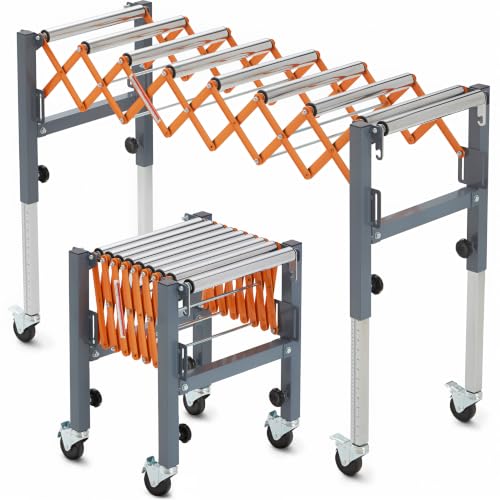 BORA Adjustable Conveyor Roller Stand for Table Saw19.3 x 18.1 x 20.5 Inches44.7 poundsCheck on Amazon
What's inside
As an Amazon Associate I earn from qualifying purchases. This post may contain affiliate links at no extra cost to you.
- Top Pick: BORA Portamate PM-5090 Pedestal Roller Stand
- Runner-up: WORKPRO Folding Roller Stand
- Also consider: VEVOR 2-Pack Roller Stands
Long boards and full sheet goods rarely stay level on their own once they pass the blade or the cutterhead. The unsupported end dips, the cut wanders, and a solo woodworker ends up trying to feed stock with one hand while catching it with the other. A roller stand solves that problem by placing an adjustable support level with the machine table, so material stays flat through the whole pass.
The five stands below cover the main shapes this support takes: a light single pedestal roller, a folding stand with a ball bearing head, a matched pair for infeed and outfeed duty, a tall multi-function stand, and a wide conveyor frame on casters. Each entry sticks to figures given on the product listing, including height range, load figure, and head type.
As an Amazon Associate, we earn from qualifying purchases.
Contents
Quick answer
For most home shops, a folding pedestal stand with a height range that brackets your saw table is the right pick. Choose the BORA PM-5090 for a light, simple single roller, the WORKESS 4-in-1 when you need extra height and load room, and the BORA PM-2700 conveyor when wide sheet goods need a broad support surface instead of a single roller line.
How to choose
Height range comes first. Measure from the floor to the top of your table saw or planer bed, then pick a stand whose listed range covers that number with room on both sides. A stand set a touch below the table lets stock slide down onto the rollers without catching an edge, while one set too high lifts the board and spoils the cut. Machines on mobile bases and benchtop planers sit at different heights, so a wide adjustment range helps one stand serve several tools.
Head type shapes how the stock moves. A single steel roller supports boards moving in a straight line, which suits ripping and planing passes. A ball bearing head rolls smoothly under load. Multi-directional rollers let material shift sideways too, handy when you guide a long board alone. A V-shaped rest cradles round stock that would roll off a flat roller. A conveyor frame spreads support across many rollers, keeping thin sheet goods from sagging between contact points.
Load figure and footprint matter together. The listed load tells you what the stand can hold, yet the base decides how steady it feels under a heavy panel. Tripod and folding leg designs store flat against a wall, while wide frames on casters roll to the machine and lock in place. Match the listed load to the heaviest stock you handle, keep the feet on flat floor, set the stand level with the machine table, and follow the maker guidance for locking the height before each pass.
BORA Portamate PM-5090 Pedestal Roller Stand

The PM-5090 is the classic single pedestal design: one steel roller on an adjustable post with folding legs. The listing gives a height range of 25 to 43.75 inches, which covers most cabinet saws, contractor saws, and planers on stands. The same stand also drops low enough for a benchtop planer on a bench.
At 9 pounds, this is the stand to grab for quick jobs. The listing notes that it folds up to a compact size, so it hangs on a wall hook or slides beside a bench. The single roller suits straight-line feeding: ripping long boards, running trim through a planer, or supporting a crosscut sled load. It is a support, not a table, so wide sheet goods still want a second stand or a broader surface. For a small shop, the PM-5090 covers the basics with the lowest minimum height in this group.
Specs (as listed):
– Height range: 25 to 43.75 inches
– Head type: single pedestal roller
– Weight: 9 pounds
– Storage: folds to a compact size
WORKPRO Folding Roller Stand

WORKPRO builds this stand around a ball bearing roller head, which the listing highlights as an upgraded head design. Ball bearings let the roller spin freely under load, so long boards keep moving with less drag at the contact point. The listed height range runs from 27 to 43 inches, a span that lines up with common table saw and planer heights in garage shops.
The listed load figure is 250 pounds, enough for thick hardwood slabs and stacked sheet goods. The folding frame suits shops where the stand lives in a corner between jobs. The listing names table saws, miter saws, planers, and jointers as partner machines, and that mix reflects how a single roller stand earns its keep: outfeed behind the saw in the morning, infeed at the jointer after lunch. For long, heavy boards fed in a straight line, the free-spinning head and midrange load figure make this a sensible middle pick.
Specs (as listed):
– Height range: 27 to 43 inches
– Load figure: 250 pounds
– Head type: ball bearing roller
– Frame: folding
VEVOR 2-Pack Roller Stands

This entry is a matched pair of folding stands, and the pair format is the point. Long stock often needs support on both ends of a cut: one stand catching the outfeed side of a planer while the other steadies the infeed side.
Each stand carries a listed load figure of 135 pounds, with a height range of 26.8 to 42.5 inches set by a twist-lock handle. The roller head is polished steel and 11.5 inches wide, per the listing. The frames fold, with non-slip foot pads and a triangular support structure. The per-stand load figure is the lowest in this group, so the pair suits dimension lumber, trim, and sheet goods rather than the heaviest slabs. For a shop that mills long stock often, a two-stand set fills the gap with flexibility a single stand cannot match.
Specs (as listed):
– Quantity: 2 stands
– Height range: 26.8 to 42.5 inches
– Load figure: 135 pounds per stand
– Head type: polished steel roller, 11.5 inches wide
– Frame: folding, triangular structure
WORKESS 4-in-1 Roller Stand

The WORKESS stand packs four support modes into one folding frame. Alongside the outfeed roller, the listing describes a saw horse mode, a V-shaped rest for centering round material, and multi-directional rollers. That mix suits a shop where the same stand supports a ripping session one day and holds pipe or dowel stock the next.
Its listed numbers lead this group: a 440 pound load figure and a height range of 33 to 50 inches with 10-step adjustment. The tall range matters for woodworkers whose saw sits on a raised base or who run a planer on a high stand, setups where shorter stands run out of travel. The trade-off is the floor end of the range: at 33 inches minimum, it will not drop low enough for benchtop tools on a low bench. If your machines sit tall and your stock runs heavy, this is the stand built around those numbers.
Specs (as listed):
– Height range: 33 to 50 inches, 10-step adjustment
– Load figure: 440 pounds
– Head types: outfeed roller, multi-directional rollers, V-shaped rest, saw horse mode
– Frame: folding
BORA PM-2700 Adjustable Conveyor Roller
The PM-2700 replaces the single roller with a frame of conveyor rollers that expands from 14 to 50 inches wide. Sheet goods and wide panels rest on many contact points at once, so thin plywood and long boards stay flat instead of dipping between two stands. The listing gives a load figure of 300 pounds and notes that the frame locks solid once expanded.
Locking casters set this model apart. The whole frame rolls to the saw, locks in place as a mobile outfeed table, and can double as a dolly for moving heavy material. The listing states the height adjusts up to 36 inches, which fits many table saws but will not reach the tallest setups, so measure your table before choosing it. The frame folds for storage when the job is done. For woodworkers who break down sheet goods often and work alone, this wide, rolling support replaces a helper at the outfeed end.
Specs (as listed):
– Width: expands from 14 to 50 inches
– Load figure: 300 pounds
– Height: adjusts up to 36 inches
– Head type: conveyor roller frame
– Mobility: locking casters, folds for storage
Who should skip
Skip a roller stand if your saw already has a fixed outfeed table with enough surface for your longest stock, since a stand would only duplicate that support. Skip the tall WORKESS model if your machines are benchtop tools on a low bench, because its range begins at 33 inches. Skip the conveyor frame if your shop floor is rough or crowded, since casters need a clear, flat path. And skip the whole category if you only cut short stock that never extends past the table; support you never use is just storage clutter.
FAQ
How far behind the saw should a roller stand sit?
Place it close enough that the board reaches the roller before the unsupported end can dip, often within a foot or two of the table edge for long stock. Set the roller level with the table or a hair below it, keep the feet on flat floor, and lock the height before the cut.
Can one stand serve both a table saw and a planer?
Yes, as long as its listed height range covers both machine tables. Measure each tool, note the taller and lower numbers, and pick a stand whose range spans both. Folding stands move between machines easily.
Are two lighter stands better than one heavy stand?
For long stock, often yes. A stand at each end of the pass keeps a board level the whole way, and two contact points spread the load. A single heavy stand still wins when one very heavy piece needs support in a single spot, so match the setup to the listed load figures.
What keeps a roller stand from tipping under a wide panel?
A wide, flat stance on level floor, a load within the listed figure, and a panel kept centered over the head. Wide sheet goods also do better on a broad surface, which is where the conveyor frame helps, since its rollers spread support across the full width of the material.
Final verdict
Every stand here solves the same problem, unsupported stock, in a different shape. The BORA PM-5090 is the light, wide-ranging single roller for everyday milling. The WORKPRO adds a free-spinning ball bearing head and a 250 pound figure for heavier straight-line feeding. The VEVOR pair trades per-stand load for two-point support on long boards. The WORKESS reaches tallest and carries the most, with extra head modes for round stock. The BORA PM-2700 conveyor suits sheet goods and solo work with its wide, rolling frame. Measure your machine tables, respect each listed load figure, and the right pick becomes a simple match.
Related guides
More from Amazon
Programs that pair well with the guide above. Offers and eligibility are set by Amazon and may change.
A free business account with business pricing and bulk-buying tools for work, shop or home office.
Create a business accountFree shipping on eligible items, Prime Video and more. Eligible new members can start with a free trial.
Start a Prime free trialAudiobooks and podcasts to listen to on the go. Eligible new members can start with a free trial.
Try Audible freeAd-free music streaming. Eligible new subscribers can start with a free trial.
Try Music Unlimited freeAs an Amazon Associate we earn from qualifying purchases.