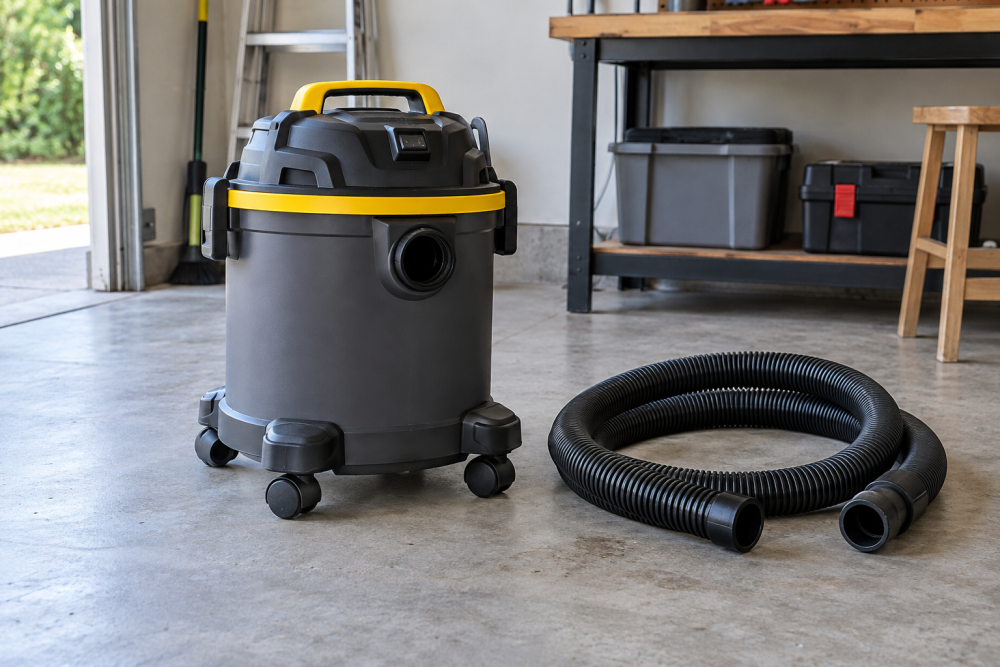
What's inside
- Understanding CFM versus Water Lift
- Tank Capacity and Material Considerations
- Filtration Levels and Fine Dust Containment
- Hose Diameter, Length, and Flexibility
- Noise Levels and Jobsite Realities
- Portability, Mobility, and Storage Footprint
- Power Management and Switch Integration
- Related Guides
- FAQ
- Related Guides
- Understanding CFM versus Water Lift
- Tank Capacity and Material Considerations
- Filtration Levels and Fine Dust Containment
- Hose Diameter, Length, and Flexibility
- Noise Levels and Jobsite Realities
- Portability, Mobility, and Storage Footprint
- Power Management and Switch Integration
- Related Guides
- FAQ
- Related Guides
As an Amazon Associate I earn from qualifying purchases. This post may contain affiliate links at no extra cost to you.
Outfitting a woodworking shop requires balancing power, efficiency, and cleanup versatility, making a reliable wet-dry vacuum an absolute cornerstone of your dust management system. Unlike household vacuums designed primarily for surface dirt and pet hair, workshop vacuums must handle heavy debris, abrasive wood chips, fine sanding dust, and occasional liquid spills without losing suction or burning out the motor. As we look at the current 2026 market, manufacturers have introduced refined motor designs and improved filtration options, but the fundamental physics of choosing the right machine remain rooted in how well its specifications match your actual woodworking habits.
Navigating the sheer volume of available options can be overwhelming, especially when marketing terms often obscure real-world performance. Choosing the right wet-dry vacuum is not about buying the highest horsepower rating on the box; it is about understanding how airflow metrics, hose dimensions, and filtration systems interact within your specific workspace. By focusing on the specifications that genuinely impact daily operation, you can avoid underpowered units that clog constantly or bulky industrial beasts that consume too much floor space.
As an Amazon Associate we earn from qualifying purchases at no extra cost to you. Product prices and availability are accurate as of the date shown and are subject to change.
Understanding CFM versus Water Lift
When evaluating shop vacuums, you will frequently encounter two primary performance metrics: Cubic Feet per Minute (CFM) and Water Lift (sealed suction). CFM measures the total volume of air moving through the system, which is the critical spec for clearing large volumes of lightweight debris like sawdust and planer shavings. Water Lift measures the vacuum’s ability to pull air vertically up a tube, indicating its strength in lifting heavier debris or standing liquids from deep crevices.
For general woodworking cleanup, prioritize higher CFM ratings because moving high volumes of air keeps airborne particles and scattered chips moving smoothly through the hose. If you plan to hook your vacuum directly up to handheld power tools like sanders or routers, a balanced ratio of CFM and adequate water lift ensures that fine particles do not settle inside the hose or clog the interior walls.
Tank Capacity and Material Considerations
Wet-dry vacuum tanks typically range from compact desktop models to massive commercial-grade drums. For a dedicated woodworking shop, a mid-sized capacity strikes the ideal balance between internal storage and physical footprint. Extremely small tanks fill up with planer shavings within minutes, forcing constant interruptions to empty the bin, while ultra-large drums become overwhelmingly heavy and difficult to maneuver once filled with dense MDF dust.
Material choice also plays a role in long-term durability. Polypropylene (heavy-duty plastic) tanks resist denting, will not rust if you frequently vacuum up damp sawdust or moisture, and absorb some motor vibrations to keep operational noise slightly lower. Stainless steel tanks offer a rigid, professional appearance and do not absorb odors, but they can dent upon heavy impact and show fingerprints or corrosion if left wet for extended periods.
Filtration Levels and Fine Dust Containment
Woodworking generates an immense amount of fine, respirable dust that standard vacuum filters simply cannot capture. Fine dust will pass straight through basic foam sleeves and blow back into your shop air, creating a serious respiratory hazard and coating your tools in a fine gray film. Investing in a proper multi-stage filtration setup—ideally incorporating a high-efficiency collection bag alongside a pleated cartridge filter—is non-negotiable for indoor workshops.
Look for vacuums compatible with high-efficiency particulate or certified fine-dust filters that trap microscopic particles before they reach the motor exhaust. Using disposable filter bags acts as the first line of defense, capturing the bulk of the sawdust and making disposal clean and dust-free, while also extending the lifespan of your primary pleated cartridge filter.
Hose Diameter, Length, and Flexibility
The hose is the literal lifeline of your dust collection setup, yet it is frequently overlooked during the purchasing process. Standard workshop vacuums usually come with wide-diameter hoses designed to swallow large wood chunks without clogging, but these wide hoses can lack the air velocity needed when attached to smaller tool ports. Conversely, narrow hoses maintain high suction velocity for hand tools but may choke when you sweep up massive piles of joint trimmings.
Flexibility and length matter immensely when you are moving around a workbench or routing along a large tabletop. A stiff, rigid hose creates constant drag, tipping over the vacuum body and fatiguing your arms. Look for smooth-interior hoses with flexible cuffs that resist kinking, and ensure the overall reach allows you to move freely around your primary work zones without stretching the cord or pulling the unit off balance.
Noise Levels and Jobsite Realities
Workshop vacuums are notoriously loud, often operating at decibel levels that require immediate hearing protection. If you work in a shared garage, a residential basement, or a tight neighborhood workshop, minimizing noise pollution is a top priority for your own comfort and community relations. Manufacturers have made strides in acoustic dampening, utilizing enclosed motor housings and baffled exhaust ports to quiet down newer models.
When reviewing specifications, check for decibel ratings rather than relying solely on subjective marketing claims. A vacuum that runs a few decibels quieter transforms the daily woodworking experience, allowing you to converse normally, listen to machinery, and work for hours without experiencing the grating fatigue associated with high-pitched motor whine.
Portability, Mobility, and Storage Footprint
Consider how your vacuum will travel around your shop. Do you need a lightweight unit that easily climbs stairs to a loft workspace, or a rolling cart configuration with large rear wheels that smoothly glide over extension cords and rough concrete floors? Caster wheels that swivel freely prevent the vacuum from snagging, while a wide wheel base keeps the unit stable when you pull hard on a stretched hose.
Storage is another critical factor in space-constrained shops. Evaluate whether the vacuum features onboard accessory storage to keep crevice tools, brush attachments, and spare filter bags organized and within reach. Units with flat top surfaces also double as temporary staging areas or mobile assembly ledges, maximizing every square inch of available floor space.
Power Management and Switch Integration
Operating a high-draw shop vacuum alongside power tools can easily trip circuit breakers if your workshop shares electrical lines with the rest of the building. Look for electrical specifications that match your breaker capacity, and note whether the vacuum features an auto-start tool-triggered outlet. This incredibly useful feature automatically turns the vacuum on when you switch on your sander or saw, and keeps it running for a few seconds afterward to clear the remaining line debris.
Related Guides
To explore specific machine recommendations and hands-on testing data, take a look at our comprehensive Best Wet Dry Vacuums for Workshop Use roundup.
FAQ
Can I use a wet-dry vacuum without a disposable filter bag for woodworking?
While you technically can run a shop vacuum with just the pleated cartridge filter, omitting the disposable bag is strongly discouraged for woodworking. Without a bag, fine dust rapidly packs into the pleats of the main filter, causing immediate suction loss and creating a massive cloud of dust when you finally clean the canister.
How often should I clean or replace my workshop vacuum filter?
You should inspect and gently tap out your pleated cartridge filter every few heavy woodworking sessions, depending on how much sanding and milling you perform. If the filter material is caked with fine dust that does not dislodge with gentle tapping, or if you notice a persistent drop in suction, it is time to wash it thoroughly or replace it entirely.
Is it safe to vacuum up wet sawdust and liquid spills simultaneously?
You can vacuum up damp sawdust and standing liquids, but you must remove all paper filter bags and dry-use cartridges first to prevent them from disintegrating and ruining the motor. Always install a foam sleeve designed for liquid pickup, and thoroughly dry and sanitize the drum afterward to prevent mold growth and rust.
Why does my workshop vacuum lose suction after only a few minutes of use?
Sudden suction loss is almost always caused by a clogged filter, an overfull collection bag, or a blockage trapped inside the hose or intake port. Check the hose first by feeding a flexible rod through it, then inspect your filter bag to ensure fine dust has not choked off the airflow.