What's inside
As an Amazon Associate I earn from qualifying purchases. This post may contain affiliate links at no extra cost to you.
Contents
Best Budget Sawhorses for Woodworking
The best budget sawhorses for woodworking are a pair of folding steel horses with a working height around 29 inches, a published capacity of at least 500 pounds per pair, and a broad, level top that can accept a temporary work surface. For frequent setup and storage, choose metal; for lighter loads and easier carrying, a plastic folding pair is usually the better-value choice. Always check whether the stated capacity applies to one horse or the pair.
Budget sawhorses compared
These are representative specifications for common product types and established models, not a guarantee that every current version has identical dimensions. Manufacturers sometimes revise specifications, so confirm the label or manual before buying. The capacity figures below are stated per pair where that is how the maker specifies them.
As an Amazon Associate we earn from qualifying purchases at no extra cost to you.


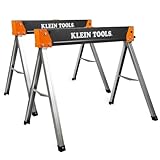

| Option | Typical working height | Published capacity | Material and folded storage | Best fit |
|---|---|---|---|---|
| WORX WX065 Clamping Sawhorses | About 32 in | Up to 1,000 lb per pair | Plastic body with metal supports; folding | Portable setups and occasional sheet work |
| Stanley Folding Metal Sawhorse (STST series) | About 31 in | Up to 1,000 lb per pair on some versions | Steel; folds flat | Garage storage and general DIY work |
| DeWalt DWST1-75676 folding sawhorse | About 31 in | Up to 2,000 lb per pair, according to product specifications | Heavy-duty plastic with metal legs; folding | Heavier assemblies and frequent transport |
| Basic fixed-leg timber horse | Often 24–30 in; varies by build | Depends on design and construction | Wood; usually non-folding | Low-cost stationary use and custom height |
Capacities are not directly comparable across brands: test methods, load placement, and whether the rating refers to one horse or a pair can differ. Treat the rating as a limit, not a target. A high number does not compensate for a narrow stance, a rocking floor, or a load concentrated at one edge.
Choose by your workspace and workload
- Small shop or shared garage: Pick folding horses that store flat and weigh little enough to move without a struggle. Check the folded thickness and whether the feet nest together; “folding” does not always mean compact.
- Regular bench-height work: Aim for a top around 29–32 inches, then account for the thickness of the board or sheet you will lay across it. If you are tall or spend long periods sanding, a higher setup may reduce stooping; test the finished height before committing.
- Heavy doors, cabinets, or assemblies: Favor a wide stance, sturdy leg braces, and a clearly stated capacity. Set the load near the center of each horse, and use a pair rather than asking one horse to support a long, uneven object.
- Uneven concrete or outdoor paving: Look for broad feet and positive leg locks. Adjustable feet can help, but inexpensive models often lack them. On a sloped or irregular surface, move to a level location or use a properly secured, firm shim under a foot; do not balance a horse on loose scraps.
- First shop setup on a tight budget: A basic folding pair plus a flat sacrificial plywood top often gives more useful workspace than spending the entire budget on premium horses.
Working height and temporary tops: get the fit right
A sawhorse’s listed height is usually the height of its support surface, not the top of your finished bench. Add the work surface thickness. For example, two 30-inch horses carrying ¾-inch plywood create a 30¾-inch surface. That can be comfortable for assembly, but the extra height may feel awkward for forceful hand-planing, where a lower work position can provide better leverage.
For a temporary assembly or cutting surface, use a flat sheet that spans both horses and overhangs them evenly. The sheet should be thick and stiff enough not to sag under the work. A ¾-inch plywood panel is a common practical choice for general shop use; thinner material may need a shorter span or additional support. Secure the panel with clamps or the horse’s built-in clamping features, if present. Keep the horses parallel, with their tops at the same height, and place the work so its weight is distributed across both supports.
Before cutting, check that the saw blade cannot reach the horse tops, legs, or any hidden fasteners. A sacrificial panel can protect the horses, but mark safe cutting zones and replace the panel when it becomes too deeply cut. Never rely on a loose top to stop a sheet from sliding during sawing.
Steel, plastic, or wood?
Folding steel
Steel legs and braces resist dents and suit repeated shop use, but the hinge and locking joints are common wear points. Inspect them for looseness, rust, bent braces, and locks that fail to engage. Thin stamped steel can flex more than a heavier frame, so prioritize stance and bracing over a large headline capacity.
Plastic with metal reinforcement
These models are often lighter and easier to carry, and some include clamping slots or accessory features. Plastic can become brittle with age, UV exposure, cold, or impact; avoid leaving the horses outdoors and do not drop them loaded. Check for cracks around hinges, feet, and support rails.
Wooden horses
A wood horse is easy to repair or customize, and a fixed design can be very rigid. It is less convenient to store and may loosen, warp, or absorb moisture. Check joints and fasteners periodically, and avoid using a cracked or twisted horse for heavy work.
What to inspect before buying
- Capacity label: Confirm whether the number is per horse or per pair, and whether it assumes evenly distributed weight.
- Locking mechanism: Open and close each horse. The legs should lock positively, without a brace that can fold under sideways pressure.
- Foot contact: Broad, intact feet help reduce slipping and rocking. On a floor with small height differences, test all four feet before loading.
- Top shape: A broad, flat rail is easier to support with plywood. Narrow rails can concentrate pressure and may require a thicker top.
- Useful features: Clamping grooves and compatible accessories can save setup time, but check the dimensions of your clamps and lumber rather than assuming universal fit.
Budget and ownership costs
Entry-level folding pairs commonly fall around $25–$60, while sturdier reinforced models often sit in the $60–$120 range; prices vary by region, sales, and model. A simple way to compare value is to estimate cost per setup: a $40 pair used twice a month for three years costs about 56 cents per use (40 ÷ 72), before tax. For occasional projects, a basic pair may be sufficient. For daily work, stronger hinges and replaceable or durable feet can matter more than the lowest initial price.
Keep hinges and feet free of sawdust, mud, and finish residue; grit can interfere with locks, while solvents may damage some plastics. Store folding horses dry and unloaded. Retire a horse with a cracked frame, bent leg, unreliable lock, or persistent rocking rather than trying to compensate with a heavier top.
Bottom line
For most budget-conscious woodworkers, a folding pair around 29–32 inches high, with a clearly stated pair capacity and a stable, braced stance, is the most versatile starting point. Choose reinforced plastic when portability and compact storage matter most; choose steel for a tougher everyday shop fixture; choose wood when you want a repairable, stationary design. Whichever type you buy, verify the actual load rating, test it on your floor, and secure any temporary work surface before cutting or clamping.