What's inside
As an Amazon Associate I earn from qualifying purchases. This post may contain affiliate links at no extra cost to you.
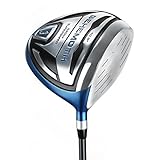
The best golf drivers for seniors are usually lightweight, high-lofted, forgiving models with a senior or regular-flex shaft—especially the TaylorMade Qi35 Max, Ping G440 Max, Callaway Elyte X, Cobra DS-ADAPT MAX-K, and Titleist GT2 when a player wants more fitting precision.
Age alone does not determine the right driver. Swing speed, typical miss, launch angle, and how consistently you strike the center matter more. A slower swing may benefit from a 45–50g shaft and 12° of loft, while a stronger senior with a 90–100 mph driver swing may prefer a 55–65g regular or stiff shaft and 9°–10.5° of loft.
As an Amazon Associate we earn from qualifying purchases at no extra cost to you.



Contents
Quick comparison of the leading senior-friendly drivers
| Driver | Head size | Useful loft options | Typical stock shaft range | Best suited to |
|---|---|---|---|---|
| TaylorMade Qi35 Max | 460cc | 9°, 10.5°, 12° | About 45–65g, senior through stiff | Maximum stability and a high launch |
| Ping G440 Max | 460cc | 9°, 10.5°, 12° | About 45–65g, senior through stiff | Players wanting forgiveness with a neutral flight |
| Callaway Elyte X | 460cc | 9°, 10.5°, 12° | About 40–65g, senior through stiff | Golfers who need help turning a slice into a straighter shot |
| Cobra DS-ADAPT MAX-K | 460cc | 9°, 10.5°, 12° | About 45–65g, senior through stiff | Adjustability and high moment of inertia |
| Titleist GT2 | 460cc | 8°, 9°, 10°, 11° | About 45–65g, regular through stiff | Consistent ball strikers who still want forgiveness |
These are approximate stock configurations rather than universal specifications. Shaft length, grip, custom-order options, and loft availability can vary by market. A fitting session is more useful than choosing solely from the name on the sole.
How shaft weight and flex affect senior golfers
Shaft weight is often more important than the label “senior flex.” A lighter shaft can help a golfer create speed and reduce fatigue, but an excessively light shaft may feel unstable and make the club difficult to return consistently. A heavier shaft can improve control for a faster swinger but may reduce speed over 18 holes.
- Below about 75 mph: Start by considering a 35–45g shaft in a seniors, A, or soft-flex profile.
- About 75–85 mph: A 40–55g senior or regular shaft is often a practical starting point.
- About 85–95 mph: Look at 50–65g regular shafts, with firm regular or stiff options if the transition is forceful.
- Above about 95 mph: Weight and timing may matter more than age; a 55–75g stiff shaft can be appropriate.
Flex labels are not standardized between manufacturers. One company’s senior shaft may play similarly to another company’s soft regular. Pay attention to launch, dispersion, and how the shaft feels during the transition from backswing to downswing.
A useful fitting comparison is to hit the same head with two shafts of similar flex but different weights. If the lighter shaft produces more speed without a wider left-right pattern, it may be the better choice. If contact becomes scattered, move back toward the heavier option.
Best choices by golfer and swing situation
Best for the slowest swing speeds: TaylorMade Qi35 Max
The Qi35 Max is a strong choice for golfers who need help launching the ball high and maintaining ball speed on off-center strikes. Its 460cc head and stability-focused construction suit players who do not consistently find the center. A 12° head paired with a lightweight senior shaft is the most logical starting point for many slower swingers.
Choose it when carry distance is the priority and your common miss is a weak fade or a strike low on the face. Avoid automatically selecting the lightest shaft, however; a 50g shaft may produce better contact than a 40g model for a golfer with a quick transition.
Best balanced option: Ping G440 Max
The G440 Max is aimed at golfers who want forgiveness without an aggressively draw-biased appearance. It offers a large, confidence-inspiring profile and adjustable hosel options that can fine-tune loft and face presentation. The 10.5° head is a sensible all-purpose starting point, while 12° is worth considering for a low-launching player.
This is a particularly sensible choice for a senior whose miss changes from round to round. A highly draw-biased head can help a slice, but it may turn a straight shot into a pull. The G440 Max provides stability while keeping the flight relatively versatile.
Best for a persistent slice: Callaway Elyte X
The Elyte X is designed with draw assistance and a forgiving shape, making it suitable for a golfer whose frequent miss curves to the right for a right-handed player. It can help reduce the severity of that curve, but it cannot replace a fitting or a swing change.
Start with 10.5° if launch is average and 12° if the ball regularly flies low. A lighter shaft can help create speed, but choose a profile that still feels stable when you make a full swing. Players who already hook the ball should consider the standard Elyte or a more neutral head instead.
Best for adjustability: Cobra DS-ADAPT MAX-K
The DS-ADAPT MAX-K combines a high-forgiveness head with extensive hosel adjustability. This makes it attractive to golfers who are still learning whether they need more loft, a more upright lie, or a draw-biased face setting.
Adjustability is most useful when it answers a specific problem. Increasing loft can raise launch and add face closure, while reducing loft generally lowers launch and can open the face slightly. Make one change at a time, hit enough shots to see a pattern, and record the setting that produces the tightest useful dispersion—not merely the longest single drive.
Best for stronger, consistent swingers: Titleist GT2
The GT2 is a good fit for seniors who still generate considerable speed and want a forgiving head without choosing an extremely lightweight setup. Its loft range and shaft selection allow a fitter to build a stable combination for regular or stiff users.
It is less obviously specialized for a very slow swing than a lightweight, high-loft configuration of the other models. For a golfer who strikes the center reasonably often and values predictable launch and spin, though, it can be an excellent long-term option.
Choosing loft: a practical starting point
| Approximate driver speed | Starting loft | Likely shaft direction | What to watch |
|---|---|---|---|
| Under 75 mph | 12°–14° | Light senior or soft flex | Carry distance and launch height |
| 75–85 mph | 10.5°–12° | 40–55g senior or regular | Contact consistency and slice curvature |
| 85–95 mph | 9°–10.5° | 50–65g regular or firm regular | Spin, dispersion, and transition control |
| Over 95 mph | 8°–10.5° | 55–75g stiff or suitable regular | Launch monitor spin and peak height |
These ranges are starting points, not rules. A golfer with a downward angle of attack may need more loft than another golfer with the same speed. Too little loft can produce a low, spinning shot that loses carry; too much can launch high with excessive spin and little roll.
Forgiveness versus adjustability
Forgiveness generally means the ball loses less speed and direction when impact moves away from the center. Look for a 460cc head, a high moment of inertia, and a shape that makes you comfortable standing over the ball. These features are especially valuable when fatigue causes contact to move toward the heel or toe.
Adjustability is valuable, but more settings do not automatically make a driver better. A player who changes the hosel after every poor shot may never learn which setup works. Once a suitable setting is found, mark it down and leave it unchanged for several rounds.
Worked buying example
Suppose a 72-year-old golfer swings at approximately 80 mph, carries the driver 165 yards, and hits a high percentage of fades. A sensible starting test would be a 10.5° or 12° forgiving head, a 45–55g senior shaft, and a standard length near 45 inches. If the 12° head launches higher but produces 10 yards more carry with similar dispersion, that extra loft is useful even if the swing speed does not change.
Now compare a 60g shaft with a 45g shaft. If the 45g version increases club speed by 2 mph but causes the average offline result to widen from 18 yards to 32 yards, the extra speed is not necessarily beneficial. A 60g shaft that produces tighter dispersion may lead to more fairways and more usable distance.
Ownership details that affect performance
- Clean the face grooves with a soft brush after play; dirt can change launch and spin readings.
- Inspect the grip at least twice a season. A glossy, hardened grip encourages excessive squeezing and can make a shaft feel too light.
- Check adjustable hosel and sole weights periodically, using the manufacturer’s torque wrench rather than guessing.
- Do not store the driver in a hot car for long periods. Heat can accelerate grip deterioration and stress adhesives.
- Replace a worn grip before replacing the driver. Grip replacement is usually a modest general-market expense, while a new premium driver commonly costs several hundred dollars.
Bottom line
For most senior golfers, begin with a forgiving 460cc head, 10.5°–12° of loft, and a 40–60g senior or regular shaft. Choose the Callaway Elyte X for slice help, the TaylorMade Qi35 Max for high-launch forgiveness, the Ping G440 Max for a neutral all-around fit, the Cobra DS-ADAPT MAX-K for adjustment options, and the Titleist GT2 for a stronger, more consistent swinger. The winning combination is the one that produces repeatable center contact, sufficient launch, and a manageable miss—not the one with the highest single-shot distance.