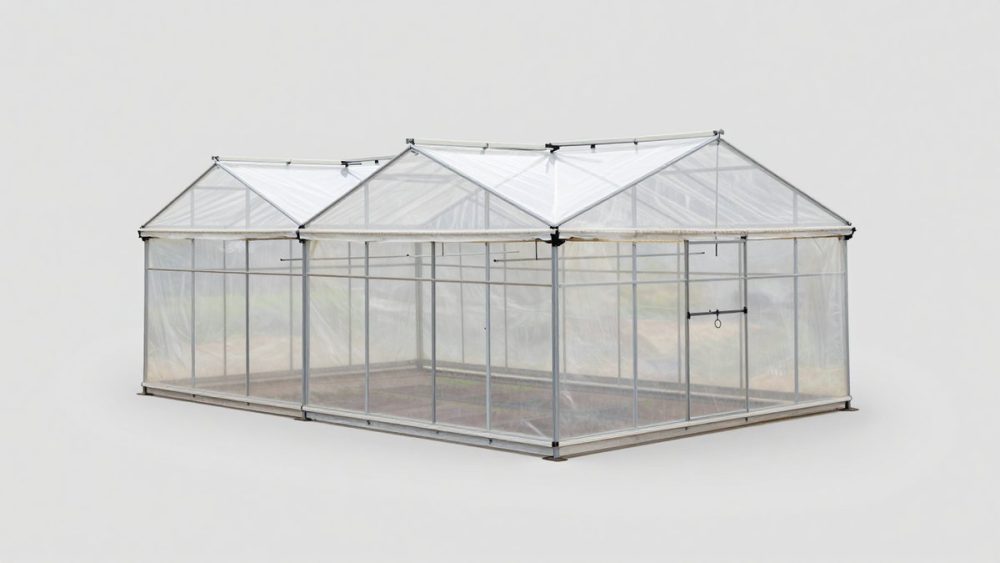
What's inside
- Top 3 Picks
- Quick Comparison
- How We Chose
- 1. Outvita Walk-in Greenhouse – Best for Small Patios and First-Time Buyers
- 2. VEVOR Walk-in Greenhouse 76.8″ x 30.3″ x 66.1″ – Best for Narrow Balconies and Side Yards
- 3. VEVOR Walk-in Greenhouse 55.5″ x 56.1″ x 78.7″ – Best for Maximum Headroom in a Small Footprint
- 4. GDY 8X8FT Instant Pop-up Greenhouse – Best Overall for Fast Setup and Floor Area
- 5. VEVOR Walk-in Tunnel Greenhouse 14.6×6.4×6.3 ft – Best for In-Ground Rows and Season Extension
- 6. Sannwsg Walk in Greenhouse 57 x 57 x 76 inch – Best Portable All-Rounder for Mixed Use
- 7. Sylviera 6×6 FT Walk in Greenhouse with Hygrometer – Best for Climate-Aware Growers
- How to Choose
- Frequently Asked Questions
- Final Recommendations by Situation
As an Amazon Associate I earn from qualifying purchases. This post may contain affiliate links at no extra cost to you.
Contents
- Top 3 Picks
- Quick Comparison
- How We Chose
- 1. Outvita Walk-in Greenhouse – Best for Small Patios and First-Time Buyers
- 2. VEVOR Walk-in Greenhouse 76.8″ x 30.3″ x 66.1″ – Best for Narrow Balconies and Side Yards
- 3. VEVOR Walk-in Greenhouse 55.5″ x 56.1″ x 78.7″ – Best for Maximum Headroom in a Small Footprint
- 4. GDY 8X8FT Instant Pop-up Greenhouse – Best Overall for Fast Setup and Floor Area
- 5. VEVOR Walk-in Tunnel Greenhouse 14.6×6.4×6.3 ft – Best for In-Ground Rows and Season Extension
- 6. Sannwsg Walk in Greenhouse 57 x 57 x 76 inch – Best Portable All-Rounder for Mixed Use
- 7. Sylviera 6×6 FT Walk in Greenhouse with Hygrometer – Best for Climate-Aware Growers
- How to Choose
- Frequently Asked Questions
- Final Recommendations by Situation
Our Top Picks


Top 3 Picks
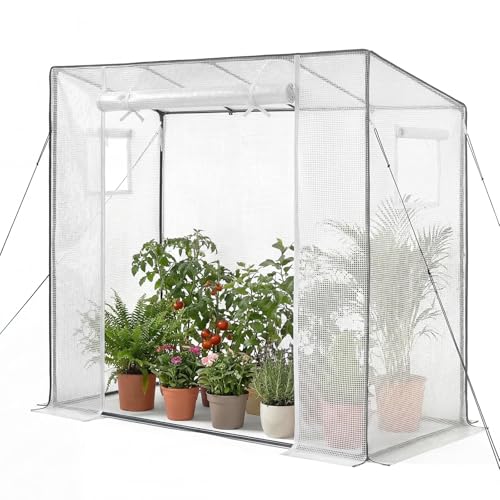
The best walk-in greenhouse for most gardeners is the GDY 8x8FT Instant Pop-up Greenhouse — its near-square 8 ft footprint gives you roughly 64 sq ft of standing room, the pop-up frame goes up in minutes rather than hours, and the roll-up zipper door makes daily access painless. If your budget is tight or your space is a balcony or narrow patio, the Outvita Walk-in Greenhouse at 56″ x 56″ x 77″ delivers the same walk-in headroom for a fraction of the outlay. For serious season extension over a long bed, the VEVOR Walk-in Tunnel Greenhouse at 14.6 x 6.4 x 6.3 ft is the pick — a hoop-house footprint that fits rows of tomatoes or peppers rather than a few shelves of pots.
Quick Comparison
| Product | Best for | Key specs | Price tier |
|---|---|---|---|
| Outvita Walk-in Greenhouse, 3 Tiers 8 Shelves | Small patios and first-time buyers | 56″ x 56″ x 77″; 3 tiers, 8 shelves; durable PE cover; walk-in height | Budget |
| VEVOR Walk-in Greenhouse 76.8″ x 30.3″ x 66.1″ | Narrow balconies and side yards | 76.8″ x 30.3″ x 66.1″; windows; PE cover; roll-up zipper door | Budget |
| VEVOR Walk-in Greenhouse 55.5″ x 56.1″ x 78.7″ | Maximum headroom in a small footprint | 55.5″ x 56.1″ x 78.7″; 2 tiers, 8 shelves; PE cover; roll-up door | Budget |
| GDY 8X8FT Instant Pop-up Greenhouse | Fast setup and generous floor area | 8 x 8 ft; PE cover; roll-up zipper doors; pop-up frame | Premium |
| VEVOR Walk-in Tunnel Greenhouse 14.6×6.4×6.3 ft | In-ground rows and season extension | 14.6 x 6.4 x 6.3 ft; hoop-house tunnel; galvanized frame; plant hot house | Mid-range |
| Walk in Greenhouses, 57 x 57 x 76 inch (Sannwsg) | Portable all-rounder for mixed use | 57 x 57 x 76″; durable PE cover; portable frame | Mid-range |
| 6×6 FT Walk in Greenhouse with Hygrometer (Sylviera) | Climate-aware growers who want instrumentation | 6 x 6 ft; integrated hygrometer; windproof design; warm plant house | Premium |
How We Chose
This roundup is built from published product specifications and category knowledge rather than from physically assembling or testing any unit. We compared the walk-in greenhouse class on the factors that actually decide whether a unit works for you: usable floor area (the interior footprint you can stand in, not the shipping dimensions), frame material and joint design, cover material and its UV and tear behaviour, ventilation options such as windows and roll-up doors, how the frame is anchored against wind, realistic assembly effort, and how each unit behaves across a full growing season. We grouped units by the garden size they genuinely serve — balcony, patio, small yard, and open-ground plot — then sorted them into budget, mid-range and premium tiers so you can trade cost against durability and convenience. We also weighed upgrade paths: whether a unit can accept added shelving, replacement covers, extra guy lines, or a heater without being rebuilt. Where the listing states an exact dimension we use it; where it does not, we describe the spec class instead of guessing a number.
1. Outvita Walk-in Greenhouse – Best for Small Patios and First-Time Buyers
As an Amazon Associate we earn from qualifying purchases at no extra cost to you.

The Outvita Walk-in Greenhouse is the classic starter walk-in: a 56″ x 56″ footprint with 77″ of interior height, a three-tier, eight-shelf layout, and a durable PE cover. It suits a gardener who has a patio corner, a balcony with a solid floor, or a small side return — roughly 2.4 square metres of ground space, which most people can find without re-engineering the garden.
What you get for the money is standing room. At 77″ the unit clears the head of almost any adult, so you can step inside, water, prune and inspect without kneeling. The three tiers and eight shelves are the real design story: they turn a compact footprint into a vertical growing system, which is how a unit this small stays useful. Eight shelves of roughly 56″ width will hold dozens of seedling trays, a season’s worth of herbs, or a stack of overwintering pots.
Key specs
- Dimensions: 56″ x 56″ x 77″ (approx. 4.7 ft square, 6.4 ft tall)
- Usable floor area: about 18 sq ft of interior footprint, expanded vertically by shelves
- Shelving: 3 tiers, 8 shelves
- Cover: durable PE (polyethylene)
- Access: walk-in front opening
- Price tier: budget
Strengths
The vertical shelf layout is the best use of a small footprint in this roundup at the budget end. PE is a proven greenhouse cover: it transmits light, traps warmth, and sheds rain, and it is the reason units in this tier can cost a fraction of polycarbonate-panelled greenhouses. Because the whole thing is light, one person can reposition it between seasons without help — useful if you rotate crops around the patio.
Pros
- Genuine walk-in height at a budget price
- Eight shelves give serious vertical growing space
- Compact 56″ square footprint fits patios and balconies
- Light enough for one person to move between seasons
Cons
- PE covers degrade under UV and typically need replacing every couple of seasons
- Small footprint limits in-ground planting — it is a shelf unit, not a bed unit
- Light weight means wind anchoring needs to be taken seriously
- No integrated climate instrumentation
Compared with the nearest alternative, the VEVOR Walk-in Greenhouse 55.5″ x 56.1″ x 78.7″, the two are close cousins: nearly identical footprints, similar shelf counts, similar materials. The VEVOR edges ahead on interior height (78.7″ versus 77″) and its roll-up door design; the Outvita is the one to consider first if you find it at the lower end of the budget tier or prefer its specific shelf configuration for seed trays. For the narrow-balcony shopper, neither is ideal — the 76.8″ x 30.3″ VEVOR is the better fit.
2. VEVOR Walk-in Greenhouse 76.8″ x 30.3″ x 66.1″ – Best for Narrow Balconies and Side Yards

This VEVOR unit is the long-and-thin specialist of the group. At 76.8″ x 30.3″ x 66.1″ it is roughly 6.4 ft long, 2.5 ft deep and 5.5 ft tall — proportions that make almost no sense in an open garden and perfect sense against a wall, along a balcony rail, or down a narrow side return.
It suits the urban gardener: someone with a balcony that is 3 ft deep and 8 ft wide, or a passage between a house and a fence that gets good sun. The windows and roll-up zipper door are the practical core of the design — you can vent hot air on a sunny afternoon without opening the whole front, which matters more in a shallow unit that heats up fast.
Key specs
- Dimensions: 76.8″ x 30.3″ x 66.1″ (approx. 6.4 ft x 2.5 ft x 5.5 ft)
- Usable floor area: about 16 sq ft, arranged in a long, shallow strip
- Features: windows, roll-up zipper door
- Cover: PE (polyethylene)
- Setting: outdoors, wall-adjacent
- Price tier: budget
Strengths
The shape is the selling point. A 30.3″ depth fits where a 56″ square unit simply will not go, and because it is shallow, you can reach the back of every shelf from the front — no crawling into corners. The 66.1″ height is lower than the square VEVOR and the Outvita, so this is a unit for growers who are comfortable with a slight stoop or who mostly work seated at the front.
Pros
- Fits narrow spaces nothing else in this list can use
- Windows plus roll-up zipper door give flexible ventilation
- Shallow depth makes every shelf reachable without stepping inside
- Budget tier pricing
Cons
- Lowest interior height in the roundup — not for tall gardeners
- A long, light unit catches wind like a sail; anchoring is essential
- Shallow footprint limits what you can grow to full size
- Being wall-adjacent reduces light on one long side
Against the Sannwsg 57 x 57 x 76 inch walk-in, the choice is purely geometric. The Sannwsg gives you a compact deep footprint with full standing height; this VEVOR gives you length and a lower ceiling. If your available space is a 2.5 ft deep strip, the VEVOR is the only sensible option here — and if you have a 5 ft square of patio, the Sannwsg will hold more plants in a more comfortable working position.
3. VEVOR Walk-in Greenhouse 55.5″ x 56.1″ x 78.7″ – Best for Maximum Headroom in a Small Footprint

This is the tallest of the compact square units: 55.5″ x 56.1″ x 78.7″. That is roughly 4.6 ft square with 6.6 ft of interior height — about two inches more than the Outvita and nearly a foot more than the long, shallow VEVOR. It carries two tiers and eight shelves and uses a PE cover with a roll-up door.
It suits taller gardeners, or anyone who wants to grow a fruiting crop — tomatoes, peppers, aubergines — in a pot on the floor and still have shelf space above it. The extra vertical inches are not trivial: an 78.7″ ceiling means a tomato plant can reach 5 ft before it touches the roof, leaving working room around it.
Key specs
- Dimensions: 55.5″ x 56.1″ x 78.7″ (approx. 4.6 ft square, 6.6 ft tall)
- Usable floor area: about 21 sq ft of interior footprint
- Shelving: 2 tiers, 8 shelves
- Cover: PE, with roll-up zipper door
- Setting: outdoors
- Price tier: budget
Strengths
The height-to-footprint ratio is the best in the budget group. Two tiers rather than three also means the shelves can be set further apart, which is what you want for taller plants — a three-tier unit forces you into low clearance on each level. The two-tier, eight-shelf arrangement is a good compromise: enough shelving for propagation, enough vertical clearance for a floor-grown crop underneath.
Pros
- Tallest compact unit in the roundup at 78.7″
- Two-tier layout gives taller plants room to grow
- Square footprint works in a patio corner
- Roll-up zipper door for easy access and venting
Cons
- Fewer tiers means less total shelf count than the three-tier Outvita
- PE cover has a limited UV lifespan, as with all units in this tier
- Square 56″ footprint will not fit a narrow strip
- No built-in thermometer or hygrometer
The nearest alternative is the Outvita, and the decision is simple: choose the VEVOR for the extra two inches of height and the roomier two-tier spacing, choose the Outvita for the extra tier of shelving if you are propagating at volume and growing nothing tall. Both are budget-tier PE walk-ins with similar anchoring needs and similar cover-replacement timelines.
4. GDY 8X8FT Instant Pop-up Greenhouse – Best Overall for Fast Setup and Floor Area

The GDY 8X8FT is the best overall pick because it solves the two problems that annoy walk-in greenhouse owners most: floor area and setup time. An 8 x 8 ft footprint gives roughly 64 sq ft of interior space — about three times the usable area of the compact 56″ square units — and the instant pop-up frame means you are not spending an afternoon with a bag of poles and a confusing diagram.
It suits the gardener with a real garden: someone who wants to overwinter pots, start a serious propagation run, or grow a season of salads and herbs under cover without committing to a permanent structure. The PE cover and roll-up zipper doors are the working parts — the doors open wide for access and venting, and the cover does the light-transmission and heat-retention job that defines this category.
Key specs
- Dimensions: 8 x 8 ft (approx. 2.4 x 2.4 m)
- Usable floor area: about 64 sq ft — roughly triple a 56″ square unit
- Frame: instant pop-up design
- Cover: PE
- Access: roll-up zipper doors
- Price tier: premium
Strengths
Floor area is the headline. Sixty-four square feet is enough for four or five large pots, a pair of grow bags per side, or a substantial staging bench — and unlike shelf-based units, you can walk to the middle of it. The pop-up frame trades some rigidity for speed, which is the right trade for a seasonal structure you may take down and store. Roll-up zipper doors on a unit this size make a real difference: on a warm day you can open it up and drop the internal temperature quickly instead of cooking your plants.
Pros
- About 64 sq ft of walkable interior floor space
- Pop-up frame assembles far faster than pole-and-joint kits
- Roll-up zipper doors for access and rapid venting
- Large enough to work inside comfortably, not just reach in
Cons
- Premium tier — the most expensive unit in this list
- Pop-up frames are typically less rigid than bolted or galvanised frames
- A big flat-sided PE structure is a large wind target; anchoring is non-negotiable
- PE cover remains a consumable that will need replacing
Compared with the VEVOR Walk-in Tunnel Greenhouse, the trade is shape and structure. The GDY gives you a square, instantly erected space; the tunnel gives you a 14.6 ft long, 6.4 ft wide hoop house that is better suited to in-ground rows and is built around a galvanised frame. Choose the GDY if you grow in pots and want it up today; choose the tunnel if you are planting into the soil and want something more permanent.
5. VEVOR Walk-in Tunnel Greenhouse 14.6×6.4×6.3 ft – Best for In-Ground Rows and Season Extension

This is the only true hoop house in the roundup. At 14.6 x 6.4 x 6.3 ft it covers roughly 93 sq ft of ground in a long tunnel — enough for a row of tomatoes down one side and a row of peppers or cucumbers down the other, with a central path you can walk.
It suits the vegetable grower with actual beds. Where the shelf-based units are essentially vertical storage with a cover, this is a soil-based growing structure: you plant into the ground, run the tunnel over the top, and use the galvanised frame to carry a PE skin through a full season. The dimensions also mean tall crops stay viable — 6.3 ft of ridge height lets indeterminate tomatoes and climbing beans reach proper size.
Key specs
- Dimensions: 14.6 x 6.4 x 6.3 ft (approx. 4.4 x 2.0 x 1.9 m)
- Ground coverage: roughly 93 sq ft
- Type: hoop house / tunnel, described as a plant hot house
- Frame: galvanised
- Cover: PE
- Price tier: mid-range
Strengths
The galvanised frame is the key upgrade over the budget pop-up and shelf units — it resists rust, holds its shape through a season, and gives you something to tie plants onto. The tunnel geometry is also better in wind than a flat-sided box of the same volume: air flows over a curve rather than slamming into a wall of plastic. Ninety-three square feet of ground cover at a mid-range price is the best area-per-unit-cost in this roundup, provided you have the garden length to accommodate 14.6 ft.
Pros
- About 93 sq ft of in-ground growing area — the largest coverage here
- Galvanised frame resists corrosion far better than painted tube
- Tunnel shape sheds wind better than a flat-sided greenhouse
- Ridge height of 6.3 ft supports tall, climbing crops
Cons
- Needs a long, open site — 14.6 ft is a serious footprint
- Not a shelf unit; you need soil or beds rather than pots and a patio
- PE skin is still a wearable item requiring periodic replacement
- Assembly involves more frame sections than a pop-up design
The nearest alternative is the GDY 8X8FT, and the decision maps onto how you grow. Pots, grow bags and staging: the GDY’s square floor and fast setup win. Soil, rows and a full season over a bed: the tunnel’s galvanised frame and 93 sq ft of ground coverage win, and it costs less than the GDY despite covering more ground.
6. Sannwsg Walk in Greenhouse 57 x 57 x 76 inch – Best Portable All-Rounder for Mixed Use

The Sannwsg walk-in is a 57 x 57 x 76 inch unit with a durable PE cover and a portable frame. In practice it sits between the compact budget boxes and the large pop-up: about 4.75 ft square, 6.3 ft tall, with roughly 22 sq ft of interior footprint.
It suits the gardener whose needs change — seedlings in spring, herbs and salads in summer, overwintering pots in winter — and who wants one structure that can be moved to follow the sun or brought closer to the house for the cold months. The portable frame is the defining feature: it is light enough to relocate, which is unusual once you get above the smallest sizes.
Key specs
- Dimensions: 57 x 57 x 76 inches (approx. 4.75 ft square, 6.3 ft tall)
- Usable floor area: about 22 sq ft
- Cover: durable PE
- Frame: portable design
- Setting: outdoors
- Price tier: mid-range
Strengths
It occupies the sweet spot between the 56″ budget boxes and the 8 x 8 ft premium units. That 22 sq ft is enough for a proper staging arrangement without demanding the corner of a large garden. The durable PE cover specification matters more than it sounds in this tier — cover replacement is the recurring cost of walk-in greenhouse ownership, and a better-specified cover delays that expense. The mid-range tier also typically brings slightly better frame fittings than the entry-level units.
Pros
- 22 sq ft footprint — more room than the 56″ budget units
- Portable frame allows seasonal repositioning
- Durable PE cover specification
- Full walk-in height at 76″
Cons
- Mid-range price for a footprint only slightly larger than budget options
- No integrated windows or hygrometer
- Larger than the compact units, so less likely to fit a balcony
- Still subject to the UV degradation that affects all PE covers
Compared with the Outvita, the Sannwsg buys you roughly four extra square feet of floor and a mid-range frame at a higher price; the Outvita counters with eight shelves across three tiers. If shelving volume is your priority, the Outvita is better value. If you want a bigger, movable open floor with full height, the Sannwsg justifies its tier.
7. Sylviera 6×6 FT Walk in Greenhouse with Hygrometer – Best for Climate-Aware Growers

The Sylviera 6×6 FT is the only unit here with an integrated hygrometer, and that single feature changes how you use a walk-in greenhouse. At 6 x 6 ft — about 36 sq ft of interior floor and roughly 6 ft of height — it is a genuinely roomy structure, and the windproof design signals that the maker has thought about the failure mode that destroys most lightweight greenhouses.
It suits a gardener who wants to manage humidity deliberately: someone starting seeds and needing to keep the air moist but not stagnant, or overwintering tender plants and watching for the damp conditions that invite rot. Having a humidity reading inside the structure rather than guessing turns greenhouse care from a routine into a measurable practice.
Key specs
- Dimensions: 6 x 6 ft (approx. 1.8 x 1.8 m)
- Usable floor area: about 36 sq ft
- Instrumentation: integrated hygrometer
- Design: windproof construction
- Type: warm plant greenhouse
- Price tier: premium
Strengths
The hygrometer is the differentiator, and the windproof design is the thing that will keep the unit standing. Lightweight greenhouses fail in two ways: the cover shreds and the frame takes off. A unit engineered with wind resistance in mind, and with a built-in humidity gauge so you can spot the conditions that lead to mould before they become a problem, is aimed at people who intend to use it properly rather than park it in a corner.
Pros
- Integrated hygrometer — unique in this roundup
- Windproof design addresses the most common failure mode
- 36 sq ft of floor area at 6 x 6 ft
- Premium construction tier
Cons
- Premium tier pricing for a mid-sized footprint
- Fewer shelving options described than the eight-shelf units
- A hygrometer needs checking and occasional recalibration or replacement
- 6 x 6 ft is smaller in area than the 8 x 8 ft GDY at a higher tier
The nearest alternative is the GDY 8X8FT, which costs similarly and offers far more floor space. The choice is about intent: the GDY maximises square footage and setup speed, whereas the Sylviera trades area for instrumentation and wind engineering. If you want the biggest covered space for the money, choose the GDY; if you want to monitor conditions and prioritise staying upright in a gale, the Sylviera earns its premium.
How to Choose
Choosing a walk-in greenhouse comes down to six numbers and one habit. Get the numbers right and the habit — anchoring — determines whether you still have a greenhouse after the first autumn storm.
Start with usable floor area, not footprint
The dimensions in a listing are external. The space you can actually plant in is smaller, because the frame, the door swing and the corner geometry eat into it. A 56″ x 56″ unit gives you about 18–21 sq ft inside; a 57″ x 57″ gives roughly 22 sq ft; a 6 x 6 ft gives about 36 sq ft; an 8 x 8 ft gives roughly 64 sq ft; a 14.6 x 6.4 ft tunnel gives about 93 sq ft of ground. If you grow in pots on shelves, think in shelf-metres rather than floor area — eight shelves across three tiers in a 56″ unit will out-hold a 6 x 6 ft floor for seedling trays. If you grow in the ground or in large pots, floor area is everything.
Match the shape to your site before anything else
Measure twice, buy once. The 76.8″ x 30.3″ VEVOR needs a strip about 2.5 ft deep and 7 ft long — a balcony or side return. The 56″ square units need a 4.7 ft square. The 6 x 6 and 8 x 8 units need a genuine open patch. The 14.6 ft tunnel needs a long, level run. No amount of spec quality compensates for a unit that does not fit the space you have, and a greenhouse squeezed against a wall loses light on one whole side.
Understand what PE actually means
Every budget and mid-range unit here uses a PE (polyethylene) cover, and that is not a weakness — it is the reason walk-in greenhouses are affordable. PE transmits light well, holds warmth, and is light enough to move. Its limitation is UV degradation: sunlight breaks down the polymer over time, and the cover is the first thing to fail on any of these units. Expect to replace the cover periodically, and factor that recurring cost into your budget rather than treating the purchase price as the total. A “durable PE” or “warm plant” specification is a signal that the maker has at least thought about UV stabilisation. Premium-tier PE is not immortal PE; it just lasts longer.
Frame material decides lifespan more than price does
Three frame classes appear in this roundup. Powder-coated or painted tube is the lightest and cheapest, and it will rust at scratched joints. Pop-up frames trade rigidity for speed — brilliant for a seasonal structure, less so for something you leave up through winter. Galvanised steel, as used in the VEVOR tunnel, is the corrosion-resistant option and the one to pick if the greenhouse is staying outside year-round. If you live somewhere with salt air or heavy winter rain, the galvanised frame is worth a tier upgrade on its own.
Ventilation is not optional
A sealed greenhouse on a sunny April day can reach temperatures that cook seedlings within an hour. This is why windows and roll-up doors matter. The 76.8″ x 30.3″ VEVOR has windows plus a roll-up zipper door; the 55.5″ x 56.1″ VEVOR has a roll-up zipper door; the GDY uses roll-up zipper doors on a large structure. Two openings on opposite sides create cross-flow, which is what actually drops temperature. A single door on a sealed box only helps if you leave it open, and leaving a door open on a windy day is how covers tear. Plan for at least one vent high and one opening low.
Anchoring: the step almost everyone skips
Lightweight walk-in greenhouses fail in wind, and they fail fast, because they combine low mass with high sail area. A 56″ square unit presents about 30 sq ft of side area; an 8 x 8 ft unit presents roughly 64 sq ft. In a 40 mph gust, that is a lot of force on a frame held down by nothing. Anchor options, in ascending order of effectiveness: ground stakes through the base rails, guy lines from the frame corners to buried pegs, weighted base plates or sandbags on the rails, and — for units on hard standing — bolting or strapping the base to a fixed structure. On a balcony, use weights on the base and never rely on the railing. On soil, drive stakes at least 8 inches in and set guy lines at 45 degrees. The Sylviera’s windproof design reduces the risk but does not remove the need to anchor.
Assembly time: what to expect per class
Pop-up designs (the GDY) go from box to standing structure in a fraction of the time of a pole kit — this is their main justification for a premium price. A compact 56″ walk-in with shelves is a straightforward job for one person with basic tools, measured in an afternoon rather than a weekend. A 14.6 ft tunnel with a galvanised frame is the most involved: more frame sections, more cover stretching, and a site that needs levelling first. Budget accordingly. If you will only use the greenhouse for eight weeks in spring, a slow-to-assemble unit is a bad buy regardless of quality.
Worked example: cost per season, and when the cover replacement lands
Take a budget 56″ walk-in at the low end of the budget tier. Add a replacement PE cover at typical market rates every second season, plus stakes and a couple of guy lines in year one. Over five seasons, the cover is the dominant running cost — often a meaningful fraction of the original purchase price across that period. Now take the mid-range tunnel: higher initial outlay, but a galvanised frame that does not need replacing, and enough floor area (93 sq ft) to grow a real crop rather than a shelf of seedlings. If your food production from the structure has any value to you, the tunnel’s cost per season is usually lower despite the higher sticker price, because the area is three to five times larger for a mid-range rather than premium outlay. The lesson: compare cost per square foot per season, not headline price.
Decision matrix by situation
| Your situation | Recommended pick | Why |
|---|---|---|
| Balcony, shallow strip under 3 ft deep | VEVOR 76.8″ x 30.3″ x 66.1″ | Only unit shaped to fit a narrow run; windows aid venting in a fast-heating shallow box |
| First greenhouse, tight budget, patio corner | Outvita 56″ x 56″ x 77″ | Eight shelves maximise a small footprint; walk-in height at budget pricing |
| Tall gardener or floor-grown tomatoes in pots | VEVOR 55.5″ x 56.1″ x 78.7″ | Tallest compact unit; two-tier spacing gives tall plants clearance |
| Want it up today, need real floor area | GDY 8X8FT Pop-up | About 64 sq ft and a pop-up frame; roll-up zipper doors for venting |
| Planting into beds and rows | VEVOR 14.6 ft Tunnel | About 93 sq ft of ground cover on a corrosion-resistant galvanised frame |
| Need one structure that moves with the seasons | Sannwsg 57 x 57 x 76″ | Portable frame, 22 sq ft, durable PE |
| Windy site, or want to track humidity | Sylviera 6×6 FT with Hygrometer | Windproof design plus an integrated hygrometer |
Common mistakes to avoid
- Buying for footprint instead of usable area. A 6 x 6 ft unit holds far more than a 56″ square, but the difference matters only if you have the ground and use the floor.
- Ignoring the cover replacement cycle. Treat the PE cover as a consumable, not a permanent part.
- Not anchoring on day one. The most common way to lose a walk-in greenhouse is a single windy night with the base staked loosely or not at all.
- Sealing it up. Insufficient venting does more damage to plants in spring than a cold snap.
- Placing it in shade. A PE structure in a shaded corner underperforms a perfectly ordinary cold frame in full sun.
- Overloading shelves. Check the load rating if stated; distribute heavy pots low and light trays high.
Frequently Asked Questions
What size walk-in greenhouse should I buy?
Match area to what you grow. For seed trays and herbs on shelves, a 56″ square unit with eight shelves is ample. For pots and grow bags, aim for 36–64 sq ft — a 6 x 6 ft or 8 x 8 ft unit. For crops in the ground, a tunnel of about 14 ft x 6 ft gives roughly 93 sq ft and is the only sensible choice. Always measure the site before choosing.
How long does a PE cover last?
Polyethylene covers degrade under UV light and typically need replacing every couple of seasons, depending on sun intensity and how well the unit is ventilated. Covers described as durable PE usually last longer than basic ones, but none are permanent. Budget for a replacement cover as an ongoing cost of ownership.
Can a walk-in greenhouse survive winter?
It can stay standing through winter if it is properly anchored and the frame is corrosion-resistant — galvanised steel is the best of the frames covered here. Whether it protects plants through winter depends on the plants and your climate; a single-layer PE cover offers modest frost protection, not a heated environment. For tender plants in a cold climate, plan supplementary protection.
Do I need to anchor a walk-in greenhouse?
Yes, always. These structures are light and present a large surface to the wind. Ground stakes through the base, guy lines to buried pegs, or weighted base plates are the minimum. On hard standing such as a patio or balcony, use weights on the base rails and never tie a greenhouse to a railing as the sole fixing.
How much ventilation does a walk-in greenhouse need?
Enough to create cross-flow. Ideally you want a high opening and a low opening on opposite sides so hot air can escape and cooler air can enter. Windows plus a roll-up door, as on the 76.8″ VEVOR, achieve this. On a sealed unit, open the door during warm days, and secure it in wind to avoid tearing the cover.
Can I use a walk-in greenhouse on a balcony or patio?
Yes, provided you pick a shape that fits. The 76.8″ x 30.3″ VEVOR is designed for narrow runs, and the compact 56″ square units work on a reasonable patio corner. The main constraints are wind exposure at height and the need to anchor with weights rather than ground stakes.
Will a walk-in greenhouse keep plants frost-free?
It raises minimum temperatures and blocks wind and rain, which helps significantly, but a single PE layer is not a heated greenhouse. Expect protection of a few degrees, not a guarantee. In hard frost, use fleece inside, group pots together, and consider a small heater appropriate to the space. For specific plant requirements, consult a horticultural professional or your local extension service.
Is a pop-up greenhouse better than a pole-frame one?
They solve different problems. Pop-up frames such as the GDY go up fast and suit seasonal use and storage. Pole and galvanised frames such as the VEVOR tunnel are more rigid and better suited to staying outside year-round. If setup time is your biggest barrier to using a greenhouse at all, the pop-up is the better choice; if durability is, choose the galvanised frame.
Final Recommendations by Situation
If you have a modest garden, a patio corner and a tight budget, buy the Outvita Walk-in Greenhouse — eight shelves, real walk-in height, and the lowest barrier to entry. If you are tall, or you want to grow a tomato plant on the floor with shelves above it, step up to the VEVOR 55.5″ x 56.1″ x 78.7″ for the extra interior height. If your only space is a narrow balcony or side return, the VEVOR 76.8″ x 30.3″ x 66.1″ is the one shaped for you, windows and all.
If you have an open patch and want the greenhouse standing this afternoon, the GDY 8X8FT Instant Pop-up is the best overall pick — roughly 64 sq ft of walkable floor and a frame that goes up in minutes. If you grow in the soil and want a structure to stay up for the season, the VEVOR 14.6 ft Tunnel gives you the most ground coverage per pound spent on a galvanised frame. If you want a movable, mid-sized all-rounder, the Sannwsg 57 x 57 x 76″ is the compromise pick. And if your site is windy, or you want to actually monitor the humidity your seedlings are living in, the Sylviera 6×6 FT with Hygrometer is the only unit here built around those priorities.