What's inside
As an Amazon Associate I earn from qualifying purchases. This post may contain affiliate links at no extra cost to you.
Iron-deficiency anemia is one of the most common nutritional problems adults face, and it rarely announces itself politely. Fatigue that coffee cannot fix, cold extremities, shortness of breath during routine tasks, and that dull metallic emptiness behind the eyes — these are the signals that ferritin stores have dropped below a functional threshold. A quality iron supplement can rebuild those stores in a matter of weeks, but the market is littered with products that either deliver too little elemental iron, wreck the digestive system, or cost a fortune for a formulation no better than a five-dollar bottle.
What separates the best iron supplements for anemia from the rest comes down to three things: the form of iron used (which determines how much actually absorbs and how harshly the gut reacts), the elemental dose relative to the capsule or tablet size, and whether the manufacturer has addressed the well-known side effects — constipation, nausea, dark stools — that cause most people to quit before their levels recover. We compared published specifications, ingredient forms, and consistent owner-reported outcomes across eight products to identify which ones actually help people get their iron back without making life miserable in the process.
As an Amazon Associate we earn from qualifying purchases at no extra cost to you. Product prices and availability are accurate as of the date shown and are subject to change.




Quick Picks
| SiderAL Forte | Gentlest on stomach | $89 |
| Nature’s Bounty Iron 65 mg | Lowest price | $4.54 |
| THORNE Iron Bisglycinate | Best chelated form for sensitive users | $16 |
| MegaFood Blood Builder | Best whole-food formulation | $14.98 |
| Nature Made Iron 65 mg | Best value bulk ferrous sulfate | $7.06 |
| LifeSeasons Blood Nourish-R | Best multi-ingredient blood support | $27.99 |
| Floradix Iron & Herbs | Best liquid iron | $26.99 |
| THORNE Advanced Iron Complex | Best for advanced deficiencies | $26 |
How We Picked
We evaluated each product on elemental iron dose per serving, iron form and its documented bioavailability profile, gastrointestinal tolerability as reported by owners over time, and cost per day of use relative to the severity of deficiency the product targets. Products that delivered meaningful absorption without excessive constipation or nausea were prioritized, and we weighted price per serving heavily for budget-conscious buyers who need months of supplementation to restore ferritin.
The 8 Best Iron Supplements For Anemia in 2026
Nature Made Iron 65 mg (Ferrous Sulfate)
This is the no-nonsense option most doctors write on a prescription pad before the pharmacy counter substitutes it with something cheaper. Each tablet delivers 65 mg of elemental iron from 325 mg ferrous sulfate — the standard therapeutic dose for rebuilding depleted stores. Owner feedback consistently notes solid lab-test results within four to six weeks at this price.
- Pro: 180 tablets at $7.06 makes it one of the cheapest effective therapeutic doses available
- Pro: USP-verified, widely available, and the same form most clinical guidelines recommend first
- Con: Ferrous sulfate is the harshest iron form for the stomach; constipation and nausea complaints are common
Skip this if you have a sensitive digestive system or have already failed a trial of ferrous sulfate due to GI side effects.
LifeSeasons Blood Nourish-R
This supplement takes a broader approach than single-nutrient iron capsules, combining iron with beet root, alfalfa, raspberry, and vitamin B-12 to address multiple pathways involved in red blood cell production. It targets people whose anemia symptoms include dizziness and general fatigue rather than pure iron depletion alone.
- Pro: Multi-ingredient formula addresses B-12 status alongside iron, useful when the deficiency is mixed
- Pro: Owners report notably less constipation than traditional ferrous sulfate products
- Con: Iron dose per capsule is modest, so people with severe deficiency may need to take multiple capsules daily
Skip this if your bloodwork shows a purely iron-deficiency picture and you need a higher elemental iron dose per serving.
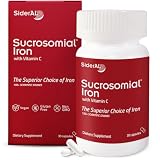
SiderAL Forte Sucrosomial Iron
SiderAL uses a sucrosomial delivery system that protects iron from direct contact with the gastric lining, dramatically reducing the GI distress that causes most people to abandon supplementation. The manufacturer claims seven times higher absorption than standard forms, and owner feedback consistently confirms the gentle-on-the-stomach promise.
- Pro: Clinically studied formulation with minimal constipation or nausea complaints
- Pro: Includes vitamin C to further support absorption without adding harsh acidic ingredients
- Con: At $89 for 30 capsules, it is the most expensive option on this list by a wide margin
Skip this if budget is a primary constraint or if you tolerate standard iron forms without difficulty.
Floradix Iron & Herbs
Floradix has been the go-to liquid iron for decades, combining ferrous gluconate with an herbal blend and fruit juices in a palatable formula that people who hate swallowing pills can actually stick with long enough to see results.
- Pro: Liquid form allows dose adjustment and is easier on some stomachs than tablets
- Pro: The herbal and vitamin C content supports absorption naturally within the same dose
- Con: Refrigeration after opening and a two-month shelf life once open make it less convenient for long courses
Skip this if you prefer a capsule-based routine or need travel-friendly supplements.
Nature’s Bounty Iron 65 mg
Essentially identical in active ingredient to the Nature Made version — 65 mg elemental iron from 325 mg ferrous sulfate per tablet — but packaged at a lower price point for a smaller count. For buyers who just need the cheapest path to a therapeutic dose, this is hard to beat.
- Pro: Lowest per-serving cost on the entire list at $4.54 for 100 tablets
- Pro: Same proven ferrous sulfate form that clinical data supports for raising ferritin
- Con: GI side effects are the trade-off; owners report constipation and stomach upset at rates similar to other ferrous sulfate products
Skip this if you have any history of gastritis, IBS, or previous intolerance to iron salts.
THORNE Iron Bisglycinate
THORNE uses bisglycinate chelation, where iron is bound to glycine amino acids, creating a compound that bypasses much of the stomach-acid-dependent dissociation that causes irritation. This is the chelated form most practitioners recommend when a patient needs iron but cannot tolerate sulfate or gluconate.
- Pro: Bisglycinate chelation produces the mildest GI profile among non-sucrosomial iron forms
- Pro: THORNE’s quality control and third-party testing standards are well-established in the supplement industry
- Con: 25 mg per capsule means you may need two to three capsules to reach a full therapeutic dose, raising cost per day
Skip this if you need a high elemental dose quickly and your stomach tolerates ferrous sulfate without issue.
MegaFood Blood Builder
MegaFood sources its iron from whole-food botanicals and combines it with vitamin C, B-12, and folate in a tablet designed to be taken on an empty stomach without nausea. Owners frequently mention that it is the first iron product they could take consistently without side effects.
- Pro: Can be taken without food, maximizing absorption without GI distress
- Pro: Vegan formulation with no synthetic iron salts
- Con: The elemental iron dose is lower than pharmaceutical-grade options, making it better suited for mild depletion or maintenance rather than severe deficiency
Skip this if your ferritin is critically low and your doctor has specified a high-dose iron therapy.
THORNE Advanced Iron Complex
This product layers multiple chelated iron forms together with supporting nutrients including vitamin C and B-12, designed for people who need aggressive repletion without resorting to intravenous therapy. It sits between the gentle bisglycinate and the pharmaceutical sulfate in both potency and tolerability.
- Pro: Multi-form chelated approach targets absorption through different pathways simultaneously
- Pro: Backed by THORNE’s reputation for clinical-grade purity and verified dosing
- Con: At $26 for 60 capsules, the cost per serving climbs if a multi-capsule dose is required for severe deficiency
Skip this if a simpler, cheaper single-form product gets you results without side effects.
Buying Guide
Iron Form Determines Everything
Ferrous sulfate delivers the highest elemental dose per tablet and the lowest cost, but it is also the form most likely to cause constipation, cramping, and nausea. Ferrous gluconate is milder with slightly lower elemental density. Chelated forms — bisglycinate, sucrosomial, and amino-acid complexes — sacrifice some elemental dose per capsule for dramatically better tolerability. If you have a sensitive gut, the form matters more than the dose.
Elemental Iron vs. Compound Weight
A label reading “325 mg ferrous sulfate” does not mean you are getting 325 mg of iron. Ferrous sulfate is only about 20% elemental iron by weight, so that tablet delivers 65 mg. This confusion causes people to underdose or overdose. Always check the elemental iron number, not the compound weight, when comparing products.
Cost Per Day and Duration
Replenishing depleted iron stores typically takes two to three months of daily supplementation. A $4 tablet bottle that lasts 100 days costs less than a $89 capsule bottle that lasts 30 days, even if the expensive product absorbs better. Calculate cost per therapeutic month before deciding whether a premium form is worth it for your situation.
Our Verdict
The best iron supplement for anemia overall is SiderAL Forte — it solves the tolerability problem that derails most supplementation attempts, and its clinical absorption data supports the premium price for people who have already failed gentler options. For the budget pick, Nature’s Bounty Iron 65 mg is the most cost-effective path to a therapeutic dose if your stomach can handle ferrous sulfate. However, if you need chelated iron but find SiderAL out of reach, THORNE Iron Bisglycinate wins as the best mid-range option combining tolerability, quality testing, and a reasonable per-serving cost.
FAQ
How long does it take to correct iron-deficiency anemia?
Most people see measurable improvements in hemoglobin within two to four weeks and feel noticeably better within the first month. Full ferritin replenishment typically requires two to three months of continued supplementation even after symptoms improve.
Can you take iron with coffee or tea?
Polyphenols and tannins in coffee and tea significantly inhibit non-heme iron absorption. The standard recommendation is to separate iron supplementation and caffeinated beverages by at least one to two hours to preserve absorption efficiency.
Is chelated iron better than ferrous sulfate?
Chelated iron is not necessarily more effective at raising ferritin, but it is substantially easier on the digestive system. For people who experience constipation or nausea from ferrous sulfate, switching to a bisglycinate or sucrosomial form often solves the problem without sacrificing therapeutic outcomes.
What is the best time of day to take an iron supplement?
Taking iron on an empty stomach maximizes absorption, ideally first thing in the morning or at least one hour before eating. If that causes discomfort, taking it with a small amount of vitamin C-rich food is a reasonable compromise that improves tolerability without eliminating absorption benefits.