What's inside
As an Amazon Associate I earn from qualifying purchases. This post may contain affiliate links at no extra cost to you.
Contents
The Short Answer
The best outdoor bench is the one built for the job you give it. A backed garden bench suits a quiet corner where people sit for a while. A backless bench works along a dining table, in a hallway or around a fire pit. A storage bench earns its keep on a porch or patio where cushions, shoes or toys need a dry home. Pick a material that matches your weather and upkeep habits: rot-resistant wood for warmth, poly lumber for low maintenance, powder-coated metal for slim lines. Then check three things most buyers skip, which are the stated weight capacity, the quality of the fasteners and the surface the legs will sit on.
Table of Contents
- Types of Outdoor Benches
- Materials Compared
- How to Choose
- Features Worth Checking
- Sizing and Spacing
- Placement, Footing and Anchoring
- Bench Types by Use
- Weather Care
- Safety
- Common Mistakes
- Who Should Choose What
- Checklist
- FAQ
- Conclusion
Types of Outdoor Benches
Backed garden benches
These have a back and often arms, and they invite you to sit longer. They suit a garden path, a view or the end of a yard. A gently angled back is more comfortable than a vertical one, and a seat that slopes slightly rearward helps rain run off.
Backless benches
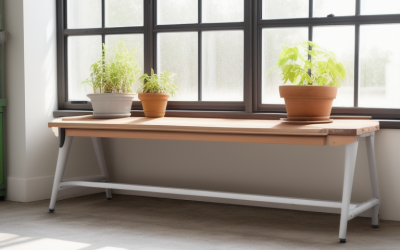
Simple, flexible and easy to move, these slide under a table, line a wall or stand at the foot of a bed of flowers. They are also the easiest to build yourself. Without a back they are less comfortable for long sits, so they work best for short stops and extra seating.
Storage benches
A hinged seat covers a box underneath. They suit entries and patios, but the lid is a safety issue because it can drop on fingers. They also demand ventilation and drainage to keep contents dry.
Picnic-style benches
Often sold with a table, these are sturdy and meant for groups. They are heavy and take space, so they suit a lawn or large patio more than a small porch.
Planter benches and benches with built-in tables
Planters at the ends or a small shelf add function but also add moisture, which stresses wood and finishes. Check how the planter liner drains.
Curved and tree benches
Wrapping around a tree or a firepit, these are usually made from segments. Plan carefully, since a tree trunk grows and the bench must allow for it.
Materials Compared
| Material | Feel | Upkeep | Strengths | Weaknesses |
|---|---|---|---|---|
| Cedar and similar softwoods | Warm, light | Moderate | Natural decay resistance; easy to repair | Dents, silvers without finish |
| Teak and dense hardwoods | Smooth, heavy | Low to moderate | Long life outdoors | Cost and weight |
| Pressure-treated lumber | Plain, sturdy | Moderate | Affordable and common | Can warp and check as it dries |
| Poly lumber | Painted look | Very low | No rot or splinters | Heavy; may sag over long spans |
| Steel or cast iron | Ornate or slim | Moderate | Strong and stable | Rust at chips; hot or cold to the touch |
| Aluminum | Light, modern | Low | Does not rust | Lighter, may shift or tip in wind |
| Stone or concrete | Permanent, solid | Very low | Almost immovable | Heavy, cold seat, hard to relocate |
| Wicker-style resin | Casual | Low | Light and comfortable with cushions | Less sturdy for heavy loads |
No material is perfect. Wood pairs well with gardens and is repairable. Metal offers strength in a slim profile but needs coating care. Stone is unbeatable for permanence and uninspiring for comfort unless a cushion is added.
How to Choose the Right Bench
- Define its job. Reading corner, entry seat, extra dining seating and storage each point to a different design.
- Consider exposure. A covered porch tolerates almost anything. A bench in open sun, a shady damp spot or a salt-air location requires materials chosen for that stress.
- Estimate occupants. Decide how many people will realistically sit at once, and check the stated weight capacity against that load.
- Choose how permanent it should be. Heavy benches stay where you put them. Light ones are easy to move but may shift or blow around.
- Match comfort to use. Ten minutes of tying shoes needs less comfort than an hour with a book.
- Inspect construction. Look at joinery, leg bracing and the thickness of slats or tubes. Thin parts on a long span will flex.
Features Worth Checking
Bracing. Long benches need center supports or stretchers so the seat does not sag. Crossbraces between legs resist racking from side to side.
Fasteners. Stainless or coated bolts and screws avoid rust streaks and loosening. Carriage bolts with washers hold better than screws in the highest-stress joints.
Seat spacing and edges. Slat gaps drain water, and rounded edges make for comfortable seating and prevent splinters and bruises.
Feet. Plastic or rubber glides raise the legs off wet ground and protect decks and pavers from scratches.
Back angle and arms. A back that tilts slightly and arms at a usable height make sitting and standing easier, particularly for older users.
Lid hardware on storage benches. Look for a lid support, such as a gas strut or a lid-stay that holds the lid open and slows closing, plus vent holes and a drainage gap at the base.
Sizing and Spacing
Most benches are sized by length, and comfortable per-person width is generous. Use the bench length divided by a comfortable amount of elbow room, not by the number of people you hope to squeeze in. A bench that nominally seats three adults may feel fine for two and crowded with three.
Seat height and depth matter just as much. A typical seat height is similar to a dining chair, but benches intended for lounging may be lower. A seat that is too deep leaves short users without back support, while a shallow seat is perched and tiring.
For spacing, give people room to get past. Along a path, leave room to walk by a seated person. Beside a table, allow space to slide the bench in and out without hitting a wall. Under a window or against a wall, allow a gap between the back of the bench and the wall for air and drying.
Placement, Footing and Anchoring
A bench is only as steady as what is under it. On soil or lawn, sinking legs and standing water speed decay in wood, so a gravel pad, paver base or patio slab is better. On a deck, check that the bench is positioned over joists and not over a single spanning board with a weak spot. On a slope, level the surface rather than shimming the legs with scraps that can slip.
Anchoring is a judgment call. A heavy bench in a private yard needs none. A light bench in a windy spot, a bench in a public or shared area, or a tall bench near a drop-off might benefit from anchoring. Options include brackets that bolt to a slab or deck, metal ground stakes or buried footings. Whatever you use, make sure the anchoring does not create a tripping hazard and does not damage underground utilities. Call before you dig, using your local utility locating service.
Positioning also affects use. Face the bench toward something worth looking at, keep it out of direct afternoon sun if you want to sit in the heat of the day, and avoid placing it where drip lines from a roof will splash it.
Bench Types by Use
| Bench type | Best use | Typical advantage | Trade-off |
|---|---|---|---|
| Backed garden bench | Quiet seating, views | Comfortable for longer sits | Takes more room and weighs more |
| Backless bench | Dining, entries, firepits | Flexible and easy to move | Less back support |
| Storage bench | Porches, patios, pool areas | Hides cushions and gear | Lid pinch risk, ventilation needs |
| Picnic bench | Groups and lawns | Sturdy, communal | Heavy and bulky |
| Planter bench | Garden edges | Combines seating and greenery | Moisture exposure |
| Stone or concrete bench | Permanent garden spots | Very durable | Cold, heavy, immovable |
If you want to compare these types side by side, you can browse outdoor benches and check dimensions and stated weight capacity before deciding. Pay attention to whether the listing describes the actual material or simply a finish that imitates it.
Weather Care
Wood: Wash once or twice a year with mild soap and a soft brush, let it dry, and renew the finish when water stops beading. Check end grain and leg bottoms, which absorb the most moisture. A rot-resistant species can be left to weather to gray if you accept the look.
Metal: Look over joints and scratched areas for rust and touch up the coating with a suitable paint. Wipe off salt and fertilizer residue.
Poly lumber and resin: Clean with soap and water and avoid harsh solvents.
Stone and concrete: Scrub off moss and algae and make sure water can drain away from the base. In freezing climates, water trapped in cracks can enlarge them.
Storage bench interiors: Check for damp and mildew, keep contents off the floor of the box, and leave the lid slightly open on dry days if the design allows.
In winter, covering a bench with a breathable cover or moving it under shelter prolongs its life. Avoid sealing it tightly in plastic, which traps moisture.
Safety
- Weight capacity: Check the stated rating and do not stand on the bench or use it as a ladder or step. Benches are designed for sitting loads.
- Storage lids: Heavy lids can fall and trap fingers. Use a lid support that holds the lid open and closes slowly, and keep children away from the hinge area. Never store anything dangerous in a box a child could climb into, and never allow children to play inside.
- Ventilation: Never allow a child or pet to be shut inside a bench. Choose a design with a latch that cannot trap and avoid locking mechanisms.
- Tipping: Tall or narrow benches can tip if people lean on the backs. Place them on level ground and anchor them if needed.
- Splinters and sharp edges: Sand rough areas and replace cracked slats. Check metal ends for burrs.
- Hot and cold surfaces: Dark metal in direct sun can be hot enough to be uncomfortable on bare skin.
- Fire: Keep benches well away from fire pits and grills, following the fire feature’s clearance guidance.
- Inspection: Wobbles, loose bolts and soft wood are early warnings. Repair or retire the bench before it fails under someone.
Common Mistakes
- Choosing a bench on photos alone without checking the stated dimensions and load rating.
- Buying a long bench with no center support.
- Setting wood legs directly in wet soil or mulch.
- Putting a storage bench near a fence with no room to open the lid fully.
- Assuming that any bench can double as a step stool.
- Using interior paint or stain.
- Forgetting to re-tighten bolts after the first few weeks.
- Ignoring the comfort of the seat, then never using the bench.
Who Should Choose What
Gardeners: a backed wooden or metal bench with a gentle recline, placed where you will rest between jobs.
Families with small children: a stable, rounded bench that does not tip. If you need storage, choose a model with a slow-closing lid support and avoid anything a child could be trapped in.
Small patios and balconies: a light backless or aluminum bench that can slide away.
Entryways: a storage bench under a roof, with a good drainage gap at the base.
Low-maintenance seekers: poly lumber, aluminum or stone.
Entertainers: a sturdy backless or picnic bench that extra guests can share.
Checklist
- Define the main purpose of the bench before you shop.
- Measure the planned spot, including space to move past.
- Confirm the stated weight capacity.
- Check that long spans have center support.
- Verify that fasteners are stainless or coated.
- Prepare a level, well-drained base.
- Decide if anchoring is needed and plan it safely.
- If buying a storage bench, check the lid support and ventilation.
- Look for rounded edges and smooth surfaces.
- Plan a seasonal inspection and cleaning routine.
Useful add-ons include a breathable bench cover, quick-drying outdoor bench cushions, and if you need dry storage on a patio, a storage bench with a lid support.
Frequently Asked Questions
What material lasts longest for an outdoor bench?
Stone, concrete, dense hardwoods and poly lumber last longest with little decay. Metal lasts well if its coating is maintained. Construction quality matters as much as the material.
Can I leave a wooden bench outside all year?
Rot-resistant wood can, particularly if it is sealed, kept off wet ground and cleaned periodically. In harsh climates, covering it or moving it under shelter extends its life.
How long should an outdoor bench be?
It depends on how many people you want to seat. Allow generous elbow room per adult rather than the minimum. A bench used mostly by one or two people can be shorter and sturdier.
Do I need to anchor my bench?
Not always. Heavy benches in private yards usually stay put. Light benches in windy or public places, or benches near edges, may benefit from anchoring. Follow the hardware maker’s instructions and check for buried utilities first.
Are storage benches safe for children?
They can be if they have a slow-closing lid support and no latch that could trap anyone inside. Keep children from playing in or around them, and keep hazardous items out of boxes children can open.
How do I stop a wooden bench from rotting at the legs?
Keep the legs off wet ground using pavers, gravel or glides, seal the end grain, and allow air to circulate around the base. Clear debris that traps moisture.
What is the best bench for a small porch?
A narrow backless bench or a compact storage bench works well. Measure the door swing and walkway first so the bench does not block traffic.
Can a bench hold two adults and a child?
That depends on its rated capacity and construction. Check the manufacturer’s stated limit for the whole bench, not per person, and avoid loading it beyond it, especially with people jumping or leaning on the back.
Conclusion
Choosing among the best outdoor benches is easier when you work backward from the job it will do. Pick a style that fits the use, a material that fits the climate and a size that fits the space, then check the details: bracing, fasteners, load rating and the surface underneath. Add sensible safety habits around lids, children and fire, and a seasonal check-up, and a good bench will serve as a dependable seat for many years.
As an Amazon Associate, we earn from qualifying purchases. If you click a link and buy, we may receive a small commission at no extra cost to you.
Related guides
More from Amazon
Programs that pair well with the guide above. Offers and eligibility are set by Amazon and may change.
A free business account with business pricing and bulk-buying tools for work, shop or home office.
Create a business accountFree shipping on eligible items, Prime Video and more. Eligible new members can start with a free trial.
Start a Prime free trialAudiobooks and podcasts to listen to on the go. Eligible new members can start with a free trial.
Try Audible freeAd-free music streaming. Eligible new subscribers can start with a free trial.
Try Music Unlimited freeAs an Amazon Associate we earn from qualifying purchases.