What's inside
As an Amazon Associate I earn from qualifying purchases. This post may contain affiliate links at no extra cost to you.
Weatherproofing depends more on where a project will live than on whether you build it in summer or fall. A porch bench exposed to rain needs a finish that sheds water in either season. A garage shelf does not need one. The seasons matter because temperature and humidity affect glue, finishes, wood movement and your chance of getting a durable coat to cure.
Before buying anything, decide whether the project will stay indoors, sit under a roof, or face direct sun and rain. Then check the finish label for its application-temperature range and drying times. A coating that feels dry can still be too soft for use or another coat.
As an Amazon Associate we earn from qualifying purchases at no extra cost to you.



Contents
Start with exposure, not the calendar
Outdoor wood faces several kinds of wear: liquid water, ultraviolet light, temperature swings and moisture entering through end grain or joints. A finish can slow that damage, but it cannot make a poorly drained design weatherproof. Leave gaps between outdoor slats, keep legs off standing water and round sharp edges slightly so finish does not pull thin at corners.
Projects under a deep roof get less direct rain and sun than fully exposed ones, but wind-driven rain still reaches them. Indoor pieces near a leaky door, basement wall or unvented bathroom may also need protection, though they usually do not need an exterior finish. For those, a wipe-clean film finish is often enough.
What summer and fall change
Warm, dry summer weather can make outdoor finishing convenient, but heat and direct sun may dry a coat too quickly. That can leave brush marks, lap lines or a surface skin over a layer that has not cured. Work in shade, avoid hot boards, and follow the product’s temperature limits. Many common finishes specify an application range starting around 50°F, but the label—not a general rule—sets the limit.
Fall brings cooler air, longer damp periods and dew. Those conditions can slow drying and trap moisture under a coating. Do not finish wood that is wet from rain or morning dew. If you have a moisture meter, aim for roughly 12% moisture content or less for many exterior finish jobs, while recognizing that the product instructions and local climate may call for a different target. Let newly built outdoor projects acclimate before finishing if the lumber has been stored wet or in a different environment.
Which materials need protection?
| Material or project | Typical exposure | Practical protection | Common failure |
|---|---|---|---|
| Indoor hardwood furniture | Spills, handling | Oil, hardwax oil or clear film finish | Water rings or worn-through finish |
| Exterior cedar or redwood | Sun and rain | Exterior stain or clear exterior finish; maintain regularly | Fading, checking and peeling finish |
| Pressure-treated lumber | Outdoor ground or weather exposure | Let dry as directed, then use compatible exterior stain or sealer | Coating will not adhere to damp wood |
| Exterior plywood | Edges and faces exposed to water | Seal edges especially well; use an exterior-rated coating | Water enters edges and causes swelling or delamination |
| Indoor plywood or MDF | Dry indoor use | Paint or clear finish where needed; no exterior coating required | MDF swells if water reaches an unsealed edge |
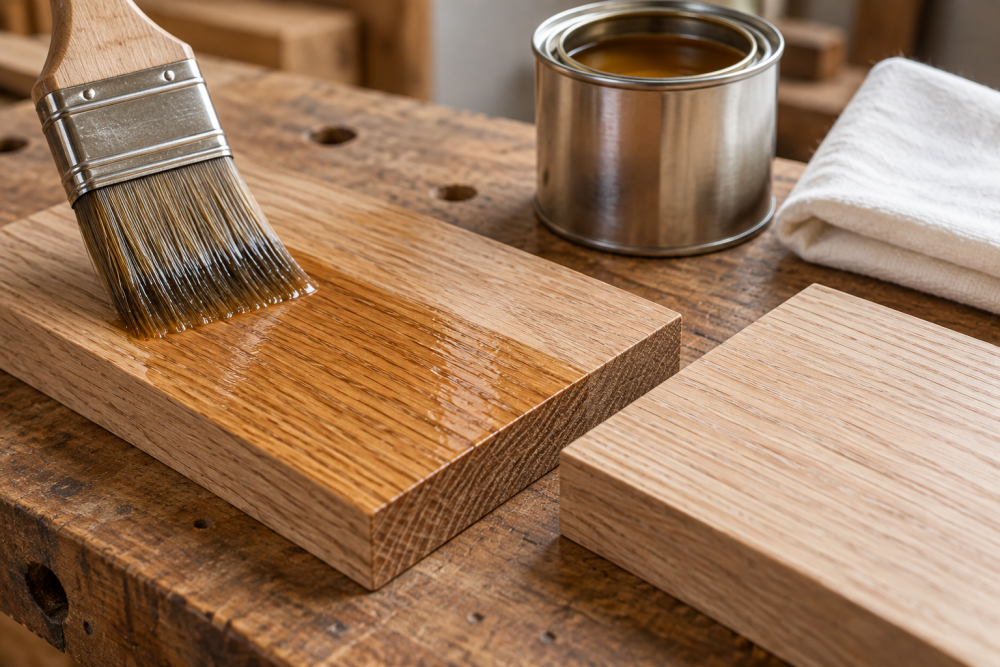
For a fully exposed bench or planter, a penetrating exterior wood stain is a practical choice when you want the grain to show and easier maintenance than a thick clear film. Pigmented stains generally offer better UV protection than clear coatings. They still need upkeep; inspect the surface yearly and recoat when water stops beading or color visibly fades.
Clear exterior finishes preserve the wood’s appearance, but sunlight breaks them down and peeling can require scraping or sanding before recoating. They suit sheltered pieces where appearance matters and maintenance is acceptable. For a simple utility project, paint or an opaque exterior stain is often cheaper and more forgiving. It hides color variation and provides stronger UV shielding, though damaged paint can also peel if water gets behind it.
Wood choice and construction still matter
Cedar and redwood resist decay better than many common untreated woods, but they are not maintenance-free. Untreated pine is inexpensive and can work for a short-lived or sheltered project; expect more movement, checking and rot risk outdoors. Pressure-treated lumber is useful where decay risk is high, but it may be wet when purchased. Follow the treatment label before painting or staining, and wear a dust mask when cutting treated wood. Do not use it for food-contact surfaces unless the product is specifically intended for that use.
Exterior plywood is made for exposure during construction, not necessarily for permanent weather without protection. Seal every face and especially the edges, where water can enter. MDF is a poor choice for an exposed outdoor project: even moisture-resistant grades are not a substitute for exterior-rated material.
Use exterior-rated fasteners for outdoor work. Ordinary steel screws can rust and stain the wood; choose corrosion-resistant coated screws or stainless steel suited to the lumber and setting. Also design for drainage. A durable finish cannot compensate for a horizontal surface that holds puddles or a joint that traps water.
Apply finish without trapping trouble
Sand and remove dust as directed by the finish maker. Coat all accessible faces, including undersides and end grain, rather than sealing only the visible top. End grain absorbs water quickly; an extra coat there may help, but do not build a ridge that prevents joints from fitting. Apply thin, even coats and respect recoat times. If the surface feels tacky after the stated drying period, cool air, high humidity, a heavy coat or unsuitable wood moisture may be responsible. Do not add another coat until it is ready.
For outdoor projects, a water-based exterior wood sealer can be easier to clean up than an oil-based product. Oil-based finishes may enhance the grain and penetrate well, but often take longer to dry and have stronger odor. Read the label for cleanup, ventilation, temperature and disposal instructions. Neither type eliminates periodic inspection.
A simple buying decision
For indoor furniture, buy a finish for the expected wear—not an exterior sealer by default. For a covered porch project, a modest exterior stain or paint is usually enough. For a piece in direct sun and rain, prioritize a design that drains, exterior-rated lumber and a maintainable pigmented finish. If you build late in fall and cannot meet the coating’s temperature and drying requirements, leave the wood unfinished under cover and finish it during a suitable weather window. That is safer than sealing damp wood just to meet a calendar deadline.