What's inside
As an Amazon Associate I earn from qualifying purchases. This post may contain affiliate links at no extra cost to you.
Contents
Best Electric Chainsaws: Corded vs. Battery Picks for Different Jobs
The best electric chainsaw for most homeowners is a 16-inch battery model if you need to move around a yard, while a corded saw is the better-value choice for regular cutting near an outlet. Choose by the wood you cut, how long you work between breaks, and whether managing a cord or spare batteries is less hassle—not by bar length alone.
Quick picks by situation
- Best for a typical yard: A 16-inch battery saw with a 5 Ah battery or larger. It can handle pruning, storm cleanup, and moderate firewood while remaining portable.
- Best for a fixed work area: A 14- to 16-inch corded saw. It avoids battery charging and usually costs less to buy, but the cord limits reach and needs careful management.
- Best for frequent, longer sessions: A battery saw with interchangeable batteries and a rapid charger. Budget for a second battery if stopping to recharge would interrupt the work.
- Best for light pruning and occasional use: A compact 10- to 12-inch saw. It is easier to handle, but its shorter bar is not suited to large rounds or sustained firewood cutting.
- Best for thicker logs: A 16- to 18-inch model, provided its manual allows the bar length and the saw has enough power for the wood. A longer bar is not a substitute for safe cutting technique.
Battery and corded electric chainsaws compared
Battery models trade a higher upfront cost for freedom of movement. Their useful cutting time varies with battery capacity, chain sharpness, wood species, and how hard the saw is pushed. Corded models can run continuously while plugged in, but the extension cord must be rated for the saw and kept clear of the cutting path. Always follow the manufacturer’s instructions for cord gauge and maximum length.
As an Amazon Associate we earn from qualifying purchases at no extra cost to you.


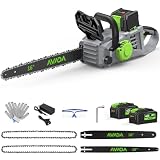

| Type or example | Bar length | Weight | Runtime or power | Best fit |
|---|---|---|---|---|
| Greenworks 40V 16-inch cordless chainsaw | 16 in. | About 10.4 lb with battery | 40V battery platform; runtime depends on battery capacity and workload | General yard cleanup and occasional firewood |
| DeWalt 20V MAX 12-inch cordless chainsaw (DCCS620) | 12 in. | About 9 lb with battery | 20V MAX battery platform; suited to lighter cutting, with runtime varying by battery | Pruning and smaller branches |
| Oregon CS1500 corded electric chainsaw | 18 in. | About 12.6 lb | 15 amp corded motor; continuous operation while powered | Stationary cutting near a suitable outlet |
| Typical compact battery chainsaw | 10–12 in. | About 6–10 lb, often including battery | Often tens of minutes per charge; conditions make this a rough planning range | Short pruning and light cleanup |
| Typical 14–16 in. corded chainsaw | 14–16 in. | About 9–13 lb | Commonly 12–15 amps; needs a properly rated extension cord if one is used | Repeated cuts at a work area near power |
Weights are approximate and can differ by version, battery, and whether the bar and chain are included. Check the exact model manual before buying. Manufacturer runtime claims are usually based on specific test conditions; treat them as comparisons, not guaranteed minutes of cutting.
How to choose for your workload
Match cutting capacity to the wood
A bar’s stated length is not the same as the maximum diameter you should routinely cut. A cut may require working from more than one side, and the saw must have enough power to keep the chain moving without forcing it. For branches and small logs, a 10- to 12-inch saw is easier to control. For general cleanup and occasional firewood, 14 to 16 inches is more versatile. If you regularly process large logs, consider whether an electric model is appropriate for the task and follow its stated limits.
Estimate battery runtime before you buy
Battery capacity is commonly marked in amp-hours (Ah). A larger Ah rating generally stores more energy within the same battery platform, but it also adds weight and does not translate directly into a fixed number of cuts. Dense or wet wood, a dull chain, and repeated full-throttle cutting drain batteries faster.
For example, if a job takes about 30 minutes of actual trigger-on cutting and your chosen battery delivers roughly 15 minutes under similar conditions, plan on at least two charged batteries—or breaks for charging. This is a planning estimate, not a guaranteed runtime. A rapid charger can reduce downtime, but compare its charge time for the exact battery size; charging a larger pack takes longer.
Account for weight and balance
Compare ready-to-cut weight, including the battery, rather than the bare tool weight. A bigger battery may extend runtime but make an already front-heavy saw tiring to hold. If possible, check how the handles feel and whether you can maintain a stable two-handed grip. Do not choose an oversized saw for overhead work; chainsaws should not be used above shoulder height.
Features that affect everyday ownership
- Chain adjustment: Tool-free tensioners are convenient, but they still require checking. A chain that is too loose can derail; one that is too tight adds wear. Follow the manual’s cold-chain tension procedure and recheck after the chain has run briefly.
- Oiling: Most full-size electric saws use automatic chain lubrication and a refillable oil tank. Check the oil level before cutting and confirm oil reaches the chain as directed. “Low maintenance” does not mean oil-free.
- Safety equipment: Look for a chain brake, hand guard, trigger lockout, and a low-kickback chain and bar where available. These reduce some risks but do not prevent injury. Wear chainsaw chaps or trousers, eye and hearing protection, gloves, and sturdy footwear; keep bystanders well clear.
- Battery and charger: A bare tool may not include either. Check what is in the box, the cost of compatible batteries, and whether you already own tools on that platform.
- Maintenance access: A tool-free cover can make cleaning easier. Regardless of design, remove packed sawdust around the sprocket and bar groove, inspect the chain, and store the saw with its chain guard fitted.
What wears first—and how to avoid avoidable costs
The chain is usually the first routine consumable: it dulls from use and can be damaged quickly by dirt, stones, or contact with soil. A dull chain cuts slowly, produces fine sawdust instead of more substantial chips, and encourages users to push harder. Sharpen it correctly or have it sharpened; replace it if damaged beyond safe repair. The guide bar also wears, especially if the chain is run too tight or lubrication is neglected. Rotate the bar if the manual recommends it and inspect for uneven wear.
Use only the specified chain pitch, gauge, and drive-link count. These must match the bar and saw; “same length” alone is not enough. Keep the chain oil filled, clean the saw after use, and store batteries according to their maker’s guidance. For corded models, inspect the extension cord for damage before each session and never let it cross the cutting path.
Bottom line
Pick a corded saw if your cuts happen near power and you value continuous operation at a lower purchase cost. Pick a battery model for mobility, quick jobs, and work spread around a property—but include battery capacity, charging time, and the cost of a spare in your budget. For a first general-purpose electric saw, a 14- to 16-inch model is a sensible range; choose the lightest setup that can safely handle the wood you actually cut.