What's inside
- Contents
- Know Where It Will Live
- Material Comparison
- Style Options
- Sizing for Your Group and Space
- Features and Construction Details
- Placement and Ground Preparation
- Weather Care, Sealing and Seasonal Upkeep
- Safety
- Buy, Assemble or Build
- Who Should Choose What
- Common Mistakes
- Checklist
- Frequently Asked Questions
- Conclusion
As an Amazon Associate I earn from qualifying purchases. This post may contain affiliate links at no extra cost to you.
Short answer: the best picnic table is stable, sized for your group and made from a material that suits your climate and your tolerance for upkeep. Cedar and treated pine are the usual wood choices, hardwoods look rich but need oiling, metal and composite tables need less care, and folding models save space. Measure the spot, choose a style that fits who will use it, and plan to clean and refinish it regularly.
A picnic table is one of the few pieces of outdoor furniture that tends to stay for a decade or more, so a little thought up front pays off. This guide covers materials, sizes, styles, placement, weather care and safety, and finishes with a checklist and common questions.
Contents
- Contents
- Know Where It Will Live
- Material Comparison
- Style Options
- Sizing for Your Group and Space
- Features and Construction Details
- Placement and Ground Preparation
- Weather Care, Sealing and Seasonal Upkeep
- Safety
- Buy, Assemble or Build
- Who Should Choose What
- Common Mistakes
- Checklist
- Frequently Asked Questions
- Conclusion
Contents
- Know where it will live
- Material comparison
- Style options
- Sizing for your group and space
- Features and construction details
- Placement and ground preparation
- Weather care, sealing and seasonal upkeep
- Safety
- Buy, assemble or build
- Who should choose what
- Common mistakes
- Checklist
- FAQ
- Conclusion
Know Where It Will Live
A table that stays on a patio all year has different needs than one that travels to a campsite or park. A permanent yard table can be heavy and solid, since you will rarely move it. A portable table trades some strength for convenience. Think about the surface too. Grass and soft soil need a frame with broad feet or support blocks. A patio, deck or gravel pad gives you a firmer base, though decks have load limits, and a heavy table on a raised deck deserves a check of the deck’s capacity.
Also think about weather. Strong sun fades finishes and warms metal. Constant damp encourages mildew and rot. Freeze and thaw cycles stress joints. Coastal air corrodes untreated metal fasteners faster. Matching the table to your conditions matters as much as picking a good-looking design.
Material Comparison
| Material | Pros | Cons | Upkeep |
|---|---|---|---|
| Cedar | Naturally resists rot and insects, light and pleasant to touch | Usually costs more; soft wood can dent | Seal or let it weather to silver-gray |
| Pressure-treated pine | Affordable and durable outdoors | Heavy; needs time to dry before staining | Seal after drying; tighten hardware |
| Untreated pine or spruce | Cheap and easy to work | Rots quickly outdoors without protection | Frequent finishing, shorter life |
| Dense hardwood such as acacia or eucalyptus | Attractive and solid feel | Heavy; can crack if dried quickly | Regular oiling to stay looking good |
| Metal or steel frame | Strong, slim and tidy | May rust if the coating chips; hot in sun | Touch up scratches, wipe clean |
| Composite or plastic | Low upkeep, easy to wipe | Can feel less sturdy; some fade in strong sun | Wash occasionally |
Wood Notes
Cedar is the classic yard choice because it tolerates moisture and bugs without chemicals. Pressure-treated lumber is a practical budget option, but its treatment chemicals are why it is generally advised not to burn scraps and to wear gloves and a dust mask when cutting or sanding it. Manufacturers also give guidance on drying time before applying stain, which can range from weeks to months depending on the product and climate. Hardwoods are beautiful and strong but usually cost more and need oil to keep their color.
Metal and Composite Notes
Metal frames resist rot but depend on their coating. A chipped spot should be touched up before rust spreads. Composite and plastic tables are simple to clean and ideal for people who want to spend weekends sitting at the table rather than refinishing it, though they may look less traditional.
Style Options
Traditional Attached Benches
The classic A-frame design is very stable and rarely tips, because the benches add weight and spread the load. It is bulky, harder to reach seats for people who use mobility aids, and the fixed benches can make it awkward for some to slide in and out.
Separate Benches or Chairs
Detached benches or chairs can be moved so everyone can find a comfortable spot, and a gap at one end makes room for a wheelchair. The trade-off is that the table itself may be less stable and the benches can shift on soft ground.
Folding and Portable
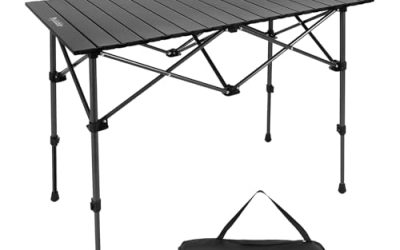
Fold-flat and fold-in-half tables are handy for trips and small spaces. They usually hold less weight and may be lower to the ground. For family camping they are often more practical than a full-size table.
Round and Hexagonal
These feel social and make conversation easier because everyone faces the middle, but they need more floor space and are harder to build.
Kids’ Sizes
Children’s tables are lower and shorter. They are a good choice for a play area but outgrown quickly.
| Style | Stability | Accessibility | Storage | Best For |
|---|---|---|---|---|
| Attached benches | Very high | Limited | Poor; heavy | Permanent yard use |
| Separate benches | Moderate | Good | Moderate | Mixed-age groups |
| Folding | Moderate | Varies | Excellent | Travel, small spaces |
| Round or hexagonal | High | Good | Poor | Larger patios, social dining |
| Kids’ size | Moderate | Child-height only | Good | Play areas |
Sizing for Your Group and Space
A common 6-foot table seats about six people, and an 8-foot table often seats eight, with adults sitting about two feet apart. Treat these as rules of thumb, since bench depth and body size vary. Children fit more easily, and large groups feel crowded quickly.
Leave several feet around the table so people can sit and stand without bumping into fences, plants or grills. A common recommendation for comfortable movement is about three feet of clearance on each side. Mark the footprint, including the benches, with string or chalk and live with it for a day before you commit.
Height and Seating
Most picnic table tops sit around 28 to 30 inches high, with benches at about 17 to 18 inches. Those dimensions are conventional, not a rule, so check the product details. Seating that is too low or too high is tiring over long meals.
Weight and Delivery
A full-size wooden table can weigh well over a hundred pounds. Consider how you will move it from the vehicle to the site, whether you need help, and whether doors, gates and steps can accommodate the package. Read the assembled dimensions and the assembly time before ordering.
Features and Construction Details
- Rounded corners and smooth edges. Safer for children and kinder to clothes.
- Quality fasteners. Galvanized, coated or stainless steel bolts and screws resist rust. Look for carriage bolts and washers on structural joints, with nuts you can tighten later.
- Gaps between boards. Small gaps let rain drain and let boards expand and contract. Tight gaps trap water.
- Sturdy cross-bracing. Diagonal bracing prevents racking, which is the side-to-side wobble that develops over time.
- Thick top boards. Thin boards sag and crack. Heavier boards feel more solid and last longer.
- Umbrella hole. A useful feature if you want shade. Make sure the hole is reinforced and positioned away from the bench.
- Feet design. Leveling feet or wide pads help on uneven ground and keep wood from sitting directly in moisture.
- Clear assembly instructions. A confusing kit leads to loose joints and frustration.
Placement and Ground Preparation
- Choose level ground. A level base prevents rocking and uneven wear. If the ground slopes, add a gravel pad or level the area.
- Add drainage. A bed of compacted gravel or pavers helps water drain away from the legs and keeps grass from growing around the base.
- Think about sun and shade. Partial shade makes meals more comfortable and protects finishes, while open sun may fade wood and heat metal.
- Keep a safe distance from heat. Place the table well away from grills, fire pits and outdoor heaters. Sparks and radiant heat can damage surfaces and cause burns.
- Consider access. Keep a clear route from the house or kitchen, and ensure the area works for those who use mobility aids.
- Check local rules. If you plan to install a permanent table in a shared space, park or community area, check your homeowner association, landlord or local authority’s rules.
- Protect the surface below. On a deck or lawn, felt pads or wide blocks help prevent scratches and sinking.
Weather Care, Sealing and Seasonal Upkeep
Spring Reset
Clean with mild soap, water and a soft brush. Rinse and let the table dry thoroughly. Sand rough spots and splinters. Check bolts for looseness and tighten them. Inspect joints for cracks or softening, since soft wood can mean rot.
Sealing
For wood, choose a sealer, stain or outdoor oil suited to the species. Penetrating oils soak in and are easy to renew. Film-forming finishes can look more uniform but peel over time and need sanding before recoating. Follow the label’s instructions on temperature, drying time and number of coats. For treated lumber, wait as long as the manufacturer advises before applying finish. Always seal end grain well, because it absorbs the most water.
Summer Care
Wipe up spills, avoid leaving wet towels or cushions on the surface, and watch for sap or bird droppings. Provide shade for finishes that fade.
Autumn Prep
Clear leaves and debris from the base, check drainage and inspect for loose hardware. If the table will face a harsh winter, consider moving it under cover or using a breathable cover that lets moisture escape. Plastic sheets that trap moisture can cause mildew.
Winter Storage
Folding tables should be stored dry and flat in a garage or shed. Wooden tables left outside should be lifted off wet ground and covered loosely if you can.
Mildew and Stains
Mild mildew can usually be cleaned with a mix of mild soap and water. Follow the product label for any wood cleaner you use, and test a small area first. Avoid high-pressure washing, which can raise the grain and erode soft wood.
Metal Care
Clean with mild soap and water, touch up chips with paint made for metal, and keep drainage holes clear so water does not pool inside tubes.
Safety
- Check that bench ends and corners are rounded and screws do not protrude.
- Test stability before use, especially with children, by pushing and rocking gently.
- Do not let people stand on benches or table tops, which can overload or tip a lighter table.
- Keep the table away from grills, fire pits and outdoor heaters, and keep hot dishes on pads or trivets.
- Supervise children who climb on benches. A fall onto a hard surface can cause injuries.
- Metal and dark surfaces get hot in sun and can burn skin, so test them before sitting children down.
- Wear gloves, eye protection and a dust mask when sanding or cutting, particularly with treated lumber.
- Remove splinters promptly and re-sand rough areas.
Buy, Assemble or Build
Ready-made tables range from fully assembled units to flat-pack kits. A kit is cheaper to ship and lets you check each part as you build. If you enjoy woodworking, building a table from plans lets you choose the species, size and bench layout, and allows features like a wide gap for wheelchair access. It is a manageable weekend or two project with basic tools, exterior-grade fasteners and a finish suited to the wood. If you prefer to buy, here are practical places to start browsing:
- wooden picnic tables
- folding picnic tables
- exterior wood sealers and oils
- breathable picnic table covers
Disclosure: As an Amazon Associate we may earn from qualifying purchases made through links on this page, at no extra cost to you.
Who Should Choose What
- The low-maintenance household: Composite, plastic or coated metal. Accept a less traditional look for easy cleaning.
- The traditionalist who does not mind a project: Cedar, sealed regularly or left to weather to a gray finish.
- The budget-minded buyer: Pressure-treated pine, allowed to dry before sealing.
- The entertainer with a patio: A larger table with separate benches or chairs for easy movement.
- The camper or traveler: A folding model that fits the vehicle and sets up quickly.
- Families with wheelchair users: A design with an open end or removable benches.
- Small yard owners: A compact folding or children’s size that stores away.
Common Mistakes
- Not sealing the wood and letting it gray, crack or mildew faster than necessary.
- Placing the table on soft ground without blocks, pads or a gravel base.
- Forgetting that metal gets hot in direct sun.
- Buying without checking assembled dimensions, weight and assembly time.
- Staining treated lumber before it has dried.
- Covering the table with plastic that traps moisture.
- Placing the table too close to a grill or fire pit.
- Ignoring local park or HOA rules for a shared space.
- Skipping annual bolt checks, which leads to a wobbly table.
Checklist
- Decide on the location and measure the footprint, including benches and walking room.
- Pick a material based on climate and upkeep preferences.
- Choose a style that suits your group and any mobility needs.
- Check seat count, height and weight.
- Inspect fasteners, bracing and edge finishing.
- Prepare level, draining ground.
- Seal or finish following the label directions.
- Schedule a seasonal clean and bolt check.
Frequently Asked Questions
What is the best wood for a picnic table?
Cedar is a popular choice for its natural resistance to rot and insects. Pressure-treated pine is a more affordable alternative, and dense hardwoods offer a rich look with extra oiling.
How many people does a picnic table seat?
A 6-foot table typically seats about six people, and an 8-foot table about eight. Children fit more easily and large adults may need more room.
How often should I seal a picnic table?
It depends on the finish, climate and exposure. Many people refresh a wood finish every year or two. When water no longer beads on the surface, or the wood looks dry and gray, it is time to clean and reapply.
Can I stain pressure-treated wood right away?
Often not. Treated lumber can hold a lot of moisture, and manufacturers usually advise letting it dry before staining. Check the label and the lumber supplier’s guidance, and test by sprinkling water on the surface to see if it soaks in.
Are folding picnic tables as sturdy as traditional ones?
Generally they are lighter and may hold less weight, but they are far easier to store and move. Check the weight rating and test stability on your ground before relying on them.
How do I keep a picnic table from wobbling?
Level the ground, tighten the bolts, check the cross-bracing and add shims or leveling feet under short legs. A gravel pad or paver base helps.
Where should I put a picnic table in my yard?
Choose level, well-drained ground with some shade, a clear path from the house and a safe distance from grills and fire pits. Leave room to sit and stand around it.
Is a metal picnic table a good idea?
Yes, if you want a strong, low-rot option. Check the coating, keep it from chipping and remember that metal gets hot in direct sun, so shade or cushions help.
Conclusion
The best picnic tables are stable, correctly sized and honest about the upkeep they need. Choose a material that fits your climate and your appetite for maintenance, pick a style that suits your guests, prepare level ground and seal the wood according to the label. Check the hardware every season and keep the table clear of heat sources. Do those few things and your table will be a reliable gathering place for many summers to come.
Related guides
More from Amazon
Programs that pair well with the guide above. Offers and eligibility are set by Amazon and may change.
A free business account with business pricing and bulk-buying tools for work, shop or home office.
Create a business accountFree shipping on eligible items, Prime Video and more. Eligible new members can start with a free trial.
Start a Prime free trialAudiobooks and podcasts to listen to on the go. Eligible new members can start with a free trial.
Try Audible freeAd-free music streaming. Eligible new subscribers can start with a free trial.
Try Music Unlimited freeAs an Amazon Associate we earn from qualifying purchases.