What's inside
As an Amazon Associate I earn from qualifying purchases. This post may contain affiliate links at no extra cost to you.
Contents
Best Kids Car Beds: Choose by Fit, Safety, and Everyday Use
The best kids car bed is one that fits the child’s mattress and bedroom, has a stable frame with secure guardrails, and is easy enough to assemble and maintain. For most families, a low-profile twin bed with a wood or steel support frame is the most practical choice; a larger plastic race-car shell makes sense when the child wants the look and the room can spare the floor space.
Car beds vary widely: some are ordinary bed frames with car-themed panels, while others are molded shells with spoilers, lights, or built-in storage. Compare the actual mattress dimensions and usable sleep surface—not just the advertised age range or the bed’s overall length.
As an Amazon Associate we earn from qualifying purchases at no extra cost to you.
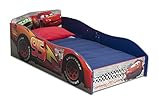
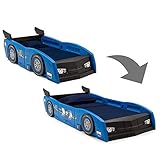


Quick comparison by bedroom and use
| Car-bed type | Typical mattress | Common materials | Approximate footprint | Best fit |
|---|---|---|---|---|
| Low-profile toddler car bed | 28 × 52 in | Molded plastic, sometimes steel or wood supports | About 55–65 × 30–35 in | Children moving from a crib; compact rooms |
| Twin race-car frame | 38 × 75 in | Engineered wood, solid wood, or metal with decorative panels | About 80–90 × 40–45 in | Longer use and standard twin bedding |
| Full-size themed bed | 54 × 75 in | Usually engineered wood or metal with themed trim | About 80–95 × 56–62 in | Older children or shared sleepovers, if room allows |
| Car-shaped loft or storage bed | Usually twin, 38 × 75 in | Wood or engineered wood; some designs combine metal hardware | Varies; allow for stairs, drawers, and access space | Rooms where under-bed storage is more valuable than a low profile |
These are common mattress sizes and planning estimates, not guaranteed specifications for every model. A car body can add several inches beyond the mattress in every direction. Confirm the maker’s exterior dimensions, mattress requirements, weight limit, and whether the mattress is included before buying.
Which type is best for your situation?
- Small bedroom or first bed: Choose a low toddler frame or a plain twin frame with modest car panels. Check the assembled length and width, and leave room to open drawers or walk around the bed.
- Child likely to outgrow a toddler mattress soon: Choose a twin-size frame. The mattress costs more than a toddler mattress, but the standard size is easier to reuse in a later bedroom setup.
- Frequent climbing, jumping, or rough play: Favor a sturdy, low frame with a clearly stated weight limit and well-supported slats. Decorative plastic is not a substitute for structural support.
- Need more storage: A model with drawers can help, but measure drawer travel and access space. A bulky shell may make the storage difficult to reach if the bed is pushed against a wall.
- Tight budget: A simple themed frame generally costs less than a feature-heavy molded bed. Broad market ranges are roughly $100–$250 for basic toddler designs, $200–$500 for many twin car beds, and $400–$900 or more for larger or feature-rich designs. Prices vary by size, materials, and included accessories.
Materials, safety, and what to inspect
Molded plastic makes it possible to create curved bodywork and bright colors without sharp decorative edges. Look for substantial, well-finished panels and secure connections; thin panels can flex, scratch, or crack under repeated impact. Plastic surfaces are usually easy to wipe clean, but seams and decals can collect dust or peel.
Wood and engineered wood provide a more furniture-like frame and can support conventional slats. Inspect the joints, fasteners, and slat spacing, and avoid assuming that a decorative headboard or car panel carries the mattress. Metal rails or supports can add rigidity, though exposed corners and loose bolts need attention over time. In mixed-material beds, check how the panels attach to the frame rather than judging sturdiness by appearance alone.
- Confirm the product is intended for the child’s age and follow its assembly and use instructions. Do not use a toddler bed outside its stated limits.
- Check that guardrails are secure, especially on an elevated or loft-style design. A guardrail should not have gaps that create an entrapment hazard.
- Use only the mattress size and thickness specified by the manufacturer. An ill-fitting mattress can leave gaps; an overly thick one can reduce the effective height of a guardrail.
- Verify the stated maximum load and include the child and any bedding or accessories when considering it. Do not treat the load limit as permission for multiple children to jump on the frame.
- Keep the bed away from windows, cords, heaters, and other hazards. Anchor tall furniture if the instructions call for it.
For a U.S. purchase, look for clear manufacturer identification, instructions, and applicable children’s-product compliance information. If a used bed is missing parts or instructions, contact the manufacturer for the correct hardware and guidance rather than improvising replacements.
Measure the whole setup before ordering
Measure the room’s usable floor area, then compare it with the bed’s exterior dimensions—not just the mattress. Add clearance for getting in and out, making the bed, opening storage, and reaching nearby furniture. A practical layout check is to tape the bed’s footprint on the floor and mark the drawer or door swing before placing an order.
For example, a twin mattress is 38 × 75 inches, or about 19.8 square feet. If a car frame measures 86 × 43 inches, its footprint is about 25.7 square feet: nearly 6 square feet more than the mattress alone, before allowing any walking space. This is why two frames that take the same mattress can feel very different in a small bedroom.
Assembly and ownership: the details that matter later
Expect assembly to take longer when the bed has multiple body panels, lights, drawers, or decorative trim. Basic frames may need only a few major connections; elaborate designs can require many fasteners and careful panel alignment. A second adult can help hold large pieces steady. Assemble on a protected floor, sort hardware before starting, and tighten fasteners only as directed—over-tightening can strip wood-based panels or damage plastic.
After the first few weeks, recheck the fasteners and slats according to the instructions. Repeat checks if the bed begins to squeak or shift. On wood-based frames, repeated disassembly can weaken screw holes, so avoid relocating the bed unnecessarily. On molded designs, inspect high-stress connection points for cracks. Clean with the method recommended by the manufacturer; abrasive pads and strong solvents may dull finishes or damage decals.
Lights and other electronic features add another ownership task: confirm whether batteries are included, how they are replaced, and whether wiring can be kept out of reach. If the feature stops working, the bed should remain stable and fully usable without it.
Bottom line
Choose a toddler car bed for a short-term transition and compact sleep surface, a twin frame for a more reusable size, or a larger themed bed only when the room can accommodate its shell. The strongest buying decision comes from matching mattress size, exterior footprint, structural materials, guardrail design, and assembly demands to the child and room—not from the most realistic-looking car body.