
What's inside
- Best Black Friday TV Deals: What Actually Fits Your Room and Your Stand
- Quick Comparison: 2026 Black Friday TV Picks
- Best Overall: LG C-series OLED
- Best for Bright Rooms: Samsung S90-series QD-OLED
- Best Budget Big Screen: TCL QM-series and Hisense U-series
- Best for a Workshop or Multi-Use Room: Samsung The Frame
- Wall Mount vs Stand: The Measurement Math
- Stand Material Durability: What Fails First
- How to Choose in Five Steps
- Frequently Asked Questions
- Related Guides
As an Amazon Associate I earn from qualifying purchases. This post may contain affiliate links at no extra cost to you.
Contents
- Best Black Friday TV Deals: What Actually Fits Your Room and Your Stand
- Quick Comparison: 2026 Black Friday TV Picks
- Best Overall: LG C-series OLED
- Best for Bright Rooms: Samsung S90-series QD-OLED
- Best Budget Big Screen: TCL QM-series and Hisense U-series
- Best for a Workshop or Multi-Use Room: Samsung The Frame
- Wall Mount vs Stand: The Measurement Math
- Stand Material Durability: What Fails First
- How to Choose in Five Steps
- Frequently Asked Questions
- Related Guides
Our Top Picks
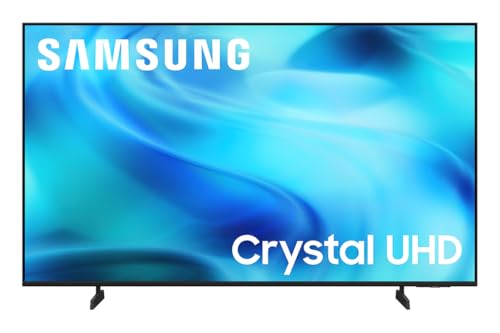 Samsung 65-Inch Class Crystal UHD U8000H Series Samsung65 Inch8.7 x 56.9 x 34.7 inches31.8 PoundsCheck on Amazon


Best Black Friday TV Deals: What Actually Fits Your Room and Your Stand
The best Black Friday TV deals in 2026 are on 55- to 65-inch 4K QLED and OLED sets from LG, Samsung, and TCL, and the two numbers that decide whether a deal is good for you are viewing distance and stand footprint. A 55-inch screen needs roughly 7 to 8 feet of seating distance for 4K content; a 65-inch wants 8 to 10 feet. Before you chase a discount, measure the wall or the stand, confirm the VESA pattern, and check the panel’s stand width against the furniture it will sit on. A cheap TV on a wobbly particleboard console is a worse purchase than a mid-priced one on a proper mount.
Quick Comparison: 2026 Black Friday TV Picks
| Pick | Best for | Key specs (typical) | Typical Black Friday range |
|---|---|---|---|
| LG C-series OLED (55″–65″) | Best overall picture; dark rooms | 4K OLED, 120 Hz, HDMI 2.1, ~35–40 lb, VESA 300×200 | $1,100–$1,600 |
| Samsung S90-series OLED (55″–65″) | Bright rooms, gamers | 4K QD-OLED, 120–144 Hz, anti-glare, ~35–45 lb | Frequently discounted; brand often price-matches |
| TCL QM-series Mini-LED (55″–75″) | Best value for size | 4K Mini-LED, 120 Hz, high brightness, ~40–55 lb | $600–$1,300 |
| Hisense U-series Mini-LED (55″–75″) | Budget big-screen | 4K Mini-LED, 120 Hz, VESA 400×300 on 65″ | $500–$1,100 |
| Samsung The Frame (55″–65″) | Living rooms where the TV is decor | 4K QLED, matte finish, art mode, slim wall mount included | $1,000–$1,500 |
Prices vary by retailer and doorbuster timing; treat the ranges above as market bands, not quotes. Panel specs come from each manufacturer’s published spec sheet.
As an Amazon Associate we earn from qualifying purchases at no extra cost to you.


Best Overall: LG C-series OLED
The C-series is the default recommendation for most living rooms because it combines perfect black levels with four HDMI 2.1 inputs, which matters if you own both a current console and a PC. A 55-inch model weighs about 35 to 40 pounds with the pedestal attached, and the panel uses a 300×200 mm VESA pattern, so most medium-duty wall mounts rated for 55 to 75 pounds will hold it with margin. Per LG’s spec sheet, the included stand adds roughly 10 inches to the depth, which is the number people forget: a pedestal-deep TV needs a console at least 15 inches deep. Main trade-off is price and OLED’s sensitivity to static content left on screen for hours.
Best for Bright Rooms: Samsung S90-series QD-OLED
QD-OLED panels push more color volume at high brightness than standard OLED, and Samsung’s anti-glare coating handles a window-facing wall better than most glossy rivals. If your room has a south-facing window you cannot curtain, this is the pick. The trade-off is that the stand is often a wide central pedestal, so measure your furniture width before buying — a 65-inch model can need close to 40 inches of surface. VESA spacing is typically 300×200 mm, matching most universal mounts.
Best Budget Big Screen: TCL QM-series and Hisense U-series
Mini-LED backlighting is why these sets punch above their price. TCL’s QM-series and Hisense’s U-series both deliver 4K at 120 Hz with VRR, and their Black Friday discounts are usually the steepest in absolute dollars on 65- and 75-inch sizes. The honest trade-offs: motion handling and off-axis viewing are a step behind OLED, and the built-in speakers are thin, so budget for a soundbar. A 75-inch Mini-LED can weigh 55 to 70 pounds with the stand, which pushes you past the safe limit of a cheap wire shelf and into a proper TV console or a stud-mounted bracket.
Best for a Workshop or Multi-Use Room: Samsung The Frame
If the TV lives in a room that doubles as a shop, guest space, or open-plan living area, The Frame’s matte finish kills the mirror glare that makes ordinary panels unusable under overhead lighting, and it ships with a slim wall mount in the box. Art mode means the screen is not a black rectangle when idle. The trade-off is brightness: it cannot match Mini-LED or OLED for HDR impact, and workshop dust settles on the matte surface visibly, so plan on a weekly dry microfiber wipe.
Wall Mount vs Stand: The Measurement Math
Whichever deal you take, you need three numbers before checkout: the panel’s VESA pattern, its weight without the stand, and its stand footprint. A 65-inch set commonly uses 400×400 mm VESA and weighs 45 to 55 pounds bare; a mount rated for 80 pounds gives you a 1.5x safety margin, which is the minimum most installers work to. For wall mounting, find two studs — a 16-inch stud spacing means the bracket’s arms must span at least 16 inches — and remember that a fixed mount sits about 1 inch off the wall while a full-motion arm can pull the screen 15 to 20 inches into the room, which changes your viewing distance by more than a foot.
| Screen size | Comfortable 4K distance | Typical VESA | Weight w/ stand | Minimum stand depth |
|---|---|---|---|---|
| 43″ | 5–6 ft | 200×200 | 18–22 lb | 10 in |
| 50″ | 6–7 ft | 200×200 | 24–30 lb | 11 in |
| 55″ | 7–8 ft | 300×200 | 30–40 lb | 12 in |
| 65″ | 8–10 ft | 400×400 | 45–60 lb | 14 in |
| 75″ | 9–12 ft | 400×400 | 55–75 lb | 15 in |
Stand Material Durability: What Fails First
TV furniture fails in a predictable order. First the cam locks or dowels loosen where the top meets the side panels; then the back panel starts to bow; then a shelf sags. Particleboard with a paper or melamine veneer handles a 40-pound TV fine but creeps under a 70-pound one within a couple of years, especially in humid rooms. MDF is denser and holds screws better, so it resists the loose-cam-lock failure longer. Solid wood and steel-frame consoles cost more but are the only categories that comfortably carry a 75-inch Mini-LED indefinitely. If you are handy, a shop-built stand from 3/4-inch plywood with glued and screwed joints and a hardwood face frame will outperform most retail furniture for the same money — and you control the depth, so you can build to the exact stand footprint in the table above.
How to Choose in Five Steps
- Measure the seating distance first. Distance sets size, not the other way around. Sit where you actually watch and measure to the wall. Under 7 feet, 55 inches is the ceiling; over 9 feet, go 65 or 75.
- Measure the furniture top. Width and depth must both clear the stand. A 65-inch set typically needs 45 to 50 inches of width and 14 inches of depth.
- Decide mount or stand. Wall mount frees the furniture but needs two studs and a 1.5x weight-rated bracket; a stand is faster but commits you to the depth above.
- Match the panel to the light. Dark room, OLED. Bright room, QD-OLED or Mini-LED. Multi-use room with overhead light, matte finish. This one choice matters more than any spec-sheet brightness number.
- Budget the accessories. Assume a soundbar or speakers, and if wall mounting, a bracket plus hardware. The TV discount rarely covers both, so price them before you commit to the deal.
Frequently Asked Questions
What size TV should I buy for my room?
Base it on viewing distance, not room dimensions. For 4K content, 55 inches suits 7 to 8 feet, 65 inches suits 8 to 10 feet, and 75 inches suits 9 to 12 feet. If you mostly watch standard-definition or older streaming content, sit at the far end of those ranges because lower-resolution material shows pixel structure up close.
Is a wall mount better than the included stand?
A wall mount wins on space, safety, and viewing-distance control, but it requires two studs within the bracket’s span and a mount rated at roughly 1.5 times the TV’s bare weight. The included stand is the better choice when you rent, cannot find studs, or want the TV to move with the furniture. In a workshop or dusty space, a stand plus a cabinet that closes is often the more practical answer.
Why do the same size TVs need different VESA brackets?
VESA patterns describe the spacing of the four mounting holes on the back panel, and manufacturers vary it by chassis design, not screen size. A 55-inch set is often 300×200 mm while a 65-inch is 400×400 mm, though exceptions exist. Check the specific model’s spec sheet before ordering a mount, and confirm the bracket covers the pattern with the included hardware.
Are Black Friday TV deals actually cheaper than other times of year?
Generally yes for the previous generation of panels and for 65- to 75-inch sizes, where discounts are steepest in absolute dollars. The catch is that the deepest doorbusters are often limited-stock or retailer-exclusive variants with different tuners or panel batches. Compare the model number character by character against the manufacturer’s listing rather than trusting the size and brand alone.
How much weight can a typical TV stand hold?
Retail consoles built from particleboard commonly list 50 to 80 pounds total, which is fine for a 55-inch set but marginal for a 75-inch Mini-LED at 55 to 75 pounds with its stand. MDF and solid wood hold up better over time, and a steel-frame or shop-built plywood stand is the safest option above 60 pounds. If the console’s top has any flex or sag, do not put a large TV on it.
Do I need a soundbar with a discounted TV?
Most slim panels have downward- or rear-firing speakers with little low-frequency output, so dialogue and music both suffer on a 65-inch or larger screen. A basic two-channel soundbar or a pair of powered bookshelf speakers will improve the experience more than paying one tier up on the TV itself. Budget for it in the same purchase so the total cost stays realistic.