What's inside
- Best Strollers for Small Dogs: The Short Answer
- Top 3 Picks
- Quick Comparison
- How We Chose
- 1. Pawccoli Pet Stroller – Best for Owners Who Want a Detachable Carrier
- 2. Pet Gear Travel Lite Plus Stroller – Best Budget Pick
- 3. Kenyone Medium Dog Stroller – Best for Larger Small Dogs
- 4. MoNiBloom Pet Stroller – Best Mid-Range All-Rounder
- 5. ROODO 3 Wheel Pet Stroller – Best All-Terrain Three-Wheel
- 6. ROODO 4 Wheel Pet Stroller – Best All-Terrain Four-Wheel
- 7. Trixie Foldable Pet Stroller – Best for Weather Protection and Storage
- 8. GTPLAYER Foldable Pet Stroller – Best for Escape-Prone Small Dogs
- 9. SilverRover Pet Stroller – Best Style-Forward Option
- 10. ZENY Pet Stroller – Best Entry-Level Foldable
- 11. KMFurnila 3 Wheel Pet Stroller – Best Budget Three-Wheel
- 12. DUMOS 3 Wheels Pet Stroller – Best Lowest-Cost Trial
- How to Choose a Stroller for a Small Dog
- Frequently Asked Questions
- The Bottom Line by Situation
As an Amazon Associate I earn from qualifying purchases. This post may contain affiliate links at no extra cost to you.
Contents
- Best Strollers for Small Dogs: The Short Answer
- Top 3 Picks
- Quick Comparison
- How We Chose
- 1. Pawccoli Pet Stroller – Best for Owners Who Want a Detachable Carrier
- 2. Pet Gear Travel Lite Plus Stroller – Best Budget Pick
- 3. Kenyone Medium Dog Stroller – Best for Larger Small Dogs
- 4. MoNiBloom Pet Stroller – Best Mid-Range All-Rounder
- 5. ROODO 3 Wheel Pet Stroller – Best All-Terrain Three-Wheel
- 6. ROODO 4 Wheel Pet Stroller – Best All-Terrain Four-Wheel
- 7. Trixie Foldable Pet Stroller – Best for Weather Protection and Storage
- 8. GTPLAYER Foldable Pet Stroller – Best for Escape-Prone Small Dogs
- 9. SilverRover Pet Stroller – Best Style-Forward Option
- 10. ZENY Pet Stroller – Best Entry-Level Foldable
- 11. KMFurnila 3 Wheel Pet Stroller – Best Budget Three-Wheel
- 12. DUMOS 3 Wheels Pet Stroller – Best Lowest-Cost Trial
- How to Choose a Stroller for a Small Dog
- Frequently Asked Questions
- The Bottom Line by Situation
Our Top Picks
 Pawccoli Pet Stroller for Small Dogs and CatsSmall_Slim29.5 x 21 x 39.5 inches16.5 poundsCheck on Amazon
 MoNiBloom Pet Stroller for Small/Medium Dogs and Cats13"(D)29"(W)40"(H)29 x 13 x 40 inches11.02 PoundsCheck on Amazon
 ROODO 3 Wheel Pet Stroller Best Lightweight Foldable33*18*38 Inch33 x 18 x 38 inches11 poundsCheck on Amazon
Best Strollers for Small Dogs: The Short Answer
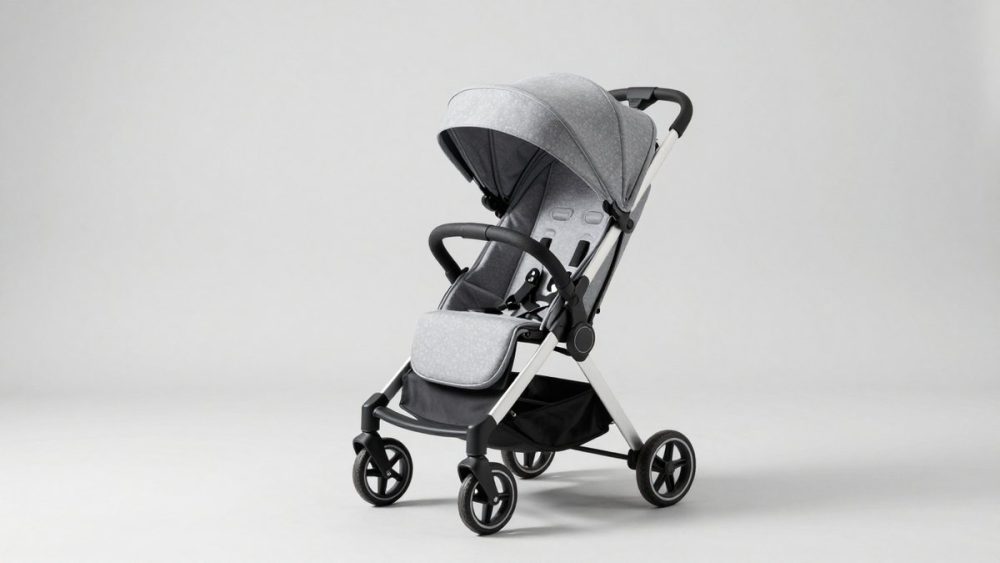
The best stroller for most small dogs is the Pawccoli Pet Stroller for Small Dogs and Cats, because its one-click fold and detachable carrier solve the two problems small-dog owners hit most often — getting the stroller in and out of a car quickly, and lifting a dog out without waking it. If your budget is tight, the Pet Gear Travel Lite Plus arrives assembled and folds flat with no tools, which makes it the lowest-friction entry point in this category. If you want the most stroller for the money and your dog is on the larger end of “small,” the Kenyone Medium Dog Stroller carries up to 55 lbs and uses an aluminum frame, so it doubles as a small-dog stroller that will never strain under a growing pet. For most readers shopping for a dog under about 25 lbs, though, the Pawccoli is the pick: it hits the sweet spot on interior height, ventilation, and fold size at once.
Top 3 Picks
Best Overall: Pawccoli Pet Stroller with Detachable Carrier
The detachable carrier is the feature that separates it — you can unclip the basket and carry the dog inside it, which matters enormously with a nervous or sleeping small breed. The one-click fold collapses the frame without removing the carrier, and the three safety tethers keep a determined terrier from launching out the front. It sits in the premium tier, but the carrier-plus-stroller combination replaces two purchases.
Best Budget: Pet Gear Travel Lite Plus Stroller
No assembly required is not a throwaway line — it means the stroller is usable the minute it comes out of the box, which is exactly what a budget buyer wants. The large wheels roll over gravel and grass better than most strollers at this tier, and the compact fold is genuinely compact. You give up premium fabrics and a detachable carrier, but nothing structural.
Best Premium / Best for Larger Small Dogs: Kenyone Medium Dog Stroller
With a 55 lb weight limit and a lightweight aluminum frame, this is the stroller to buy if your “small dog” is a 30 lb French Bulldog or a Corgi that will not stop growing. The one-click fold and aluminum construction keep it manageable despite the capacity, and it is the only stroller here rated well above the 33 lb ceiling most of this list shares.
Quick Comparison
| Product | Best For | Key Specs (per listing) | Price Tier |
|---|---|---|---|
| Pawccoli Pet Stroller | Best overall; owners who want a detachable carrier | One-click fold; detachable carrier; 3 safety tethers | Premium |
| Pet Gear Travel Lite Plus | Best budget; no-assembly buyers | No assembly required; compact fold; large wheels | Budget |
| Kenyone Medium Dog Stroller | Best for larger small dogs | Up to 55 lbs; lightweight aluminum frame; one-click fold | Premium |
| MoNiBloom Pet Stroller | Mid-range all-rounder for cats and small dogs | Rated to 33 lbs; black; small/medium dogs and cats | Mid-range |
| ROODO 3 Wheel Pet Stroller | Best all-terrain / jogging-style use | 3 wheels; lightweight; foldable compact; all-terrain | Premium |
| ROODO 4 Wheel Pet Stroller | Stability-focused all-terrain use | 4 wheels; lightweight; foldable compact; all-terrain | Premium |
| Trixie Foldable Pet Stroller | Weather protection and storage | Weather cover; storage basket; foldable carrier cart | Mid-range |
| GTPLAYER Foldable Pet Stroller | Small dogs with escape-artist tendencies | Up to 33 lb; 4-wheel; 2 safety tethers | Mid-range |
| SilverRover Pet Stroller | Style-forward small-dog strolling | Small/medium dogs and cats; pink colorway | Mid-range |
| ZENY Pet Stroller | Entry-level foldable strolling | Foldable; small/medium dogs and cats | Budget |
| KMFurnila 3 Wheel Pet Stroller | Budget three-wheel maneuvering | 3 wheels; foldable design | Budget |
| DUMOS 3 Wheels Pet Stroller | Lowest-cost trial of stroller life | 3 wheels; foldable; small dogs and cats | Budget |
How We Chose
This list was assembled from what the manufacturer listings actually state about each stroller — rated weight capacity, wheel count and wheel type, fold mechanism, frame material where disclosed, tether and safety-feature counts, and whether a carrier is detachable — plus well-established conventions in the pet-stroller category, such as the fact that 3-wheel strollers pivot more tightly while 4-wheel strollers resist tipping, and that a 30 lb dog needs roughly 1.5 to 2 inches of headroom above its standing height to ride comfortably.
We prioritized category fit over brand prestige. Every stroller on this list is explicitly marketed for small dogs, cats, or both, and we excluded anything whose stated capacity or cabin dimensions would make it a poor match for a dog under 35 lbs. We weighted fold size and entry-point design heavily because those two factors determine whether an owner actually uses the stroller daily or leaves it in a closet. Where a product’s listing did not disclose an exact figure, we described the spec class rather than guessing at a number, and we have not handled, tested, or measured any of these strollers ourselves — the numbers below come from the manufacturer specifications and standard sizing math.
1. Pawccoli Pet Stroller – Best for Owners Who Want a Detachable Carrier
As an Amazon Associate we earn from qualifying purchases at no extra cost to you.

The Pawccoli solves a specific, very common problem: you have a small dog who falls asleep in the stroller, and then you arrive somewhere and have to wake the dog up to transfer it to a carrier. Because the carrier itself detaches, the dog stays put and you carry the whole basket. That single design decision is why this is the best overall pick for small breeds, which tend to be the dogs most sensitive to being moved mid-nap.
Mechanically, the standout is the one-click fold. On most strollers in this class you either remove the carrier first or perform a two-handed, two-step collapse while balancing a leash. A one-click mechanism means you press, the frame drops, and you are done. On a stroller you might fold and unfold three or four times per outing, that repetition is where cheap strollers get annoying.
Key Specs
- Category: Small dogs and cats
- Fold: One-click foldable frame
- Carrier: Detachable, so it works as a standalone carrier
- Safety: Three safety tethers/clips inside the cabin
- Frame type: Folding tubular frame with fabric cabin (exact alloy not disclosed in the listing)
- Intended use: Errands, vet visits, sidewalk and park strolling
Three tethers is more than the category norm, which is typically one or two. With a small dog, the risk is not so much a jump-out at speed as a sudden lunge when another dog passes. Two clips placed fore and aft on the harness spread that load; a third gives you a spare attachment point if one clip ends up buried under a blanket. It is a small thing that speaks to how much thought went into the cabin rather than the chassis.
The trade-off with a detachable carrier is weight and complexity. A carrier that clips in and out needs a rigid base and a latch mechanism, both of which add mass compared with a fixed fabric basket. If your priority is the lightest possible stroller and you never intend to lift the dog out in the basket, the ROODO models further down this list fold smaller and weigh less. But for most small-dog owners, the detachable carrier earns its keep within a week.
Pros
- Detachable carrier means no mid-nap transfers
- One-click fold is genuinely one action, not a two-step routine
- Three interior tethers give multiple attachment points
- Doubles as a standalone carrier for car rides and vet waiting rooms
- Suited to both cats and small dogs, so it works in multi-pet homes
Cons
- Premium tier pricing for a small-dog-sized cabin
- Detachable carrier adds weight versus a fixed basket
- No published weight capacity figure in the listing name, so heavier small dogs need verification
- Not designed for jogging or rough terrain
How It Compares
Against the Kenyone Medium Dog Stroller, the Pawccoli is the better choice if your dog is under roughly 25 lbs and you value the detachable carrier more than capacity. The Kenyone wins outright for a 35–55 lb dog and its aluminum frame is a meaningful durability advantage, but it does not offer a removable carrier. Against the GTPLAYER, the Pawccoli has one more tether and the carrier advantage; the GTPLAYER is the more affordable mid-range alternative if you simply want a solid 33 lb-capacity four-wheeler.
2. Pet Gear Travel Lite Plus Stroller – Best Budget Pick

Pet Gear has been making pet travel gear long enough that the Travel Lite Plus reflects a settled design rather than a first attempt, and the headline claim — no assembly required — is the reason it leads the budget tier. Most strollers in this price band ship with the wheels off and require you to seat axles, which is a fifteen-minute job that occasionally goes wrong. Taking that step out of the process makes this the stroller you can unbox and use immediately.
It is explicitly built for cats and dogs and sized compactly, which suits small breeds well. The large wheels are the other differentiator at this tier: budget strollers frequently use small hard plastic wheels that catch on every sidewalk seam, and upsizing the wheels is the single cheapest way to make a stroller roll smoothly over imperfect pavement.
Key Specs
- Category: Cats and dogs, compact sizing
- Assembly: None required — ships ready to use
- Fold: Compact, easy fold
- Wheels: Large wheels relative to the compact frame
- Frame type: Folding tubular frame
- Intended use: Everyday errands, vet visits, neighborhood walks
What you give up at the budget tier is mostly surface quality. Fabrics are typically lighter denier, zippers are smaller, and the cabin may not hold its shape as firmly when empty. None of that affects whether the stroller carries a 12 lb Dachshund down a sidewalk, but it does affect how the stroller looks after a year of use. If you are buying your first stroller to find out whether your dog tolerates one at all, this is the sensible place to start, because the financial exposure is low and the core function is not compromised.
Ventilation on compact strollers is worth checking carefully. Because the cabin is small, a dog generates heat in it quickly. Look for mesh on at least two sides — typically the front panel and one long side — and consider whether the top can be opened or unzipped. On a summer walk, an opened top panel does more for a small dog’s comfort than any amount of side mesh.
Pros
- No assembly — usable straight out of the box
- Large wheels for the price tier roll better on rough pavement
- Compact fold stores in small closets and car footwells
- Lowest-risk way to find out if your dog will use a stroller
- Simple mechanism means fewer parts to fail
Cons
- Budget fabrics and hardware will show wear sooner
- No detachable carrier
- No published high weight rating — best kept to genuinely small dogs
- Fewer safety tethers than mid-range and premium options
How It Compares
Against the ZENY and DUMOS budget strollers, the Travel Lite Plus justifies its slightly higher position with the no-assembly build and the larger wheels. Both the ZENY and the DUMOS are foldable and inexpensive, and either is a reasonable budget buy, but they require more setup and typically roll on smaller wheels. Against the GTPLAYER, the Travel Lite Plus saves money but loses the second tether and the 33 lb rating; if your dog is at the top of the small range, the GTPLAYER is the safer budget-adjacent buy.
3. Kenyone Medium Dog Stroller – Best for Larger Small Dogs

The Kenyone is the outlier on this list: a stroller built for medium dogs up to 55 lbs that is nonetheless one of the best options for a “small” dog that is not actually small. Breeds like French Bulldogs, Corgis, Boston Terriers, and miniature Australian Shepherds routinely land between 25 and 40 lbs, and most strollers marketed for small dogs cap out at 33 lbs. The 22 lb of extra headroom here is the difference between a stroller that lasts and one you replace.
The lightweight aluminum frame is what makes the capacity practical. Steel frames at this capacity would be heavy enough that folding and lifting the stroller into a trunk becomes a chore. Aluminum keeps the overall package manageable despite the larger cabin, and the one-click fold means you are not wrestling with it either.
Key Specs
- Weight capacity: Up to 55 lbs
- Frame: Lightweight aluminum
- Fold: One-click folding mechanism
- Category: Medium dogs, also suitable for large small-breed dogs
- Intended use: Older or recovering dogs, long outings, bigger small breeds
Capacity ratings deserve a caveat that listings rarely state: the rated limit is the total load the frame and axles can bear, not a comfortable riding weight. A 55 lb dog in a 55 lb-rated cabin fills it completely, leaving no room to shift, and you should treat roughly 80 percent of the rated figure as the practical comfortable ceiling. For the Kenyone, that means about 44 lbs of dog plus a light blanket is realistic, which still comfortably covers almost every “small” breed that outgrew its category.
This is also the stroller to consider for a senior dog or a dog recovering from a procedure, where the goal is not strolling for pleasure but transporting the dog without asking it to walk. A larger cabin lets the dog lie down flat rather than sit upright, which is generally more comfortable for a dog that is tired or sore. For any health-related concern about your dog’s mobility, consult your veterinarian about how much walking and standing is appropriate.
Pros
- 55 lb capacity covers every breed that gets called “small” and then doesn’t stay small
- Aluminum frame keeps weight down despite the larger cabin
- One-click fold suits frequent car loading
- Roomy enough for a dog to lie down rather than perch
- Long service life — no capacity-driven replacement as the dog grows
Cons
- Premium pricing
- Physically larger than a true small-dog stroller when folded
- Overkill if your dog is a 10 lb Chihuahua
- No detachable carrier
How It Compares
Against the Pawccoli, the Kenyone wins on capacity and frame material and loses on the detachable carrier. If your dog is under 25 lbs and you want to lift the dog out in the basket, buy the Pawccoli. If your dog is 30 lbs or more, or will be, the Kenyone is the only sensible choice of the two. Against the MoNiBloom and GTPLAYER, both rated to 33 lbs, the Kenyone is the upgrade path when capacity is the binding constraint rather than budget.
4. MoNiBloom Pet Stroller – Best Mid-Range All-Rounder

The MoNiBloom is a straightforward, well-scoped stroller for small and medium dogs and cats up to 33 lbs, and the 33 lb figure is the most useful number in its listing. It puts the MoNiBloom in the same capacity band as the GTPLAYER, which makes those two the most direct comparison in this guide. The black colorway is the practical choice in a category full of pastels: it shows dirt less and reads as a stroller rather than a toy.
Suiting both dogs and cats is not just marketing shorthand. Cats tend to be more sensitive to enclosure height and overhead clearance, while small dogs care more about floor space and whether they can turn around. A cabin that works for both is generally one with a mid-range height and a wide, flat base — which is also, conveniently, what most small dogs prefer.
Key Specs
- Weight capacity: Up to 33 lbs
- Category: Small and medium dogs, cats
- Color: Black
- Fold: Folding frame (mechanism not detailed in the listing name)
- Intended use: Everyday strolling, vet visits, multi-pet households
The 33 lb rating is the practical dividing line in this category. Below it, you are in true small-dog territory where almost any stroller on this list will work. Above it, you are shopping the Kenyone or a similar medium-dog stroller. If your dog is between 25 and 33 lbs, pay attention to cabin dimensions as much as the rating — a 33 lb dog in a 33 lb cabin has no room to lie down, whereas the same dog in a 55 lb cabin rides comfortably.
Where mid-range strollers like this one differ from budget options is mostly in the fabric weight, the zipper quality, and the rigidity of the cabin floor. A firmer floor matters more than owners expect: a soft floor lets a small dog’s feet sink, which makes the dog shift and stand repeatedly, and a standing dog is a tired dog. If you can, look for a cabin with a removable, washable pad and a floor that holds its shape when you press it with a thumb.
Pros
- 33 lb rating covers most small and medium-small breeds
- Works for cats as well as dogs
- Neutral black colorway hides wear and dirt
- Mid-range pricing without obvious compromises
- Good fit for multi-pet homes that need one shared stroller
Cons
- No detachable carrier
- Fold mechanism less explicitly specified than premium options
- 33 lb ceiling rules out larger small breeds
- Fewer published safety-feature details than the GTPLAYER or Pawccoli
How It Compares
Against the GTPLAYER, the two share a 33 lb capacity, so the decision comes down to details: the GTPLAYER explicitly lists two safety tethers and a four-wheel configuration, while the MoNiBloom emphasizes its dual dog-and-cat suitability and colorway. If escape prevention is your main worry, the GTPLAYER’s explicit tether count is the tiebreaker. Against the SilverRover, the MoNiBloom is the more neutral, utility-focused choice; the SilverRover is the pick if you want a specific colorway in the same tier.
5. ROODO 3 Wheel Pet Stroller – Best All-Terrain Three-Wheel

ROODO builds its strollers around the lightweight, foldable, all-terrain brief, and the three-wheel version is the maneuverability specialist. Three-wheel geometry pivots around a single front wheel, which means you can turn the stroller in a tight radius with one hand — genuinely useful in crowded farmers markets, narrow store aisles, and on sidewalks where you are constantly steering around obstacles.
The trade-off is lateral stability. A three-wheel stroller can tip sideways more easily than a four-wheel one, particularly if the dog lunges to one side or you take a corner at speed. For a calm, small dog on pavement and packed gravel, that is a non-issue. For a reactive dog or one that likes to stand and shift its weight, four wheels is the safer configuration, which is exactly why ROODO also offers a four-wheel version.
Key Specs
- Wheel configuration: 3 wheels
- Terrain: All-terrain intent
- Build: Lightweight, foldable, compact for transport
- Category: Puppies and small pets
- Intended use: Jogging-style travel, unpaved paths, tight maneuvering
“All terrain” in the pet-stroller category generally means larger-diameter wheels with a bit more tread, not suspension and not mountain-bike capability. It handles packed gravel, dirt paths, and grass better than small hard plastic casters, and it will still struggle in loose sand or deep mud. If your walks are mostly on pavement with occasional park paths, an all-terrain stroller is a modest upgrade; if you regularly walk a gravel trail, it is close to essential.
Jogging with a pet stroller deserves an honest word. Most pet strollers, including all-terrain models, are not engineered as running strollers the way a dedicated jogging stroller for a child is. The listing language invites a brisk walk rather than a run. If you genuinely intend to jog with your dog, keep the pace moderate, keep both hands on the handlebar, and never tether the stroller to yourself — a stroller that goes where you go is a stroller that can drag you down with it.
Pros
- Three-wheel design turns in a very tight radius
- Lightweight for the all-terrain class
- Folds compact for car transport
- Larger wheels handle gravel and grass far better than budget casters
- Premium build quality in frame and wheel assembly
Cons
- Less laterally stable than four-wheel strollers
- Premium pricing
- Not a true running stroller despite the jogger styling
- Three-wheel geometry is a poor fit for dogs that lunge sideways
How It Compares
Against the ROODO 4 Wheel version, the choice is pure geometry: three wheels for maneuverability, four wheels for stability. Everything else — the lightweight build, the fold, the all-terrain wheel intent, the premium tier — is essentially shared, so this is the cleanest head-to-head on the list. Against the KMFurnila and DUMOS three-wheel budget strollers, the ROODO justifies its premium with wheel quality and frame construction; the budget three-wheelers give you the same steering geometry without the refinement.
6. ROODO 4 Wheel Pet Stroller – Best All-Terrain Four-Wheel

The four-wheel ROODO takes everything the three-wheel version does well — lightweight construction, compact folding, all-terrain wheel intent — and trades a little turning agility for a lot of lateral stability. Four wheels mean a rectangular footprint, so the stroller resists tipping sideways and tracks straight when you push one-handed. For a dog that shifts its weight, stands up repeatedly, or gets excited when other dogs pass, that stability is worth more than a tight turning circle.
Straight-line tracking sounds like a minor virtue until you have pushed a stroller that wanders. Walking any distance, a stroller that holds its line lets you steer with a light touch on one handle, leaving your other hand free for a leash, a coffee, or a phone. It is the kind of difference you notice on a long walk and never notice on a trip to the vet.
Key Specs
- Wheel configuration: 4 wheels
- Terrain: All-terrain intent
- Build: Lightweight, foldable, compact for transport
- Category: Dogs and cats, small- to medium-size
- Intended use: Longer walks, gravel and grass paths, dogs that move around
The two ROODO strollers are the clearest illustration of the wheel-count decision on this list. Three wheels: better in tight spaces, better for weaving through crowds, slightly more prone to sideways tip. Four wheels: better on long straight paths, better for dogs that move, slightly wider footprint and marginally less nimble. Neither is superior in the abstract; the right answer depends on where you walk and how much your dog wiggles.
All-terrain wheels on a four-wheel stroller also tend to track better over uneven ground because there are two front contact points to distribute the load. If your regular route includes a gravel shoulder or a park path with roots and ruts, the four-wheel configuration smooths that out more than the three-wheel geometry does. Both remain premium-tier purchases, so the practical difference in cost between the two ROODO models is not what should decide it.
Pros
- Four-wheel footprint resists sideways tipping
- Tracks straight, so one-handed pushing is easy
- All-terrain wheels handle gravel, grass, and uneven paths
- Lightweight and compactly foldable for a four-wheel design
- Works for both cats and small-to-medium dogs
Cons
- Wider turning radius than the three-wheel ROODO
- Premium pricing
- Still not a dedicated running stroller
- Larger folded footprint than three-wheel competitors
How It Compares
Against the three-wheel ROODO, this is the stability-versus-agility choice described above, and it is the single most direct comparison in this article. Against the Kenyone, the ROODO is the better all-terrain stroller while the Kenyone wins decisively on capacity, 55 lbs versus the small-to-medium range. If your dog is under 25 lbs and you walk unpaved paths, the ROODO four-wheel is the sharper tool; if capacity matters at all, go Kenyone.
7. Trixie Foldable Pet Stroller – Best for Weather Protection and Storage

Trixie is a long-established European pet equipment brand, and this stroller’s listing leads with two features that matter more than they sound: a weather cover and a storage basket. The weather cover is the one feature no other stroller on this list explicitly advertises, and for anyone walking in a climate with frequent drizzle, wind, or cold, it changes how many days a year the stroller is usable.
A weather cover typically does double duty. It shields the dog from rain and wind, which is the obvious benefit, and it also traps some warmth, which is useful for short-haired small breeds on cold mornings. The caveat is ventilation: a covered cabin can overheat quickly, so a good weather cover needs vents or a partially rollable front panel. On warm days, use it only in rain and leave it off otherwise.
Key Specs
- Weather cover: Included
- Storage: Undercarriage storage basket
- Fold: Foldable carrier cart design
- Category: Cats and dogs
- Intended use: Four-season walking, shopping trips, carrying supplies along with the pet
The storage basket is the second genuinely useful addition. Small-dog owners carry more than the dog: waste bags, a water bottle, a collapsible bowl, a sweater, keys, and a phone. Strollers without undercarriage storage force all of that into the cabin with the dog, which reduces the dog’s usable space and usually results in a dog sitting on your keys. An undercarriage basket keeps the cabin for the dog.
For a small dog, cabin height is the spec to scrutinize most. A dog should be able to stand, turn around, and lie down without its head touching the canopy. As a working rule, measure your dog from floor to the top of its head while standing, and look for at least 2 inches of clearance above that — more if it has upright ears. If you cannot find a published interior height, compare the stroller’s overall height to its wheel and basket height and estimate the difference; anything under about 12 inches of interior height is a tight fit for a dog over 15 lbs.
Pros
- Weather cover extends usable season into rain and cold
- Storage basket keeps supplies out of the dog’s cabin
- Foldable cart design is straightforward to collapse
- Established pet-equipment brand with a broad accessory ecosystem
- Suitable for both cats and dogs
Cons
- Weather cover requires attention to ventilation on mild days
- Mid-range pricing for a stroller without a detachable carrier
- No published high weight rating in the listing name
- Storage basket adds folded bulk
How It Compares
Against the MoNiBloom, the Trixie trades the 33 lb explicit rating for weather protection and storage — if you know your dog’s weight is well within small-dog range and you walk in unpredictable weather, the Trixie is more useful day to day. Against the ROODO models, the Trixie is the better foul-weather stroller despite not being all-terrain, because a weather cover does more for a rainy sidewalk walk than knobby wheels do.
8. GTPLAYER Foldable Pet Stroller – Best for Escape-Prone Small Dogs

The GTPLAYER is the stroller on this list whose listing leads with safety: two safety tethers and an explicit 33 lb capacity, in a four-wheel configuration. For a small dog that has learned to unzip, wriggle, or launch, that combination is the point. Four wheels resist the sideways tip that a determined lunge can trigger, and two tethers give you a primary and a backup attachment point.
Two tethers also serve a practical purpose beyond redundancy. Attaching one clip to a harness D-ring at the chest and one at the back spreads the load across the harness rather than concentrating it at a single point, which is gentler on the dog if it does lunge. Many small-dog harnesses have two attachment points for exactly this reason.
Key Specs
- Weight capacity: Up to 33 lbs
- Wheel configuration: 4 wheels
- Safety: 2 safety tethers
- Fold: Foldable
- Category: Small dogs and cats
- Intended use: Everyday strolling, dogs that move around inside the cabin
Escape prevention is worth thinking about structurally rather than just counting clips. The three points of failure on a pet stroller are the zipper, the top opening, and the front panel. A dog that pushes at a zipper from the inside can work it open over a long walk; look for zippers with a locking slider or a clip that holds the pull tab. A top opening that unzips only partially is safer than one that opens wide. A front panel that zips fully closed is safer than a flap with a magnetic or hook-and-loop closure.
The 33 lb rating puts the GTPLAYER squarely in the same band as the MoNiBloom, and the two are the closest match on this list for a small dog in the 15–30 lb range. The GTPLAYER emphasizes safety hardware; the MoNiBloom emphasizes dual dog-and-cat suitability and a neutral colorway. Which wins depends entirely on whether your dog is calm or ambitious.
Pros
- Two safety tethers for dual-point harness attachment
- 33 lb capacity suits most small breeds
- Four-wheel configuration resists tipping
- Foldable for car transport and closet storage
- Mid-range pricing for a safety-forward design
Cons
- No detachable carrier
- Four-wheel footprint is wider than three-wheel options
- 33 lb ceiling excludes larger small breeds
- Not an all-terrain design
How It Compares
Against the MoNiBloom, the GTPLAYER wins on explicitly stated safety features and the MoNiBloom wins on cat-suitability and colorway. Against the Pawccoli, the GTPLAYER is the cheaper mid-range alternative, but it gives up both the detachable carrier and one tether — the Pawccoli has three. If your dog is an escape artist and your budget stretches, the Pawccoli’s extra tether plus the carrier is the stronger buy; if budget is the constraint, the GTPLAYER covers the essentials.
9. SilverRover Pet Stroller – Best Style-Forward Option

The SilverRover’s pink colorway is a real consideration in this category, not a trivial one. Pet strollers are highly visible accessories that you push through your neighborhood several times a week, and most of the market defaults to black, gray, and navy. If you want a stroller that reads as yours rather than generic, the SilverRover is the pick here, and it is sized for small and medium dogs and cats.
Beyond the color, this is a mid-range stroller without headline specs, which is not a criticism. The middle of this category is defined by competent, unremarkable gear: folding frames, mesh ventilation, a canopy, a tether or two. The SilverRover competes on appearance and finish rather than on capacity or terrain capability.
Key Specs
- Category: Small and medium dogs, cats
- Color: Pink
- Fold: Folding frame
- Tier: Mid-range
- Intended use: Neighborhood walks, errands, social outings
When a stroller competes on aesthetics, the specs that still matter are the ones you cannot see: cabin floor rigidity, zipper quality, and wheel bearings. Press the cabin floor with your thumb — it should resist rather than sink. Check the zipper pulls for metal rather than plastic. And spin the wheels; they should turn freely for several seconds on their own, which indicates actual bearings rather than a bare axle through plastic.
If your priority is terrain capability, the ROODO models beat the SilverRover clearly. If your priority is capacity, the Kenyone wins. If your priority is a stroller you are happy to be seen pushing, and your dog is a small breed on paved routes, the SilverRover does everything the mid-range needs to do while looking distinct while it does it.
Pros
- Distinctive pink colorway in a category of black and gray
- Suits small and medium dogs as well as cats
- Mid-range pricing
- Foldable for transport and storage
- Straightforward, low-complexity design with fewer failure points
Cons
- Light color shows dirt and paw marks sooner
- No all-terrain wheel intent
- No detachable carrier
- No published weight rating or safety-feature count in the listing name
How It Compares
Against the MoNiBloom, the SilverRover trades the explicit 33 lb rating for a color choice; if your dog is under 20 lbs, the capacity difference is academic and appearance becomes a legitimate tiebreaker. Against the Trixie, the SilverRover loses the weather cover and storage basket but costs less complexity. Against every premium option here, the SilverRover gives up capacity or terrain capability in exchange for style and a lower price.
10. ZENY Pet Stroller – Best Entry-Level Foldable

The ZENY is a budget foldable stroller for small and medium dogs and cats, and its value is in the price tier rather than the spec sheet. If you are not yet sure whether your dog will tolerate being pushed around in a stroller — and plenty of small dogs take to it immediately while others never do — spending at the budget tier is the rational way to find out.
Budget strollers of this type generally share a common formula: a tubular folding frame, a fabric cabin with mesh panels, a canopy, small-to-medium wheels, and one or two tethers. That formula, executed competently, does the job for a small dog on paved surfaces. Where it falls short is on rough terrain, at higher weights, and in the long-term durability of the hardware.
Key Specs
- Tier: Budget
- Fold: Foldable
- Category: Small and medium dogs, cats
- Intended use: Paved neighborhood walks, vet visits, an affordable first stroller
The most common mistake with budget strollers is overloading them. Because these strollers rarely publish a specific weight rating in their listing names, owners tend to assume they are rated for whatever dog fits inside. They are not. A stroller whose frame is sized for a 15 lb dog will flex and eventually fatigue under a 30 lb dog, and the failure usually appears at the axle mounts or the frame hinge rather than the fabric.
Consumables wear first on strollers at every tier, but budget strollers wear fastest. Wheels and their plastic hubs are the first to go, followed by zippers, then the folding hinge. Keeping the axle points clean and free of grit, wiping the frame down after wet walks, and storing the stroller folded and dry indoors will meaningfully extend its life. If a wheel starts to wobble, replacing it is usually cheap; if the hinge loosens, that is the sign the stroller is near the end of its service life.
Pros
- Lowest financial risk if your dog may not take to stroller life
- Foldable for storage in small spaces
- Suits both cats and small-to-medium dogs
- Simple mechanism with few parts to break
- Light enough to lift into a car without effort
Cons
- No published weight rating — keep to genuinely small dogs
- Smaller wheels roll poorly on gravel and grass
- Fabric and zippers will show wear within a season or two
- Fewer safety tethers than mid-range or premium options
How It Compares
Against the Pet Gear Travel Lite Plus, the ZENY typically costs less but requires assembly and rolls on smaller wheels; if you want a budget stroller you can use immediately, the Travel Lite Plus is worth the small premium. Against the DUMOS and KMFurnila, all three are budget folding strollers with three- or four-wheel configurations, and the deciding factor is usually price and available colorway rather than any meaningful spec difference.
11. KMFurnila 3 Wheel Pet Stroller – Best Budget Three-Wheel

The KMFurnila brings three-wheel steering geometry to the budget tier: a foldable design intended for dogs and cats, priced low, with the maneuverability advantage of a single front wheel. If you walk in crowded settings — a farmers market, a busy sidewalk, a vet clinic lobby — the tight turning radius is a real benefit, and it is not something most budget four-wheel strollers offer.
Three-wheel geometry on a budget frame does mean you should manage your expectations on stability. A budget three-wheeler has a narrower effective footprint than a budget four-wheeler, so a dog that lunges to the side is more likely to tip it. For a calm small dog and a careful pusher, this is a non-issue; for a bouncy young dog, four wheels remain the safer configuration.
Key Specs
- Wheel configuration: 3 wheels
- Fold: Foldable design
- Tier: Budget
- Category: Dogs and cats
- Intended use: Paved walks, tight spaces, affordable three-wheel maneuvering
The value proposition here is the same one that applies at the budget tier generally: low entry cost, competent core function, limited long-term durability. Three wheels and a folding frame for a small dog on pavement is a complete, working stroller. What it is not is a stroller you should expect to hand down after five years of daily use.
When shopping any budget three-wheeler, check the front wheel first. On a three-wheel stroller, the front wheel carries a disproportionate share of the steering load and is the most likely component to develop play. Spin it, push it side to side, and confirm it does not rattle in its fork. A rattling front wheel on a three-wheeler makes the stroller feel far worse than it is, and the fix — tightening or replacing the fork assembly — is not always easy on a budget design.
Pros
- Three-wheel steering at a budget price
- Foldable for small storage spaces
- Suits both dogs and cats
- Light and easy to lift
- Good maneuvering in tight or crowded spaces
Cons
- Less laterally stable than a four-wheel stroller
- No published weight rating
- Budget hardware and fabric
- Small wheels limit rough-terrain use
How It Compares
Against the DUMOS 3 Wheels, the two are functionally similar budget three-wheelers and the choice comes down to price and color. Against the ZENY, the KMFurnila offers three-wheel geometry where the ZENY is a conventional folding design; if tight-space maneuvering matters to you, the KMFurnila is the better pick. Against the premium three-wheel ROODO, the KMFurnila delivers the same steering feel with noticeably less refinement and durability.
12. DUMOS 3 Wheels Pet Stroller – Best Lowest-Cost Trial
The DUMOS is a foldable three-wheel stroller for small dogs and cats at the budget tier, and its clearest use case is as a low-cost trial. If you have a small dog and you are genuinely unsure whether stroller life is for them, this is close to the minimum you can spend on a functional folding stroller with three-wheel steering.
Three wheels and a foldable frame is a well-established, reliable formula for small pets on paved surfaces. The DUMOS follows it. Expect a mesh cabin, a canopy, a frame that collapses, and wheels sized for pavement. Expect the hardware to be the least durable part of the package, and plan accordingly.
Key Specs
- Wheel configuration: 3 wheels
- Fold: Foldable
- Tier: Budget
- Category: Small dogs and cats
- Intended use: Paved neighborhood walks, an inexpensive first stroller
The practical way to think about a stroller at this price is cost per use. If you spend at the budget tier and use the stroller three times a week for a year, that is roughly 150 uses — a very low cost per outing, even accounting for the fact that you will likely replace it within a couple of years. If you spend at the premium tier and use it three times a week for five years, that is roughly 780 uses, and the premium price spread across those outings is smaller per use than the sticker difference suggests. The question is not which stroller is cheaper; it is how many years and how many walks you realistically expect.
That calculation flips depending on your dog. For a 9 lb elderly Chihuahua who needs gentle transport twice a week, the budget tier is entirely rational. For a 22 lb Pug who will ride daily for the next six years, the premium tier is the cheaper stroller per use.
Pros
- Lowest-cost way to test whether your dog accepts a stroller
- Three-wheel steering for tight spaces
- Foldable and light
- Straightforward design with minimal parts
- Suitable for cats as well as small dogs
Cons
- No published weight rating — keep to genuinely small pets
- Least durable hardware of the group
- Limited rough-terrain capability
- Minimal safety-feature detail published
How It Compares
Against the KMFurnila, the DUMOS is essentially the same stroller concept from a different brand, and price and colorway should decide it. Against the ZENY, the DUMOS offers three wheels versus a conventional folding configuration. Against the Pet Gear Travel Lite Plus, the DUMOS saves money but loses the no-assembly build and the large wheels, which are the two features that make the Travel Lite Plus worth its small premium.
How to Choose a Stroller for a Small Dog
Choosing a small-dog stroller comes down to seven measurable factors: interior measurements, weight limit, ventilation, wheel quality, folded size, entry points, and safety features. Get those right and almost any stroller on this list will work well. Get one badly wrong and no amount of build quality will fix it.
Interior Measurements: The Spec Nobody Publishes
Interior dimensions matter more than exterior ones, and they are the hardest to find. A stroller’s published height includes wheels, frame, and canopy; the interior height might be 40 percent of that. When a listing does not give interior figures, work from the dog rather than the stroller. Measure your dog standing from the floor to the top of its head, then measure it lying down from nose to tail base, then add a margin.
A practical sizing rule for a small dog:
- Interior height: standing height plus 2 inches (add another inch for upright-eared breeds or a dog that likes to sit up)
- Interior length: lying length plus 4 inches, so the dog can stretch out without pressing against the front panel
- Interior width: at least the dog’s shoulder width plus 3 inches, so it can turn around inside the cabin
For a typical 12 lb dog, that works out to roughly 14 inches of interior height, 22 inches of interior length, and 11 inches of interior width. For a 25 lb dog, expect around 17 inches of height, 26 inches of length, and 13 inches of width. A cabin smaller than these figures in any dimension will make the dog stand up repeatedly, and a dog that cannot lie down comfortably will not enjoy the ride.
Weight Limit: Rated Versus Practical
The rated weight limit is a structural ceiling, not a comfort target. As a working rule, treat 80 percent of the rated figure as the maximum comfortable load, and 60 percent as the weight at which the dog has real room to move. That means:
| Rated Capacity | Comfortable Riding Max (~80%) | Spacious Riding (~60%) | Typical Breeds |
|---|---|---|---|
| Unrated (budget tier) | Assume ~20 lbs | ~15 lbs | Chihuahua, Yorkie, toy breeds |
| 33 lbs | ~26 lbs | ~20 lbs | Shih Tzu, Pug, Mini Dachshund, most terriers |
| 55 lbs | ~44 lbs | ~33 lbs | French Bulldog, Corgi, Boston Terrier, Mini Aussie |
Notice how the 33 lb and 55 lb tiers overlap substantially. A 30 lb dog is genuinely comfortable in a 55 lb stroller and technically within rating but cramped in a 33 lb one. If your dog sits near a tier boundary, size up. The penalty is a slightly larger folded footprint; the benefit is a stroller the dog grows into rather than out of.
Ventilation: Where Small-Dog Overheating Happens
A stroller cabin is a small enclosed space, and small dogs generate heat faster in a confined area than owners expect. Look for mesh on at least two surfaces — usually the front panel and one or both long sides — and check whether the top can be opened or partially unzipped. An open or vented top releases heat far more effectively than side mesh alone, because heat rises.
If your stroller has a weather cover, treat it as a rain and cold accessory, not a permanent fixture. On a mild overcast day with no precipitation, a covered stroller can be substantially warmer inside than the ambient temperature suggests. For flat-faced breeds in particular, ventilation is not a luxury; if you have any concern about your dog’s breathing or heat tolerance, talk to your veterinarian about appropriate weather conditions for outings.
Wheel Quality: The Single Biggest Ride-Quality Factor
Wheels determine how a stroller feels more than any other component. Three things to assess:
- Diameter: Larger wheels roll over cracks and gravel better. Budget strollers typically use small casters that catch on sidewalk seams; all-terrain models use larger wheels with some tread.
- Bearings: Spin a wheel and let go. If it continues turning for a few seconds on its own, it has real bearings. If it stops almost immediately, it is riding on a bare axle, and it will feel draggy and get noisier with time.
- Count: Three wheels pivot tightly and maneuver well in crowds; four wheels resist sideways tipping and track straighter on long walks. Choose based on whether your dog is calm or wiggly, and whether your routes are crowded or open.
Folded Size: The Spec That Determines Whether You Actually Use It
A stroller you leave in the closet because it will not fit in your trunk is a wasted purchase. Before buying, check the folded dimensions against the space you actually have — a car trunk, a hall closet, the footwell behind a seat. Three-wheel strollers generally fold narrower than four-wheel ones. Strollers with undercarriage storage baskets fold bulkier because the basket does not collapse flat.
Also consider the fold mechanism itself. A one-click fold is meaningfully faster than a two-step collapse, and if you fold the stroller several times per outing, that difference accumulates. If you load a stroller into a car twice a day, a one-click mechanism is worth prioritizing over almost any other feature.
Entry Points: How You Get the Dog In and Out
Entry design is underrated and it decides your daily experience. Look at three things:
- Front entry versus top entry: A front panel that zips fully open lets a dog walk in and out on its own, which matters for a dog that is willing but unsteady. A top opening is easier for a dog you are lifting.
- Carrier detachability: If the carrier detaches, you never have to move a sleeping or nervous dog. This is the single most useful feature in the category for anxious small breeds.
- Zipper access: A stroller you can open with one hand while holding a leash is easier than one that requires two hands and a steady surface.
Safety Features: Tethers, Brakes, and Locking
Count the internal tethers. One is the minimum; two lets you clip to both a chest and back D-ring, spreading load across the harness; three gives you redundancy. Beyond tethers, check for a parking brake — essential on any incline — and a locking mechanism that keeps the stroller folded when carried.
A few habits prevent most stroller accidents: never tether the stroller to your body, always set the parking brake before letting go of the handlebar, clip the dog’s harness to the stroller tether before opening any panel, and never leave a dog unattended in a stroller in sun or heat.
A Decision Path by Situation
- Dog under 15 lbs, paved walks, budget-first: Pet Gear Travel Lite Plus, ZENY, or DUMOS. The Travel Lite Plus if you want no assembly; the ZENY or DUMOS if price is the only criterion.
- Dog under 25 lbs, daily use, wants one stroller for years: Pawccoli, for the detachable carrier and three tethers.
- Dog 25 to 55 lbs, or a breed still growing: Kenyone, for the 55 lb rating and aluminum frame.
- Gravel paths, park trails, unpaved routes: ROODO three-wheel for maneuvering, ROODO four-wheel for stability.
- Rain, cold, or an unpredictable climate: Trixie, for the weather cover and storage basket.
- Escape-prone dog: GTPLAYER for two tethers at mid-range, Pawccoli for three tethers at premium.
- Cat or a dog-and-cat household: MoNiBloom or SilverRover, both sized for cats as well as small dogs.
- Want a stroller you enjoy being seen with: SilverRover in pink, if the specs otherwise fit your dog.
Frequently Asked Questions
What size stroller does a small dog need?
Base it on interior dimensions, not the rated weight alone. Your dog should be able to stand without its head touching the canopy, turn around fully, and lie down stretched out. As a rule, interior height should exceed your dog’s standing height by at least 2 inches, and interior length should exceed lying length by about 4 inches. For a 12 lb dog, that is roughly 14 inches of interior height and 22 inches of interior length.
Are three-wheel or four-wheel pet strollers better for small dogs?
Three-wheel strollers pivot in a tighter radius, which helps in crowds, shops, and narrow aisles. Four-wheel strollers resist sideways tipping and track straighter on long walks, which suits dogs that move around inside the cabin. If your small dog is calm and your routes are on pavement, three wheels is fine. If your dog is bouncy, reactive, or likes to stand, choose four wheels.
How do I stop my small dog from jumping out of a stroller?
Clip the dog’s harness to the stroller’s internal tether before you open any panel, and use two clips on a dual-D-ring harness if the stroller supports them. Check that all zippers close fully and look for locking sliders or a clip that holds the pull tab. Never leave the top open while walking, and never leave the dog unattended in the stroller.
Can I use a dog stroller for a cat?
Yes, and several strollers on this list are explicitly marketed for cats as well as dogs. Cats tend to be more sensitive to overhead clearance and to the firmness of the cabin floor, so prioritize interior height and a rigid, washable base pad. Expect a longer adjustment period with a cat than with most small dogs.
How much weight can a small-dog stroller really carry?
Treat 80 percent of the rated capacity as a realistic comfortable load. A 33 lb-rated stroller comfortably carries about 26 lbs of dog plus a light blanket, and a 55 lb-rated stroller comfortably carries about 44 lbs. Budget strollers often publish no rating at all, in which case assume roughly 20 lbs and keep to genuinely small pets.
Do pet strollers fold small enough for a car trunk?
Most do, but folded dimensions vary considerably. Three-wheel strollers typically fold narrower than four-wheel models, and strollers with undercarriage storage baskets fold bulkier because the basket does not collapse flat. Check the published folded dimensions against your actual trunk or footwell space before buying, and favor a one-click fold if you load the stroller into a car frequently.
How long should a pet stroller last?
At the budget tier, expect one to three years of regular use before wheels, zippers, or the folding hinge need attention. Mid-range and premium strollers generally last longer, particularly where the frame is aluminum rather than steel or plastic. Wheels and their hubs wear first, followed by zippers, then the fold hinge. Cleaning axle points and storing the stroller folded and dry indoors extends service life noticeably.
What should I check before buying a stroller for an older dog?
Prioritize a cabin large enough for the dog to lie down flat rather than sit upright, a low entry point the dog can step through if it can still walk, and a smooth-rolling wheel set so bumps are not jarring. If your dog has mobility or joint concerns, ask your veterinarian how much standing and walking is appropriate and how long outings should be.
The Bottom Line by Situation
If your dog is a typical small breed under 25 lbs and you want one stroller that handles daily life well, buy the Pawccoli — the detachable carrier and three tethers are the features you will actually use. If your dog is closer to 30 lbs or still growing, buy the Kenyone and skip the capacity problem entirely. If money is the deciding factor, the Pet Gear Travel Lite Plus is the best budget stroller here because it needs no assembly and rolls on larger wheels than its price peers. If you walk unpaved paths, choose between the two ROODO models on wheel count: three for maneuverability, four for stability. And if foul weather is a regular feature of your walks, the Trixie weather cover earns its mid-range price. For everyone else, the deciding factor is usually capacity first, wheel count second, and folded size third — get those three right and the rest is preference.