What's inside
- Best Zero-Turn Mowers for Large Yards: Direct Answer
- Top 3 Picks
- Quick Comparison
- How We Chose
- 1. Husqvarna Z254F 54 in. 23 HP Kawasaki – Best Overall Large-Yard Zero-Turn
- 2. EGO Power+ Z6 Zero Turn Electric Riding Mower, 42″ Deck – ZT4214L – Best Electric Zero-Turn for Large Yards
- 3. Husqvarna Z254FX 22HP 726cc Kaw Engine 54″ FAB Z-Turn Mower – Best Cut Quality and Deck Durability
- 4. Rimwig Zero Turn Mower Cover Waterproof 420D – Best Budget Protection
- 5. Zettum Zero Turn Mower Cover – 600D Heavy Duty Waterproof Universal Fit – Best Mid-Range All-Weather Cover
- 6. Tough Cover Zero-Turn Mower Cover, Premium 600D, Fits Up to 60in Deck – Best for Wide-Deck Machines
- 7. Kipiea Zero Turn Mower Cover – 600D Heavy Duty Waterproof Universal Fit – Best All-Around Mid-Range Cover
- 8. Himal Outdoors Zero Turn Mower Cover, Heavy Duty 600D to 60″ – Best Value 600D Cover
- 9. SDSNTE Zero-Turn Mower Handle Bucket Bracket – Best Budget On-Board Storage
- 10. Landpa Zero Turn Mower Cover – 600D Waterproof – Best Mid-Range Cover for Frequent Use
- 11. NEVERLAND Zero Turn Mower Cover Waterproof 420D, Fits up to 60″ – Best Budget Cover for Wide Decks
- 12. Agri-Fab Zero Turn Mower Electric Spreader, 125 lb Hopper, 12V Motor – Best Tow-Behind Spreader for Large Properties
- How to Choose
- Frequently Asked Questions
- The Bottom Line by Situation
As an Amazon Associate I earn from qualifying purchases. This post may contain affiliate links at no extra cost to you.
Contents
- Best Zero-Turn Mowers for Large Yards: Direct Answer
- Top 3 Picks
- Quick Comparison
- How We Chose
- 1. Husqvarna Z254F 54 in. 23 HP Kawasaki – Best Overall Large-Yard Zero-Turn
- 2. EGO Power+ Z6 Zero Turn Electric Riding Mower, 42″ Deck – ZT4214L – Best Electric Zero-Turn for Large Yards
- 3. Husqvarna Z254FX 22HP 726cc Kaw Engine 54″ FAB Z-Turn Mower – Best Cut Quality and Deck Durability
- 4. Rimwig Zero Turn Mower Cover Waterproof 420D – Best Budget Protection
- 5. Zettum Zero Turn Mower Cover – 600D Heavy Duty Waterproof Universal Fit – Best Mid-Range All-Weather Cover
- 6. Tough Cover Zero-Turn Mower Cover, Premium 600D, Fits Up to 60in Deck – Best for Wide-Deck Machines
- 7. Kipiea Zero Turn Mower Cover – 600D Heavy Duty Waterproof Universal Fit – Best All-Around Mid-Range Cover
- 8. Himal Outdoors Zero Turn Mower Cover, Heavy Duty 600D to 60″ – Best Value 600D Cover
- 9. SDSNTE Zero-Turn Mower Handle Bucket Bracket – Best Budget On-Board Storage
- 10. Landpa Zero Turn Mower Cover – 600D Waterproof – Best Mid-Range Cover for Frequent Use
- 11. NEVERLAND Zero Turn Mower Cover Waterproof 420D, Fits up to 60″ – Best Budget Cover for Wide Decks
- 12. Agri-Fab Zero Turn Mower Electric Spreader, 125 lb Hopper, 12V Motor – Best Tow-Behind Spreader for Large Properties
- How to Choose
- Frequently Asked Questions
- The Bottom Line by Situation
Our Top Picks
 Rimwig Zero Turn Mower Cover Waterproof 420D LawnZero Turn-79"L x 55"W x 46"H80 x 46 x 55 inchesCheck on Amazon


Best Zero-Turn Mowers for Large Yards: Direct Answer
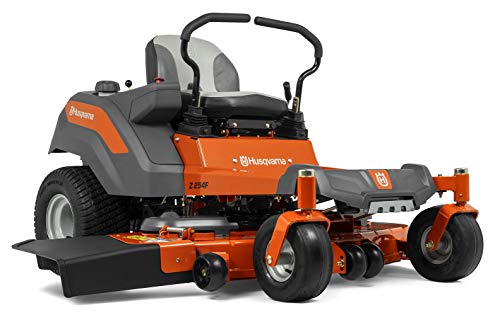
For most large yards — roughly one acre and up, with a mix of open lawn and a few obstacles — the best overall zero-turn mower is the Husqvarna Z254F 54 in. 23 HP Kawasaki Zero Hydrostatic Turn Riding Mower. Its 54-inch fabricated-style deck and 23 HP Kawasaki engine hit the sweet spot between cutting width and maneuverability, letting you finish a two-acre property in materially fewer passes than a 42-inch machine while still threading gates and trimming around beds. If you want to cut fuel stops, noise, and exhaust out of the equation and your lawn is mowable in one charge block, the EGO Power+ Z6 ZT4214L with its 42-inch deck is the electric alternative worth serious consideration. If your priority is the toughest cut quality and long-term durability on rough or hilly ground, the Husqvarna Z254FX with its 54-inch fabricated deck and Kawasaki engine is the premium pick. The rest of this guide covers how to match deck width, runtime or fuel capacity, turning radius, comfort, and terrain capability to your specific yard — plus the covers and accessories that keep a machine this size protected.
Top 3 Picks
Best Overall: Husqvarna Z254F 54 in. 23 HP Kawasaki
The Z254F balances a wide 54-inch cutting deck against a price that stays below the fabricated-deck premium tier, making it the most sensible first zero-turn for a large residential yard. The 23 HP Kawasaki engine provides enough torque to power through thick spring growth without bogging, and the hydrostatic drive gives you the independent wheel control that makes zero-turn steering useful. It suits owners mowing one to three acres regularly who want a proven gas platform and dealer support.
Best Budget: Rimwig Zero Turn Mower Cover (420D)
If you already own a mower and your real problem is sun, rain, and pollen eating the paint, seat, and electronics, the budget-tier Rimwig cover is the highest-value purchase on this list. A 420D waterproof cover protects the investment you already made for a fraction of the cost of a mower upgrade. It suits anyone parking a zero-turn outdoors or under a carport where blowing rain and UV still reach the machine.
Best Premium / Best Cut Quality: Husqvarna Z254FX 22HP 726cc Kaw Engine 54″ FAB Z-Turn
The Z254FX upgrades to a fabricated (FAB) deck, which is welded and reinforced rather than stamped, and it holds its shape and cut quality better over years of use and through contact with roots and stumps. With a 726cc Kawasaki engine and a 54-inch fabricated deck, it is the machine for owners who mow multiple acres, deal with rougher terrain, or simply want the deck to outlast the rest of the mower. It costs more up front and rewards that spend over a long ownership period.
Quick Comparison
| Product | Best For | Key Specs | Price Tier |
|---|---|---|---|
| Husqvarna Z254F 54 in. 23 HP Kawasaki | Best overall large-yard gas zero-turn | 54 in. deck; 23 HP Kawasaki; hydrostatic zero-turn drive; gas | Premium |
| EGO Power+ Z6 ZT4214L | Best electric option for large yards | 42 in. deck; battery-powered; multiple battery ports for extended runtime | Premium |
| Husqvarna Z254FX 54″ FAB Z-Turn | Best cut quality and deck durability | 54 in. fabricated deck; 22 HP / 726cc Kawasaki engine; gas | Premium |
| Rimwig Zero Turn Mower Cover 420D | Budget outdoor protection | 420D waterproof fabric; universal zero-turn fit | Budget |
| Zettum Zero Turn Mower Cover 600D | Mid-range heavy-duty cover | 600D heavy-duty waterproof fabric; universal fit | Mid-range |
| Tough Cover Zero-Turn Mower Cover 600D | Mid-range cover for up to 60 in. decks | 600D premium fabric; fits decks up to 60 in. | Mid-range |
| Kipiea Zero Turn Mower Cover 600D | Mid-range all-weather cover | 600D heavy-duty waterproof; universal fit | Mid-range |
| Himal Outdoors Zero Turn Mower Cover 600D | Budget-friendly 600D protection | 600D heavy-duty fabric; fits up to 60 in. | Budget |
| SDSNTE Zero-Turn Mower Handle Bucket Bracket | Budget on-board storage add-on | Handle-mounted bucket bracket; black finish | Budget |
| Landpa Zero Turn Mower Cover 600D | Mid-range universal cover | 600D waterproof; universal zero-turn fit | Mid-range |
| NEVERLAND Zero Turn Mower Cover 420D | Budget cover for up to 60 in. | 420D waterproof; fits lawn tractors up to 60 in. | Budget |
| Agri-Fab Zero Turn Mower Electric Spreader | Tow-behind spreading on large properties | 125 lb hopper; 12V motor; up to 12 ft spread width | Premium |
How We Chose
This guide was assembled by reviewing published product listings, manufacturer specifications, and well-documented category knowledge about how zero-turn mowers are built and used on large properties. We did not test, benchmark, or own any of these products. Selection hinged on four factors. First, category fit: every mower here is a true zero-turn with independent hydrostatic or electric drive, not a lawn tractor with a tighter turning circle. Second, spec-to-yard match: deck width, engine or battery output, and turning footprint were weighed against the realities of large yards — long runs, tight gate passages, and varying terrain. Third, use case coverage: we included gas and battery platforms, plus covers and accessories, because a large-yard owner’s real needs extend past the mower itself. Fourth, upgrade path and ownership durability: fabricated versus stamped decks, engine brand support, consumable wear items, and how well each machine’s design holds up over a decade of seasonal use. Price tiers are general market bands only; actual prices move with promotions and availability.
1. Husqvarna Z254F 54 in. 23 HP Kawasaki – Best Overall Large-Yard Zero-Turn
As an Amazon Associate we earn from qualifying purchases at no extra cost to you.
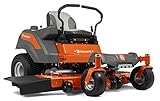
The Husqvarna Z254F is the machine most large-yard homeowners should start their shortlist with. It pairs a 54-inch cutting deck with a 23 HP Kawasaki engine and hydrostatic zero-turn drive — the combination that lets you cover a genuinely big lawn quickly without sacrificing the ability to pivot tightly around trees, beds, and fence lines. Kawasaki’s small-engine reputation for reliability and parts availability matters more than a spec sheet suggests: when a mower is your primary tool for two acres, downtime is the real enemy.
Who It Suits
- Owners mowing roughly one to three acres with regular cuts through the growing season.
- Buyers who want a wide deck but aren’t ready for the fabricated-deck price premium.
- Anyone who values dealer and parts support for a gas engine they’ll service for years.
- Properties with mixed terrain — mostly flat or gently rolling, with obstacles to mow around.
Key Specs
- Deck width: 54 inches — a large-yard sweet spot, wide enough to reduce pass count while staying maneuverable in most gate widths (commonly 48–60 inches).
- Engine: 23 HP Kawasaki gasoline engine.
- Drive: Hydrostatic zero-turn, with independent control of each rear wheel.
- Fuel: Gasoline; typical large-fuel-tank class for multi-acre mowing between fills.
- Category: Residential zero-turn rider.
Strengths
The core advantage is throughput. A 54-inch deck cuts a swath nearly a third wider than a 42-inch deck, which compounds over an acre of mowing: fewer passes mean fewer turns, less overlap, and significantly less time on the machine. The Kawasaki engine provides enough power to maintain blade tip speed in thick grass, which is what actually determines cut quality when you’re moving fast. Hydrostatic zero-turn steering lets you pivot around obstacles instead of making three-point turns, and that agility is what makes a machine this size feel manageable rather than unwieldy. As a Husqvarna model, it also sits within a broad ecosystem of parts, service documentation, and accessories.
Pros
- 54-inch deck delivers strong acre-per-hour coverage.
- Kawasaki engine with well-established parts and service support.
- True zero-turn hydrostatic drive for tight maneuvering.
- Balanced price-to-capability ratio versus fabricated-deck machines.
- Comfortable, adjustable seating and controls suited to long mowing sessions.
Cons
- Stamped deck construction won’t shrug off stump strikes the way a fabricated deck will.
- Gas platform means fuel, oil, filters, and seasonal servicing as ongoing costs.
- Wider 54-inch deck can be tight through narrow gates and around dense landscaping.
- More expensive to buy than entry-level zero-turns with smaller decks.
How It Compares
Against the Husqvarna Z254FX, the Z254F is the value-oriented sibling: same 54-inch width and similar Kawasaki power, but a stamped deck rather than a fabricated one and a slightly lower price tier in practice. If your yard is relatively smooth and you mow carefully, the Z254F is the smarter spend. Against the EGO Z6 ZT4214L, it trades electric quietness and zero fuel handling for a wider deck and unlimited runtime with refueling — the key decision point is whether your lawn fits within a battery charge block.
2. EGO Power+ Z6 Zero Turn Electric Riding Mower, 42″ Deck – ZT4214L – Best Electric Zero-Turn for Large Yards

The EGO Power+ Z6 is the most credible electric zero-turn for genuinely large residential lawns. Its 42-inch deck is narrower than the gas machines here, but the Z6 compensates with quiet, exhaust-free operation, instant torque, and a modular battery system that lets you extend runtime by adding packs. For an owner who dislikes fuel handling, engine maintenance, and neighborhood noise, it changes the ownership experience entirely — provided the yard size and mowing frequency fit within what a charge block can deliver.
Who It Suits
- Owners of roughly one-half to two acres who can mow within a charge cycle (or add batteries).
- Buyers who want to eliminate gasoline, oil changes, spark plugs, and winterization.
- Anyone mowing near homes, patios, or quiet-hour restrictions where noise matters.
- Households already invested in a shared battery platform who value interchangeable packs.
Key Specs
- Deck width: 42 inches — narrower than the 54-inch gas machines, so more passes on a given lawn.
- Power source: Battery (rechargeable, swappable packs); no fuel, no exhaust.
- Drive: Electric zero-turn with independent wheel control.
- Runtime strategy: Multiple battery ports allow running and swapping packs to extend mowing time.
- Category: Battery-electric residential zero-turn rider.
Strengths
Electric drive delivers full torque instantly, which means consistent blade speed in tall or wet grass rather than the slight bog a gas engine shows under sudden load. The absence of fuel and exhaust removes most of the routine maintenance that dominates gas ownership: no oil changes, no air filters, no fuel stabilizer, no winterizing. Noise is dramatically lower, which matters for early-morning mowing and for anyone with close neighbors. Battery modularity is the Z6’s real flexibility play — you’re not locked into a fixed runtime, because additional packs can extend a session or be kept charged as spares. And the shared EGO battery ecosystem means packs do double duty across other outdoor tools.
Pros
- No fuel, oil, exhaust, or engine winterization.
- Much quieter operation than gas — friendlier for early or late mowing.
- Instant torque maintains blade speed in thick grass.
- Modular batteries extend runtime as needed.
- Zero tailpipe emissions; no fuel storage on the property.
Cons
- 42-inch deck means more passes and more turns than a 54-inch gas machine.
- Runtime is finite per charge; very large lawns may require battery rotation or a mid-session break.
- Higher upfront cost, and replacement batteries are a significant future expense.
- Battery performance and capacity fade over many years of cycling.
How It Compares
Versus the Husqvarna Z254F, the Z6 gives up six inches of deck width and the ability to refuel and keep mowing indefinitely, but gains quiet operation and near-zero routine maintenance. On a one-acre lawn, the difference in pass count is noticeable but not punishing; on three acres, the gas Husqvarna’s throughput advantage becomes decisive. If your priority is low maintenance and low noise and your yard fits the runtime envelope, the Z6 is the better ownership experience; if pure acre-per-hour matters most, a 54-inch gas deck still wins.
3. Husqvarna Z254FX 22HP 726cc Kaw Engine 54″ FAB Z-Turn Mower – Best Cut Quality and Deck Durability

The Z254FX is the Husqvarna Z254 family’s toughness play, distinguished by its fabricated (FAB) 54-inch deck and a 726cc Kawasaki engine. A fabricated deck is welded from heavier-gauge steel with reinforced edges and additional bracing — it resists denting, holds its shape, and maintains an even cut over years of contact with roots, stumps, and rocky ground. For a large yard that isn’t perfectly manicured, that construction difference is the whole argument for spending up.
Who It Suits
- Owners mowing two or more acres, especially with rough, uneven, or obstacle-heavy terrain.
- Buyers who plan to keep the mower for a decade or more and want the deck to outlast everything else.
- Anyone whose property has exposed roots, low stumps, or rocky patches that punish a stamped deck.
- Owners who value a slightly larger-displacement Kawasaki engine for reserve power in heavy growth.
Key Specs
- Deck width: 54 inches, fabricated (welded, reinforced) construction.
- Engine: 22 HP, 726cc Kawasaki gasoline engine.
- Drive: Hydrostatic zero-turn with independent wheel control.
- Deck type: FAB — heavier gauge steel, welded seams, reinforced edges.
- Category: Residential zero-turn rider, premium deck tier.
Strengths
The fabricated deck is the headline, and it pays off in three ways: durability against impacts, resistance to rust and deformation along the edges, and a more consistent cut because the deck shell doesn’t flex or warp with age. The 726cc Kawasaki engine — the larger displacement in this comparison — provides torque headroom that keeps blade speed steady in thick, wet, or overgrown grass, which is precisely when cut quality is hardest to maintain. Everything else that makes the Z254 platform effective carries over: a 54-inch cut path, hydrostatic agility, and comfortable operator controls for long sessions. For a large yard with real terrain challenges, this is the machine least likely to need replacing or repairing prematurely.
Pros
- Fabricated deck resists dents, warping, and edge damage.
- Larger 726cc Kawasaki engine for reserve power in heavy grass.
- Maintains cut quality over years rather than degrading with deck flex.
- 54-inch width keeps pass counts low on big lawns.
- Husqvarna/Kawasaki parts and service availability.
Cons
- Premium price tier — the fabricated deck is a real upfront cost.
- Heavier deck contributes to overall machine weight, which can affect soft-ground performance.
- Still a gasoline platform with the usual fuel and servicing routine.
- Overkill for small, smooth, well-maintained lawns that never challenge a deck.
How It Compares
Against the Husqvarna Z254F, the Z254FX is the same width and platform with a tougher deck and larger-displacement engine — the upgrade is about longevity and terrain resilience, not speed or cut width. If your yard is smooth and you’re gentle with equipment, the Z254F saves money for essentially the same weekly result. If you mow rocky ground, hit roots, or simply hate replacing equipment, the FX’s fabricated deck is the better long-term buy. Against the EGO Z6, it’s gas versus battery all over again, with the Husqvarna holding the clear advantage in deck width and run-time flexibility.
4. Rimwig Zero Turn Mower Cover Waterproof 420D – Best Budget Protection

The Rimwig cover is the entry point into protecting a zero-turn that lives outdoors. A 420D waterproof fabric shell is the lighter of the two common cover weights, and for a budget-tier cover it does the essential job: keeping rain, pollen, sap, and direct sun off your seat, deck, and electronics. If you’ve just spent premium money on a 54-inch gas mower, spending a little more to shield it from UV and moisture is one of the highest-return purchases you can make.
Who It Suits
- Owners parking a zero-turn outside, under a carport, or in an open shed.
- Buyers who want basic weather protection at the lowest reasonable cost.
- Anyone in a region with strong sun, heavy pollen, or frequent rain.
- Owners of smaller or mid-size zero-turns within a universal-fit range.
Key Specs
- Fabric: 420D waterproof material — a lighter-weight outdoor cover class.
- Fit: Universal zero-turn sizing.
- Protection: Water resistance, UV shielding, dust and pollen barrier.
- Category: Budget outdoor mower cover.
Strengths
The value proposition is simple: for a small fraction of the mower’s cost, you slow the aging of the parts that degrade fastest outdoors. Sun is the quiet killer of riding mowers — it cracks vinyl seats, fades paint, and embrittles plastic and rubber. Water accelerates corrosion on decks, spindles, and electrical connectors. A 420D waterproof cover interrupts both. At the budget tier, the Rimwig cover is easy to justify, easy to replace when it wears, and it packs down small when not in use.
Pros
- Very low cost relative to the protection provided.
- Waterproof shell sheds rain, dew, and tree debris.
- UV protection helps prevent seat and paint fading.
- Lightweight and easy to put on and take off.
- Universal fit suits a wide range of zero-turns.
Cons
- 420D fabric is less abrasion- and tear-resistant than 600D.
- Shorter service life under constant sun exposure than heavier covers.
- Universal fit may be loose on some machine profiles, allowing wind lift.
- Thinner material may not stand up to repeated contact with sharp deck edges.
How It Compares
Against the Zettum 600D and similar mid-range covers, the Rimwig trades fabric weight and expected lifespan for a lower price. If your mower is under a roof and only occasionally exposed, 420D is plenty. If it sits in full sun and weather year-round, stepping up to a 600D cover like the Zettum or Kipiea buys meaningfully longer service life and better tear resistance for a modest increase.
5. Zettum Zero Turn Mower Cover – 600D Heavy Duty Waterproof Universal Fit – Best Mid-Range All-Weather Cover

The Zettum cover sits in the mid-range cover tier with 600D heavy-duty fabric — a denser, tougher weave than budget 420D covers and a common standard for covers meant to last through full seasons of sun, rain, and freezing. It’s the sensible default for a large-yard owner who parks a valuable zero-turn outdoors and wants protection that won’t need replacing every year.
Who It Suits
- Owners whose mower is exposed to weather year-round.
- Buyers willing to spend modestly more for longer cover life.
- Anyone in harsh-sun or heavy-precipitation climates.
- Zero-turn owners who want a sturdy, universal-fit cover with a durable feel.
Key Specs
- Fabric: 600D heavy-duty waterproof material.
- Fit: Universal zero-turn fit.
- Protection: Waterproof, UV-resistant, dust and debris barrier.
- Category: Mid-range outdoor mower cover.
Strengths
600D fabric is the practical sweet spot for outdoor covers: substantially more resistant to tearing, abrasion, and UV degradation than 420D, without the cost of specialty marine fabrics. That matters where a cover meets sharp deck corners, metal edges, and repeated folding. A heavier cover also resists wind lift better and holds its shape, so it stays seated on the machine rather than flapping loose in storms. For a mower that’s a multi-thousand-dollar asset, the mid-range cover tier is the rational choice for anyone parking outdoors permanently.
Pros
- 600D fabric resists tearing and abrasion better than 420D.
- Waterproof layer protects deck, seat, and electronics from moisture.
- Longer UV lifespan under constant sun.
- Heavier weight resists wind lift.
- Universal fit across common zero-turn sizes.
Cons
- Costs more than budget 420D covers.
- Heavier and bulkier to handle and store.
- Universal fit still may not be tailored to every machine profile.
- 600D density alone doesn’t guarantee seam quality — construction varies by brand.
How It Compares
Against the Rimwig 420D, the Zettum cover is the durability upgrade — more tear resistance and longer sun life for a mid-range price. Against the Tough Cover 600D, both occupy the same fabric tier; the practical difference is fit range, since the Tough Cover is specified to fit decks up to 60 inches, which suits the widest zero-turns, while the Zettum’s universal fit covers typical residential sizes. If your machine has a 60-inch deck, check fit range carefully before choosing.
6. Tough Cover Zero-Turn Mower Cover, Premium 600D, Fits Up to 60in Deck – Best for Wide-Deck Machines

The Tough Cover zero-turn cover is specified to fit machines with decks up to 60 inches, which makes it the practical choice for owners of the widest residential and light-commercial zero-turns. It uses premium 600D fabric, the same heavy-duty weight class as the best mid-range covers, but with a stated fit ceiling that accommodates larger machines that a generic universal cover might not fully enclose.
Who It Suits
- Owners of zero-turns with decks up to 60 inches.
- Buyers who need a cover that actually encloses a large machine rather than stretching over it.
- Anyone who parks a big-deck mower outdoors and wants full coverage.
- Owners prioritizing fabric durability alongside generous fit.
Key Specs
- Fabric: Premium 600D heavy-duty material.
- Fit: Designed to fit decks up to 60 inches.
- Protection: Waterproof, weather-resistant shell.
- Category: Mid-range outdoor mower cover, wide-fit.
Strengths
Fit is the feature here. A cover that’s too small for a 54- or 60-inch zero-turn leaves the deck edges, tires, and operator station exposed, and it stresses seams when pulled tight. By specifying fit up to 60 inches, the Tough Cover is built for the large-yard machines that dominate this roundup, so a 54-inch Husqvarna or a wide EGO gets genuine full-body coverage rather than a partial fit. The 600D fabric then delivers the abrasion and UV resistance expected at this tier, protecting seats and paint through full seasons of exposure.
Pros
- Specified fit up to 60-inch decks suits large machines.
- 600D fabric for good tear and UV resistance.
- Full-body coverage rather than a tight, stressed fit.
- Waterproof construction shields deck and electronics.
- Suits both residential zero-turns and larger deck sizes.
Cons
- May be oversized and loose on smaller machines with narrow decks.
- Mid-range price, above budget 420D covers.
- Bulkier to install and store than lighter covers.
- Loose fit on smaller mowers could catch wind if not secured.
How It Compares
Against the Zettum 600D and Kipiea 600D, the Tough Cover distinguishes itself mainly on fit ceiling — it’s the safer pick specifically for a 60-inch deck, where universal covers can run short. Against the Himal Outdoors 600D, which also states fit up to 60 inches, the two overlap closely in function; the decision comes down to price tier and availability, with Himal sitting at the budget end of the 600D range and Tough Cover in the mid-range.
7. Kipiea Zero Turn Mower Cover – 600D Heavy Duty Waterproof Universal Fit – Best All-Around Mid-Range Cover

The Kipiea cover is another 600D heavy-duty, waterproof, universal-fit option in the mid-range tier, and it does the core job that matters: keeping weather, pollen, and UV off a parked zero-turn. For buyers who want a sturdy cover without agonizing over brand differences within the same fabric class, it’s a solid, straightforward choice.
Who It Suits
- Zero-turn owners wanting a durable, weatherproof cover at a moderate price.
- Anyone parking a mower outdoors through changing seasons.
- Buyers prioritizing 600D fabric durability over the lowest possible cost.
- Owners of standard residential zero-turn sizes within universal fit.
Key Specs
- Fabric: 600D heavy-duty waterproof material.
- Fit: Universal zero-turn fit.
- Protection: Waterproof shell with UV resistance.
- Category: Mid-range outdoor mower cover.
Strengths
At the 600D tier, the Kipiea cover delivers meaningful protection against the elements with fabric tough enough to survive seasons of outdoor duty. It shields the most weather-sensitive parts of a zero-turn — the seat, the electrical harness, the deck, and the painted surfaces — which is exactly where outdoor storage does the most damage over time. For a large-yard owner who’s already invested in a premium mower, a mid-range cover is the low-cost way to preserve that investment’s resale and reliability.
Pros
- 600D heavy-duty fabric resists tearing and abrasion.
- Waterproof protection for deck, seat, and electronics.
- Universal fit covers most residential zero-turns.
- UV resistance slows fading and material breakdown.
- Moderate price for the fabric class.
Cons
- Less differentiated from other 600D covers in the same tier.
- Universal fit may not be snug on every machine shape.
- Heavier to handle than 420D covers.
- Seam and strap quality can vary and deserve a look before buying.
How It Compares
Against the Zettum 600D and Tough Cover 600D, the Kipiea cover competes on the same fabric tier and general fit. Where the Tough Cover is specified to fit decks up to 60 inches and suits wider machines, the Kipiea’s universal fit targets standard residential sizes. Against the budget Rimwig 420D or NEVERLAND 420D, it’s an upgrade in fabric weight and expected lifespan for a modest price increase — worth it if the mower lives outside year-round.
8. Himal Outdoors Zero Turn Mower Cover, Heavy Duty 600D to 60″ – Best Value 600D Cover

The Himal Outdoors cover combines 600D heavy-duty fabric with a fit range up to 60 inches, but at the budget end of the pricing tier — which makes it one of the strongest value plays in this roundup for large-yard owners. It targets the same protection goals as mid-range 600D covers while asking less for the privilege.
Who It Suits
- Owners who want 600D durability at a budget-tier price.
- Buyers protecting zero-turns with decks up to 60 inches.
- Anyone looking for a sensible first cover without overspending.
- Owners of large-deck machines needing generous fit at low cost.
Key Specs
- Fabric: 600D heavy-duty material.
- Fit: Designed for machines up to 60 inches.
- Protection: Waterproof weather shield.
- Category: Budget outdoor mower cover with 600D fabric.
Strengths
The combination of 600D fabric and a 60-inch fit ceiling at a budget price is the Himal cover’s whole case. You get the abrasion resistance and UV life of heavier fabric without paying the mid-range premium, and the generous fit suits the wide-deck machines this guide focuses on. For an owner who wants solid protection and doesn’t care about branded extras, it hits the value target squarely — often the right answer for a first cover or a backup.
Pros
- 600D fabric at a budget-tier price.
- Fits decks up to 60 inches — suits large machines.
- Waterproof protection for outdoor storage.
- Strong value relative to mid-range 600D covers.
- Heavier fabric resists tearing and wind lift better than 420D.
Cons
- Budget pricing may mean fewer finishing details or thinner seams than premium covers.
- Can be loose on smaller-deck mowers.
- Heavier and bulkier than 420D covers.
- Fit accuracy on a specific machine can vary within a universal range.
How It Compares
Against the Tough Cover 600D, the Himal cover matches the 60-inch fit and 600D fabric while costing less — the trade may be in finishing details rather than core protection. Against the Rimwig and NEVERLAND 420D covers, it’s a clear step up in fabric weight for only a modest price difference, making it the better all-around value for anyone parking outdoors long-term.
9. SDSNTE Zero-Turn Mower Handle Bucket Bracket – Best Budget On-Board Storage

The SDSNTE handle bucket bracket is a small, cheap accessory that addresses a real annoyance on zero-turns: where to put tools, gloves, twine, or a trash bucket while you mow. It mounts to the mower’s handle and holds a bucket in reach, so you’re not stopping, dismounting, or juggling items in your lap. It’s a minor purchase, but on a large property where you spend hours mowing, small conveniences accumulate.
Who It Suits
- Zero-turn owners who carry tools, gloves, or debris buckets while mowing.
- Anyone tired of holding items on their lap or stopping to retrieve them.
- Buyers wanting a low-cost, practical add-on for a large-yard mower.
- Owners mowing properties with lots of pickup work — branches, litter, fallen fruit.
Key Specs
- Type: Handle-mounted bucket bracket.
- Finish: Black.
- Function: Holds a bucket on the mower handle for tools or debris.
- Category: Budget mower accessory.
Strengths
Its strength is narrow but genuine: it makes the mower more of a working vehicle. On a large yard you inevitably encounter sticks, pine cones, litter, or trimmings that need collecting, and a bucket within reach turns that into a one-pass job instead of a separate walk-around. The bracket is inexpensive, installs to the handle without major modification, and doesn’t add meaningful weight. For the price of a few gallons of fuel, it removes a recurring small frustration.
Pros
- Very inexpensive accessory.
- Adds practical on-board storage within reach of the operator.
- Simple handle mounting, no major modification.
- Useful for tools, gloves, and debris collection.
- Lightweight; negligible effect on the machine.
Cons
- Fits only a standard bucket size, which may not suit all needs.
- Mounting compatibility varies by mower handle design and diameter.
- Not load-rated for heavy items.
- A convenience item, not a performance upgrade.
How It Compares
There’s no direct equivalent elsewhere in this list — the other budget items are covers. Compared with spending the same small amount on a budget cover like the Rimwig 420D, the SDSNTE bracket solves a different problem: protection versus convenience. Many large-yard owners end up with both, since together they cost little and address the two most common everyday annoyances of mower ownership.
10. Landpa Zero Turn Mower Cover – 600D Waterproof – Best Mid-Range Cover for Frequent Use

The Landpa 600D cover is a mid-range, waterproof, universal-fit option built to be taken on and off regularly without falling apart. Its heavier fabric handles the repeated handling that comes with mowing several times a month, which is the normal rhythm on a large property during the growing season.
Who It Suits
- Owners who cover and uncover the mower frequently through the mowing season.
- Anyone parking a zero-turn where weather reaches it most days.
- Buyers wanting 600D durability with universal fit.
- Owners of standard residential zero-turn sizes.
Key Specs
- Fabric: 600D heavy-duty waterproof material.
- Fit: Universal zero-turn fit.
- Protection: Waterproof with UV resistance.
- Category: Mid-range outdoor mower cover.
Strengths
Frequent use is the enemy of light covers — every install and removal flexes seams and stresses fabric. A 600D cover like the Landpa holds up better under that cycle than a 420D shell, which makes it a sensible match for an actively used large-yard machine. It protects the same vulnerable surfaces — seat, deck, connectors, paint — and its heavier weight helps it stay put in wind. For an owner who treats the cover as part of the daily routine, durability under handling is the feature that matters most.
Pros
- 600D fabric withstands repeated handling better than 420D.
- Waterproof protection for everyday outdoor storage.
- UV resistance extends fabric life in sun.
- Universal fit suits common zero-turn sizes.
- Heavier weight resists wind lift.
Cons
- Mid-range price.
- Bulkier to handle than lighter covers.
- Universal fit may not be snug on every machine.
- Similar to several other 600D covers, so differentiation is limited.
How It Compares
Against the Kipiea 600D and Zettum 600D, the Landpa cover sits in the same fabric and fit class, so the choice comes down to price and availability rather than capability. Against the budget Himal Outdoors 600D, it’s a mid-range alternative with presumably finer finishing, though both deliver the core 600D protection. For a mower used frequently, any of the 600D covers here is a defensible pick.
11. NEVERLAND Zero Turn Mower Cover Waterproof 420D, Fits up to 60″ – Best Budget Cover for Wide Decks

The NEVERLAND cover is a budget-tier 420D waterproof cover specified to fit lawn tractors and zero-turns up to 60 inches, making it the low-cost option for owners of wide-deck machines. It’s the value pick when you want basic protection for a large mower without spending much.
Who It Suits
- Owners of machines with decks up to 60 inches on a tight budget.
- Buyers wanting a spare or backup cover for occasional use.
- Anyone whose mower is partly sheltered and only occasionally exposed.
- Owners who prefer to replace an inexpensive cover periodically rather than invest in a heavy one.
Key Specs
- Fabric: 420D waterproof material.
- Fit: Fits lawn tractors and zero-turns up to 60 inches.
- Protection: Water resistance and dust barrier.
- Category: Budget outdoor mower cover.
Strengths
The NEVERLAND cover’s advantage is pairing a 60-inch fit with a budget price — a combination that lets wide-deck owners get coverage without paying mid-range money. The 420D shell keeps rain, dew, pollen, and debris off the machine, which is most of the protective benefit at a fraction of the cost. If the mower is under partial cover or the cover is a secondary layer of defense, the lighter fabric is entirely adequate, and its low price makes replacing it painless.
Pros
- Budget price with a 60-inch fit range.
- Waterproof against rain and dew.
- Keeps pollen, leaves, and debris off the machine.
- Lightweight and easy to handle.
- Low cost makes it easy to replace when worn.
Cons
- 420D fabric is less durable than 600D under sun and handling.
- Shorter lifespan with constant outdoor exposure.
- Thinner material offers less abrasion resistance at deck edges.
- Universal fit can be loose, risking wind lift.
How It Compares
Against the Himal Outdoors 600D, which also fits up to 60 inches, the NEVERLAND cover is lighter and cheaper — a reasonable choice if the mower is partly sheltered, but the Himal delivers more fabric durability for close to the same practical budget. Against the Rimwig 420D, both share the 420D class; the NEVERLAND’s stated 60-inch fit range is the deciding factor for wide machines.
12. Agri-Fab Zero Turn Mower Electric Spreader, 125 lb Hopper, 12V Motor – Best Tow-Behind Spreader for Large Properties

The Agri-Fab electric spreader is the large-property accessory that turns a zero-turn into a year-round groundskeeping tool. With a 125-pound hopper capacity, a 12V motor, and a spread width up to 12 feet, it tows behind the mower to distribute fertilizer, seed, and ice melt across big lawns and driveways — work that’s slow and uneven by hand on acreage.
Who It Suits
- Owners of large lawns who fertilize, overseed, or treat in bulk.
- Anyone with a long driveway or large paved area needing ice melt in winter.
- Buyers who want to cover ground fast without push-spreader fatigue.
- Properties large enough that hand spreading is impractical.
Key Specs
- Hopper capacity: 125 pounds — a large-load class that reduces refill stops.
- Motor: 12V electric drive for consistent spreading.
- Spread width: Up to 12 feet.
- Type: Tow-behind broadcast spreader.
- Category: Premium tow-behind spreader.
Strengths
The math favors it on big properties. A 125-pound hopper at up to a 12-foot spread width covers a large area per fill, cutting the number of stops and the total time spent treating a lawn or driveway. Electric 12V operation gives a more consistent spread pattern than gravity or hand crank, which means more even coverage and less waste of fertilizer or seed. Towing it behind the zero-turn you already own means the machine earns more of its keep across the year, not just in mowing season. For anyone maintaining multiple acres, that broadens the value of a mower considerably.
Pros
- Large 125-pound hopper reduces refill frequency.
- Up to 12-foot spread width covers big areas fast.
- 12V electric motor for consistent distribution.
- Tow-behind design reuses the mower you already own.
- Useful across seasons for fertilizer, seed, and ice melt.
Cons
- Premium price for a tow-behind accessory.
- Requires towing capacity and hitch compatibility on the mower.
- Added weight and length when attached.
- Overkill for small lawns that a hand spreader handles easily.
How It Compares
No other product in this list is a tow-behind spreader, so the comparison is category-level rather than head-to-head. Against the covers and the handle bracket, it’s a different kind of investment — a functional tool rather than protection or convenience. If your large yard needs regular fertilizing or seeding, and your driveway needs winter treatment, the Agri-Fab spreader extends the zero-turn’s usefulness far beyond mowing.
How to Choose
Start With Deck Width — It Determines Your Mowing Time More Than Anything Else
On a large yard, deck width is the single biggest lever on how long mowing takes. A wider deck cuts a wider swath, which means fewer passes and fewer turns per acre. The relationship is close to linear: a 54-inch deck covers roughly 29 percent more ground per pass than a 42-inch deck. Over a two-acre lawn, that difference translates to a substantial reduction in total mowing time each week — and it compounds across a whole season.
The trade-off is maneuverability and access. Before committing to a wide deck, measure your tightest passes. Common constraints include:
- Gate widths: many residential gates fall in the 36–48 inch range, which a 54-inch deck cannot fit through — you’ll need a second machine, a walk-behind, or a gate modification.
- Between-obstacle gaps: trees, beds, and sheds spaced closely may leave gaps narrower than the deck.
- Slope transitions: a wider, heavier deck can scalp or bottom out on abrupt grade changes.
Rule of thumb: for one acre, a 42–48 inch deck is efficient; for one to three acres, 48–54 inches is the sweet spot; above three acres, 60 inches and up pays off. If your property has many obstacles and narrow passages, a slightly narrower deck mowing more passes beats a wide deck that can’t get everywhere.
Decide Fuel Versus Battery by Runtime, Not by Ideology
The gas-versus-battery decision comes down to one question: can your lawn be mowed within a charge block, with a margin for thick grass and slower days?
Battery mowers like the EGO Z6 deliver instant torque, near-silent operation, and near-zero routine maintenance — no oil changes, no fuel stabilizer, no winterization. But runtime is finite, and cutting heavy, wet grass drains batteries faster than a light weekly trim. The practical approach is to estimate:
- Your lawn area in acres.
- Your mowing pace — roughly how many hours per acre your current method takes.
- Your charge window — the working time one battery set provides, minus a safety margin for tough conditions.
If the charge window comfortably exceeds your mowing time, battery is a strong choice. If you’re on the edge, budget for additional battery packs, or accept that very large properties favor gas, where refueling takes a minute and mowing continues indefinitely. A worked comparison helps: a one-acre lawn might take roughly 45–75 minutes with a 42-inch battery machine in normal conditions, while a 54-inch gas machine might do the same acre in roughly 35–55 minutes — but the gas machine then keeps going without a charge break, while the battery machine’s pace depends on how many packs you own.
Think About Turning Radius and Maneuverability on YOUR Layout
All true zero-turn mowers can pivot on their own axis by driving the rear wheels independently. What differs in practice is the zero-turn radius of the whole machine envelope — deck corners, tires, and rear weight all sweep outward during a pivot. On a large lawn with scattered trees, beds, and a fenced perimeter, the effective working radius is what matters, not the marketing claim.
Larger decks turn in a larger footprint. That’s the hidden cost of a 60-inch machine on an obstacle-dense property: you gain width but lose the ability to dart in and out of tight spots. Walk your yard and note the tightest turns you make; if your layout has many, favor a smaller or mid-size deck, or plan to trim those areas with a string trimmer.
Comfort Is Not a Luxury on Large Yards — It’s a Requirement
Mowing two or three acres can mean two hours or more on the machine, often weekly through the growing season. Comfort directly affects how well you mow and how much you dread it. Key comfort factors to weigh:
- Seat quality and suspension: a well-padded, high-back seat with spring or suspension isolation reduces fatigue and back strain on rough ground.
- Control ergonomics: lap bars should adjust to your reach; poor ergonomics cause shoulder and wrist fatigue over long sessions.
- Vibration isolation: engine and deck vibration transmitted to the hands and seat accumulates over hours.
- Access: easy step-up height matters if any operator has mobility limitations.
On uneven terrain, seat suspension isn’t a frill — it keeps you in the seat and in control, which is a safety factor as well as a comfort one.
Match Terrain Capability to Your Ground
Terrain determines how much you should invest in deck construction and stability features.
| Terrain Type | What Matters Most | Deck Recommendation | Notes |
|---|---|---|---|
| Smooth, flat, well-maintained | Cut width and comfort | Stamped deck fine | A value gas machine like the Z254F suffices |
| Gently rolling, few obstacles | Stability, traction, cut width | Stamped or fabricated | Check tire type; consider wider deck for time savings |
| Rough, roots, low stumps, rocky | Deck durability and impact resistance | Fabricated strongly preferred | The Z254FX’s FAB deck earns its cost here |
| Sloped areas | Traction, weight distribution, braking | Either; prioritize stability | Zero-turns can lose traction on wet slopes; mow across gently or use a walk-behind on steep banks |
| Wet or soft ground | Traction and weight | Lighter machine or wider tires | Heavier fabricated decks can sink more; avoid mowing saturated ground |
The Ownership Realities Nobody Lists: What Wears First
Understanding consumables and wear items helps you budget and choose wisely. On any zero-turn, these components degrade first:
- Blades: the highest-frequency wear item. Dull or bent blades tear grass instead of cutting it, stressing the lawn and the engine. Expect to sharpen regularly during the season and replace after chips or heavy impacts.
- Belt(s): deck and drive belts stretch and crack with heat and age; a spare belt on hand avoids mid-season downtime. On hydrostatic machines, drive is hydraulic rather than belt-based, but deck belts still wear.
- Air and oil filters (gas): critical for engine life, especially in dusty conditions. Battery machines skip these.
- Battery packs (electric): capacity fades after many charge cycles; replacement is a real future cost.
- Tires and spindles: spindle bearings and tire condition affect cut quality and steering feel; both wear over years.
- The seat and paint (outdoors): UV and moisture degrade these fastest — exactly what a cover protects.
Cleaning matters too. After mowing, blow or rinse grass clippings off the deck underside; accumulated clippings trap moisture, promote rust, and unbalance the deck. Lubricate spindles and grease fittings per the manual. And avoid the most common mistakes: mowing wet grass (clogs and tears), running over debris (deck and blade damage), and storing outdoors uncovered (the single biggest accelerator of cosmetic and electrical decline).
Accessory Decisions Are Part of the Buy
Once the mower is chosen, the accessories that matter most on a large property are protection and utility. A cover is essential if the machine lives outdoors; a 600D cover like the Zettum, Kipiea, Landpa, Himal, or Tough Cover lasts longer than a budget 420D shell, while the Rimwig or NEVERLAND 420D serves if the machine is partly sheltered. A tow-behind spreader like the Agri-Fab extends the mower’s usefulness to fertilizing, seeding, and ice melt, paying off over a season on acreage. Small add-ons like the SDSNTE handle bracket make long mowing sessions more convenient. Factor these into your total budget from the start — a protected, well-equipped mower lasts longer and works harder than a bare one.
Match the Machine to Your Situation — A Quick Decision Matrix
| Your Situation | Best Choice | Why |
|---|---|---|
| 1–3 acres, mixed obstacles, want value gas | Husqvarna Z254F 54″ | Wide deck, proven Kawasaki engine, balanced price |
| Rough/rocky ground, want longest deck life | Husqvarna Z254FX 54″ FAB | Fabricated deck resists dents and holds cut quality |
| Want no fuel/maintenance, quiet operation | EGO Power+ Z6 ZT4214L | Battery power, instant torque, near-zero servicing |
| Need cover, mower lives outdoors year-round | Zettum / Kipiea / Landpa 600D | Heavy-duty fabric resists sun, rain, and handling |
| Wide 54–60″ deck, need full coverage cheaply | Himal 600D or Tough Cover 600D | Fits up to 60″; Himal at budget, Tough Cover mid-range |
| Partly sheltered, want lowest-cost protection | Rimwig or NEVERLAND 420D | Waterproof budget shell for occasional exposure |
| Large property needing fertilizing/seeding/ice melt | Agri-Fab spreader | 125 lb hopper, up to 12 ft spread, tows behind mower |
| Want on-board storage while mowing | SDSNTE handle bucket bracket | Cheap, mounts to handle, holds tools and debris bucket |
Frequently Asked Questions
What deck width do I need for a large yard?
For one to three acres, a 48- to 54-inch deck is the practical sweet spot — wide enough to cut pass count while staying maneuverable in most layouts. Above three acres, a 60-inch deck and larger becomes worthwhile. Below one acre, a 42-inch deck is often enough and easier to store. The deciding constraint is usually gate width and obstacle spacing, so measure your tightest passage before choosing.
Is a zero-turn mower worth it for a large yard?
Yes, if your yard is open enough for a wide deck to be useful and you mow regularly. Zero-turns cut wide swaths and pivot tightly, which is exactly what makes them efficient on acreage. On heavily sloped or very obstacle-dense properties, a zero-turn’s traction and turning footprint can be drawbacks, and a garden tractor or walk-behind may be the better fit. Match the machine to the ground, not the other way around.
How long does a battery zero-turn run on one charge?
Runtime depends on the machine, the battery configuration, grass conditions, and terrain. Cutting thick, wet grass draws batteries down faster than a light weekly trim on dry turf. The practical approach is to estimate your lawn’s mowing time and compare it to the charge window, keeping a safety margin. Many battery zero-turns accept additional or swappable packs specifically to extend runtime beyond a single charge.
Do I need a fabricated deck or is a stamped deck fine?
A stamped deck is lighter and less expensive and handles a smooth, obstacle-free lawn perfectly well. A fabricated deck is welded from heavier-gauge steel with reinforced edges, so it resists dents, warping, and edge damage and maintains an even cut over years. If your ground has exposed roots, low stumps, or rocks, or you simply plan to keep the mower a decade, the fabricated deck is the better long-term investment.
How much should I spend on a mower cover?
Match the cover to how exposed the machine is. If the mower is fully outdoors year-round, a 600D cover is the sensible minimum — the heavier fabric resists sun, tearing, and repeated handling far better than 420D. If the machine is under a roof and only occasionally exposed, a budget 420D cover does the essential job for much less. Always check fit range, especially for decks near 54–60 inches, since a too-small cover leaves edges and tires exposed.
What maintenance does a gas zero-turn require that an electric one doesn’t?
Gas machines need engine oil changes, air and oil filter replacement, spark plugs, fuel treatment or drainage for storage, and seasonal winterization. Electric zero-turns eliminate all of that, which is a major ownership-time advantage. The trade-off is that electric machines have finite runtime per charge and battery packs eventually lose capacity, becoming a future replacement cost that gas machines don’t have.
Can a zero-turn mow slopes?
Zero-turns can handle gentle to moderate slopes, but traction and stability degrade on steep, wet, or soft ground, partly because much of the machine’s weight sits over the rear wheels. On steep banks, mow up and down rather than across where safe, keep speeds low, and consider a walk-behind mower for the steepest sections. Never mow slopes so steep that the machine feels unstable or the tires slip.
Is a tow-behind spreader worth it for a large yard?
If you fertilize, overseed, or treat a long driveway regularly, a tow-behind spreader with a large hopper like the Agri-Fab saves substantial time and gives more even coverage than hand spreading on acreage. A 125-pound hopper and wide spread pattern mean fewer refill stops and faster coverage. On a small lawn that a hand spreader handles in minutes, it’s not necessary; the value scales with property size and how often you treat it.
The Bottom Line by Situation
If you mow one to three acres and want the best overall gas machine for the money, the Husqvarna Z254F 54″ is the pick — a wide deck, a proven Kawasaki engine, and a price that stays below the fabricated-deck tier. If your ground is rough, rocky, or you intend to keep the mower for many years, step up to the Husqvarna Z254FX for its fabricated deck and larger-displacement engine, which will hold cut quality long after a stamped deck would fatigue. If you want to eliminate fuel handling, engine maintenance, and noise, the EGO Power+ Z6 ZT4214L is the electric option worth choosing — just confirm your lawn fits within a charge window with margin.
Whatever mower you choose, budget for protection and utility from the start. A 600D cover (Zettum, Kipiea, Landpa, Himal, or Tough Cover) is the right choice for a machine stored outdoors; a budget 420D cover (Rimwig or NEVERLAND) makes sense for partial shelter. Add the Agri-Fab spreader if you maintain acreage year-round, and the SDSNTE handle bracket for everyday convenience. Protected and properly equipped, a large-yard zero-turn will deliver years of efficient mowing — and that’s the real return on the decision.