Our Top Picks
 DampRid Hi-Capacity Fragrance Free Absorber Bucket47.5 Ounce (Pack of 2)17.69 x 9 x 6.89 Inches2 poundsCheck on Amazon
 GoGuess 1600 Sq.Ft Compressor Dehumidifier for Basement1600 Sq. Ft7.2 x 13.2 x 17.1 inchesCheck on Amazon
What's inside
- Start here: your shed picks the type
- Sizing a shed with real numbers
- Powered dehumidifiers: compressor and tank models
- No-power moisture absorbers
- Power in a shed: outlets, cords and cold
- A monthly cost model and a tool-rust routine
- How we picked these
- Six mistakes that keep sheds damp
- What to buy for your shed
- Frequently asked questions
As an Amazon Associate I earn from qualifying purchases. This post may contain affiliate links at no extra cost to you.
The best dehumidifier for a shed depends on two things you can check in ten minutes: whether the shed has safe power, and whether it drops below freezing. With power and mild weather, a compressor unit such as the GoGuess is the strongest match among these eight. With no power, or with hard winters, a no-power moisture absorber bucket like the DampRid pair is the dependable choice. For a tiny shed or a potting corner, the small TABYIK tank model is the low-cost option.
Picture the problem instead of the product. A shed sits on or near the ground, its walls swing from cold nights to warm afternoons, and the air inside holds more water than the metal wants. Chisels pick up orange freckles, the handles of garden tools swell, and a bag of fertilizer gets crusty. The cure is moisture control that fits your conditions, not the biggest appliance in the aisle.
This guide starts with a decision table, then does the sizing math for a typical shed, covers all eight listings in two groups, explains how we picked them, and finishes with extension-cord safety, a monthly cost model and a rust-prevention routine.
Contents
- Start here: your shed picks the type
- Sizing a shed with real numbers
- Powered dehumidifiers: compressor and tank models
- No-power moisture absorbers
- Power in a shed: outlets, cords and cold
- A monthly cost model and a tool-rust routine
- How we picked these
- Six mistakes that keep sheds damp
- What to buy for your shed
- Frequently asked questions
Start here: your shed picks the type

SEMKAP 2500 Sq.Ft Max 32 Pints Dehumidifier for Basement with Drain Hose | Dehumidifiers for Home, Large Room, Bathroom, Bedroom, Quiet With Smart Compressor, Intelligent Humidity Control, 24HR Timer


As an Amazon Associate we earn from qualifying purchases. Product prices and availability are accurate as of the date/time indicated.
DampRid Hi-Capacity Fragrance Free Absorber Bucket, 2 lb. 15.5 oz. with Detection Strip, 2 Pack


As an Amazon Associate we earn from qualifying purchases. Product prices and availability are accurate as of the date/time indicated.

ToLife Dehumidifier, 1000 Sq Ft 95 oz Tank with Sleep Mode, Auto Shutoff | Portable for Home, Bedroom, Bathroom and Basement with 7-Color LED Light, Grey


As an Amazon Associate we earn from qualifying purchases. Product prices and availability are accurate as of the date/time indicated.
GoGuess 1600 Sq.Ft Compressor Dehumidifier for Basement, Max 21 Pint/Day | Dehumidifier with Drain Hose for Home RV Garage Large Room, Timer Humidity Control


As an Amazon Associate we earn from qualifying purchases. Product prices and availability are accurate as of the date/time indicated.

BEDRED Dehumidifier, 95Oz Dehumidifier for Home 1000 Sq.Ft | Quiet, Auto Shutoff, Sleep Mode, 7 Color Ambient Light for Bedroom, Bathroom, Basement (Deep Black)
As an Amazon Associate we earn from qualifying purchases. Product prices and availability are accurate as of the date/time indicated.
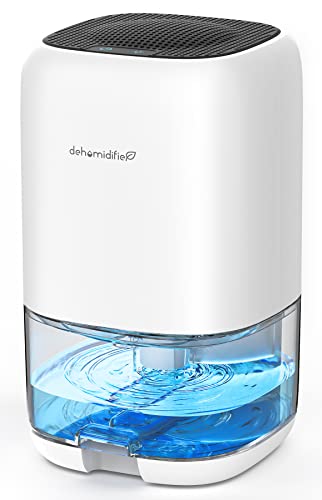
TABYIK 35 OZ Dehumidifier for Bedroom RV, Quiet with Auto Shut Off, White | 280 Sq.Ft Small Dehumidifiers for Home Bathroom Closet, 7 Color Light, 28dB Ultra Quiet, 35OZ Water Tank


As an Amazon Associate we earn from qualifying purchases. Product prices and availability are accurate as of the date/time indicated.

Camco Moisture Absorber Bucket - Features Fast-Acting Moisture-Absorbing Agent - No-Fragrance Beads – Use with RV Storage, Camper Organization & More (44282)


As an Amazon Associate we earn from qualifying purchases. Product prices and availability are accurate as of the date/time indicated.

Dehumidifiers for Home, 1000 Sq Ft Dehumidifier with 95oz Tank Auto Shutoff | Quiet for Bedroom, Bathroom and Basement with Sleep Mode 7-Color LED Light, Grey


As an Amazon Associate we earn from qualifying purchases. Product prices and availability are accurate as of the date/time indicated.
| Your shed | Best type | Closest picks here |
|---|---|---|
| No power, any climate | No-power absorber bucket | DampRid, Camco |
| Power, stays above about 45 F most of the year | Compressor unit with drain hose | GoGuess, SEMKAP |
| Power, freezing winters | Compressor in warm months, bucket in winter | GoGuess plus DampRid |
| Very small shed or potting corner | Small tank unit or one bucket | TABYIK, Camco |
| Power, mild climate, tight budget | Mid-priced tank unit | ToLife, NineSky |
The comparison table below lists all eight. Price tiers are relative bands in this group based on the price field of each listing; check the product page for current pricing.
| Model | Key spec (from the title) | Price tier | Best for |
|---|---|---|---|
| SEMKAP 32-Pint | Smart compressor, 32 pints max, drain hose, 24-hour timer | Premium | Large or very damp outbuildings |
| DampRid Bucket, 2-Pack | Fragrance free, 2 lb 15.5 oz each, detection strip | Budget | Unpowered sheds |
| ToLife 95 oz | 1,000 sq ft rating, 95 oz tank, auto shutoff | Mid-range | Mild-climate powered sheds |
| GoGuess 21-Pint | Compressor, up to 21 pints a day, drain hose, garage and RV use | Mid-range | Powered garden sheds and garages |
| BEDRED 95 oz | 1,000 sq ft rating, 95 oz tank, auto shutoff | Premium | Buyers who want a quiet-themed unit |
| TABYIK 35 oz | 280 sq ft rating, 35 oz tank, 28 dB | Budget | Tiny sheds and closets |
| Camco Absorber Bucket | Fast-acting moisture-absorbing beads, no fragrance | Budget | Small sheds, campers, storage |
| NineSky 95 oz | 1,000 sq ft rating, 95 oz tank, auto shutoff | Mid-range | Mild-climate powered sheds |
Sizing a shed with real numbers
Room ratings in dehumidifier titles are written for living space. A shed is different, so translate. Take an 8 by 10 foot shed with 7-foot walls: that is 80 square feet of floor and 560 cubic feet of air. Every title here, even the 280 square foot TABYIK, is rated above that floor area on paper.
But paper area is not the whole story. A shed leaks air around the door, gets damp from the soil under it, and gains moisture from wet tools, bagged soil and stored lawn furniture. In practice, the unit works harder than the square-foot figure suggests, and a wide gap between rating and shed size is a margin, not a waste.
Tank math matters in a shed because nobody is there to empty it. A 95 oz tank holds about 5.9 US pints. If the unit pulled 1 pint a day in a humid week, which is our planning assumption rather than a listing figure, the tank would fill in about 6 days. The 35 oz TABYIK tank holds about 2.2 pints and would fill in roughly 2 days under the same assumption. A unit with a drain hose that runs to a gutter or out of the door never fills at all, which is why the GoGuess and SEMKAP titles mention drain hoses.
The SEMKAP’s 32 pints a day is a maximum under conditions the title does not describe. The GoGuess is rated for up to 21 pints a day. Both are far more than a closed shed produces, so they will spend most of their time cycling off at the target humidity, which is the behavior you want.
Powered dehumidifiers: compressor and tank models
The first two titles in this group name a compressor. The other four tank-style titles do not state how they dry, which matters because cold performance depends on the technology.
GoGuess 1600 Sq.Ft Compressor Dehumidifier, 21 Pints a Day
This is the closest match to a shed on the list, simply because the title names the right places: home, RV and garage, along with large rooms and basements. It is a compressor model with a drain hose, a timer and humidity control, rated for up to 21 pints a day and 1,600 square feet. In a mid-size shed that is more than enough capacity, and the drain hose means you do not have to empty a tank.
The compressor is both its advantage and its limit. Compressors remove water well in warm damp conditions, and they handle a continuously damp summer shed with ease. They struggle as the air gets cold, because the coil can ice. The title does not list a minimum operating temperature or an auto-defrost feature, so find those on the product page. If the listing says nothing, assume it is meant for rooms that stay above the low 40s Fahrenheit.
Practical setup: stand it on a pallet or block so it is off the damp floor, run the hose through a gap in the door or out a small hole to a drain point, set the target humidity around 50 percent, and use the timer so it does not run when you do not need it. Leave space on all sides for airflow.
Estimated cost, with the assumption stated: a unit like this at 250 watts running 8 hours a day would use about 60 kWh a month, around nine dollars at 15 cents per kWh. The real wattage is on the label.
Pros
- Compressor design with drain hose named in the title
- Garage and RV use named, closest to a shed
- Mid-range tier for the capacity
Cons
- Minimum operating temperature not in the title
- Needs a power outlet and room for the hose
- Rated for 1,600 sq ft, bigger than most sheds need
Who it’s for: owners of a powered shed or workshop in a mild climate who want set-and-forget drainage.
SEMKAP 2500 Sq.Ft 32-Pint Dehumidifier with Smart Compressor
The SEMKAP is the biggest unit here: up to 32 pints a day, a 2,500 square foot rating, a smart compressor, intelligent humidity control, a 24-hour timer and a drain hose, marketed for basements, large rooms, bathrooms and bedrooms. In a shed, it is very likely more machine than you need, but there are sheds where it makes sense: a large workshop outbuilding, a damp barn-style shed, or a space where you store lumber.
The phrase “smart compressor” is a seller term, and the title does not define it. The product page should explain what the feature does, and, more importantly for sheds, whether the unit handles low temperatures or defrosts itself. Ask the same question for every compressor model: what is the lowest ambient temperature in the manual?
The 24-hour timer is helpful in a building that you visit rarely. You can limit running to the dry hours of the day or the weeks you plan to be away. The drain hose means the unit can run for days without anyone emptying a tank, subject to the hose route being downhill and not blocked.
Size and weight also matter. Large dehumidifiers take space in a shed where every square foot holds a mower or a stack of pots. The title does not give dimensions, so check them against the spot where you plan to put the unit.
It is in the Premium tier, so it makes the least sense for a basic garden shed and the most for a large, valuable workshop contents.
Pros
- Highest capacity in the list, 32 pints at maximum
- 24-hour timer and drain hose named in the title
- Suits large or very damp outbuildings
Cons
- Premium tier and likely oversized for a small shed
- Cold-weather limits not stated in the title
- Footprint and weight not given
Who it’s for: owners of a large workshop shed with power who want capacity to spare.
ToLife 1000 Sq Ft Dehumidifier with 95 oz Tank
The ToLife title is typical of the tank-style group: 1,000 square foot rating, 95 oz tank, sleep mode, auto shutoff, portable, for the home, bedroom, bathroom and basement, with a 7-color LED light, in grey. The sleep mode and LED light tell you that it was designed for a bedroom, not a shed. That is not a problem, but you should treat bedroom features as irrelevant and focus on the tank and the shutoff.
Auto shutoff is the valuable feature here. When the 95 oz tank fills, the unit stops, which prevents overflow in a building where you are not around. The catch is that a full tank also means the dehumidifier has stopped working, so in a very damp shed you will find it off every time. Check whether the unit has a drain-hose option; the title does not mention one.
The title does not state the drying technology, so do not assume it is a compressor. Find the technology and the lowest operating temperature on the product page before you decide it can handle a cold night.
The value argument is simple: it is in the Mid-range tier and fits in a small shed, where capacity needs are modest. For an 80 square foot shed, a 95 oz tank used at a pint a day would need emptying roughly weekly, which is workable if you visit the shed weekly anyway.
Because the NineSky and BEDRED listings state the same headline numbers, compare the three on the details that titles skip: warranty, noise, drain options and return policy.
Pros
- Auto shutoff protects against overflow
- Portable and sized for small spaces
- Mid-range tier
Cons
- Technology and low-temperature range not stated
- Small tank fills in about a week at a pint a day
- Bedroom-oriented features add nothing in a shed
Who it’s for: shed owners with an outlet and mild weather who visit often enough to empty a tank.
BEDRED 95 Oz Dehumidifier for Home, 1000 Sq.Ft
The BEDRED reads like the ToLife and the NineSky: 95 oz tank, 1,000 square foot rating, quiet, auto shutoff, sleep mode, a seven-color ambient light, marketed for bedroom, bathroom and basement, in deep black. The headline numbers match, and that raises the real question: what, besides branding, accounts for a much higher price tier? On this list it sits in the Premium tier, near the SEMKAP, while the ToLife and NineSky sit in Mid-range.
A fair way to evaluate it is to read what the titles do not say. Does the product page mention a compressor? A drain hose? A warranty longer than the others? A lower operating temperature? If the answer to all of those is the same as for the cheaper twins, the price difference is hard to justify for a shed. If the page shows a drain option or a warranty term that the others lack, the gap may be earned.
“Quiet” matters less in a shed than in a bedroom, but it matters in an attached lean-to, a garage workshop with a living space above, or a shed near a neighbor’s fence. The title does not give a decibel figure here, unlike the TABYIK, so check the listing for one.
Black finish is cosmetic. In a dusty shed, a dark casing hides dust, which is a small point in its favor, and the ambient light can generally be ignored.
Our view from the listing alone: for a plain shed, buy this one only if the product page shows a concrete advantage over the ToLife and NineSky.
Pros
- 95 oz tank with auto shutoff
- Quiet operation named in the title
- Plain dark finish
Cons
- Premium tier despite matching headline specs of cheaper units
- Technology, drain option and cold limits not stated
- Bedroom features add little in a shed
Who it’s for: shoppers who find a documented advantage on the product page and want a quieter unit near living space.
NineSky Dehumidifier for Home, 1000 Sq Ft with 95 oz Tank
NineSky lists the same headline specs as the ToLife: 1,000 square feet, a 95 oz tank, auto shutoff, quiet for bedroom, bathroom and basement, sleep mode and a 7-color LED light, in grey. It is priced in the same tier as the ToLife, so choosing between them comes down to the details that the titles do not cover.
To compare, open both product pages and write down five things: the drying technology, the minimum operating temperature, the power consumption in watts, the warranty period, and whether a continuous drain port is offered. A shed buyer needs those five far more than the bedroom features. If one lists a number and the other stays silent, that is useful information too.
Think about the shed’s duty cycle. A tank unit with auto shutoff will run until the tank is full, then stop. In a shed you visit every week or two, that means it may be off for several days in a humid spell. If that sounds like your situation, look for a model with a drain hose, such as the GoGuess or SEMKAP, or combine this unit with a bucket as a backup.
There is also a placement issue. Keep it off the floor on a small stand or pallet, and keep it clear of loose items like tarps and fertilizer bags, which can block airflow or tip into it.
Honest verdict from the listing alone: a reasonable mid-priced option when the shed has power and stays mild, no better or worse on paper than the ToLife.
Pros
- Auto shutoff and 95 oz tank in the title
- Mid-range tier, below the BEDRED
- Portable footprint for small buildings
Cons
- Technology and low-temperature range not stated
- Same weekly emptying burden as other 95 oz units
- Brand differences hide behind identical headline specs
Who it’s for: budget-conscious shed owners with power who compare the fine print and pick the better-documented twin.
TABYIK 35 oz Small Dehumidifier, 280 Sq.Ft
The TABYIK is the small one: 35 oz, for bedroom and RV, quiet with auto shutoff, a 280 square foot rating, for bathroom and closet, with a 28 dB noise figure, a 7-color light and a 35 oz tank. The 28 dB is a seller-stated number; no one on our team measured it.
The fit for a shed is a narrow but real one: a very small shed, a lean-to storage box, a potting bench enclosure, or a tool cabinet with a power source. An 80 square foot shed is well inside the 280 square foot rating, though the tank is the bottleneck. At 35 oz, about 2.2 pints, and our assumed 1 pint a day in a damp week, you would be emptying it every two days, which is not practical in a building you rarely visit.
That makes it best for a situation where you can run it for a short stretch rather than leave it unattended: drying out the shed after a rainy week, or sitting beside a stack of lumber before a project. It is also a reasonable closet or camper unit.
The title does not state the technology, so confirm what it is and what the minimum operating temperature is before you count on it in a cold building.
It is in the Budget tier among the powered units, which makes it a modest way to find out whether a shed responds to dehumidifying at all before you spend more.
Pros
- Budget tier and small footprint
- 28 dB figure in the title for quiet operation
- Suitable for tiny enclosures and closets
Cons
- 35 oz tank fills fast in a damp shed
- Technology and low-temperature range not stated
- Small coverage for large or leaky buildings
Who it’s for: owners of a tiny powered shed or storage box who can empty the tank often.
No-power moisture absorbers
Buckets do not need an outlet, and they do not stop at freezing. They do need to be checked and replaced, and the liquid they collect needs careful handling.
DampRid Hi-Capacity Fragrance Free Absorber Bucket, 2-Pack
DampRid is the obvious no-power option: the title describes a fragrance-free, high-capacity absorber bucket of 2 lb 15.5 oz, with a detection strip, sold as a 2-pack. Two buckets are enough to split a shed in half or to carry one bucket at a time while the other is in use.
The strip is a practical feature, though the title does not describe how it works, so read the instructions on the listing. The general idea of any such product is to give you a cue that it is time to replace the bucket instead of guessing by eye.
The advantage over a powered unit in a shed is independence. It works when the power is off, in a shed with no outlet, and in cold weather, as long as you handle the collected liquid properly. The disadvantage is that it works slowly and has a ceiling. Once the absorbing material is used up, the bucket does nothing, and a shed that is wet from the ground may use it up within weeks.
Planning estimate for an 80 square foot, 560 cubic foot shed: place one bucket on each end shelf, not on the floor, and plan on swapping one per quarter in a typical damp season, which is an assumption rather than a listing figure. Heavy damp can cut that sharply.
Keep the bucket upright, away from children and pets, and follow the label for disposing of the liquid. Do not set it on a shelf above a bench where a tipped bucket would spill onto tools or wood.
Pros
- No power or setup
- Two buckets in the pack
- Fragrance free and a detection strip named in the title
Cons
- Capacity is finite and slow in a wet shed
- Liquid must be handled and disposed of
- Cannot reach a target humidity without a hygrometer to check
Who it’s for: owners of unpowered or freezing sheds who want a dependable, low-effort starting point.
Camco Moisture Absorber Bucket (44282)
Camco’s bucket is described as a fast-acting moisture-absorbing agent with no-fragrance beads, for RV storage, camper organization and more. The RV roots show up in the title. A camper has the same issue as a shed: a small enclosed space that nobody visits for weeks. The no-fragrance wording matters for stored tools and garden chemicals, where a floral scent is unwelcome.
The title does not give the size or weight of the bucket, unlike the DampRid, which lists 2 lb 15.5 oz. That makes capacity comparisons difficult. Open the listing and find the net weight of the beads. Without that, you cannot judge how many buckets your shed would need or how this one stacks against the DampRid pack.
It is the cheapest absorber on the list, in the Budget tier, so it is an easy first experiment. Buy one, put it in the shed with a hygrometer, and look at the reading after a week. If the number drops and stays down, you have your answer. If the reading barely moves, a shed that wet needs a powered unit.
The bucket is a good candidate for places where a bigger unit will not fit: inside a tool cabinet, a lockable chest, or a lean-to where a plug is out of reach. Use the same cautions as with any bucket: upright, away from kids and pets, and not above anything you would hate to see wet. Mark the date you set it out on the lid with a marker, since the title gives no replacement schedule and a forgotten bucket protects nothing.
Pros
- Lowest cost among the absorbers
- No-fragrance beads named in the title
- Fits small spaces, cabinets and campers
Cons
- Capacity not stated in the title
- Slow for a wet or leaky shed
- Liquid and refills need handling
Who it’s for: anyone running a low-cost trial in a small shed, cabinet or camper.
Power in a shed: outlets, cords and cold
A dehumidifier is only as safe as the way it is powered. Sheds are damp, dusty and often uninspected, which is a rough place for electricity.
First, check the manual. Some dehumidifier makers discourage extension cords entirely, and ignoring that can void a warranty or create a fire risk. If yours allows one, use these common-sense rules:
- Choose an outdoor-rated cord, with a conductor thickness suited to the unit’s amperage and to the cord length. A longer run needs a thicker cord; the manual and the cord’s label give the rating.
- Plug into a GFCI-protected outlet, or use a portable GFCI adapter.
- Keep the plug connection off the ground and out of puddles, for example in a covered box on a shelf.
- Never chain two cords or run the cord under a rug, through a closed door or under a pallet.
- Do not share the circuit with a space heater or another heavy load.
- Uncoil the cord fully so it does not heat up.
For anything permanent, hire a licensed electrician to run a proper outdoor-rated circuit to the shed. It is a one-time cost that removes the temptation to improvise. If you do not have power at all, that is not a reason to give up: buckets work, and a sealed cabinet with desiccant protects the most important tools.
Cold changes the picture too. A compressor unit can ice up near freezing, and a tank can freeze solid if it is left full. Drain it before winter, store it indoors if the shed freezes, and switch to buckets in the cold months.
A monthly cost model and a tool-rust routine
These figures are our estimates under stated assumptions, not wattage figures from the listings. Electricity is assumed at 15 cents per kWh.
| Setup | Assumption | Estimated monthly cost |
|---|---|---|
| Compressor unit, drain hose | 250 W, 8 hours a day, 30 days (60 kWh) | About nine dollars |
| Small tank unit | 60 W, 12 hours a day, 30 days (21.6 kWh) | About three dollars |
| Absorber bucket | No power; one bucket per quarter | Cost of four buckets a year |
Now the routine that makes any of them work for tools. It takes about fifteen minutes a month.
- Read the hygrometer. If it is above about 60 percent for a week, add capacity.
- Wipe steel tools dry, scrub off light rust with fine abrasive, and rub on a thin coat of oil.
- Hang tools off the floor and away from the walls. A wall-mounted rack such as the one in our guide to a wall-mounted garden tool shelf keeps blades in circulating air.
- Store small steel items in a lidded box with desiccant, and put tools on a raised shelf like the one in our adjustable-bracket shed shelf project.
- Dry wooden handles before they go back in the shed. Our tool handle drying rack is built for exactly that.
- Replace or empty buckets, drain tanks, and look for water stains on the floor.
How we picked these
The Editorial team put this page together from published specifications, manufacturer documentation and buyer reviews. For each listing we read the title and product description, recorded what was stated and what was missing, and grouped the eight by drying approach: compressor, unspecified tank-style and no-power absorber.
Nobody on the team used or measured these units. That is why each description sticks to what the title says, and why numbers such as running cost, fill time and bucket lifespan are labeled as planning estimates with assumptions you can change. We do not publish star ratings or review counts, because they move too quickly to be reliable.
Our checks were practical for shed owners. Does the title name a compressor or leave the technology open? Is there a drain hose? Does the listing mention garages or RVs, which are closer to a shed than a bedroom? What is the price tier relative to the capacity? Where a listing was silent, we say to check the product page rather than guess.
Six mistakes that keep sheds damp
Buying by room rating. A 1,000 square foot label does not mean the unit suits an 80 square foot shed; check the tank, drain and cold limits instead.
Ignoring the cold. A compressor in a freezing shed may ice up. Check the minimum temperature in the manual.
Skipping the hygrometer. Without a reading you are guessing, and sheds change with the weather.
Putting buckets on the floor. Spills and splashes ruin the effect; use a shelf away from tools.
Improvising power. A frayed or undersized cord is a hazard. Use an outdoor-rated, appropriately sized cord or call an electrician.
Leaving the real leak. A dehumidifier cannot beat a leaking roof or a wet floor. Fix the source and then control the moisture.
What to buy for your shed
If the shed has power and stays mild, the GoGuess is the best match on paper, with a compressor, a drain hose and garage and RV use named in its title. If you have no power or hard winters, buy the DampRid pack and a hygrometer. For a tiny shed or a cabinet, the TABYIK or a single Camco bucket is enough. Save the SEMKAP for a large workshop, and compare the ToLife, NineSky and BEDRED on their fine print before you pay a Premium-tier price for headline specs that match.
Frequently asked questions
Will a compressor dehumidifier work in an unheated shed?
Only within limits. Compressor dehumidifiers chill a coil to pull water from the air, and at low temperatures that coil can ice up, which cuts output or makes the unit cycle off. Many manuals list a minimum operating temperature somewhere in the low 40s Fahrenheit, but you must read the manual for your exact model. In a shed that freezes, a no-power moisture absorber bucket is the safer choice, or run a compressor unit only in the milder months.
How big a dehumidifier does a garden shed need?
Most sheds are small. An 8 by 10 foot shed with 7-foot walls holds about 560 cubic feet, so the room ratings of 1,000 square feet or more in these titles are far larger than you need on paper. Sheds leak air and sit against damp ground, so the unit works harder than the rating suggests, but a mid-size tank model or a pair of absorber buckets is usually enough for a shed of that size.
Is it safe to run a dehumidifier in a shed on an extension cord?
It can be, but only with care. Use an outdoor-rated, heavy-duty cord with a conductor size suited to the appliance’s amperage and the cord length, plug into a GFCI-protected outlet, keep connections off wet ground, and never chain cords or power strips together. Some dehumidifier manuals discourage extension cords completely, so check yours. For long-term use, a licensed electrician can install an outdoor-rated circuit to the shed, which is the cleaner solution.
Are moisture absorber buckets enough to stop tools rusting?
Sometimes. In a small shed with a tight door and tools stored off the floor, a bucket or two can keep humidity low enough to slow rust, especially if you also wipe and lightly oil the metal. In a leaky or wet shed they fill quickly and need frequent replacement. Put a cheap hygrometer inside and let the reading decide: if it stays above about 60 percent, add capacity or move to a powered unit.
What humidity should I aim for in a shed?
A common target for protecting tools and wood is roughly 40 to 55 percent relative humidity. Iron and steel rust far faster above about 60 percent, and wood moves and can grow mold when it stays damp. A shed that swings with the weather may never hold a steady number, so aim to stay under the upper end during humid months and treat a hygrometer reading as your guide rather than a fixed rule.