What's inside
As an Amazon Associate I earn from qualifying purchases. This post may contain affiliate links at no extra cost to you.
Outdoor woodworking has two useful starting windows. Spring gives you time to build before peak outdoor use, but damp lumber and cool, changeable weather can slow the work. Summer offers longer, drier stretches for cutting and finishing, though heat and sun can make both uncomfortable. The best season depends less on the calendar than on your project, the wood’s moisture, and whether you have a dry place to work.
For most beginners, spring is a good time to start a planter, bench, or simple table if the parts can stay under cover while you work. Save large builds that depend on stable, dry stock—or finishes that need predictable curing conditions—for a stretch of suitable weather.
As an Amazon Associate we earn from qualifying purchases at no extra cost to you.


Contents
Spring and summer compared
| Factor | Spring | Summer |
|---|---|---|
| Good projects | Planters, garden beds, small benches | Tables, chairs, larger outdoor furniture |
| Main advantage | Build early and use the project through the season | More chances of dry weather for assembly and finishing |
| Main risk | Rain, damp stock, cool temperatures | Heat, direct sun, fast-drying finishes |
| Best workspace | Covered, ventilated area | Shade or a garage with good airflow |
Those are tendencies, not guarantees. A rainy summer can be worse for finishing than a dry spring. Check the weather and the finish label; many exterior coatings have minimum application temperatures and limits for rain exposure during curing.
Projects that make sense in spring
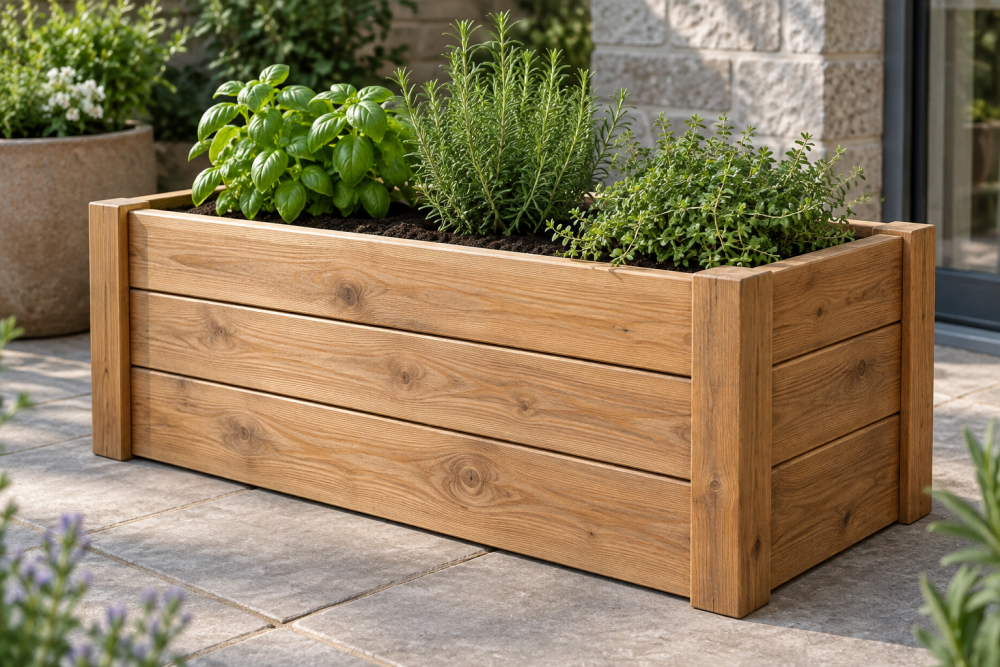
A planter box is a forgiving first build: it uses short boards, straightforward square cuts, and can tolerate small cosmetic errors. Use rot-resistant wood or lumber rated for ground contact where it will touch soil. Leave gaps or drill drainage holes in the bottom; trapped water shortens the life of the box. Line the inside only with a material suitable for garden use, and avoid letting wet soil sit against untreated wood.
Raised beds are another practical spring project. A common size is 4 feet by 8 feet, but make the width fit your reach: about 3 to 4 feet is easier to tend from the sides. Before buying lumber, check whether the site is level and whether you can move filled soil into place. A bed filled to 12 inches across that footprint holds a lot of soil, so plan delivery or filling in stages rather than assuming a wheelbarrow trip or two will do it.
Spring is also a good time to build a compact garden bench. Keep the first version simple: a seat, four legs, and stretchers to reduce wobble. If you cannot keep boards dry between work sessions, choose a design with replaceable slats rather than complicated joinery. A covered work area matters more than a premium saw for a small outdoor build; a basic circular saw and square are enough if you measure carefully.
Projects better suited to summer
Summer’s longer dry spells help with larger furniture, such as a picnic table or a pair of chairs, because you can cut, assemble, and protect the work without leaving it exposed overnight. These builds need more attention to fit. A table that is slightly out of square may rock, and a chair that flexes at its joints can fail under load. Use a tested plan, clamp assemblies square, and check the finished piece on a level surface before applying a finish.
Summer is also convenient for replacing deck steps or building a small outdoor storage cabinet, provided the lumber is dry and the project is protected from rain during assembly. Do not assume hot weather makes wet lumber ready to use: boards can dry unevenly, cup, or twist. Stack stock flat with spacers between layers, keep it out of direct sun, and allow airflow. If boards are visibly wet or feel substantially heavier than comparable dry stock, postpone precision joinery.
Direct sunlight can make a finish skin over before it levels, while wind-blown dust can stick to it. Work in shade when possible. If the surface is hot to the touch, wait until it cools. A cheaper brush or roller can be fine for a basic fence or planter finish; for furniture with visible surfaces, a decent exterior-rated brush usually leaves fewer marks and is easier to control.
Choose materials and tools for the job
For outdoor projects, pick wood for exposure and maintenance, not just price. Cedar and redwood resist decay but cost more and can still weather or split. Pressure-treated lumber is often economical for structural parts and ground contact, but it may be wet when purchased and can move as it dries. Let it dry before tight-fitting work, and use fasteners rated for treated wood. Untreated pine is a low-cost choice for covered, replaceable parts, but expect more upkeep and a shorter service life outdoors.
Before shopping, compare the plan’s cut list with the board lengths available locally. A few extra inches of stock can prevent a bad cut from stopping the build, but buying far more than needed ties up money and leaves awkward offcuts. For outdoor assembly, corrosion-resistant screws are usually worth the modest cost. A search for exterior wood screws can help compare coated and stainless options; stainless is useful in corrosive environments, while coated screws are often adequate for ordinary yard furniture.
If you are buying a saw for occasional builds, a corded circular saw is generally less expensive and avoids battery limits; a cordless one is easier to use away from an outlet. For repeated outdoor cutting, compare cordless circular saws by blade size, battery platform, and whether a battery and charger are included. A miter saw can speed up repeated crosscuts, but it is not necessary for a planter or a basic bench.
Avoid the failures that shorten outdoor projects
Measure twice, but also check the boards themselves. A bowed board can make an otherwise accurate frame twist. Lay out the pieces before cutting, mark reference faces, and dry-fit assemblies. Predrill near board ends to reduce splitting, especially with dry or narrow stock. Use exterior-rated glue only where the joint design benefits from it; adhesive does not replace sound mechanical joints.
Plan for water to escape. Round or ease sharp exposed edges, keep feet off standing water where practical, and avoid flat surfaces that hold puddles. Apply finish to all accessible faces and ends before assembly when the design permits. End grain absorbs moisture readily, so extra attention there can slow checking and water entry.
Start when you can protect the project for the time the materials require. In spring, that may mean building under a roof and finishing during a dry spell. In summer, it may mean working in shade and avoiding the hottest part of the day. Choose the season that gives your particular project enough dry, comfortable work time—not simply the earliest date on the calendar.