What's inside
As an Amazon Associate I earn from qualifying purchases. This post may contain affiliate links at no extra cost to you.
Spring and fall are both good seasons for outdoor woodworking, but they create different problems. Spring brings damp lumber, showers, and rising temperatures. Fall offers cooler working conditions, but shorter days, falling leaves, and a fast drop in temperature can complicate glue-ups and finishes. Choose projects by how long they can stay under cover, how much movement their parts can tolerate, and whether you can finish them before the weather turns.
As an Amazon Associate we earn from qualifying purchases at no extra cost to you.


Contents
Start with the weather, not the project
Check the forecast for the whole build, including the time needed for glue and finish to cure. A sunny afternoon is not enough if overnight temperatures will fall below the product label’s minimum. Many exterior finishes need roughly 50°F or warmer to apply and cure well, but the manufacturer’s instructions take priority. Dew, rain, and high humidity can leave a finish cloudy or tacky.
Work under a roof or portable canopy when possible, but keep the sides open for airflow. A tarp draped over fresh work can trap moisture. Store boards flat, stickered, and out of direct sun; let them acclimate near the build area before cutting. Do not use a moisture reading as a substitute for stable stock: wood that is still drying can twist after assembly even if its surface feels dry.
Spring and fall project comparison
| Factor | Spring | Fall | What it means for the build |
|---|---|---|---|
| Moisture | Frequent rain and damp stock | Often drier, but morning dew is common | Cover parts and avoid sealing wet wood |
| Temperature | Warms gradually; afternoons may be suitable | Cool evenings can arrive quickly | Check cure temperatures, not just daytime highs |
| Daylight | Increasing | Decreasing | Allow extra time for careful layout and finishing |
| Good project fit | Planters, trellises, simple benches | Storage boxes, repairs, sheltered furniture | Match project size to reliable dry work time |
Projects that suit spring
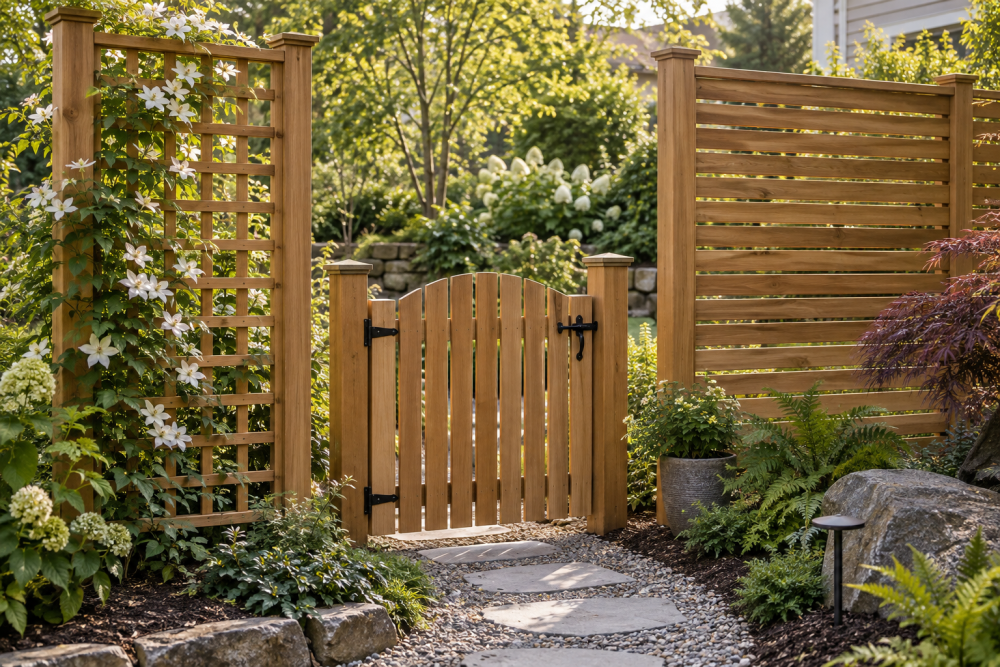
Spring is a practical time for a trellis, raised planter, or compact potting bench. These projects can be built in manageable sections and do not require perfectly tight indoor-style joinery. A simple freestanding trellis, for example, can use 1-by-2-inch battens with small gaps between them; those gaps help the assembly dry after rain. Use exterior-rated screws, predrill near board ends, and leave a small drainage gap beneath any horizontal shelf.
Planters are forgiving in appearance but not in water management. Line the soil-facing surfaces with landscape fabric rather than plastic, which can hold water against the wood. Drill several drainage holes in the bottom, and raise the box on feet or narrow runners. Cedar or naturally durable wood costs more than common construction lumber, but it is a sensible choice where soil and standing water will contact the box. For a short-lived decorative planter, cheaper lumber is reasonable if you accept more frequent repairs or replacement.
Spring’s main failure mode is assembling or finishing stock that is too wet. Boards may shrink as they dry, opening joints or splitting around screws. If a project must be ready quickly, choose a design with slatted parts and screws rather than a wide glued panel. A basic pin-type wood moisture meter can help compare boards, though inexpensive meters are best treated as a screening tool, not a guarantee.
Projects that suit fall
Fall is good for building a storage bench, firewood rack, or replacement parts for outdoor furniture, especially if you can work under cover. A firewood rack is a useful beginner project: two end frames joined by rails, with the lowest rail or feet keeping the wood off the ground. Leave airflow around the stack; tightly boxed-in firewood dries poorly. A rack should be sized for the available spot rather than built oversized and left exposed to winter wind.
For a storage bench, favor a slatted seat and a lid that sheds water. A flat lid may be simpler to cut, but it holds rain and can warp; a slight slope and a small overhang reduce that risk. If adding a hinged lid, include a stop or lid support so it cannot slam shut. Do not rely on caulk to make an outdoor box watertight: joints move, and trapped water has nowhere to go. Design for drainage and use a cover when the bench will be exposed to heavy weather.
Shorter days make fall a poor season for rushing a complicated finish. Sand and dry-fit parts before the weather window, then assemble when temperatures are within the adhesive’s stated range. An exterior-rated glue is useful for joints that stay protected from standing water, but screws or bolts are safer for parts that need to be serviced. Choose exterior wood screws with a corrosion-resistant coating; ordinary interior screws can rust and stain the surrounding wood.
Finish and fasteners: avoid the common failures
Use a finish made for exterior exposure and follow its coverage and recoat directions. A penetrating oil is easy to refresh but usually needs more frequent maintenance. Paint or an opaque stain can provide stronger UV protection, but only if the surface is clean, dry, and properly prepared. No coating eliminates maintenance. Inspect outdoor projects at least once a year for peeling, soft spots, loose fasteners, and water trapped at joints.
Pay special attention to end grain, which absorbs water readily. Seal cut ends when the finish system allows, and avoid designs that create horizontal pockets. Where dissimilar metals meet treated lumber, check fastener compatibility; some treatment chemicals can accelerate corrosion. A few extra dollars for suitable fasteners is cheaper than replacing a failed joint.
Choose a build you can finish well
For a first outdoor project, pick a plan with straight cuts, repeated parts, and an assembly that can be moved under cover. A drill-driver is enough for many trellises, racks, and planters; a circular saw helps with sheet goods and repeated crosscuts, but a handsaw is adequate for a small build if you work slowly. Buy tools for the cuts your plan actually requires, not for an imagined future workshop. A cordless drill-driver is convenient for outdoor assembly, while a corded drill can be the cheaper choice if you already have power nearby.
In either season, build around the dry, stable time you have. Spring favors open, quick-draining designs; fall favors compact builds that can be assembled and protected before cold weather. If the forecast or lumber condition is uncertain, cut and dry-fit now, then postpone glue and finish rather than forcing the job.