What's inside
- Quick comparison of the best Cordoba classical guitars
- Best Cordoba classical guitars by playing situation
- Best Cordoba for amplification and a narrower neck
- Solid versus layered construction: what you are really choosing
- Neck width, scale length, and playability
- Ownership realities: strings, humidity, and setup
- Final buying decision
- Quick comparison of the best Cordoba classical guitars
- Best Cordoba classical guitars by playing situation
- Best Cordoba for amplification and a narrower neck
- Solid versus layered construction: what you are really choosing
- Neck width, scale length, and playability
- Ownership realities: strings, humidity, and setup
- Final buying decision
As an Amazon Associate I earn from qualifying purchases. This post may contain affiliate links at no extra cost to you.
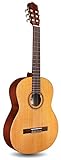
The best Cordoba classical guitars for most players are the C5 for value, the C7 for a richer solid-top sound, the C9 or C10 for serious acoustic playing, and the GK Studio or Fusion 5 when amplification, a cutaway, or a narrower neck matters more than traditional construction.
Cordoba’s range is broad enough that “best” depends on four decisions: whether you want solid or layered woods, whether you need electronics, how comfortable a roughly 50–52 mm classical neck feels, and whether the guitar is mainly for learning, recording, performing, or long-term ownership.
As an Amazon Associate we earn from qualifying purchases at no extra cost to you.


Contents
- Quick comparison of the best Cordoba classical guitars
- Best Cordoba classical guitars by playing situation
- Best Cordoba for amplification and a narrower neck
- Solid versus layered construction: what you are really choosing
- Neck width, scale length, and playability
- Ownership realities: strings, humidity, and setup
- Final buying decision
Quick comparison of the best Cordoba classical guitars
| Model or family | Top and back/sides | Scale length | Nut width | Electronics | Best fit |
|---|---|---|---|---|---|
| C1M / C1M 1/2 or 3/4 | Layered spruce or cedar top; layered back and sides | Full size: 650 mm; reduced sizes vary | About 50–52 mm | Usually none | First guitar, lessons, children, limited budget |
| C5 | Solid cedar or spruce top; layered mahogany back and sides | 650 mm | About 52 mm | Available in cutaway-electric versions | Best all-round acoustic value |
| C7 | Solid spruce or cedar top; layered Indian rosewood back and sides | 650 mm | About 52 mm | Some versions available with electronics | More projection and tonal color without moving to a fully solid body |
| C9 | Solid cedar top; solid mahogany back and sides | 650 mm | About 52 mm | Usually acoustic-only | Warm, responsive instrument for committed players |
| C10 | Solid cedar top; solid Indian rosewood back and sides | 650 mm | About 52 mm | Usually acoustic-only | Advanced playing, recording, broad dynamic range |
| GK Studio | Solid spruce or cedar top; layered back and sides | 650 mm | About 50 mm | Fishman electronics on common versions | Flamenco-influenced feel, stage use, easier neck transition |
| Fusion 5 | Solid spruce or cedar top; layered back and sides | 650 mm | About 48 mm | Fishman electronics on common versions | Players moving from steel-string or electric guitar |
Specifications can vary by finish, left-handed version, and year, so check the exact product sheet before ordering. The important comparisons are consistent: full-size Cordoba classical guitars generally use a 650 mm scale, while the Fusion and some Stage-oriented designs reduce the nut width to make the fretting hand feel more familiar.
Best Cordoba classical guitars by playing situation
Best beginner choice: Cordoba C1M
The C1M is the sensible starting point when the priority is a playable, full-size nylon-string guitar at a restrained price. Its layered construction is less expensive and generally less sensitive to ordinary changes in humidity than a more heavily solid-wood instrument. That makes it suitable for lessons, casual practice, school programs, and players who are not yet sure whether classical guitar will become a long-term hobby.
Choose a cedar-top version for a softer attack and warm response, particularly if the player uses a light touch. Choose spruce when you prefer a clearer initial note and more headroom as your technique develops. Younger players should not automatically be given a full-size guitar: a 1/2 or 3/4-size Cordoba may be easier to hold, even though its shorter scale and smaller body produce a different sound.
Best value upgrade: Cordoba C5
The C5 is the strongest general recommendation for an adult who wants a serious acoustic instrument without paying for a fully solid body. The solid cedar or spruce top is the part of the guitar most responsible for the instrument’s initial response and projection, while the layered mahogany back and sides keep the price and maintenance demands under control.
The cedar C5 tends to suit fingerstyle, romantic repertoire, and players who want an immediately warm sound. Spruce is the better choice for crisp articulation, stronger rhythmic definition, and a tone that can remain clear when played firmly. If you need to plug into an amplifier, compare the standard acoustic C5 with a cutaway-electric version rather than assuming that every C5 includes a pickup.
Best middle ground for tone and projection: Cordoba C7
The C7 moves to layered Indian rosewood back and sides while retaining a solid spruce or cedar top. Rosewood commonly contributes deeper bass, more overtone complexity, and a stronger sense of separation between registers than mahogany, although the player’s touch and the individual setup matter at least as much as the wood label.
It is a good choice when the C5 feels limiting but a fully solid guitar is outside the budget. The C7 remains practical for regular home use because the layered back and sides are less vulnerable to seasonal movement than solid rosewood. Select cedar for warmth and quick response; select spruce for a more immediate, defined attack.
Best solid-wood step-up: Cordoba C9
The C9 combines a solid cedar top with solid mahogany back and sides. It is aimed at players who practice consistently and want a more responsive instrument that can reveal subtle changes in right-hand position and dynamics. Compared with layered construction, a solid body can offer greater resonance, but it also deserves more careful storage.
The C9 is particularly attractive for classical students progressing beyond the beginner stage. It is not automatically “better” for every player: a well-set-up C5 can be more comfortable than a neglected C9, and the C9’s wider traditional neck may feel demanding to someone accustomed to steel-string guitar.
Best performance-oriented acoustic: Cordoba C10
The C10 is the choice for a player who values fully solid construction, a broad acoustic palette, and long-term development. Its solid cedar top and solid Indian rosewood back and sides are suited to nuanced fingerstyle playing, recording, and advanced repertoire where balance and dynamic control matter.
A C10 is an investment in an instrument that can remain rewarding as technique improves, but it should not be purchased solely because solid wood sounds prestigious. It needs stable humidity, careful transport, and a professional setup when necessary. If your guitar will spend most of its life in a hot car, damp basement, or unregulated rehearsal space, a layered-back model may be the more rational choice.
Best Cordoba for amplification and a narrower neck
GK Studio: stage-friendly classical feel
The GK Studio is built around practical performance needs. Common versions use a solid top, a cutaway, and Fishman electronics, with a nut around 50 mm rather than the approximately 52 mm width found on many traditional classical models. Its design is useful for flamenco-influenced playing, amplified ensemble work, and guitarists who need access to higher frets.
Expect a more stage-oriented compromise than with a conventional acoustic classical guitar. The pickup system makes plugging in easy, but the amplified sound depends on the preamp settings, venue, speaker, and feedback control. Test the plugged-in signal through the type of amplifier or PA you actually use if possible.
Fusion 5: easiest transition from steel-string guitar
The Fusion 5 is worth considering when a standard classical neck feels too wide. Its approximately 48 mm nut is closer to many steel-string guitars, while the 650 mm scale preserves the familiar full-size classical reach. This can make chord shapes and single-note lines feel less intimidating for players changing instrument types.
The trade-off is that the narrower string spacing leaves less room for traditional right-hand fingerstyle technique. It is a strong choice for pop, Latin, worship, singer-songwriter, and amplified nylon-string work; a player focused on strict classical technique may prefer the roomier neck of the C5, C7, C9, or C10.
Solid versus layered construction: what you are really choosing
- Layered construction: usually costs less, tolerates everyday handling well, and is a sensible choice for beginners, travel, teaching studios, and variable indoor climates.
- Solid top with layered back and sides: delivers much of the tonal benefit of a solid soundboard while retaining practical durability and moderate pricing.
- Fully solid construction: offers greater acoustic complexity and responsiveness, but it needs better humidity control and careful storage. Solid wood is not indestructible, and cracks or bridge movement can be expensive to repair.
Wood choice is a tonal direction, not a quality ranking. Cedar usually responds easily and sounds warm; spruce often has more attack and headroom; mahogany tends toward focused mids; Indian rosewood can add bass depth and overtone richness. Setup quality, string condition, top humidity, and the player’s technique can outweigh these broad tendencies.
Neck width, scale length, and playability
A 650 mm scale is standard on most full-size Cordoba classical guitars. It gives the instrument familiar classical tension and spacing, but it also creates a substantial reach for small hands. A shorter-scale student model can reduce stretching, although it may feel less powerful and will not exactly reproduce the response of a full-size guitar.
Nut width deserves a hands-on check. Around 52 mm gives the left hand and right-hand fingers generous separation, which benefits traditional classical technique. Around 50 mm is a compromise, while approximately 48 mm is more approachable for steel-string players. A narrower neck is not necessarily easier once complex fingerstyle passages require accurate right-hand spacing.
Before buying, measure the distance between the thumb and fingertips while forming a relaxed first-position chord. Do not force a painful stretch. Also inspect the action: nylon strings should feel comfortable without buzzing, but an excessively high saddle or nut can make any model seem difficult. A qualified guitar technician can correct many setup problems; they cannot turn a 52 mm neck into a 48 mm one.
Ownership realities: strings, humidity, and setup
Nylon strings lose brightness and tuning stability before they necessarily break. A frequent player may replace them every 6–12 weeks, while occasional players might change them every few months. Replace the whole set together so tension and tonal balance remain consistent. Use the correct classical strings; steel strings can damage a classical guitar because the instrument is not braced for their much higher tension.
Keep a solid-wood guitar around ordinary household humidity rather than extreme dryness or dampness. A case humidifier can help in dry climates, but it must be used according to its instructions and kept away from direct contact with the wood. Wipe fingerprints from the strings and finish with a soft dry cloth, and avoid household polish or silicone products unless the manufacturer specifically approves them.
For a simple cost-per-use decision, suppose a C5 costs about $500 and is played twice a week for three years: 2 × 52 × 3 equals 312 sessions, or roughly $1.60 per session before strings. A $1,500 C10 played four times weekly for five years equals 1,040 sessions, or about $1.45 per session. The calculation does not make the C10 automatically economical; it shows why frequency of use and ownership time matter more than the initial price alone.
Final buying decision
- Choose the C1M for a first instrument or uncertain commitment.
- Choose the C5 for the best balance of price, tone, and durability.
- Choose the C7 for more tonal depth without fully solid back and sides.
- Choose the C9 for a warm, responsive solid-wood upgrade.
- Choose the C10 for advanced acoustic playing and long-term performance potential.
- Choose the GK Studio for amplification, cutaway access, and a stage-focused design.
- Choose the Fusion 5 when a narrower neck is the deciding factor.
Whichever model you choose, prioritize comfortable neck width, correct action, and the intended playing environment over a more expensive wood specification. A guitar that fits your hands and gets played regularly is the best Cordoba classical guitar for you.