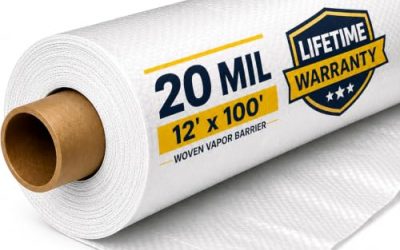
Key takeaways
- Compare house wrap by material build, water holdout and roll size, with the lap-it-like-shingles rule and tape-every-seam habit for dry walls.
What's inside
As an Amazon Associate I earn from qualifying purchases. This post may contain affiliate links at no extra cost to you.
House wrap is the weather-resistive barrier, or WRB, that goes over exterior wall sheathing before the siding. Rain that gets past siding — and some always does — lands on this layer, and the wrap’s job is to shed that water down and out while letting water vapor from inside the wall escape. It is a wall product, full stop. It is not a crawl space vapor barrier: those heavy ground liners lie on soil under the house as an interior moisture cover, a different job done by different sheets. It is also not roofing underlayment, which belongs on a roof deck under shingles. This guide covers wall wraps only: flat nonwoven sheets, a grooved drainable sheet, one self-adhered membrane, and woven rolls.
Disclosure: As an Amazon Associate, I earn from qualifying purchases. Product details were verified at the time of writing.
Four working rules govern every pick below. Laps run like shingles: each upper course overlaps the course below it, so water running down the face of the wrap stays on the outside of the layer beneath. Every seam and penetration gets taped or flashed — pipes, vents, and electrical boxes are holes in the barrier until they are sealed. At windows and doors the wrap is capped and folded into the opening in the maker’s pattern, then tied in with the flashing, never left as a loose flap. And the clock matters: each wrap carries a stated UV exposure window, and the siding goes on within that period. On high walls, work from a scaffold or a properly footed ladder and unroll in lengths you can control in wind.
Contents
How to Choose a House Wrap
Material build. Nonwoven spunbonded sheets are fused fiber webs with no punched holes; their pores are the spaces between fibers, which is how they hold out liquid water while passing vapor freely. Woven wraps interlace strands and coat them, gaining tear strength, and most woven wall wraps breathe through micro-perforations in the coating. Self-adhered membranes skip fasteners entirely: the sheet sticks to the sheathing and seals around the few penetrations that do pass through it.
Permeance. Perm figures state how readily water vapor passes through the sheet, and the picks below span a wide range on purpose. High-perm nonwovens suit walls that need to dry outward quickly. Mid-range woven and membrane figures suit assemblies that dry more slowly or in both directions. There is no single correct number — match the figure to the wall assembly and climate, and treat any wrap as one layer in a drying plan, not the whole plan.
Water holdout. Holdout is the wrap’s resistance to liquid water pushed against it by wind and by the back of wet siding. Makers publish it as a hydrostatic head figure in centimeters, as a pass in the boat test, or both. Drainable builds add a second defense: grooves or spacers that give trapped water a path down and out instead of letting it sit against the sheathing.
Roll size and coverage. Coverage is width times length. Three-foot rolls suit remodel work and cut-up walls with many openings; nine- and ten-foot rolls cover a full story height in one horizontal pass, which removes the horizontal lap entirely on standard walls. Fewer laps mean fewer seams to tape and fewer places for water to find a way in.
UV exposure window. Every wrap states how long it may sit uncovered — weeks for some, months for others. Plan the siding schedule around the shortest window on the job, and on a remodel where siding will be delayed, pick a wrap whose stated window covers the delay.
Fastening. Mechanically fastened wraps go up with cap nails or cap staples; plain staples tear through thin sheets in wind. Self-adhered membranes trade that fastener pattern for surface prep: clean, dry sheathing, a roller to press the sheet home, and primer on the substrates the maker names.
1. DuPont Tyvek HomeWrap, 3 ft. by 100 ft.

The default nonwoven pick, and the sheet most crews picture when the class is named. HomeWrap is spunbonded high-density polyethylene: extremely fine fibers fused into a uniform web — nonwoven, with no perforations — so its water holdout comes from the fiber structure itself rather than a coating. Its perm figure is among the highest in the class, which makes it the forgiving choice for walls that must dry to the outside, and the sheet is translucent enough to see stud layout through it while fastening. The 3-by-100-foot roll covers 300 square feet and is the handiest format in this guide for remodel walls, additions, and gable ends where a nine-foot roll is awkward.
The honest handling notes: the sheet is light and cuts with a utility knife, but that same lightness means it billows in wind and wants a second pair of hands on a tall wall, and it fastens with cap nails or cap staples — plain staples are a tear waiting for a gust. DuPont backs the sheet with a 10-year limited warranty and publishes the full system of tapes and flashings meant to seal its seams. Choose it when the wall is a standard framed assembly, outward drying matters, and the siding schedule fits inside a four-month exposure window.
Specs
- ASIN: B00DRL8MBI
- Roll size: 3 ft. x 100 ft. (300 sq. ft.)
- Material: nonwoven spunbonded high-density polyethylene, no perforations
- Permeance: 56 perms (ASTM E96, Method A)
- Water penetration resistance: 250 cm (AATCC 127)
- Basis weight: 1.8 oz/yd2
- Tear resistance (trapezoid): 8/6 lb.
- UV exposure window: 120 days
- Compliance: ASTM E2556 Type II; ASTM E1677 Type I air barrier
- Maker: DuPont
2. DuPont Tyvek DrainWrap
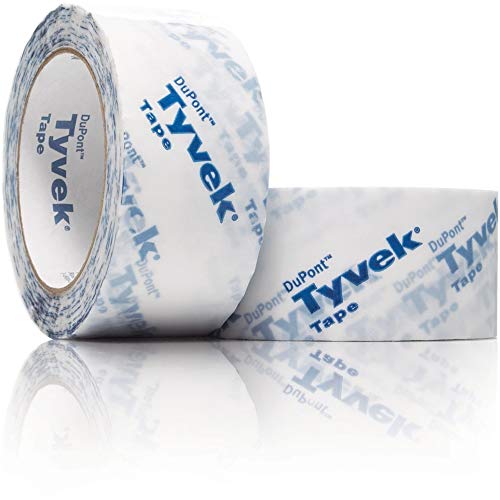
The drainable pick, for wet climates and for claddings that hold moisture against the wall. DrainWrap is the same spunbonded polyethylene family as the flat sheet above, with one structural change: vertical grooves formed into the surface, so any water that reaches the wrap has a channel to run down instead of a flat plane to sit on. DuPont publishes a drainage efficiency above 98 percent for the sheet, and its perm figure sits a step below the flat HomeWrap while remaining firmly in the high-drying range. Behind primed wood, fiber cement, and other reservoir claddings that soak up rain and then push it inward as they dry, that drainage path is the difference between a damp week and a rotten wall.
Rolls come in nine- and ten-foot widths at 125 feet, sized to cover a story in one pass with no horizontal seam. The grooves must run vertically — install the sheet rotated and the drainage plane is defeated — and the bottom edge needs a clear exit so collected water can leave the wall. Choose it when the cladding stores water, the site sees wind-driven rain, or the wall simply has a history of staying wet.
Specs
- ASIN: B000OZX35K
- Roll sizes: 9 ft. x 125 ft. and 10 ft. x 125 ft.
- Material: spunbonded high-density polyethylene with vertical drainage grooves
- Drainage efficiency: above 98% (ASTM E2273)
- Permeance: 36 perms (ASTM E96, Method A); 50 perms (Method B)
- Water penetration resistance: 210 cm (AATCC 127)
- Basis weight: 2.1 oz/yd2
- Breaking strength: 30/30 lb./in.
- UV exposure window: 120 days
- Compliance: ASTM E2556 Type II; ASTM E1677 Type I air barrier
- Maker: DuPont
3. Henry Blueskin VP100

The self-adhered pick. Blueskin VP100 is a peel-and-stick membrane: an engineered vapor-permeable film on a full adhesive bed, rolled onto the sheathing so the barrier is continuous, with no staple holes punched through it and a seal that closes around the fasteners and penetrations that do pass through. Its perm figure sits in the middle of this guide’s range, open enough for outward drying while the adhesive bed does the air-sealing work that taped laps do on a mechanical wrap. For remodels over sound existing sheathing and for high-exposure walls where wind-driven rain finds every fastener hole, that trade is worth making.
The discipline is in the prep. The sheet sticks on contact, so it is placed once, in manageable lengths, and some substrates and cold-weather applications call for the maker’s primer before the membrane will bond as intended. Henry publishes a 150-day UV exposure window, the longest among the non-woven and membrane picks here. The full-wall roll is four feet wide; narrower widths serve as their own flashing strips at openings. Choose it when air-sealing continuity is the priority and the crew will do the surface preparation the product asks for.
Specs
- ASIN: B0CD2HKRQK
- Roll size: 48 in. x 100 ft. (400 sq. ft.); also 4, 6, 9 and 12 in. widths x 100 ft.
- Material: self-adhered vapor-permeable membrane, engineered film
- Thickness: 19 mil
- Permeance: 33 perms
- UV exposure window: 150 days
- Fastening: full adhesive bed, roller-applied; primer on substrates the maker names
- Sealing: membrane seals around fastener penetrations
- Maker: Henry
4. Prime Wrap PR-4575 House Wrap, 9 ft. by 75 ft.

The woven pick. Prime Wrap is a woven polyethylene fabric with a coating on one face, and its breathability comes from micro-perforations through that coating — the woven construction is why it shrugs off the rips that begin at staple lines on nonwoven sheets. The maker’s published permeance is 9.1 perms, at the low end of this guide, which suits wall assemblies designed to dry slowly or inward as well as out. The weave also makes the sheet translucent, so studs and sheathing edges show through while it is being fastened, and CS Fabric states a UV exposure allowance of up to twelve months, the longest window in this guide — a real consideration on phased remodels where siding waits.
The listed roll is the nine-foot width at 75 feet, 675 square feet: one horizontal pass covers a story height, and the shorter length keeps the roll manageable for a small crew. Water resistance passes the standard boat test method, and the line carries an ICC-ES evaluation report. Choose it when tear resistance on a busy site and a long exposure window matter more than a high perm figure.
Specs
- ASIN: B01E7QIOEQ
- Roll size: 9 ft. x 75 ft. (675 sq. ft.)
- Material: woven and coated polyethylene with micro-perforations
- Permeance: 9.1 perms (ASTM E96-A)
- Tensile strength: 50 lb./in. MD, 46 lb./in. CD (ASTM D882)
- Water resistance: Pass (ASTM D779)
- Weight: 15 lb. per 1,000 sq. ft.
- UV exposure window: up to 12 months (maker figure)
- Compliance: ICC-ES ESR-2496
- Color: white
- Maker: CS Fabric
5. APX House Wrap, 9 ft. by 150 ft.

The coverage pick. This APX roll pairs the nine-foot story-height width with a 150-foot length, so one roll covers 1,350 square feet — the most wall per roll in this guide, and on a whole-house job that arithmetic removes both laps and roll changes. The build is a woven membrane, mechanically fastened like the other woven pick here, and sold as a moisture barrier for exterior walls under siding.
The honest note is about documentation: this is an Amazon-native brand, and its published lab figures are thinner than the data sheets behind the DuPont, Henry, and CS Fabric picks above. What is verifiable is the format and the build, and for many production walls that is the decision — a woven sheet in the size that covers the most wall with the fewest seams. Confirm the exposure window and fastening pattern from the product’s own instructions before it goes up, and give its seams the same tape discipline as every other pick. Choose it when coverage per roll drives the job and the wall is a standard assembly that does not need a specialist membrane.
Specs
- ASIN: B0GS9M9FFF
- Roll size: 9 ft. x 150 ft. (1,350 sq. ft.)
- Build: woven membrane
- Type: mechanically fastened house wrap and moisture barrier for exterior walls
- Fastening: cap nails or cap staples, seams taped
- Brand: APX
Verdict
Match the build to the wall and the weather it sees. For a standard new wall or remodel that needs to dry outward, the flat Tyvek HomeWrap sheet is the default: the highest perm figure here, in a roll size that suits cut-up walls. Where the cladding stores water or the site takes wind-driven rain, step up to DrainWrap and let the grooves carry water out of the assembly. When air-sealing continuity outranks everything, the self-adhered Blueskin VP100 removes the fastener holes entirely, in exchange for careful surface prep. The woven Prime Wrap roll is the pick for rough sites and long, phased schedules, with the longest stated exposure window in the guide. And when the job is measured in whole houses, the APX roll covers the most wall per roll. Every one of them fails the same way if the details are skipped: lap each course like shingles, tape every seam, flash every penetration, and get the siding on inside the stated window.
Hanging Wrap That Keeps Water Out
- Lap like shingles, always. Bottom course first, each course above overlapping the one below — six inches at horizontal laps and twelve at corners and vertical joints are the common maker minimums — so water on the face of the wrap never meets an upward-facing edge.
- Tape every seam. Run the maker’s seam tape the full length of every lap and press it home. An untaped lap is a slot that wind-driven rain and air both find.
- Flash every penetration. Pipes, vents, hose bibs, and electrical boxes get flashing or a sealed tape collar, tied into the wrap in shingle order — lower flashing under the wrap, upper flashing over it.
- Cap the wrap at openings. At windows and doors, cut and fold the wrap into the rough opening in the maker’s pattern, then integrate sill, jamb, and head flashing so the opening sheds water onto the wrap’s face, not behind it.
- Respect the UV window. Note the exposure limit of the wrap you hung and schedule siding inside it. A wrap left past its window chalks, weakens, and loses the holdout it was bought for.
- Work high walls safely. Use a scaffold or a ladder set on firm, level footing, keep three points of contact, and cut rolls into lengths you can hold against the wall in a gust. A nine-foot sheet in wind is a sail; on exposed walls, hang it on a calm morning with a second person footing the roll.
Related guides
More from Amazon
Programs that pair well with the guide above. Offers and eligibility are set by Amazon and may change.
A free business account with business pricing and bulk-buying tools for work, shop or home office.
Create a business accountFree shipping on eligible items, Prime Video and more. Eligible new members can start with a free trial.
Start a Prime free trialAudiobooks and podcasts to listen to on the go. Eligible new members can start with a free trial.
Try Audible freeAd-free music streaming. Eligible new subscribers can start with a free trial.
Try Music Unlimited freeAs an Amazon Associate we earn from qualifying purchases.