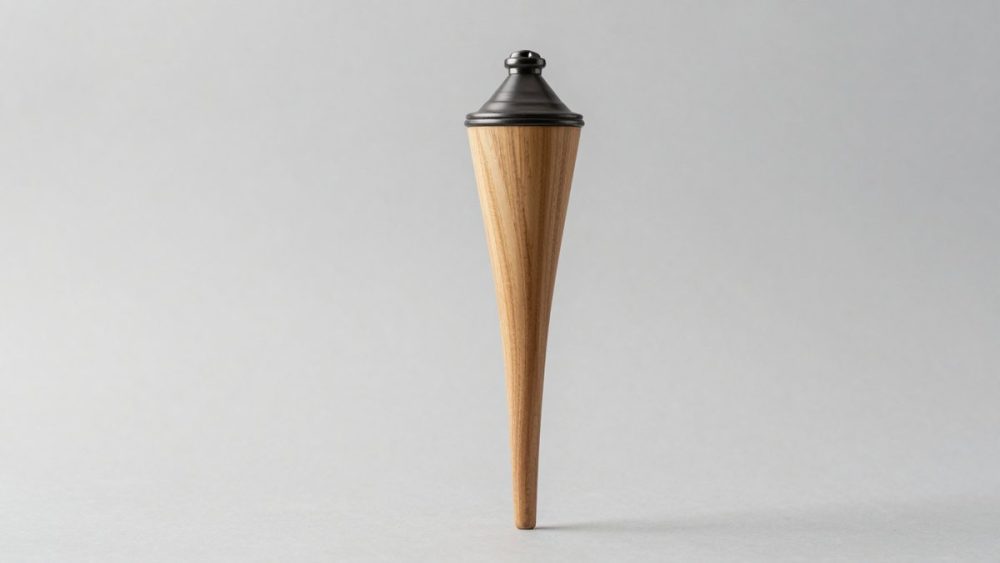
What's inside
- Best tiki torch types by backyard situation
- How tall should a backyard tiki torch be?
- Fuel choices: citronella, paraffin, and alternatives
- Base stability matters more than decorative finish
- Flame duration and a simple operating-cost calculation
- Safe spacing for different backyard sizes
- Features worth paying for
- Setup and maintenance that extend service life
- Bottom line
As an Amazon Associate I earn from qualifying purchases. This post may contain affiliate links at no extra cost to you.
The best tiki torches for a backyard are usually 5–6 feet tall, use a replaceable fiberglass wick and citronella or paraffin-based torch fuel, and have a broad, weighted base—or a firmly installed ground stake matched to your soil and wind exposure.
The right choice depends less on flame size than on stability, refill convenience, and how much space you need to illuminate safely. A compact patio may need two low-profile tabletop torches, while a large lawn benefits from taller stake torches spaced around the perimeter rather than clustered near seating.
As an Amazon Associate we earn from qualifying purchases at no extra cost to you.


Contents
- Best tiki torch types by backyard situation
- How tall should a backyard tiki torch be?
- Fuel choices: citronella, paraffin, and alternatives
- Base stability matters more than decorative finish
- Flame duration and a simple operating-cost calculation
- Safe spacing for different backyard sizes
- Features worth paying for
- Setup and maintenance that extend service life
- Bottom line
Our Top Picks
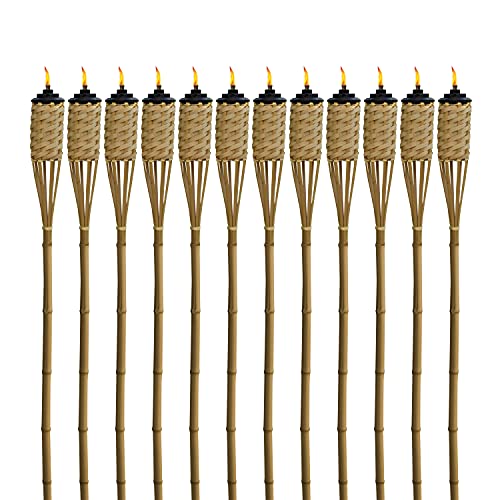

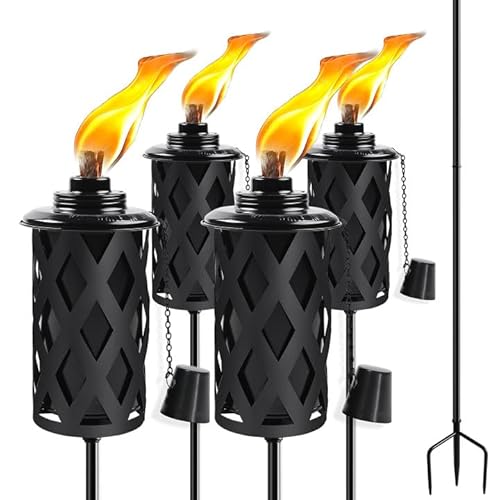

Best tiki torch types by backyard situation
| Backyard situation | Recommended torch | Useful target specifications | Why it fits |
|---|---|---|---|
| Small patio or balcony-style deck | Tabletop torch or short, weighted torch | 18–30 in. tall; 2–4 hour burn; 8–12 in. base | Less intrusive and easier to move away from furniture |
| Medium yard, roughly 500–1,000 sq. ft. | Standard ground-stake torch | 5–6 ft. tall; 12–16 oz. fuel reservoir; 6–8 ft. spacing | Provides perimeter lighting without filling the lawn with hardware |
| Large yard, roughly 1,000–2,500 sq. ft. | Tall metal or fiberglass stake torch | 6–7 ft. tall; 16–24 oz. reservoir; 8–10 ft. spacing | Raises the flame above grass and improves visibility across a wider area |
| Windy, sandy, or frequently used yard | Heavy pedestal torch or reinforced stake model | 8 lb or more for a pedestal; steel or thick fiberglass stake | Reduces tipping and repeated repositioning |
| Occasional entertaining | Removable torch with cap and replaceable wick | 6–8 hour total burn per fill; snuffer cap included | Stores cleanly between events and limits fuel evaporation |
How tall should a backyard tiki torch be?
For most lawns, 5–6 feet is the practical sweet spot. A flame at this height is visible from standing and seated positions, yet the pole is not so tall that it becomes difficult to stabilize. Torches shorter than about 4 feet can disappear behind planting beds or furniture. Torches taller than 7 feet may need deeper installation and are more vulnerable to leverage from wind.
Height also affects placement. A standard torch should be positioned where the flame is well away from tree branches, awnings, umbrellas, vinyl fencing, and low rooflines. Do not use height as a reason to place a flame beneath an overhang. For a deck, tabletop models are often safer and easier to control than long stakes driven between boards.
Fuel choices: citronella, paraffin, and alternatives
Citronella torch fuel
Citronella-scented fuel is popular for outdoor entertaining because it produces a recognizable scent. It should not be treated as a guaranteed insect barrier; airflow, vegetation, and local conditions matter more than the label suggests. Choose fuel specifically labeled for outdoor torches, and never substitute gasoline, kerosene, rubbing alcohol, or another unapproved liquid.
Clear or scented paraffin-based fuel
Clear torch fuel is often the better choice when you want a neutral appearance and predictable burning. Scented varieties add atmosphere but may be unpleasant to some guests. Regardless of formula, keep the reservoir capped during storage and follow the fuel manufacturer’s instructions for filling and cleanup.
Fuel-free LED torches
Solar and battery-powered LED torches eliminate an open flame, spills, and wick replacement. They are useful near children’s play areas, dry landscaping, or locations where local fire rules restrict flame devices. Their light generally looks less like a real flame, and solar models can provide shorter illumination after cloudy days. If choosing LED, compare actual nighttime runtime rather than only the battery capacity.
Base stability matters more than decorative finish
A decorative torch can look substantial while still having a narrow center of gravity. For freestanding models, look for a base at least 8–12 inches wide and, preferably, a fillable reservoir that can be weighted with water or sand. Empty the base before freezing weather if the manufacturer warns that trapped water can expand and crack it.
Stake torches are stable only when installed correctly. Push or screw the stake into firm soil; do not simply place it on top of the ground. Avoid loose mulch, saturated soil, eroded edges, and areas where a lawn mower or pet can strike the pole. In sandy soil, use a longer stake, a stabilizing sleeve, or a heavy pedestal model rather than relying on friction alone.
Metal poles generally resist ultraviolet damage but can rust at joints, fasteners, and the fuel cup. Fiberglass resists rust and is light to install, though it can become brittle after prolonged sun exposure or crack if bent. Powder-coated steel offers a useful compromise when the coating remains intact. Examine the wick holder and fuel reservoir first: these parts commonly wear before the pole does.
Flame duration and a simple operating-cost calculation
Burn time varies with wick width, wind, fuel type, and flame height. A typical outdoor torch consumes approximately 2–4 ounces of fuel per hour. A 16-ounce reservoir therefore gives a theoretical runtime of about four to eight hours:
16 ounces ÷ 3 ounces per hour = approximately 5.3 hours.
In practice, leave room below the maximum fill line and expect less runtime in windy conditions. If a general-purpose torch fuel costs roughly $8–$15 per quart, a 16-ounce fill costs about $4–$7.50. At a five-hour burn, that works out to approximately $0.80–$1.50 per hour, before wick replacement. This is a more useful comparison than reservoir size alone: a larger tank is not necessarily economical if the torch burns through it quickly.
Safe spacing for different backyard sizes
Use spacing to define a walkway or seating perimeter, not to create a dense row of flames. As a conservative starting point, place standard torches 6–8 feet apart in a small or medium yard and 8–10 feet apart in a larger yard. Increase the distance when flames appear visually crowded, but never reduce clearances to compensate for a torch that is too dim.
- Keep each flame at least 6 feet from buildings, fences, combustible furniture, umbrellas, and stored firewood unless the torch manufacturer or local fire authority requires more.
- Keep flames away from tree limbs, dry grass, curtains, and decorations that can move in the wind.
- Do not position a torch beside a narrow path where clothing, hair, or a shoulder could brush it.
- Leave a clear route to extinguish every torch without walking through other flames.
- Check local fire restrictions, especially during drought, high winds, or wildfire season.
For a 20-by-30-foot rectangular yard, four torches placed near the corners usually define the space better than six torches clustered beside a table. Keep them inside the property boundary and adjust the layout around doors, play equipment, and low vegetation.
Features worth paying for
- Replaceable fiberglass wick: Fiberglass lasts longer than ordinary cotton and is less prone to burning away, although it still collects soot and can clog.
- Snuffer cap: A cap lets you extinguish the flame without pouring fuel or using improvised covers. Let the torch cool before replacing it for storage.
- Wide fill opening: This reduces spills and makes a funnel easier to use. A narrow opening is frustrating when refilling outdoors.
- Sealed or capped reservoir: It limits contamination, evaporation, and rainwater entering the fuel.
- Replaceable hardware: Stainless or galvanized fasteners are preferable where the torch will remain outside year-round.
- Visible fuel level: A translucent reservoir or dipstick helps prevent overfilling and unexpected flame loss.
Established outdoor-lighting brands such as TIKI Brand sell several styles, including stake and tabletop torches, but specifications vary by model and season. Compare the actual reservoir, base, wick, and material specifications rather than choosing by brand name alone.
Setup and maintenance that extend service life
- Assemble and inspect the torch. Check that the fuel cup, wick holder, pole sections, and base are tight before adding fuel.
- Install it before filling. Driving a stake into the ground after filling can splash fuel or strain the reservoir.
- Fill below the marked line. Wipe any fuel from the outside immediately and wait for spilled fuel to evaporate before lighting.
- Trim or adjust the wick. A flame that is smoky, tall, or uneven usually needs a shorter exposed wick or a clean wick holder.
- Extinguish with the snuffer. Do not move a lit or recently extinguished torch.
- Clean and store seasonally. Remove soot from the cap and wick area, keep fuel in its original approved container, and store the torch upright in a dry place.
The most common mistakes are overfilling, leaving a torch burning unattended, installing it in loose soil, and allowing rainwater to mix with fuel. Water-contaminated fuel can cause sputtering and poor ignition; empty and clean the reservoir according to the manufacturer’s directions instead of repeatedly adding fresh fuel.
Bottom line
Choose a 5–6-foot stake torch with a replaceable fiberglass wick for a typical lawn, a weighted tabletop model for a compact patio, and a heavy pedestal or reinforced stake for windy conditions. Prioritize stability, a capped reservoir, safe clearances, and realistic burn time over elaborate styling. Four well-spaced, properly maintained torches will usually make a backyard more usable than a larger number of unstable flames placed too close together.