
What's inside
As an Amazon Associate I earn from qualifying purchases. This post may contain affiliate links at no extra cost to you.
Contents
Our Top Picks
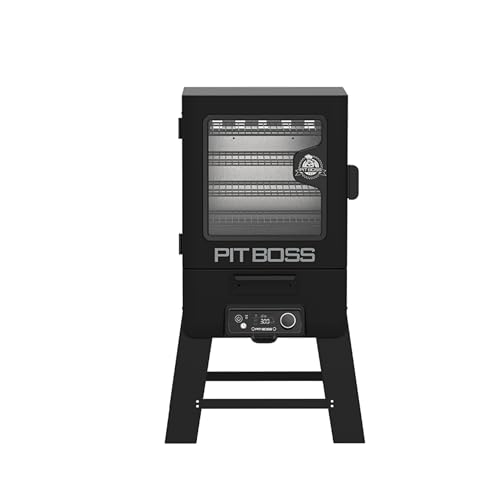 Pit Boss 3-Series WiFi & Bluetooth Digital Vertical30 Inch23.15 x 23.15 x 40 inches63 PoundsCheck on Amazon
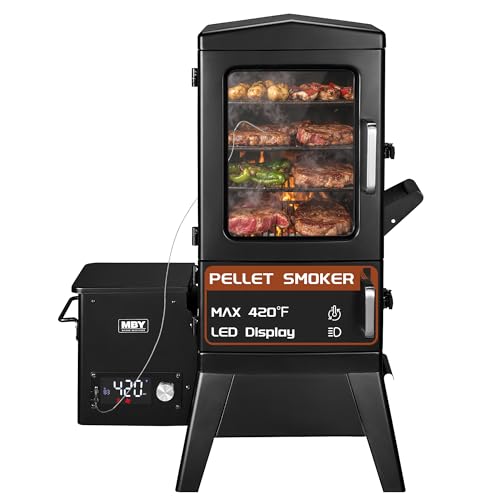
 Vertical Electric Pellet Smoker with Waterproof Cover &616 Sq.in17.3 x 29.5 x 42.5 inches90 poundsCheck on Amazon

Best Vertical Pellet Smokers for Consistent Results
The best vertical pellet smoker for most backyards is a mid-size, insulated cabinet with at least four usable racks, a digital controller, and enough clearance between shelves for the foods you actually cook. Choose a compact model for occasional ribs and chicken, a larger cabinet for batch cooking, or a premium insulated unit if steady temperatures in cold or windy weather matter more than price.
Vertical pellet smokers use a powered auger and fan to feed and burn pellets, while the cabinet’s stacked racks make efficient use of a small footprint. The trade-off is that rack spacing, temperature uniformity, and access to the firepot matter as much as the advertised total cooking area. Product specifications and configurations can change, so confirm current dimensions, weight, included racks, and controller features before buying.
As an Amazon Associate we earn from qualifying purchases at no extra cost to you.


Shortlist by backyard and cooking style
- Best for a small patio: A compact cabinet such as the Pit Boss 3-Series Vertical Pellet Smoker. It takes less room than a large cabinet and suits smaller cooks, but verify the usable rack spacing and whether its footprint leaves room to open the door and reach the hopper.
- Best for frequent, larger cooks: The Camp Chef XXL Pro is a tall cabinet-style option with multiple racks and a larger cooking capacity. It makes sense for people who regularly smoke several kinds of food at once; its height and weight make placement and assembly more demanding.
- Best for temperature stability: The insulated, premium cabinet approach represented by the Smokin’ Tex line. Insulation can reduce heat loss in cool conditions, though it adds cost and does not remove the need to keep the smoker sheltered and clean.
These are different purchase profiles, not a claim that one model wins every test. For each candidate, check the current manufacturer manual for maximum temperature, rack dimensions, controller functions, pellet-hopper capacity, and electrical requirements. A large advertised cooking-area figure does not tell you whether a whole brisket will fit on one rack.
What matters more than the headline capacity
| Buying factor | Useful target or check | Why it matters |
|---|---|---|
| Rack count and spacing | At least 4 racks; measure clear vertical gaps, not just rack count | Closely spaced shelves can be awkward for tall poultry, roasts, or hanging sausages. |
| Cooking area | About 500–1,000 sq. in. for many family cooks; more for batch cooking | Area is usually calculated across all shelves, which may not suit a single large cut. |
| Temperature range | Look for a low smoking setting and a stated maximum around 350°F or higher if you want more than low-and-slow cooking | Cabinet smokers are not a substitute for a high-heat grill, and actual performance depends on conditions and design. |
| Pellet hopper | Roughly 20–40 lb is a practical range for longer cooks | A bigger hopper reduces refills, but does not guarantee a particular runtime or pellet consumption. |
| Footprint and weight | Measure the unit, door swing, and access path; expect many full-size cabinets to be heavy | Some models are difficult to move after assembly and need a stable, level, outdoor location. |
The figures above are buying guidelines, not specifications for every shortlisted model. Confirm exact numbers on the current product page or manual. Also distinguish total cooking area from shelf dimensions: four narrow racks may provide plenty of area for ribs but little space for a wide turkey or brisket.
Make the choice by situation
| Your situation | What to prioritize | Best fit |
|---|---|---|
| New to smoking, cooks for a small household | Simple digital controls, manageable size, easy-to-remove racks | A compact vertical pellet cabinet |
| Often cooks for a crowd or prepares several foods | More rack area, useful shelf spacing, a larger hopper, accessible grease and ash cleanup | A large multi-rack cabinet such as the Camp Chef XXL Pro |
| Limited patio or storage space | Overall width and depth, wheels, door clearance, and covered storage options | A compact model; do not buy by cooking area alone |
| Smokes year-round in cool weather | Insulation, a reliable controller, wind protection, and a sheltered location | An insulated premium cabinet, if its higher cost fits your budget |
| Wants crisp, high-heat searing | Separate grill or finishing method | Choose the smoker for smoke and low-temperature cooking, not as your only searing appliance |
Temperature control and pellet use in real conditions
A digital controller sets a target temperature, but it cannot make every shelf identical. Heat rises, food blocks airflow, and frequent door opening causes swings. For more consistent results, place a separate grate-level thermometer near the food, leave space around each piece, and rotate shelves if your first few cooks reveal a persistent hot or cool zone. Treat the built-in display as a control reference, not a guarantee that every rack is at the same temperature.
Pellet consumption varies with the set temperature, outdoor temperature, wind, insulation, pellet quality, and how often the door is opened. A larger hopper is mainly a convenience reserve. It is not a reliable runtime promise. Use dry, food-grade wood pellets intended for cooking; damp pellets can swell, feed poorly, or contribute to auger problems. Keep a spare supply sealed and off the ground.
Assembly, footprint, and ownership costs
Vertical cabinets can be bulky and heavy. Before ordering, measure the route from delivery point to cooking location, including gates and steps. Check whether the smoker must be assembled where it will live, and have another person available to handle large panels and lift the cabinet. Assembly commonly involves fitting the legs or base, racks, handles, controller connections, and chimney or exhaust parts. Follow the manual’s order and do not force fasteners into misaligned panels.
Budget time for an initial burn-in, which helps clear manufacturing residue and verifies that the controller, auger, and fan operate. Follow the manufacturer’s instructions for this first run. Later, clean the grease channel and bucket after cooks, remove ash when the smoker is cool, and periodically vacuum loose ash from the firepot area as directed. Grease buildup and blocked airflow are common, preventable causes of poor performance and flare-ups.
In ownership, the parts most likely to need attention are consumable or exposed components: igniters, temperature probes, seals, and the finish around edges or fasteners. Keep the unit covered only when cool and dry, inspect for water entry, and check replacement-part availability before purchase. A low purchase price is less attractive if essential parts are difficult to obtain.
Bottom line
For a small patio and modest cooks, choose a compact vertical pellet smoker and give rack spacing priority over a big area number. For frequent batch cooking, move up to a larger multi-rack cabinet and confirm that its dimensions fit your largest planned food. If shoulder-season stability is a priority, consider an insulated model, while remembering that placement, clean airflow, dry pellets, and a grate-level temperature check still shape the result. The right choice is the cabinet that fits your food, space, and maintenance habits—not simply the one with the most racks.