What's inside
As an Amazon Associate I earn from qualifying purchases. This post may contain affiliate links at no extra cost to you.
Contents
The 9 Best Laser Engraved Cutting Boards of 2026 (Compared for Durability)
For a board that will be used and washed often, choose a thick, edge-grain maple board with a shallow engraving on a handle or serving area—not across the main cutting surface. Walnut offers attractive contrast but is softer and often costs more; bamboo is affordable and hard-wearing, but its laminated construction and variable finish make it a less dependable choice for deep or frequent-use engraving.
There is no single best board for every purpose. The picks below are practical board types and established options to compare by material, layout, and intended use. Prices are broad U.S. market ranges, not fixed quotes; size, personalization, and finish can change the price. Engraving depth and weight are typically not standardized by sellers, so confirm them with the maker rather than relying on a product name.
As an Amazon Associate we earn from qualifying purchases at no extra cost to you.
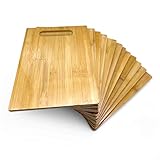

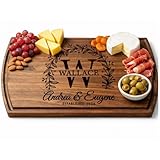

Quick comparison: pick by use, not just appearance
| Pick | Material and typical size | Typical price | Engraving and groove fit | Best for |
|---|---|---|---|---|
| John Boos maple carving board | Maple; about 20 × 15 in. | $100–$250 | Broad work area; choose a model with a perimeter groove and keep engraving outside the knife zone | Frequent carving and serving |
| John Boos walnut carving board | Walnut; about 20 × 15 in. | $150–$350 | Good visual contrast; shallow engraving is preferable | Premium gift or serving board |
| Teakhaus teak board | Teak; commonly around 20 × 14 in. | $60–$150 | Often available with a juice groove; engraving contrast varies with grain and oil | Moisture-conscious cooks |
| Epicurean Kitchen Series board | Wood-fiber composite; several sizes, often around 14 × 11 in. | $25–$60 | Thin, easy to store; verify laser compatibility and manufacturer care guidance | Compact kitchens and light use |
| Totally Bamboo Kauai board | Bamboo; around 14 × 11 in. | $15–$35 | Affordable flat surface; groove and engraving placement vary by model | Budget gifts and occasional serving |
| Totally Bamboo Big Kahuna board | Bamboo; around 18 × 12 in. | $25–$55 | More display area than a small prep board; check laminated seams and groove layout | Large personalized gift on a budget |
| Personalized maple end-grain board | Maple; often 16–20 in. across | $120–$350 | Durable cutting face, but engraving should be on an end or separate inset | Serious everyday chopping |
| Personalized walnut serving board | Walnut; often 15–20 in. long | $80–$250 | High-contrast names and designs; grooves are optional and reduce usable flat area | Serving and occasional prep |
| Custom bamboo name board | Bamboo; commonly 12–18 in. long | $20–$60 | Clear personalization at low cost; avoid deep engraving across the food-contact zone | Low-cost housewarming present |
Sizes above are representative ranges for commonly sold formats, not specifications for every model or custom listing. A “juice groove” is a channel near the edge that catches liquid; it does not make a board leakproof, and it reduces the flat area available for cutting.
Maple vs. walnut vs. bamboo: what holds up?
Maple: the safest all-round bet for a working board
Hard maple is a dense, close-grained hardwood widely used for cutting boards. It gives a restrained, clean engraving and is generally a sensible choice when the board will see regular knife use. Edge-grain maple is usually less expensive than end-grain construction. End-grain boards can be substantial and costly, but a decorative engraving on the chopping face can be less practical: knife marks, sanding, and refinishing may gradually diminish it.
Walnut: best-looking personalization, with a trade-off
Walnut’s darker color can make a laser mark stand out, particularly when the engraved area is finished carefully. It is typically softer than hard maple, so deep engraving on the working face can collect food residue and become harder to clean. Walnut is compelling for a cutting board name engraved as a gift, especially when the name sits on a handle, border, or presentation side rather than where knives repeatedly land.
Bamboo: economical, but check the construction
Bamboo boards are made from strips bonded together, not from a single solid plank. They are often light and inexpensive, but glue lines, surface finish, and board construction vary. A laser engraver for cutting boards can mark bamboo, yet a deep or dark burn may look uneven across changing grain and adhesive lines. For a bamboo board, favor a shallow mark, follow the maker’s care instructions, and avoid assuming every coating is suitable for laser processing.
What makes an engraving last—and remain cleanable?
Most decorative laser marks are surface burns, not deep cuts. A deeper engraving may stay visible longer, but it also creates a larger recess where moisture and food particles can collect. For an everyday board, a shallow mark on a non-cutting edge is usually a better durability compromise than a deep logo in the center.
- Put the design outside the knife zone. Use a handle, border, or reverse face intended for serving. A groove and engraving competing for the same narrow margin can leave too little material at the edge.
- Ask about finish and process. A finished board may need a compatible, food-contact-safe coating after engraving. “Food-safe” should refer to the completed board and its finish, not simply the wood. Ask the maker what finish is used and whether it is appropriate for the intended food contact.
- Hand-wash and dry promptly. Do not soak a wood or bamboo board or put it in a dishwasher unless its maker explicitly says it is dishwasher-safe. Heat and prolonged water exposure can encourage warping, cracking, or glue-joint failure.
- Oil when the surface looks dry. Use a board-care product intended for cutting boards, such as food-grade mineral oil, following its directions. Oil helps condition the wood; it does not sanitize a dirty board or seal an engraving permanently.
Repeated washing is the real test: shallow marks on edges tend to remain legible because they avoid both knife wear and frequent scraping. Center-face engraving can fade or roughen as the board is used and resurfaced. If a board is meant for food preparation every day, keep personalization modest and treat the working surface as replaceable through normal maintenance.
Choose by situation
| Your situation | Better choice | Why |
|---|---|---|
| Daily chopping, experienced cook | Thick maple, preferably with a separate engraving area | Reliable working surface; less risk of wearing away the personalization |
| Gift under about $60 | Shallowly engraved bamboo or a smaller maple board | Lower entry price; prioritize simple lettering and clear care instructions |
| Display-first wedding or housewarming gift | Walnut serving board | Dark wood makes names and decorative designs visually prominent |
| Small kitchen or limited storage | Compact composite or bamboo board, about 11–14 in. wide | Lightweight and easier to store; less suitable for large carving jobs |
| Frequent roasts or juicy produce | Large maple or teak board with a perimeter groove | More room for food and liquid capture; keep the engraving out of the channel |
Buying a board for laser engraving
If you are sourcing a blank for custom work rather than ordering a finished personalized board, look for a flat, unfinished surface and ask whether the board is solid wood or laminated. Confirm the material, dimensions, grain orientation, and any existing oil, lacquer, wax, or sealant. Coatings can produce inconsistent marks and may create fumes when lasered; the engraving shop should verify material suitability and use appropriate ventilation. Never laser an unknown coating based on appearance alone.
For a cutting board with last name engraved, give the maker the exact spelling, capitalization, and placement in writing. Request a layout proof, especially if the board has a handle, juice groove, or irregular shape. A border placement often protects legibility better than a large centered design. Also ask whether the mark is on the food-contact face and what cleaning routine the maker recommends.
Price is only part of ownership cost. For example, a $40 board used twice a week for three years works out to about 13 cents per use (156 uses per year × 3 years = 468 uses; $40 ÷ 468). A $120 maple board used five times a week for the same period is about 15 cents per use. Those estimates exclude care products and replacement, but show why a cheap board is not automatically the better value if it is too small or poorly suited to regular use.
Bottom line
Choose maple for a dependable working board, walnut for a presentation piece with striking personalization, and bamboo for a lower-cost gift or occasional-use board. For laser engraved cutting boards that must stay legible through repeated washing, prioritize a shallow engraving on a protected edge, a practical size, and a clearly specified food-contact finish. No material or engraving depth can compensate for soaking, dishwasher cycles, or placing the design directly under years of knife work.