What's inside
As an Amazon Associate I earn from qualifying purchases. This post may contain affiliate links at no extra cost to you.
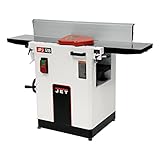
If you want one machine that both flattens faces and thicknesses boards without eating your whole shop, a Jet jointer planer combination machine is one of the most practical answers on the market in 2026. The short version of the decision: the Jet JJP-8BT benchtop suits small shops and boards under 8 inches wide, the JJP-10BTOS is the sweet spot for serious hobbyists, and the 12-inch JJP-12 and JJP-12HH models are the right call if you regularly mill wide hardwood panels or want helical cutterhead performance. Below, we break down every current model by cutting width, bed length, dust collection, and footprint so you can match the machine to the boards you actually run.
As an Amazon Associate we earn from qualifying purchases at no extra cost to you.


Contents
Jet Jointer Planer Lineup at a Glance
Jet’s combination machines share the same basic European-style layout: a jointer bed on top, a thickness planer underneath, and one cutterhead doing both jobs. You flip the jointer tables up to convert to planing mode — a changeover that takes under a minute once you’ve done it a few times. Here’s how the current models compare on the numbers that matter:
| Model | Max Jointing Width | Max Planing Width | Cutterhead | Motor | Weight | Footprint (approx.) |
|---|---|---|---|---|---|---|
| JJP-8BT | 8″ | 8″ | 2-knife straight | 1.5 HP, 120V | ~240 lbs | 29″ × 24″ benchtop |
| JJP-10BTOS | 10″ | 10″ | 2-knife straight | 1.5 HP, 120V | ~425 lbs with stand | 42″ × 22″ with stand |
| JJP-12 | 12″ | 12″ | 3-knife straight | 3 HP, 230V | ~550 lbs | 55″ × 27″ floor model |
| JJP-12HH | 12″ | 12″ | Helical, 56 carbide inserts | 3 HP, 230V | ~560 lbs | 55″ × 27″ floor model |
Note that jointing and planing widths are identical on every model — that’s the whole point of a combo machine. The real differentiators are power, cutterhead type, bed length, and how much floor space you’re willing to surrender.
Jet JJP-8BT: The Small-Shop Starter
The JJP-8BT is Jet’s benchtop jet planer jointer, and it’s the machine most often recommended to hobbyists working in garages or spare rooms. The 8-inch capacity handles the vast majority of S4S lumber sold at home centers and covers most furniture-scale parts — table legs, rails, drawer stock, and cabinet frames.
The honest limitation is the fence and bed length. The jointer tables are on the shorter side (roughly 28–30 inches combined), which means accurately flattening boards longer than about 4 feet takes patience and good technique. Jointing pressure needs to stay consistent across the infeed and outfeed tables, and a shorter bed gives you less reference surface to work with. For small boxes, cutting boards, and table parts under 3–4 feet, it’s perfectly capable. For 8-foot rough lumber, you’ll want support rollers and realistic expectations.
Dust collection is a 4-inch port, and planing generates a lot of chips fast — pair it with at least a 650 CFM collector or a good shop vacuum with a cyclone separator.
Jet JJP-10BTOS: The Middle Ground Most Buyers Should Consider
The jointer planer Jet shoppers overlook most often is arguably the best value in the line. The JJP-10BTOS gives you 10 inches of capacity — enough for most wide boards and glue-up panels — on a dedicated stand with longer beds than the 8-inch benchtop. The extra 2 inches matters more than it sounds: a 10-inch jointer planer handles edge-glued tabletops, wide shelving stock, and most hardwood lumber without the “rip it narrower first” workaround the 8-inch model sometimes forces.
It still runs on standard 120V household power, which is a genuine advantage over the 12-inch models. If your shop doesn’t have a 230V circuit, the 10-inch is the largest Jet combo machine you can run without calling an electrician.
Jet JJP-12 and JJP-12HH: For Wide Boards and Heavy Use
The jet 10 jointer planer vs. 12-inch question usually comes down to two things: electrical service and board width. The Jet JJP-12 runs a 3 HP motor on 230V and has roughly 55-inch jointer beds — long enough to flatten 6–7 foot boards with confidence. If you mill rough-sawn hardwood, wide slabs for shelving, or full-width tabletops, this is the tier you want.
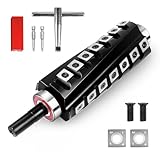
The JJP-12HH swaps the three straight knives for a helical (spiral) cutterhead with 56 indexable carbide inserts. The practical differences:
- Surface quality: Helical heads shear the wood at a slight angle, producing noticeably less tear-out on figured maple, birdseye, and reversing grain.
- Noise: Roughly 5–8 dB quieter under load — a real quality-of-life improvement in a garage shop.
- Maintenance: Instead of sharpening and resetting knives, you rotate dull inserts 90° for a fresh edge. Each insert gets four edges before replacement.
- Cost: The HH typically costs several hundred dollars more upfront. Inserts run roughly $3–6 each, so a full set is a meaningful consumable expense — but you’ll spend far less time on knife changes.
Decision Matrix: Which Model Fits Your Shop?
| Your Situation | Recommended Model | Why |
|---|---|---|
| Garage shop, occasional use, boards under 8″ wide | JJP-8BT | Benchtop footprint, 120V, lowest cost of entry |
| Serious hobbyist, no 230V circuit, mixed furniture work | JJP-10BTOS | Best capacity-per-dollar, longer beds, household power |
| Regular rough lumber milling, boards over 5 ft long | JJP-12 | 3 HP motor, long beds, full 12″ width |
| Figured woods, noise-sensitive shop, minimal maintenance preference | JJP-12HH | Carbide inserts, less tear-out, quieter cut |
Ownership Realities Listings Don’t Mention
- Knife setup is the first skill you’ll need. On straight-knife models, resetting knives after sharpening takes 30–60 minutes with a dial indicator or magnetic jig. Budget for an extra knife set so a dull edge never stops a project.
- Changeover matters for workflow. Flipping between jointing and planing means you can’t batch operations the way you would with separate machines. Plan your milling sequence — flatten all faces first, then thickness everything.
- Dust collection is non-negotiable. A 12-inch planer produces chips at a rate that overwhelms a shop vac quickly. A dedicated 1.5–2 HP dust collector is a practical requirement, not an accessory.
- Snipe happens. Expect 2–3 inches of slightly deeper cut at board ends on any lunchbox-style planer feed. Cut stock long, then trim.
- Cast iron needs protection. Wax the tables seasonally — surface rust shows up fast in humid garages and drags on workpieces.
FAQ
Is a Jet jointer planer better than buying separate machines?
Per dollar and per square foot of floor space, usually yes. You give up the ability to run two operations simultaneously and slightly longer jointer beds than a dedicated 8-inch jointer would offer, but you gain wider planing capacity than most standalone lunchbox planers.
Do I need 230V power?
Only for the JJP-12 and JJP-12HH. The 8-inch and 10-inch models run on standard 120V circuits.
How often do helical inserts need replacing?
With normal hobbyist use, years. Rotate an edge when you see wear lines on finished boards — each insert offers four cutting edges before it needs replacement.