What's inside
- The best Kreg pocket-screw jig depends on how often you build and what you need to clamp
- Kreg jig comparison: capacity, portability, and clamping
- Choose by the job, not just by the model name
- What to buy in a Kreg pocket screw jig kit
- Set up for clean, strong joints
- Ownership realities: bits, alignment, and common mistakes
- Bottom line
- The best Kreg pocket-screw jig depends on how often you build and what you need to clamp
- Kreg jig comparison: capacity, portability, and clamping
- Choose by the job, not just by the model name
- What to buy in a Kreg pocket screw jig kit
- Set up for clean, strong joints
- Ownership realities: bits, alignment, and common mistakes
- Bottom line
As an Amazon Associate I earn from qualifying purchases. This post may contain affiliate links at no extra cost to you.
Contents
- The best Kreg pocket-screw jig depends on how often you build and what you need to clamp
- Kreg jig comparison: capacity, portability, and clamping
- Choose by the job, not just by the model name
- What to buy in a Kreg pocket screw jig kit
- Set up for clean, strong joints
- Ownership realities: bits, alignment, and common mistakes
- Bottom line
The best Kreg pocket-screw jig depends on how often you build and what you need to clamp
For occasional repairs and small projects, the Kreg Jig 320 is the practical pick; for repeat cabinet work, choose the Kreg Jig 720 or 720PRO for quicker setup and integrated clamping; and for moving between job sites, the Kreg Jig K4 is a portable benchtop-style option with a larger work support. Match the jig to your stock thickness and clamping setup, rather than buying the most elaborate kit by default.
A Kreg pocket screw jig drills an angled pilot hole so a pocket screw can pull two pieces of wood together. The basic operation is similar across models, but the differences that matter in daily use are workpiece thickness range, how the jig is secured, and how quickly you can repeat the same setup. The figures below reflect published product specifications; confirm the manual for your exact model and accessories.
As an Amazon Associate we earn from qualifying purchases at no extra cost to you.

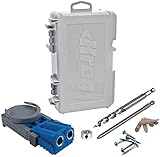


Kreg jig comparison: capacity, portability, and clamping
| Model | Workpiece thickness range | Setup and clamping | Best fit |
|---|---|---|---|
| Kreg Jig 320 | 1/2–1 1/2 in. | Compact two-hole guide; clamp the jig to the workpiece with a compatible face clamp or another suitable clamp. | Repairs, shelves, small furniture, and occasional projects |
| Kreg Jig 520PRO | 1/2–1 1/2 in. | Portable, adjustable jig with a built-in clamp; designed to secure directly to the workpiece. | Mobile work and projects that need a more self-contained setup |
| Kreg Jig 720 | 1/2–1 1/2 in. | Automaxx clamping adjusts to workpiece thickness; bench-oriented design speeds repeated drilling. | Frequent furniture or cabinet assembly in a fixed shop |
| Kreg Jig 720PRO | 1/2–1 1/2 in. | 720-style automatic clamping with added portable work support and accessories, depending on kit configuration. | Repeat work with occasional need to move the setup |
| Kreg Jig K4 | 1/2–1 1/2 in. | Removable drill guide and front-mounted clamp; can be mounted or clamped at a bench. | Bench use with a simple, familiar adjustment process |
These models cover the common 1/2- to 1 1/2-inch material range, but that does not mean every board in that range takes the same screw. Set the jig and drill-bit collar for the actual thickness, and select screw length and thread type for the material. A jig’s listed capacity is a drilling range, not a guarantee that a particular joint design will work in every species or edge condition.
Choose by the job, not just by the model name
| Your situation | Best starting choice | Why |
|---|---|---|
| A few repairs a year; tight budget or storage space | Kreg Jig 320 | Small and simple, with no need to dedicate bench space. Budget separately for a clamp if you do not already own a suitable one. |
| Occasional projects, but you work away from a bench | Kreg Jig 520PRO | Its integrated clamping arrangement reduces the extra setup gear you need to bring. |
| Several cabinets or repeated assemblies in one session | Kreg Jig 720 | Automatic clamping cuts down on readjusting the clamp for each workpiece, which matters more over a long run than during a one-off repair. |
| Frequent shop work plus some mobile use | Kreg Jig 720PRO | It combines the 720-style workflow with added support and portability features. Check the kit contents against what you already own. |
| You prefer a straightforward bench-mounted jig | Kreg Jig K4 | A removable guide and front-mounted clamp make it easy to understand and reposition, though it is less focused on rapid automatic adjustment. |
For repeat cabinet work, the value of a higher-tier jig is mostly time and consistency, not stronger screws. If you are drilling only a handful of holes, a compact jig can produce the same kind of joint when set correctly. If you are making dozens of identical parts, easier clamping and less setup repetition can justify the upgrade.
What to buy in a Kreg pocket screw jig kit
A Kreg pocket screw jig kit may bundle the jig with a stepped drill bit, depth collar, driver bit, sample screws, clamps, or plugs. Contents vary by model and package, so compare the included tools with your shop inventory before paying more for a bundle. The drill bit and collar are essential to correct setup; a clamp is essential to safe, repeatable drilling, but it need not always come in the same box.
Also plan for the consumables and accessories your projects actually require. Pocket screws are available in different lengths and thread styles; coarse threads are generally intended for softwoods and plywood, while fine threads are commonly used in hardwoods. Follow Kreg’s sizing guidance for the stock and joint. If the visible pocket holes matter, matching wood plugs or a filler-and-finish plan may be needed.
Set up for clean, strong joints
-
Measure the real stock thickness. Nominal lumber dimensions can differ from finished dimensions. Use the measured thickness to set the jig, drill-bit collar, and screw length.
-
Clamp the jig and the boards securely. A jig that shifts can leave a ragged hole or put the screw off line. When joining two boards, clamp the joint so the screw cannot push the pieces apart as it tightens.
-
Drill at a controlled speed and clear the chips. Pocket-hole chips have limited room to escape. Back the bit out as needed rather than forcing it through packed debris, which can overheat or dull the bit.
-
Test the setting on scrap. Drive one screw into offcuts of the same thickness and material. Check that the screw tip does not break through the far face and that the joint closes without splitting.
-
Drive the screw without over-tightening. Use the correct driver and a clutch setting that seats the joint firmly without stripping the hole or crushing the fibers. Pocket screws pull parts together; they do not replace sound layout, adequate edge distance, or appropriate glue where the design calls for it.
Ownership realities: bits, alignment, and common mistakes
The stepped drill bit is a wear item: repeated use, heat, and drilling into abrasive sheet goods can dull its cutting edges. A dull bit tends to burn, wander, or leave rough holes. Keep it clean, let it cool during long runs, and replace it when sharpening no longer restores clean cutting. The depth collar can also slip if its set screw is not secure, so recheck it after adjustment and before drilling a batch of parts.
Common problems usually come from setup rather than the jig model: setting the collar for nominal instead of actual thickness, using the wrong screw length, failing to clamp the work, or overtightening the screw. Plywood edges can be especially prone to splitting or breakout; test on an offcut and keep holes properly spaced from edges. For narrow pieces, verify that the jig physically fits and that the clamp has a safe purchase before drilling.
Bottom line
Choose the Kreg Jig 320 for a low-cost, space-saving setup for occasional repairs; choose the 520PRO when portability and integrated clamping are priorities; and choose the 720 or 720PRO when repeat work makes faster clamping worthwhile. The K4 remains a sensible bench-style alternative if you prefer a removable guide and a simple manual setup. Whichever Kreg pocket screw jig you buy, accurate thickness settings, a sharp bit, and secure clamping will do more for clean joints than a bigger kit.