What's inside
- Quick comparison of the best Merrell hiking shoes
- Best overall: Merrell Moab 3
- Best for wet trails: Moab 3 Waterproof
- Best lightweight option: Merrell Moab Speed 2
- Best women’s-specific option: Merrell Siren 4
- Match the shoe to terrain and foot shape
- Waterproofing, grip, and cushioning: what matters most?
- How to size and break in Merrell hiking shoes
- Ownership: what wears first and how to extend service life
- Final recommendation
- Quick comparison of the best Merrell hiking shoes
- Best overall: Merrell Moab 3
- Best for wet trails: Moab 3 Waterproof
- Best lightweight option: Merrell Moab Speed 2
- Best women’s-specific option: Merrell Siren 4
- Match the shoe to terrain and foot shape
- Waterproofing, grip, and cushioning: what matters most?
- How to size and break in Merrell hiking shoes
- Ownership: what wears first and how to extend service life
- Final recommendation
As an Amazon Associate I earn from qualifying purchases. This post may contain affiliate links at no extra cost to you.
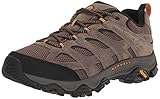
The best Merrell hiking shoes are the Moab 3 for dependable all-round trails, the Moab 3 Waterproof for wet day hikes, the Moab Speed 2 for faster and lighter outings, and the Siren 4 for a women’s-specific fit with pronounced arch shaping.
Choosing between them is less about finding one universal winner than matching the shoe to your terrain, foot shape, weather, and tolerance for break-in time. Merrell’s range spans flexible trail shoes, supportive low hikers, and waterproof mid-height boots, so the right decision can change dramatically between a rocky mountain route and a maintained woodland path.
As an Amazon Associate we earn from qualifying purchases at no extra cost to you.


Contents
- Quick comparison of the best Merrell hiking shoes
- Best overall: Merrell Moab 3
- Best for wet trails: Moab 3 Waterproof
- Best lightweight option: Merrell Moab Speed 2
- Best women’s-specific option: Merrell Siren 4
- Match the shoe to terrain and foot shape
- Waterproofing, grip, and cushioning: what matters most?
- How to size and break in Merrell hiking shoes
- Ownership: what wears first and how to extend service life
- Final recommendation
Quick comparison of the best Merrell hiking shoes
| Model | Best use | Approx. weight | Waterproofing | Outsole | Break-in expectation |
|---|---|---|---|---|---|
| Moab 3 | General hiking, mixed trails, wide-foot comfort | About 2 lb 3 oz per pair, men’s US 9 | None in the standard version | Vibram TC5+ rubber, approximately 5 mm lugs | Low; usually comfortable within one or two walks |
| Moab 3 Waterproof | Wet grass, mud, cool-weather day hikes | About 2 lb 7 oz per pair, men’s US 9 | Waterproof membrane and treated upper | Vibram TC5+, approximately 5 mm lugs | Low to moderate |
| Moab Speed 2 | Fast hiking, firm paths, lighter packs | About 1 lb 10 oz per pair, men’s US 9 | Standard version is not waterproof; GTX version uses a waterproof membrane | Vibram TC5+, approximately 4 mm lugs | Very low; flexible and athletic |
| Moab 3 Mid Waterproof | Rougher trails, ankle coverage, wet conditions | About 2 lb 10 oz per pair, men’s US 9 | Waterproof membrane and treated upper | Vibram TC5+, approximately 5 mm lugs | Moderate around the collar and flex points |
| Siren 4 | Women’s hiking fit, day hikes, uneven ground | About 1 lb 11 oz per pair, women’s US 8 | Available in non-waterproof and waterproof versions | Vibram TC5+, approximately 4.5 mm lugs | Low, although the arch shape needs a careful fit check |
Weights vary by size, colorway, and waterproof construction, so treat the figures as useful comparisons rather than exact shipping specifications. A waterproof membrane, leather panels, or a mid-height collar generally adds weight and reduces ventilation.
Best overall: Merrell Moab 3
The standard Moab 3 is the safest starting point for most hikers. Its combination of leather and mesh upper materials, moderate cushioning, protective toe coverage, and Vibram TC5+ outsole suits forest paths, gravel tracks, rolling hills, and moderate rocky terrain. It is not the lightest choice, but the extra structure can feel reassuring when carrying a daypack or walking over irregular ground.
This is also the strongest choice for wider feet. Merrell commonly offers the Moab 3 in wide sizing, and its forefoot is less tapered than many athletic trail shoes. That does not mean every wide-footed hiker should buy it automatically: check that the heel stays secure and that the widest part of your foot sits over the shoe’s broadest point.
Choose the non-waterproof version if you hike in warm weather, cross shallow streams, or prefer quicker drying. Mesh breathes better and does not retain as much moisture after immersion. Choose the Waterproof version when wet grass, drizzle, and muddy trails are normal rather than occasional.
Best for wet trails: Moab 3 Waterproof
The Moab 3 Waterproof is the practical pick for damp day hikes and shoulder-season use. Its membrane helps stop rain and surface water entering through the upper, while the deeper tread gives useful purchase on loose soil and wet roots. It is better suited to slow-to-moderate hiking than high-output summer walking because waterproof construction reduces airflow.
Waterproof does not mean submersible. Water can enter over the collar, through the tongue area, or through a damaged seam. If you regularly walk through deep puddles or bogs, gaiters and a taller waterproof boot may be more effective than simply choosing a membrane shoe.
The waterproof Moab is also a sensible option for people who dislike a very flexible shoe. The midsole has a stable, protective feel, but it can seem bulky beside lightweight trail footwear. Allow several short walks before a long trip, especially if the leather upper feels firm at the heel or forefoot.
Best lightweight option: Merrell Moab Speed 2
The Moab Speed 2 is the better fit for hikers who value low weight, quick transitions, and a more athletic feel. It works well on maintained paths, fast day hikes, compact dirt, and mixed routes where a heavy boot would be unnecessary. Its lighter build reduces fatigue for some walkers, although it provides less substantial protection than the traditional Moab when carrying a heavy pack over sharp rocks.
The outsole’s roughly 4 mm lugs balance grip and efficiency. They are adequate on ordinary mud and loose trail, but the more open, aggressive tread of a dedicated mountain shoe may be preferable for deep muck, steep scree, or persistent off-trail use.
Pick the GTX version only when wet-weather protection matters more than maximum breathability. For hot climates or routes involving frequent stream crossings, the standard non-waterproof model is often easier to dry and more comfortable during sustained exertion.
Best women’s-specific option: Merrell Siren 4
The Siren 4 is designed around a women’s-specific last and can suit hikers who find unisex shoes too broad through the heel or poorly shaped through the arch. It offers a secure, guided fit without requiring the taller ankle coverage of a boot. Non-waterproof and waterproof versions make it possible to choose ventilation or weather resistance separately.
Its main fitting caution is the arch contour. A shaped footbed can feel supportive to one person and intrusive to another. Walk around indoors wearing the socks you intend to hike in. If the arch pressure remains distracting rather than fading after a few minutes, try a different model instead of assuming it will disappear during break-in.
Match the shoe to terrain and foot shape
| Your situation | Best starting choice | Why | Trade-off |
|---|---|---|---|
| Occasional hikes on local woodland trails | Moab 3 | Versatile grip and forgiving fit | Heavier than a trail runner |
| Frequent rain, wet grass, and muddy paths | Moab 3 Waterproof | Membrane protection and substantial outsole | Warmer and slower to dry |
| Fast hiking with a light pack | Moab Speed 2 | Lower weight and more flexible ride | Less protective around sharp rocks |
| Wide forefoot or preference for toe room | Moab 3 Wide, where available | More usable forefoot volume | Heel fit still needs checking |
| Narrower heel or women’s-specific shaping | Siren 4 | More tailored last and secure heel feel | Arch shape may not suit everyone |
| Heavy backpack and uneven rocky trails | Moab 3 Mid Waterproof | More collar support and protective construction | Heavier and needs more break-in |
Waterproofing, grip, and cushioning: what matters most?
Waterproofing
A membrane is valuable when precipitation is frequent and temperatures are cool. It is less attractive in hot weather, where sweat can accumulate inside even if outside water stays out. Leather and synthetic treatments also need periodic cleaning and reproofing; dirt can reduce breathability and cause water to spread across the upper.
Sole grip
Vibram TC5+ is a versatile compound for everyday hiking, but grip depends on more than rubber branding. Lug depth, lug spacing, rubber condition, and the surface itself all matter. Clean packed mud from the tread before descending a slippery slope, and do not expect any low hiking shoe to behave like a mountaineering boot on ice.
Cushioning and stability
The classic Moab models feel more planted and protective, while the Moab Speed 2 feels lighter and more flexible. Cushioning can make long hard-surface approaches more comfortable, but excessive softness may feel less stable on side slopes. If you carry a substantial pack, prioritize a secure heel, firm midsole support, and adequate rock protection over minimum weight.
How to size and break in Merrell hiking shoes
-
Try them late in the day, when feet are typically at their largest, wearing hiking socks.
-
Leave roughly a thumb’s width, about 10–12 mm, between your longest toe and the front of the shoe.
-
Walk downhill or use stairs. Your toes should not repeatedly strike the front.
-
Check heel movement. A small amount is normal, but noticeable lifting can create rubbing and instability.
-
Wear the shoes for 30–60 minutes on several easy walks before attempting a full-day hike.
Most low-cut mesh models need little break-in. Leather-heavy Moab versions and mid boots may need more time for the upper and collar to soften. Do not try to force break-in by wearing a painful shoe for hours; persistent pressure, numbness, or rubbing is a fit problem rather than a normal adjustment period.
Ownership: what wears first and how to extend service life
On hiking shoes, the outsole heel and forefoot usually wear before the upper fails. Repeated wet-dry cycles can stiffen leather, while trapped grit accelerates mesh and lining abrasion. After a muddy walk, remove the insoles, brush off debris, and rinse with lukewarm water. Use mild soap if needed, then air-dry away from radiators and direct high heat. Heat can distort adhesives and harden leather.
Do not machine-wash waterproof shoes or apply ordinary household oils. Reproof the upper with a product compatible with its material, and replace worn laces before they fail on a trip. As a planning example, a $120 pair used for 40 hikes costs $3 per hike; at 80 hikes, it costs $1.50 per hike. The cheaper purchase is not always the better value if poor fit leaves the shoes unused.
Final recommendation
Choose the Moab 3 if you want the broadest, most forgiving all-rounder. Choose the Moab 3 Waterproof for routinely wet conditions, the Moab Speed 2 for lightweight fast hiking, the Moab 3 Mid Waterproof for rougher routes and added ankle coverage, and the Siren 4 if its women’s-specific shape better matches your heel and arch. Whichever model you select, fit, intended terrain, and ventilation should come before a waterproof label or a small difference in weight.