What's inside
As an Amazon Associate I earn from qualifying purchases. This post may contain affiliate links at no extra cost to you.
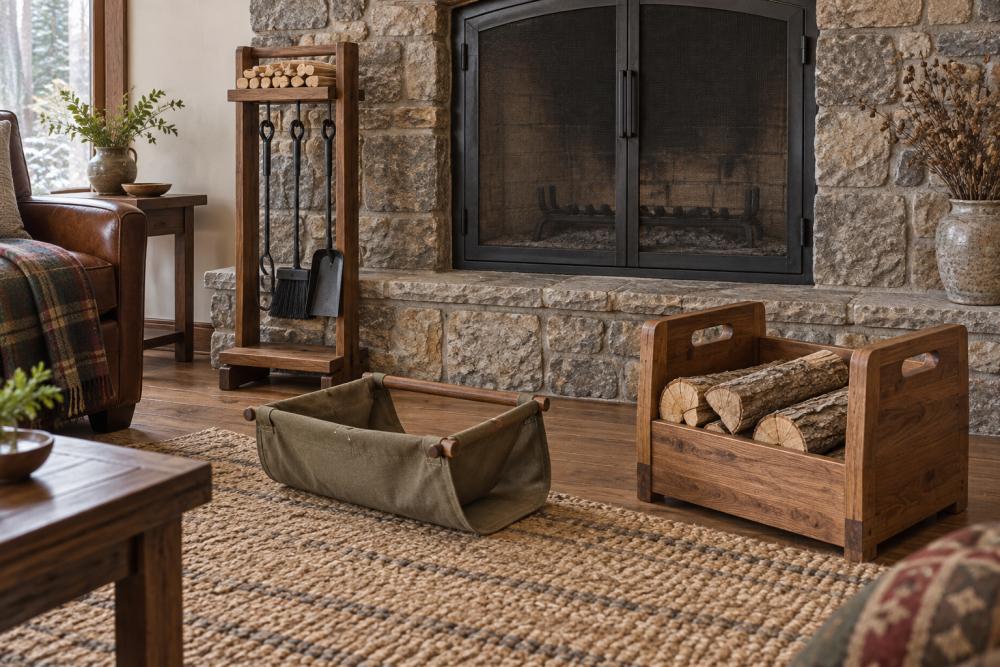
A firewood sling is little more than a strip of tough fabric and two handles, but the details matter: weak stitching can let a load spill, and handles that are too short make the sling awkward to grip. This simple version uses a 12-inch-wide canvas body and removable wooden dowel handles. It suits short trips from a woodpile to a stove or hearth; it is not a substitute for a cart when you are moving heavy loads over distance.
Contents
Materials and sizing
Choose tightly woven canvas or another heavy, abrasion-resistant fabric. A piece about 18 by 40 inches makes a practical sling for typical split firewood. The 18-inch length provides enough fabric to wrap around a modest bundle, while the 40-inch width leaves room for reinforced end pockets and a useful carrying span. Adjust the length to your logs: for pieces longer than 16 inches, add several inches so the sling can close around the load.
For handles, use two hardwood dowels about 1 inch in diameter and 18 inches long. Hardwood is less likely than softwood to dent or split under a concentrated load. A 1-inch dowel is easier to grip than a very thick rod, but inspect it for cracks, knots, and runout grain before use. Choose heavy cotton canvas by the yard if you do not have suitable scrap. For occasional indoor use, sound, tightly woven canvas is generally sufficient; you do not need expensive specialty fabric.
| Fabric choice | Best for | Trade-off |
|---|---|---|
| Heavy cotton canvas | Most home firewood runs | Can absorb moisture and may mildew if stored damp |
| Outdoor polyester canvas | Frequent use or damp storage areas | Often costs more and can be slippery against rounded logs |
| Lightweight cotton or upholstery cloth | Very small, light bundles | Likely to stretch or tear at the handle pockets under a full load |
Tools and preparation
You will need a tape measure, square, sharp scissors or a rotary cutter, pins or clips, and a sewing machine that can handle several layers of fabric. Use heavy polyester thread and a denim or heavy-fabric needle, typically size 16 or 18. A domestic machine may manage canvas if you sew slowly and use a fresh needle; forcing the fabric through can bend the needle or damage the machine. If your machine struggles on a folded test scrap, hand-sew the pockets with strong waxed thread or ask a local alterations shop to stitch them.
Cut the canvas to 18 by 40 inches. Fold each short end over by 1/2 inch, then fold it over again by 3 inches to form a handle pocket. Press the folds flat if the fabric allows it, and clip them in place. The pocket should be wide enough for the dowel to slide through without forcing it. If your dowel is thicker than 1 inch, increase the fold depth accordingly.
Sew reinforced handle pockets
At each end, sew two parallel rows across the full width of the fabric: one close to the inner edge of the folded pocket and another about 1/4 inch from the outer folded edge. Use a straight stitch with a short length, around 3 mm. Backstitch at both ends of each seam. These rows keep the pocket from opening; the fabric fold distributes pressure better than a single narrow hem.
Reinforce each pocket with a box-and-cross pattern at both side edges: stitch a small rectangle across the folded layers, then sew diagonally corner to corner. This extra work is worthwhile because the corners take concentrated strain when the sling is lifted. Keep the stitching clear of the dowel channel. Pull gently on each pocket before inserting the handles. If stitches skip, thread loops underneath, or the cloth puckers badly, repair the seam before loading it.
Fit the wooden handles
Sand the dowels smooth, especially at the ends and along any rough grain. Ease the ends with sandpaper so they will not catch on the pocket fabric. Slide one dowel through each pocket, leaving equal amounts exposed on both sides. Handles around 18 inches long give room for two hands or a one-handed carry, depending on the load. If you want a finish, use a thin coat of hardwax oil or another finish suitable for frequent hand contact, and let it cure fully before use.
Do not glue the dowels into the pockets. Removable handles make the sling easier to wash and store, and they let you replace a damaged dowel. If a handle shifts while carrying, add a small removable stop outside the fabric, such as a snug rubber ring, rather than drilling a hole near the dowel end. Holes can create a weak point where a split starts.
Test and use safely
Before carrying firewood, put a few short pieces in the sling and lift it just a few inches above the floor. Check for seam movement, fabric tearing, or dowel bending. Add weight gradually, then test over a clear floor rather than beside a stove or on steps. There is no reliable universal weight rating for a home-sewn sling: fabric condition, stitch quality, and how the logs sit all affect capacity. Keep the load modest, balanced, and low enough that you can see your path.
Arrange logs crosswise and keep sharp, splintered ends from rubbing directly against one pocket. Do not overload the center; a bowed fabric body can roll the logs outward when you lift. If the sling stretches, a seam opens, or a dowel develops a crack, stop using it until repaired. For a high-volume wood supply or long outdoor trips, a firewood cart is a better choice than asking a fabric sling to carry more than is comfortable.
Care and storage
Shake out bark and sawdust after each use. Let the canvas dry completely before folding it, especially if it has been set on snow, damp ground, or wet wood. Check the stitching and handle surfaces every few weeks during regular use. Store the sling indoors, away from pests and standing moisture. With dry storage and occasional inspection, this straightforward design should make routine trips easier without taking much room beside the woodpile.