
Key takeaways
- Compare the best milk paint with true powder picks, premixed options, and bonding tips that give furniture a vintage matte look with real character.
What's inside
- How to Choose the Best Milk Paint
- 1. Old Fashioned Milk Paint, Oyster White, Gallon
- 2. The Real Milk Paint Co., Sweetheart, 1 Pint
- 3. Miss Mustard Seed’s MilkPaint, Farmhouse White, Pint
- 4. General Finishes Water Based Milk Paint, 1 Quart, Linen
- 5. Rust-Oleum Milk Paint Finish, Classic White, Quart
- Comparison Table
- FAQ
- Verdict
As an Amazon Associate I earn from qualifying purchases. This post may contain affiliate links at no extra cost to you.
Milk paint is one of the oldest coatings in the shop. The traditional recipe is little more than milk protein (casein), lime, clay, and earth pigment, sold as a dry powder and mixed with water minutes before the brush touches wood. Because it is thin and water-based, it soaks into raw wood instead of sitting on top of it, and it dries to a flat, slightly varied matte that no modern film finish quite imitates — the look of a farmhouse dresser that has been painted for a century. Where the surface will not let it grip, it flakes away in patches, which is either a defect or the most honest distressed finish you can buy, depending on the piece in front of you. The shelf splits into two families that share a name and little else: true casein powders you mix yourself, and premixed paints that borrow the name for a similar low-sheen look. The five picks below cover both, and each one is labeled plainly as what it actually is.
Disclosure: As an Amazon Associate, I earn from qualifying purchases. Product details were verified at the time of writing.
This is a dedicated milk paint buying guide for furniture-scale work — dressers, cabinets, tables, and cupboards. It stays on this one shelf: gel stains, wood dyes, and chalk-style furniture paints are different families with different chemistry, and none of them behaves the way a casein paint does on raw pine or oak. Three of the picks are true powder milk paints from the makers who define the category. The other two are premixed paints sold under the milk paint name; both are included because many readers want the look without the mixing, and both are flagged in their sections as acrylic-style formulas that contain no casein.
Contents
- How to Choose the Best Milk Paint
- 1. Old Fashioned Milk Paint, Oyster White, Gallon
- 2. The Real Milk Paint Co., Sweetheart, 1 Pint
- 3. Miss Mustard Seed’s MilkPaint, Farmhouse White, Pint
- 4. General Finishes Water Based Milk Paint, 1 Quart, Linen
- 5. Rust-Oleum Milk Paint Finish, Classic White, Quart
- Comparison Table
- FAQ
- Verdict
How to Choose the Best Milk Paint
Start with the honest split: true powder versus premixed. A true milk paint only exists as a powder. Casein spoils in liquid form, so any can that arrives ready to brush is, by definition, something else — usually a water-based acrylic tuned to dry flat and level like the real thing. Powders ask for ten minutes of mixing and give you the genuine article: a coating that bonds into bare wood fibers, can be thinned into a wash or stain, and ages the way antique painted furniture ages. Premixed cans trade that character for convenience and consistency, and the better ones say so on their own technical pages. Neither family is wrong; buying one while expecting the other is the only real mistake.
Understand bonding before you blame the paint. On raw or porous wood, milk paint needs no help — it soaks in and holds. Over an existing varnish, lacquer, or factory finish, it cannot soak in, so it lets go in sheets and patches as it dries. That uncontrolled chipping is the famous chippy look, and on a flea-market side table it can be perfect. When you want full, even coverage on a previously finished piece, the fix is mechanical and chemical: scuff-sand to break the gloss, and stir a bonding agent additive into the first coat so the paint grips the sealed surface. Every true milk paint maker sells or names such an additive, and the first coat is the only one that needs it.
Mix small, mix fresh, and let it rest. The standard ratio is equal parts powder and warm water by volume. Stir or shake until the foam settles, then give the mix a short rest — ten to twenty minutes — so the casein fully hydrates and the last lumps relax; a quick pass through a strainer helps on big jobs. Powder in a sealed bag keeps for years on the shelf, which is the quiet advantage of the format, but mixed paint is a perishable: plan on using a batch within days, not weeks, and mix only what the piece in front of you needs.
Buy coverage by the maker’s figures, and expect whites to cover less. Milk paint stretches further than most furniture paint — a pint of powder typically handles a small dresser — but pale colors over dark wood are the exception. Whites and creams may take three coats for full hiding where a mid-tone color takes two, and the makers’ own guidance reflects that. Compare the coverage printed for the specific size you are buying, and size up rather than down when the project is a full cabinet run.
Plan the topcoat as part of the paint job, because milk paint needs one. A cured casein film is porous. Left bare, it marks with water rings, takes oil stains from hands, and powders onto anything rubbed against it. A topcoat is what turns the color into a working furniture finish: wax for a soft, low glow you can renew, hemp oil for a lean, close-to-the-wood feel on pieces that see gentle use, or a water-based clear topcoat where a tabletop has to shrug off daily spills. Expect the topcoat to deepen the color a shade — milk paint dries lighter than it looks in the cup, then darkens back under its sealer — so judge your color only after a sealed test board. Give the finished piece gentle treatment for the first few weeks while the film fully cures.
Test on the actual wood. Milk paint reads differently on pine, oak, and maple, and differently again over a tannin-rich board than over a pale one. Every maker in this guide sells small sizes or has a small size in the line; a sample bag and an offcut from the project lumber will tell you more in one afternoon than any color card.
1. Old Fashioned Milk Paint, Oyster White, Gallon

This is the original. The Old Fashioned Milk Paint Company has made the same casein formula since 1974, recreating the paint that coated early American furniture long before factory paint existed. It ships as a dry powder — casein, lime, and natural pigments, with no VOC content — and mixes one-to-one with warm water. On raw wood it behaves the way the historical paint did: it soaks in, dries dead flat with gentle tonal variation, and can be sanded back at edges and corners for wear that looks earned rather than applied. The line runs to 32 colors, all of them muted, historical tones. The gallon pack listed here carries 48 ounces of powder, enough for a full run of kitchen cupboards or several large pieces, and the same formula is sold in pint and quart packs for smaller work. Choose this one when authenticity is the brief and you want the paint the rest of the shelf is measured against.
Specs
- Type: True milk paint, dry powder
- Base: Milk protein (casein), lime, natural pigments
- Mix: Equal parts powder and warm water
- Size: Gallon pack, 48 oz powder
- Coverage: About 288 sq ft per gallon pack per maker figures
- Finish: Matte
- Color: Oyster White; 32 colors in the line
- VOC: None
- Use: Interior furniture, cupboards, woodwork
2. The Real Milk Paint Co., Sweetheart, 1 Pint

The Real Milk Paint Company builds its powder on the same short ingredient list — purified casein, pharmaceutical-grade lime, and pigments — and runs one of the widest color cards in the category, with more than fifty shades. Sweetheart is the line’s soft pink, the kind of color that lands on nursery dressers and small accent pieces, but the formula underneath is the serious part: it mixes one-to-one with water, goes onto raw wood, plaster, and unsealed brick without a primer coat, and dries in as little as thirty minutes in warm conditions, with a working window of up to a few hours depending on the pigment. Mixed paint from this maker stays usable for up to two weeks if kept sealed, the longest grace period among the true powders here, which suits painters who work in short evening sessions. The pint is the right size for a single piece of furniture with some left for the matching chair.
Specs
- Type: True milk paint, dry powder
- Base: Purified casein, lime, natural pigments
- Mix: Equal parts powder and water
- Size: 1 pint
- Coverage: About 35 sq ft per pint per maker figures
- Finish: Matte
- Color: Sweetheart; more than 50 colors in the line
- VOC: None
- Dry time: About 30 minutes to 4 hours, conditions dependent
- Use: Furniture, cabinets, walls, brick, stone
3. Miss Mustard Seed’s MilkPaint, Farmhouse White, Pint
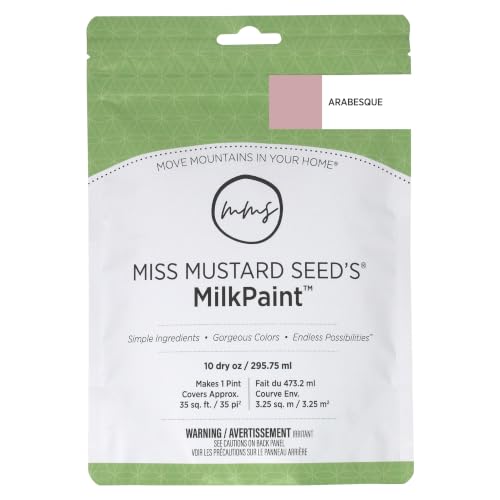
Miss Mustard Seed’s MilkPaint is the boutique end of the true powder shelf: five ingredients — casein, limestone, clay, chalk, and pigments — mixed one-to-one with water and aimed squarely at furniture painters who want either a smooth vintage finish or a controlled chippy one. Farmhouse White is the line’s warm, high-hiding white, developed because pale colors are where milk paint struggles most; even so, the maker’s own guidance is that light whites cover roughly 50 to 70 square feet per quart, so expect this pint to handle a small dresser or a pair of nightstands in two to three coats. The brand supports the paint with a full system — a bonding agent for sealed surfaces, an anti-foaming mixing aid, waxes, and hemp oil — which makes it the easiest true powder here to learn as a complete method rather than a single product. Pick it when the project is a statement piece and you want the finish, and the option to let it chip, fully in your hands.
Specs
- Type: True milk paint, dry powder
- Base: Casein, limestone, clay, chalk, natural pigments
- Mix: Equal parts powder and water
- Size: 1 pint
- Coverage: About 25 to 35 sq ft per pint for light whites per maker guidance
- Finish: Matte
- Color: Farmhouse White; 28 colors in the line
- VOC: None
- Use: Furniture, cabinets, wood, walls
4. General Finishes Water Based Milk Paint, 1 Quart, Linen

Read the maker’s own words first: General Finishes states plainly that its Milk Paint is not a true milk paint — it is a premixed, water-based acrylic with no casein in it, named for the low-luster look of the traditional finish. Judged as what it is, it is an excellent furniture paint. It arrives ready to brush, roll, or spray, levels smoothly, and is self-sealing, so the maker does not require a separate topcoat — the one pick here that breaks the topcoat rule, precisely because it is an acrylic film rather than a casein one. The quart covers roughly 100 to 125 square feet, dries to the touch in about thirty minutes, and can be recoated in about two hours, with a full cure in about three weeks. Linen is the line’s warm off-white; the range runs to a full card of current furniture colors. Choose this one when you want the matte vintage look on cabinets or a dresser with hardware-store simplicity and no mixing, measuring, or bonding lessons.
Specs
- Type: Premixed acrylic in milk paint style — not a true casein milk paint
- Base: Water-based acrylic, premixed, no casein
- Size: 1 quart
- Coverage: 100 to 125 sq ft per quart per maker figures
- Finish: Flat, low luster
- Color: Linen; full color card in the line
- VOC: Under 50 g/L per maker figures
- Dry time: About 30 minutes to touch; recoat about 2 hours; cure about 21 days
- Topcoat: Self-sealing per maker; none required
- Use: Furniture, cabinets, millwork, interior and exterior
5. Rust-Oleum Milk Paint Finish, Classic White, Quart

Rust-Oleum’s entry is the other honest way to read this shelf: the can says Milk Paint Finish, and finish is the right word. This is a premixed, water-based paint built to imitate the washed, brush-marked matte of milk paint rather than to be milk paint — there is no powder and no casein, and it should be bought with that understanding. Within those terms it is the simplest route in this guide: minimal surface prep, a brushed application that deliberately leaves subtle brush texture in the film for an aged feel, and cleanup with soap and water. Classic White is the line’s clean, bright white, and the quart format suits a dresser, a small table set, or a run of picture frames and trim. It will not chip, soak in, or distress the way a true powder does, so it suits readers who want the pale matte look to stay exactly where they put it. Pick it for a first painted-furniture project where a predictable result matters more than period authenticity.
Specs
- Type: Premixed milk paint style finish — not a true casein milk paint
- Base: Water-based, premixed
- Size: 1 quart
- Finish: Matte with a brushed, washed effect
- Color: Classic White
- Prep: Minimal per maker directions
- Cleanup: Soap and water
- Use: Interior furniture and decor
Comparison Table
| Pick | True casein powder | Form | Size | Topcoat needed | Best for |
|---|---|---|---|---|---|
| Old Fashioned Milk Paint, Oyster White | Yes | Powder, mix 1:1 | Gallon pack | Yes | Authentic finish, large projects |
| The Real Milk Paint Co., Sweetheart | Yes | Powder, mix 1:1 | 1 pint | Yes | Wide color choice, small pieces |
| Miss Mustard Seed’s MilkPaint, Farmhouse White | Yes | Powder, mix 1:1 | 1 pint | Yes | Boutique colors, controlled chipping |
| General Finishes Milk Paint, Linen | No — acrylic | Premixed liquid | 1 quart | No, self-sealing | Cabinets, no-mix convenience |
| Rust-Oleum Milk Paint Finish, Classic White | No — premixed finish | Premixed liquid | 1 quart | Sealer advised for wear | First projects, predictable results |
FAQ
Is milk paint the same as chalk-style furniture paint?
No. Chalk-style paints are premixed acrylics with mineral additives, sold ready to use. True milk paint is a casein powder mixed with water just before use; it soaks into raw wood instead of filming over it, distresses differently, and needs a topcoat where most chalk-style paints merely suggest one.
Does milk paint really need a topcoat?
Yes, for any piece that will be touched, wiped, or set upon. The cured casein film is porous and marks easily. Wax, hemp oil, or a water-based clear topcoat seals it. The exception in this guide is the General Finishes pick, which is self-sealing because it is an acrylic, not a casein paint.
Why did my milk paint chip off in patches?
Because the surface underneath was sealed. Milk paint bonds by soaking into porous material; over varnish or an old factory finish it can only sit on the gloss, and it lets go as it dries. Embrace the chippy result, or next time scuff-sand and stir a bonding agent into the first coat.
How long does mixed milk paint keep?
Days, not months. Powder keeps for years in a sealed bag, but once water goes in, the casein starts a slow decline. Most makers advise using a batch promptly; The Real Milk Paint Co. allows up to about two weeks for a sealed batch. If a mix smells sour, discard it and mix fresh.
Can milk paint go over raw wood with no prep at all?
Nearly. Brush off dust, remove anything greasy, and paint. Raw, porous wood is the surface this paint was made for, and it is the one case where no primer and no bonding help is needed. Knots and tannin-rich boards can still bleed through pale colors, so test a hidden patch first.
Verdict
For the genuine article, start with the powder shelf. Old Fashioned Milk Paint is the benchmark — the 1974 formula, a deep historical color card, and pack sizes from a single pint to the gallon listed here. The Real Milk Paint Co. matches it on purity and beats it on color range and on how long a mixed batch stays usable. Miss Mustard Seed’s MilkPaint is the pick for furniture painters who want a supported system around the paint and full control over the chippy effect. If mixing powder sounds like a chore standing between you and a finished dresser, the two premixed picks earn their place honestly: General Finishes brings a durable, self-sealing acrylic in the milk paint style, and Rust-Oleum offers the simplest first-project route to the pale matte look. Whichever family you choose, budget the topcoat and the test board into the job — with milk paint, those two steps are the difference between a finish that looks a century old on purpose and one that just looks unfinished.
Related guides
More from Amazon
Programs that pair well with the guide above. Offers and eligibility are set by Amazon and may change.
A free business account with business pricing and bulk-buying tools for work, shop or home office.
Create a business accountFree shipping on eligible items, Prime Video and more. Eligible new members can start with a free trial.
Start a Prime free trialAudiobooks and podcasts to listen to on the go. Eligible new members can start with a free trial.
Try Audible freeAd-free music streaming. Eligible new subscribers can start with a free trial.
Try Music Unlimited freeAs an Amazon Associate we earn from qualifying purchases.








