
Key takeaways
- Compare gable vents by material, louver style and screen build, with the measure-the-opening-first rule and seal-the-flange habit for vents that fit.
As an Amazon Associate I earn from qualifying purchases. This post may contain affiliate links at no extra cost to you.
Disclosure: As an Amazon Associate, I earn from qualifying purchases. Product details were verified at the time of writing.
A gable vent is the louvered opening set into the peak end wall of a house. On a working attic it is an exhaust point: hot, damp air that has risen through the attic leaves here, while fresh air enters low at the soffits. On many houses it is also the single most visible trim piece on the elevation, which is why the shelf splits into two honest families. Functional vents have open louvers and a real air path. Decorative vents wear the same louvered face over a solid back and move no air at all — they are trim, bought for the look on a gable that is sealed or vented another way. This guide covers both, labeled plainly: four functional picks and one decorative pick. It does not cover powered gable-mount attic fans, which are motors that mount behind a vent like these and are a separate purchase covered in a companion guide, nor soffit vents or ridge vents, which are the intake and ridge-exhaust halves of the system and are covered in companion guides of their own.
Four habits matter more than any single pick. First: measure the opening first — the rough opening in the gable wall, the depth of the siding and sheathing stack, and the face size you need to cover the old vent’s footprint. A vent named for its face diameter can hide a much smaller air opening, so the tape measure, not the box label, decides the fit. Second: keep the screen intact — the mesh behind the louvers is the pest barrier, and a torn or missing screen turns the vent into an open door for wasps, birds, and bats. Third: seal the flange — seat the vent flat, fasten through the flange or trim ring, and run exterior sealant around the frame so wind-driven rain cannot work behind it. Fourth: vent the gable as part of a system — gable vents exhaust best when soffit intake feeds them, and a gable vent should not share an attic with a ridge vent: the gable opening short-circuits the ridge vent’s draw, pulling air sideways from the nearest opening instead of washing the whole deck. Pick one exhaust strategy per attic. Add ladder sense on top of all of it: gable work is high work, done from a secured ladder on firm ground, in dry weather, with no leaning past your belt line.
How to Choose Gable Vents
Work from net free area, not face size. Net free area (NFA) is the open area left after louvers, baffles, and screen take their share, and it is the figure that sizes an attic system — the working rule is about one square foot of total NFA per 150 square feet of attic floor (or per 300 with a vapor retarder and a balanced layout, where local code allows), split roughly half intake and half exhaust. Face diameter flatters: one 22-inch round pick below publishes 50 square inches of venting area, and several architectural vents publish no NFA figure at all, which is stated plainly in their Specs. Where no figure is published, count the vent conservatively or confirm the figure with the maker before you rely on it.
Decide functional or decorative before you shop. A functional vent needs a real opening behind it and belongs in the attic’s airflow arithmetic. A decorative vent is a solid-backed trim piece for a sealed gable, a faux peak, or a wall that already breathes through the roof. Buying a decorative vent to fix a hot attic is the most common mistake in this class — the louvered face looks identical from the street.
Match the material to the house. Vinyl and copolymer vents carry their color through the body, shrug off weather, and pair with vinyl siding systems, trim ring and all. Aluminum gives a rigid, crisp louver in a square or rectangular face and suits painted trim. Urethane and polyurethane millwork vents are the architectural end of the shelf: molded detail, primed and paintable, made to match historic trim — and handled like trim, not like siding hardware. PVC surface-mount vents sit between the two, paintable like millwork and weatherproof like plastic.
Read the screen before the louver. Louvers shed weather; the screen behind them stops pests. A sealed-in fiberglass or metal mesh that cannot work loose is the build to want. Some architectural vents do not state their screen arrangement in the listing details — that is flagged in the Specs below where it applies, and on those the honest move is to check before ordering and plan on mesh behind the opening if none is fitted.
Mind the mount. Vents built for siding carry a trim ring or channel that swallows the siding edge and locks at set depths, which is the clean retrofit on vinyl. Surface-mount vents screw flat over the wall face and suit brick, stucco, and fiber cement, where there is no siding pocket to fill. Either way, the flange gets sealed and the louvers point down and out — a vent hung with its louvers reversed funnels rain inward.
The 5 Best Gable Vents
1. Mid-America 22-Inch Round Gable Vent — the vinyl workhorse
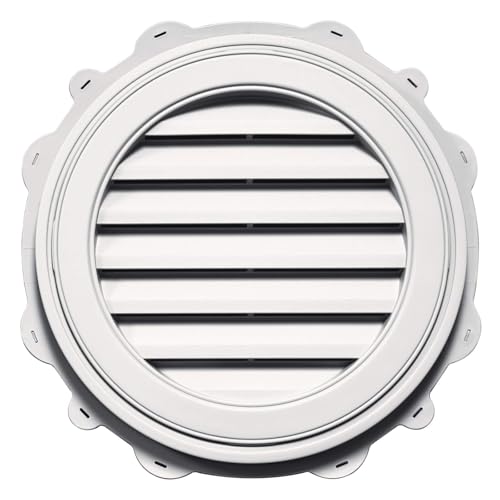
Mid-America’s 22-inch round is the siding-trade standard in this class: a single-piece molded vent in UV-stabilized copolymer with the color molded through the body, so a scuff never shows a different shade underneath. It is a genuinely functional vent with the arithmetic printed by the maker — 50 square inches of venting area — and the weather build is the thorough one: double baffles behind the louvers for driven-rain resistance, and a fiberglass screen in an 18×16 mesh sealed to the inside of the unit so it cannot sag or work loose. The separate trim ring adjusts across a range of siding thicknesses with locking positions, which is what makes it a clean retrofit over an existing vinyl gable. This listing is the Bright White (117) version; the maker’s line carries a wide color range, but each color is its own listing, so order the exact one you need. Depth is 2 inches, and the whole unit is light enough to hold in place one-handed while the first fasteners go in.
Specs
- Brand: Mid-America
- Size: 22 in round
- Material: UV-stabilized copolymer (vinyl), color molded in
- Color: Bright White (117)
- Type: Functional, open louvers with double baffles
- Net free area: 50 sq in (maker figure)
- Screen: Fiberglass, 18×16 mesh, sealed to the unit
- Depth: 2 in
- ASIN: B0DY8C36Y4
2. Zepoty 18 x 18 Aluminum Gable Vent — the square metal vent

The Zepoty is the metal entry in a plastic-heavy class: an 18 by 18 inch aluminum face with fixed louvers and a built-in screen behind them, sized to fit a 16 by 16 inch opening. The square format suits gables framed for a rectangular vent and houses where a round vent would fight the trim lines, and the aluminum body is the draw for anyone pulling out a warped or sun-brittle plastic vent — it stays rigid across its full width and holds its louver spacing. The listing pitches it across houses, attics, and sheds, and the gable is where a vent of this size earns its keep; the same listing suggests wall and grille duty, but the louvers-plus-screen pairing is aimed at an exterior gable opening. One sizing caution, stated by the maker and worth repeating: the 18-inch figure is the face, the 16-inch figure is the hole, and confusing the two is the one way this install goes wrong. The maker publishes no net free area figure for it, so count it as a contributor alongside the vents that do publish figures, not as a measured system on its own.
Specs
- Brand: Zepoty
- Size: 18 x 18 in face
- Fits opening: 16 x 16 in
- Material: Aluminum
- Type: Functional, fixed louvers
- Screen: Built-in screen behind the louvers
- Net free area: Not published by the maker
- ASIN: B0CNW7365D
3. Ekena Millwork 24-Inch Round Gable Vent Louver — architectural urethane, functional

Ekena Millwork’s urethane round is the trim-grade version of the round vent: high-density urethane molded with a clean louvered face and a 1 1/8 inch projection, sold factory primed and ready for paint. It is a functional vent — the louvers are open and pass air — built for houses where the gable vent is part of the architecture: historic elevations, deep trim packages, and paint-matched schemes where a molded vinyl vent would read as a substitute. Urethane does not rot or warp, takes paint like wood, and weighs little for its size, which matters when you are setting a 24-inch piece from a ladder. Two honest limits. The maker does not publish a net free area figure for this size in the listing details, so a code-sized attic should confirm the figure with the maker or pair it with exhaust that carries published numbers. And the listing details do not state the screen arrangement, so check for mesh before ordering and plan on screen behind the opening if none is fitted.
Specs
- Brand: Ekena Millwork
- Size: 24 in round (24 x 24 in)
- Projection: 1 1/8 in
- Material: High-density urethane
- Type: Functional, open louvers
- Finish: Factory primed, paintable
- Screen: Not stated in the listing details — check before ordering
- Net free area: Not published by the maker
- ASIN: B0081RS14G
4. Ekena Millwork 22-Inch Round Gable Vent Louver — the smaller urethane

The 22-inch Ekena is the same architectural build one size down: high-density urethane, open functional louvers, a slightly deeper 1 1/4 inch projection, and a factory-primed face that paints to match the trim. It suits the smaller gable — a Cape Cod peak, a garage gable, a dormer cheek — where the 24-inch piece would crowd the trim, and it keeps the millwork look that vinyl cannot copy: molded edges, a real shadow line, and a face that reads as painted wood from the street. The same two limits follow it from its bigger sibling, and they are repeated here rather than assumed away: no net free area figure is published for this size, and the screen arrangement is not stated in the listing details, so the mesh check belongs in the order, not after it. Between the two Ekena sizes there is no wrong pick — measure the opening and the gable’s proportions, and let the tape decide.
Specs
- Brand: Ekena Millwork
- Size: 22 in round (22 x 22 in)
- Projection: 1 1/4 in
- Material: High-density urethane
- Type: Functional, open louvers
- Finish: Factory primed, paintable
- Screen: Not stated in the listing details — check before ordering
- Net free area: Not published by the maker
- ASIN: B0081RS100
5. Fypon RLV28 Round Decorative Louver — purely decorative, stated plainly

The Fypon RLV28 is a 28-inch round louver in high-density polyurethane with a brickmould-style trim ring, and it is included as exactly what it is: a decorative vent. The back is solid — Fypon builds its decorative louvers as one-piece units that do not allow air to pass — so this piece adds the classic louvered medallion to a gable while moving no air whatsoever. That is a legitimate purchase on a sealed gable, over a wall that vents through the roof, or as a matched face where a functional vent already sits behind a screen elsewhere in the system; it is the wrong purchase for a hot attic, and no part of this guide’s airflow arithmetic applies to it. What it does better than any functional pick here is the millwork itself: crisp molded detail, a primed surface that must be painted before or after fitting, and a body that will not rot, split, or feed insects. Buy it as trim, with your eyes open, and it is the best-looking piece in the guide.
Specs
- Brand: Fypon
- Model: RLV28
- Size: 28 in round
- Material: High-density polyurethane
- Style: Brickmould trim ring
- Type: Decorative — solid back, passes no air
- Venting area: None (decorative)
- Finish: Primed, must be painted
- ASIN: B004W5E816
Verdict
Match the vent to the gable’s job, not to its photograph. For a working attic on a vinyl-sided house, the Mid-America 22-inch is the default: it is the only pick that pairs a published venting figure with a sealed-in screen and a siding-ready trim ring, and it disappears into the elevation the way a vent should. Choose the Zepoty where the opening is square and a rigid aluminum face matters more than a published airflow figure — a replacement for a warped plastic vent is its home ground. The two Ekena urethane rounds are for houses where the vent is architecture: pick the 24-inch for a full-size gable and the 22-inch for a smaller peak, paint either to match the trim, and settle the screen and airflow figures before the ladder comes out. The Fypon is the honest trim piece for a gable that needs the look and no airflow at all. Whichever you choose, the result is decided by the habits: measure the rough opening before ordering, keep the screen intact, seal the flange against driven rain, feed the gable from the soffits, and never ask a gable vent and a ridge vent to share one attic.
FAQ
Can a gable vent and a ridge vent work together on the same attic?
They fight. A ridge vent draws air along the whole underside of the deck, but a gable opening near the ridge line gives that draw a shortcut: air enters the gable and leaves the ridge without washing the deck, and the far ends of the attic go still. The standard guidance is one exhaust strategy per attic — ridge vent with soffit intake, or gable vents with soffit intake — and where a ridge vent is fitted, the usual move is to close the gable openings or fit them with decorative faces.
How much venting does my attic actually need?
The working rule is about one square foot of net free area per 150 square feet of attic floor, or per 300 where a vapor retarder and a balanced layout allow it under local code, split roughly half intake and half exhaust. A 1,500 square foot attic on the tighter rule wants about 1,440 square inches in total — 720 of exhaust — which is why a single 50-square-inch gable vent is a contributor, not a system, and why big attics pair two gable vents or add roof exhaust.
How do I know whether a vent is functional or decorative?
Look through it. A functional vent has open louvers and daylight or a screen behind them; a decorative vent has a solid back you can confirm from inside the attic or from the maker’s description. The face tells you nothing — both wear the same louvered front. If a listing never mentions venting area, airflow, or a screen, treat it as decorative until the maker says otherwise.
Can I paint these vents to match the house?
The urethane and polyurethane picks arrive primed for exactly that — paint them with exterior paint, keeping coats light so the louver gaps stay open. The vinyl pick carries its color molded through the body and is ordered in the color you need rather than painted. On any functional vent, mask or avoid the screen: paint bridging the mesh cuts the open area the vent was bought for.
Will a gable vent keep animals out of the attic?
Only while its screen is intact. Louvers alone stop weather, not wasps, birds, or bats. Check the mesh from the attic side each season, and where the listing does not state a screen, fit mesh behind the opening during the install — a vent with no barrier behind the louvers is an entrance with a decorative frame.
Related guides
More from Amazon
Programs that pair well with the guide above. Offers and eligibility are set by Amazon and may change.
A free business account with business pricing and bulk-buying tools for work, shop or home office.
Create a business accountFree shipping on eligible items, Prime Video and more. Eligible new members can start with a free trial.
Start a Prime free trialAudiobooks and podcasts to listen to on the go. Eligible new members can start with a free trial.
Try Audible freeAd-free music streaming. Eligible new subscribers can start with a free trial.
Try Music Unlimited freeAs an Amazon Associate we earn from qualifying purchases.








