
Key takeaways
- Compare froes, checking blade length, steel, handle design and eye shape for woodworking, splitting, green woodwork and traditional crafts use.
As an Amazon Associate I earn from qualifying purchases. This post may contain affiliate links at no extra cost to you.
A froe is one of the oldest tools in the woodworker’s kit, and it still does one job better than any saw or axe: splitting wood along its grain with control. Instead of cutting across the fibres, a froe is set on the end of a bolt or billet, driven in with a wooden mallet or club, and then levered with its handle so the split runs exactly where you placed the blade. That control is why froes remain the tool of choice for riving shingles and shakes, splitting out chair parts and basket splints, breaking down green wood for turning blanks, and making kindling without a swinging blade near your hands.
Disclosure: As an Amazon Associate, I earn from qualifying purchases. Product details were verified at the time of writing.
The five froes below cover the main patterns you can buy today, from a traditional American shingle froe with a long hickory handle to a compact hand-forged blade for smaller work. All of them share the same basic L-shaped form, but blade length, steel, handle design and eye shape differ enough that the right pick depends on the size of wood you split and how you like to work.
How to Choose a Froe
Blade length. Most shingle froes carry a blade around 15 inches long, which suits bolts up to roughly the same width and gives you room to work the split down a long billet. Shorter blades near 13 inches are easier to steer on small rounds, kindling and basket work, while longer blades earn their keep on wide shingle bolts and stave wood.
Blade steel and profile. A froe blade should be tough rather than razor sharp. The edge is a splitting wedge, not a knife, so look for a blade with a gradual taper that thickens toward the back. Case hardened and forged carbon steels stand up well to years of mallet blows on the spine. A blade that is too thin can wander or fold in tough grain, while a well-shaped taper helps steer the split as it runs.
Handle design. The handle sits at a right angle to the blade and acts as your lever, so length and grip matter. Handles around 18 inches give strong leverage for prising a split open, while shorter handles near 13 to 14 inches feel handier for small stock. Hickory and other hardwoods are the traditional choice because they absorb shock from mallet strikes and can be replaced easily when worn.
Eye shape and fit. The handle passes through an eye forged or welded at one end of the blade. A tapered eye wedges the handle tighter as you work, which keeps the head from loosening mid-split. Some patterns use a closed socket, others an open wrapped eye. Either can work well, but a snug, rattle-free fit is the sign of a froe that will stay safe and predictable in use.
Match the tool to the stock. Froes are made for wood that has already been crosscut to length and, for bigger pieces, often split once with wedges first. They shine on straight-grained green wood such as cedar, oak, ash and pine. Twisted or knotty rounds fight any froe, so pick clear bolts and let the grain do the work.
The 5 Best Froes
1. Peavey Shingle Froe
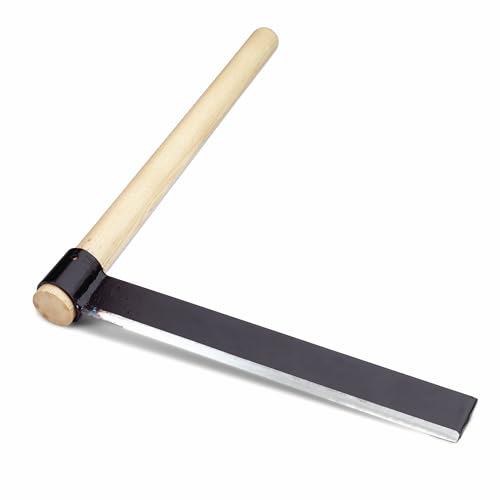
The Peavey shingle froe is the classic American pattern from a Maine maker long known for logging tools. Its 15-inch blade is 2 inches deep, giving a broad splitting face that tracks steadily through shingle bolts and stave wood. The 18-inch hickory handle provides the leverage needed to open a split once the blade is seated, and the traditional eye fit keeps the head planted under repeated mallet blows. If you want one froe for shakes, turning blanks and general riving at the bench or in the woodlot, this is the pattern generations of shingle makers settled on.
Specs
- Blade length: 15 in
- Blade depth: 2 in
- Handle: 18 in hickory
- Pattern: traditional shingle froe
- Best for: shingles, shakes and turning blanks
2. Lehman’s Wood-Splitting Froe
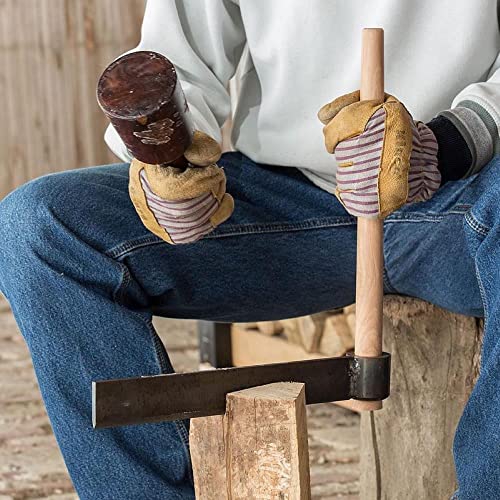
Lehman’s wood-splitting froe is made in the USA in the Amish tradition, pairing a case hardened steel blade with a hickory handle. The hardened blade holds up to steady work in split lumber and small logs, and the maker is clear about its intended range: this is a froe for kindling, shingles, furniture parts and basket wood rather than for breaking down large rounds from scratch. That honest sizing makes it a dependable pick for green woodworkers who rive chair parts and small stock, where control matters more than brute force.
Specs
- Blade material: case hardened steel
- Handle: hickory
- Origin: made in the USA
- Pattern: traditional wood-splitting froe
- Best for: kindling, shingles, furniture parts and baskets
3. Timber Tuff TMW-62 Shingle Froe

The Timber Tuff TMW-62 takes the traditional shingle froe shape and builds it with modern materials. The 15-inch blade is made from heavy-duty anodized steel, and at 2.9 pounds the whole tool is light for its size, which reduces fatigue during long sessions of splitting shakes or firewood. A hardwood handle delivers a solid grip that is easy to maintain. This is a practical choice if you like the classic 15-inch format but want a lighter tool that is simple to carry between the workshop and the woodpile.
Specs
- Blade length: 15 in
- Blade material: anodized steel
- Handle: hardwood
- Weight: 2.9 lb
- Model: TMW-62
4. DH Corp Hand-Forged Froe

This froe from DH Corp is handmade with a forged carbon steel blade in a Korean blacksmith style, giving it a compact and characterful build. The 13-inch blade and 13.5-inch wooden handle make for a total length of 15.3 inches, a size that suits kindling, small billets and finer riving where a full-size shingle froe feels clumsy. At 3.1 pounds it has enough mass to bite into the end grain and start a split cleanly. The maker recommends a wooden mallet, as with any froe, and a light coat of oil on the blade after use to keep rust away.
Specs
- Blade length: 13 in
- Blade material: forged carbon steel
- Handle: wood, 13.5 in
- Overall length: 15.3 in
- Weight: 3.1 lb
5. SYTOALND Heavy Duty Shingle Froe

The SYTOALND heavy duty shingle froe is built around a 15-inch blade sized for splitting larger shingle bolts into shakes. Its heavy-duty pattern follows the same time-tested layout as the traditional tools on this list: a straight splitting blade with the handle set at a right angle, driven by a mallet and levered to steer the split. For woodworkers who mostly work wide cedar or pine bolts and want a blade that spans the full width of the stock, this is a straightforward, workmanlike option to consider.
Specs
- Blade length: 15 in
- Pattern: heavy-duty shingle froe
- Work: splitting shingle bolts into shakes
- Use with: wooden mallet or froe club
- Best for: wide bolts and shake making
Comparison Table
| Product | Blade length | Blade material | Handle | Weight |
|---|---|---|---|---|
| Peavey Shingle Froe | 15 in | Steel | 18 in hickory | Not stated |
| Lehman’s Wood-Splitting Froe | Not stated | Case hardened steel | Hickory | Not stated |
| Timber Tuff TMW-62 | 15 in | Anodized steel | Hardwood | 2.9 lb |
| DH Corp Hand-Forged Froe | 13 in | Forged carbon steel | Wood, 13.5 in | 3.1 lb |
| SYTOALND Heavy Duty Shingle Froe | 15 in | Steel | Not stated | Not stated |
FAQ
What is the difference between a froe and a splitting axe?
An axe is swung and cuts where it lands, while a froe is placed on the end grain exactly where you want the split to start, then driven in with a mallet. Because the blade is positioned before any force is applied, a froe gives far more control over thickness, which is why it is preferred for shingles, staves and riven furniture parts.
What size froe should I start with?
A blade around 15 inches with an 18-inch handle is the most versatile starting point for general work. Choose a shorter blade near 13 inches if most of your splitting is kindling, basket splints and small green wood blanks.
Should a froe blade be sharp?
Only mildly. A froe splits by wedging fibres apart, so the edge should be keen enough to bite into end grain but not ground like a knife. A very sharp, thin edge is more likely to stick, wander or chip in tough grain.
Can I strike a froe with a steel hammer?
No. Always use a wooden mallet or a froe club. Steel on steel can mushroom the back of the blade, damage the eye and send chips flying. A hardwood club is traditional, cheap to make and easy on the tool.
Verdict
For most woodworkers, the Peavey shingle froe is the benchmark: a 15-inch blade, a full-length hickory handle and a pattern proven over generations of shake and shingle work. If your riving leans toward smaller stock, chair parts and baskets, the Lehman’s froe offers the same traditional layout in a hardened steel build sized for split lumber and small logs. The Timber Tuff TMW-62 suits anyone who wants the classic format in a lighter, modern tool, while the DH Corp froe brings a hand-forged touch to kindling and fine work. Whichever you choose, pair it with a wooden mallet, clear straight-grained bolts and a steady bench, and the split will follow the grain exactly where you set the blade.
Related guides
More from Amazon
Programs that pair well with the guide above. Offers and eligibility are set by Amazon and may change.
A free business account with business pricing and bulk-buying tools for work, shop or home office.
Create a business accountFree shipping on eligible items, Prime Video and more. Eligible new members can start with a free trial.
Start a Prime free trialAudiobooks and podcasts to listen to on the go. Eligible new members can start with a free trial.
Try Audible freeAd-free music streaming. Eligible new subscribers can start with a free trial.
Try Music Unlimited freeAs an Amazon Associate we earn from qualifying purchases.








