
What's inside
As an Amazon Associate I earn from qualifying purchases. This post may contain affiliate links at no extra cost to you.
Winter is a good time to learn straight dados because the work is controlled, repeatable, and small enough to do in a garage or spare room. A dado is a groove cut across the grain, usually to hold a shelf, divider, or panel. The cut itself is simple. Cutting several dados at exactly the same width, depth, and position is where the useful skill develops.
The projects below progress from scrap practice to useful shop furniture. They use a router, table saw, or circular saw with a guide. You do not need the most expensive tool, but you do need a reliable way to guide the cut and check the result.
As an Amazon Associate we earn from qualifying purchases at no extra cost to you.



Contents
Choose the right winter project
| Project | Best tool | Skill level | What it teaches |
|---|---|---|---|
| Test board and story stick | Router or circular saw | Beginner | Depth, layout, and fit |
| Wall-mounted shelf | Router with guide | Beginner | Repeatable dados and square assembly |
| Small bookcase | Table saw or router | Intermediate | Multiple matching dados and case accuracy |
| Drawer-divider tray | Router or table saw | Intermediate | Shallow dados and thin stock |
| Cross-lap storage grid | Table saw or router | Intermediate | Two parts that must fit consistently |
Start with a test board
Before cutting a cabinet side, make a test board from the same material. Use a piece at least 6 inches wide and 18 inches long. Mark three lines across it and cut one shallow dado, one medium dado, and one intended final cut. This takes less than an hour and prevents wasting a full panel.
For plywood, measure the actual thickness rather than trusting the label. “Half-inch” plywood may measure 15/32 inch or less. A shelf cut to a nominal half-inch groove can rattle, while a groove cut to the exact shelf thickness may be too tight after paint or finish. Cut the dado about 1/32 inch deeper than the mating part is thick, then test the fit.
A good starting depth is one-quarter to one-third of the board thickness. On 3/4-inch stock, a 1/4-inch-deep dado is common. Deeper cuts weaken the side and are rarely needed for a small indoor project.
Build a wall-mounted shelf
A simple shelf is the best first useful project. Cut two side pieces, one shelf, and a back or cleat. Mark the dado on both sides with a square and a sharp pencil. Measure from one reference edge, not from opposite ends, so small measurement errors do not accumulate.
The cheapest reliable guide is a straight board clamped to the workpiece. Use a factory edge or joint one edge first. Clamp it firmly at both ends, and account for the distance between the router bit and the router base. With a circular saw, the guide should position the saw shoe so the blade cuts directly on the layout line.
Make several shallow passes instead of forcing one deep cut. A router bit or saw blade should remove roughly 1/8 inch per pass in ordinary softwood. Vacuum between passes because chips under the guide can shift the setup. Check every groove with the shelf before moving on. If you are buying a guide, a straight-edge clamp guide is useful for both router and circular-saw work.
Dry-assemble the shelf before applying glue. If the shelf enters halfway and stops, do not hammer it in; the side can split. Test which area is tight with a small scrap or pencil mark, then remove only the high spot. A slightly loose fit can be corrected with glue and finish. A damaged or oversize dado usually requires a new part or a face frame to hide it.
Move up to a small bookcase
A two-shelf bookcase provides practice with repeated dados. Cut both sides to final length, clamp them together, and lay out matching dado positions across both boards at once. This is faster and more accurate than measuring each side separately. Keep the reference edges aligned and label the top of every part.
Use a spacer block to position the guide for each repeated cut. The block should be cut to a known length, such as 10 inches, and registered against the same edge every time. Do not rely on a tape measure for six identical setups; a spacer reduces cumulative error.
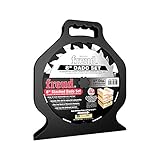
A router with a straight bit gives clean, adjustable-width grooves, but it creates dust and requires a guide setup. A dado blade on a table saw is fast and repeatable, but it requires a stable saw, proper throat-plate clearance, and careful stock handling. A circular saw with multiple passes costs less and works well for plywood, though the groove bottom may show blade marks.
For a router setup, use a quality set of straight router bits. A bit that is dull, undersized, or bent will make a groove that varies in width. Do not try to widen a dado by leaning the router; make a second controlled pass from the guide.
Try shallow dados in a drawer-divider tray
Thin dividers make a good winter project when you want less material and shorter cuts. Build a tray from 1/2-inch plywood or solid stock, then cut 1/8- to 1/4-inch-deep dados for removable dividers. The shallow depth leaves more strength in the tray sides, but it also makes errors easier to see.
Cut the divider grooves before assembling the tray. A narrow dado can trap dust and glue, so brush it clean and dry-fit every divider. Leave about 1/32 inch of total clearance if the dividers need to be removable. For fixed dividers, aim for a firm hand fit rather than a press fit.
Small parts move easily under a router. Use double-sided woodworking tape only as a supplement to clamps, and keep your hands outside the bit’s path. A simple sacrificial backing board reduces tear-out as the bit exits the work.
Use a cross-lap grid as an accuracy test
A wine-rack-style grid or cubby divider is a more demanding project because two sets of parts must intersect. Cut half-depth slots in one set from the top and in the other set from the bottom. The slot width must match the material thickness, and all slots must line up.
Make one test intersection first. If it is too tight, widen the slot by a small amount. If it is loose, do not compensate with excessive glue; remake the part or add a thin veneer to the slot wall. The finished grid should go together with firm hand pressure and remain square without clamps.
What to buy, and what can stay cheap
A sharp combination square, a marking knife, clamps, and a shop vacuum matter more than an expensive cutting tool. A cheap square that is out of square will spoil every layout line. Check it by marking a line, flipping the square, and marking again; any gap between lines reveals an error.
If you already own a circular saw, start with a circular-saw guide rail or straight edge. It is the economical choice for occasional dados, especially in plywood. Buy a router when you want cleaner bottoms, adjustable widths, or many repeated grooves. A router table is convenient but not necessary for these projects.
Work indoors only with adequate dust collection and ventilation. Wear eye protection and hearing protection, secure the workpiece, and unplug the tool before changing bits or blades. In an unheated shop, bring wood indoors for several days before cutting so winter moisture changes do not alter the fit after assembly.
Choose the project based on the tool you have and the type of accuracy you need. The shelf teaches the basic cut, the bookcase teaches repeatability, the tray teaches control on small stock, and the grid exposes inconsistent width immediately. Keep the test board from each project; it becomes a useful record of actual material thickness, bit settings, and the fit that worked.