What's inside
- Laser Engraving Business Ideas: Products, Pricing, and Startup Costs
- Choose products by job economics, not just material
- Best ideas for different starting situations
- Price the work, not only the blank
- What equipment does a realistic startup need?
- Ownership costs and mistakes that erode margin
- A practical first-month plan
- Related Guides
- Laser Engraving Business Ideas: Products, Pricing, and Startup Costs
- Choose products by job economics, not just material
- Best ideas for different starting situations
- Price the work, not only the blank
- What equipment does a realistic startup need?
- Ownership costs and mistakes that erode margin
- A practical first-month plan
- Related Guides
As an Amazon Associate I earn from qualifying purchases. This post may contain affiliate links at no extra cost to you.
Contents
- Laser Engraving Business Ideas: Products, Pricing, and Startup Costs
- Choose products by job economics, not just material
- Best ideas for different starting situations
- Price the work, not only the blank
- What equipment does a realistic startup need?
- Ownership costs and mistakes that erode margin
- A practical first-month plan
- Related Guides
Laser Engraving Business Ideas: Products, Pricing, and Startup Costs
The most practical laser engraving business ideas for a new operator are small, personalized products—such as wood signs, slate coasters, leather patches, and acrylic ornaments—because they combine manageable material costs with relatively quick jobs and easy shipping. The right choice depends less on what a laser can engrave than on whether you can price the design, setup, finishing, and customer revisions profitably.
Choose products by job economics, not just material
The estimates below are planning ranges in U.S. dollars, not supplier quotes. Material costs assume small-batch buying; machine times are approximate engraving time for a typical small item, excluding design, focusing, loading, finishing, and packing. Results vary with machine power, artwork, material, and settings.
As an Amazon Associate we earn from qualifying purchases at no extra cost to you.


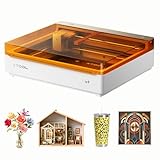

| Product | Typical blank cost | Typical machine time | Personalization potential | Shipping risk | Common retail range |
|---|---|---|---|---|---|
| Wood keychains or bag tags | $0.50–$2 each | 1–4 minutes | High: names, dates, simple icons | Low | $8–$18 |
| Slate coasters, sold in sets | $1–$3 per coaster | 2–6 minutes each | Medium-high: monograms, logos, maps | Medium: edges can chip | $20–$45 per set |
| Small wood signs | $4–$15 each | 10–35 minutes | High: names, family details, business branding | Medium: size and corners need protection | $30–$100 |
| Leather patches or wallet panels | $2–$10 each | 3–12 minutes | High: initials, logos, short text | Low-medium | $15–$60 |
| Cast acrylic ornaments or tags | $1–$5 each | 2–8 minutes | High: names, dates, layered designs | Medium: scratches and cracking | $12–$35 |
“Machine time” is not the whole job. A one-minute engraving can still take ten minutes of customer communication, proofing, setup, and packing. For one-off custom orders, those minutes often determine profitability more than the blank does.
Best ideas for different starting situations
Low budget or limited workspace: start with tags and small flat goods
Keychains, luggage tags, small ornaments, and coasters fit compact work areas and ship in modest packaging. They are good for learning repeatable alignment and testing whether local customers will pay for personalization. Keep the design menu narrow: a few fonts, a few layouts, and a clear limit on text length. Unlimited custom artwork can turn a low-cost product into an unprofitable design service.
Local business connections: offer branded batches
Coasters, counter signs, nameplates, and logo tags can sell in batches to cafés, real-estate agents, event planners, and small retailers. Batch orders reduce repeated setup and customer acquisition time. Ask for suitable, high-resolution artwork and written approval of a proof before engraving. Check that the customer has permission to use any submitted logo or artwork.
More design skill, higher ticket: make signs and keepsakes
Small signs, memorial pieces, and personalized gifts can support higher prices, but they also bring more revisions, finishing, and shipping protection. Set boundaries on dimensions, spelling approval, and revision rounds. For a fragile or unusually large item, quote packaging and shipping separately rather than absorbing the risk into a flat price.
Frequent repeat orders: standardize a product line
For weddings, clubs, or corporate events, offer a fixed set of materials, sizes, and layout options. Batch work becomes more predictable when blanks are consistent and names arrive in a spreadsheet with an agreed format. Confirm a sample or proof before producing the full quantity; a typo repeated across 100 pieces is much more expensive than a single remake.
Price the work, not only the blank
Use a simple per-order calculation: blank and packaging + machine and labor cost + design/setup allowance + payment or selling fees + a remake/shipping-risk reserve. Then compare the result with what your target customer will pay.
Example: a set of four slate coasters. Suppose the blanks cost $8, packaging costs $2, and the job takes 20 minutes of machine time plus 15 minutes of handling and proofing. If you assign a planning rate of $24 per labor hour, labor is $14. Add $2 for wear, test pieces, and remake risk. Your cost floor is about $26 before selling fees, taxes, and profit. A $32 price may leave little room after fees; a $40 price is healthier if the market accepts it. If customers resist that price, improve batch efficiency or choose a lower-cost product rather than quietly ignoring your time.
Keep a job log for the first 20–30 orders. Record blank cost, total hands-on minutes, machine minutes, failed pieces, packaging, and final sale price. Use the results to adjust prices and discontinue products that generate many revisions or remakes.
What equipment does a realistic startup need?
A sensible starter setup is usually a diode laser for wood, coated materials, and certain leather or slate jobs, or a CO₂ laser when acrylic cutting and faster work across suitable nonmetal materials are central to the plan. A basic diode machine may cost roughly $300–$1,500; a more capable enclosed diode setup often falls around $1,000–$3,000. Entry-level CO₂ machines commonly run about $2,000–$6,000, with installation, ventilation, and accessories potentially adding substantially more. These broad market ranges vary by power, work area, enclosure, cooling, and support.
- Enclosure and exhaust: Budget for a suitable enclosure and a safe way to vent fumes outdoors. A purifier can help with some particles and odors but is not a substitute for understanding the material and managing exhaust.
- Air assist and extraction: Air assist can reduce scorching and improve cutting; extraction helps clear smoke and debris. Both matter for consistent results and safer operation.
- Fire safety: Never leave a laser running unattended. Keep appropriate fire-safety equipment nearby and follow the machine maker’s operating guidance.
- Workholding and setup: A honeycomb bed, clamps, a reliable focus method, and a jig for repeat items can improve consistency. Jigs pay off when the same product is made repeatedly.
- Materials and test pieces: Reserve money for blanks, rejected samples, packaging, and calibration—not just the machine. Start with a small material range and record settings by supplier and thickness.
Do not engrave unknown plastics. Some materials, including PVC and vinyl, can release hazardous corrosive gases when processed. Check the material composition and machine guidance before engraving; “looks like acrylic” is not enough to identify a safe material.
Ownership costs and mistakes that erode margin
Laser businesses have recurring costs: lenses or protective windows may need cleaning or replacement, exhaust filters can require replacement, and belts, fans, or other parts eventually wear. Dust and smoke residue can reduce engraving quality and, in some systems, contribute to overheating or fire risk. Follow the manufacturer’s maintenance schedule, clean the machine as directed, and keep a record of service and settings.
Common early mistakes include pricing only the material, skipping test runs when stock changes, accepting low-resolution logos without explaining the result, and offering too many product variations. Burn marks, inconsistent focus, and misalignment create scrap; fragile packing creates replacements and refunds. A short written order form that captures spelling, dimensions, material, deadline, and proof approval prevents many avoidable problems.
A practical first-month plan
- Choose one machine type based on the materials and products you intend to sell—not on a broad promise that it can engrave everything.
- Pick two or three products that share materials and packaging, then make samples and time each complete job.
- Set prices using actual handling time, consumables, fees, and a remake allowance.
- Sell a small batch locally or through a limited product menu, and track which designs sell without excessive back-and-forth.
- Expand only after repeat orders show that both the production process and the price are sustainable.
The strongest laser engraving business is rarely the one with the most product ideas. It is the one with a small, repeatable range whose customization feels valuable to buyers while remaining quick to make, safe to produce, and straightforward to ship.