What's inside
- How the Three Beginner-Friendly Processes Compare
- What a Complete Kit Should Actually Contain
- Side-by-Side: Representative 2026 Beginner Kits
- Match the Kit to Your Situation
- Power Requirements — the Spec Most Beginners Miss
- Metal Thickness: Honest Expectations
- Ownership Realities: What Wears and What Goes Wrong
- FAQ
- How the Three Beginner-Friendly Processes Compare
- What a Complete Kit Should Actually Contain
- Side-by-Side: Representative 2026 Beginner Kits
- Match the Kit to Your Situation
- Power Requirements — the Spec Most Beginners Miss
- Metal Thickness: Honest Expectations
- Ownership Realities: What Wears and What Goes Wrong
- FAQ
As an Amazon Associate I earn from qualifying purchases. This post may contain affiliate links at no extra cost to you.
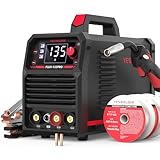
A beginner welder kit should include the machine, a ground clamp and stinger or torch, a starter supply of consumables (electrodes, wire, or tips), basic safety gear, and a clear manual — and the best choice for most home workshops is a 120V flux-core MIG kit, because it runs on a household outlet, needs no shielding gas bottle, and tolerates rusty or dirty metal better than any other process. Below we compare the real options by process, what’s actually in the box, and how thick a metal a first-timer can realistically weld on day one.
As an Amazon Associate we earn from qualifying purchases at no extra cost to you.


Contents
- How the Three Beginner-Friendly Processes Compare
- What a Complete Kit Should Actually Contain
- Side-by-Side: Representative 2026 Beginner Kits
- Match the Kit to Your Situation
- Power Requirements — the Spec Most Beginners Miss
- Metal Thickness: Honest Expectations
- Ownership Realities: What Wears and What Goes Wrong
- FAQ
How the Three Beginner-Friendly Processes Compare
Your first decision is process, not brand. Each one trades ease of learning against versatility:
- Flux-core (FCAW) — wire-feed welding where the wire contains its own shielding. Easiest to start, works outdoors in wind, welds up to about 1/4″ steel on a good 120V machine. Produces spatter and slag you chip off. Best for farm repairs, gates, trailers, brackets.
- Stick (SMAW) — cheapest machines, dead simple, welds outdoors and through rust. But striking and holding an arc takes real practice, and most beginners burn through thin material. Best for heavy repairs on 1/8″ and thicker steel.
- Gas MIG (GMAW) — the cleanest, most controllable weld, and the easiest to make look good. Requires a shielding-gas cylinder (often rented, not included in kits) and works poorly in drafts. Best for auto body, furniture, and anything where appearance matters.
Many modern kits are “multi-process” or “MIG-ready” — they run flux-core out of the box and accept a gas solenoid and regulator later. For a first welder kit for beginners, that upgrade path is worth more than raw amperage.
What a Complete Kit Should Actually Contain
Marketing photos often show accessories sold separately. A true starter kit includes:
- Machine, power cable, ground clamp (look for a real spring clamp, not a stamped-steel tab)
- MIG gun/torch or electrode holder
- Consumables: at minimum a 1–2 lb spool of flux-core wire, contact tips, or a small pack of 6011/6013 rods
- A regulator and hose — only if the kit advertises gas MIG capability
- Safety gear: auto-darkening helmet, gloves, and ideally a jacket or apron
Budget kits under roughly $150 commonly ship with a fixed-shade or “solar” helmet that’s barely functional. Budget $60–$100 for a proper auto-darkening helmet if it’s not included — it is the single biggest quality-of-life upgrade for a learner, because you can see exactly where the arc will start.
Side-by-Side: Representative 2026 Beginner Kits
These are established lines widely sold through welding suppliers and big-box retailers; specs are from manufacturer documentation. Prices shift, so treat ranges as market-level guidance.
| Kit | Process | Input power | Output range | Max thickness (realistic) | Weight | Included extras | Typical price |
|---|---|---|---|---|---|---|---|
| Hobart Handler 140 | MIG + flux-core | 120V | 25–140 A | 1/4″ steel (flux-core, multi-pass) | ~57 lb | Regulator/hose, contact tips, spool adapter | $600–$750 |
| Forney Easy Weld 140 FC-i | Flux-core only | 120V | 10–140 A | 1/4″ steel | ~19 lb | Ground clamp, gun; gear usually separate | $250–$330 |
| Lincoln Electric Handy MIG / Weld-Pak line | MIG + flux-core | 120V | 35–140 A | 1/8″ steel comfortable | ~46 lb | Regulator kit, starter wire | $400–$550 |
| YesWelder MIG-205DS (multi-process) | MIG, flux-core, stick, lift TIG | 110V/220V dual | 30–205 A | 3/16″ steel on 120V; more on 220V | ~28 lb | Torch, stinger, tips; helmet/glove bundles vary | $230–$350 |
| PrimeWeld / Eastwood stick-MIG starter bundles | Varies | 120V or dual | ~90–180 A | 1/8″–3/16″ | 15–35 lb | Often helmet + gloves + rods/wire | $150–$400 |
Match the Kit to Your Situation
- Garage outlet only, under $300, repair-focused: a 120V flux-core-only machine like the Forney 140 FC-i. Fewer settings to learn, welds rusty angle iron, and you can add a helmet and still stay near budget.
- Auto body or thin sheet (22–16 gauge): you need gas MIG for low heat input and clean beads. The Hobart Handler 140 or Lincoln MIG kits are the long-term buy; expect to add ~$60–$90 for a gas cylinder fill/lease.
- One machine to grow into: a dual-voltage multi-process unit (YesWelder 205DS class). Run flux-core on 120V now; move to a 220V circuit and gas MIG or lift-TIG later without replacing the welder.
- Outdoor/fence/gate work, heaviest metal: a simple stick kit. Cheapest entry (~$120–$180), but only pick this if most of your work is 1/8″ and thicker — thin stock will frustrate you.
- Infrequent hobby use, tight storage: inverter-based units under 20 lb hang on a shelf and draw less power than transformer machines, which matters on a shared 15A circuit.
Power Requirements — the Spec Most Beginners Miss
A “140 amp” welder on 120V cannot output 140A continuously — the outlet limits it. Expect a practical ceiling near 90–115A of welding current on a 15A circuit before you trip breakers, which is enough for about 3/16″ steel in a single pass with flux-core. Check your duty cycle rating: many entry machines are 20–30% at maximum output, meaning 2–3 minutes of welding per 10-minute period at full power. That’s fine for bead practice and short repairs, annoying for long seams on a trailer frame.
Worked example: welding a 4-foot angle-iron frame has roughly 8 feet of weld. At 25% duty cycle at 90A, you’re welding ~15 seconds then resting ~45, so plan about 30–40 minutes of elapsed time — not a flaw, just how hobby machines work. If your projects are routinely long seams on 1/4″, step up to a 220V machine from the start.
Metal Thickness: Honest Expectations
- 24–18 gauge sheet: gas MIG only; flux-core will blow holes until your technique is good.
- 16–14 gauge: the sweet spot for every kit above — practice stock, brackets, small frames.
- 1/8″–3/16″: single-pass territory for a 140A-class machine on flux-core.
- 1/4″: achievable with beveled edges and multiple passes; don’t design critical joints assuming one pass.
- Aluminum: not realistic for entry kits — needs a spool gun plus gas, or a TIG-capable machine with more skill than day-one allows.
Ownership Realities: What Wears and What Goes Wrong
- Contact tips wear first on wire-feed machines — keep a 10-pack of spares; a worn tip causes erratic arcs beginners mistake for bad settings.
- Drive rollers must match wire diameter and type (knurled for flux-core). Wrong rollers cause “birdnesting” — the most common beginner failure.
- Flux-core wire rusts in humid garages; store the spool in a sealed bag or budget ~$15 for a fresh 2 lb spool each season.
- Ground clamps are the weakest included part on cheap kits — a poor ground mimics machine problems. A $15 brass clamp upgrade fixes most “won’t strike” complaints.
- No-kits-included consumables beginners forget: a chipping hammer/brush for flux slag, a shade-appropriate helmet, and 6013 rods if you go stick.
FAQ
Can I learn to weld from a kit with no experience?
Yes — flux-core and MIG reward practice quickly; expect usable beads within a few hours on scrap. Stick takes longer. Budget 10–20 lb of scrap steel before welding anything that matters.
Is a 120V welder enough for a home workshop?
For material up to 3/16″, yes. If your work is regularly 1/4″ or thicker, or long continuous seams, the duty-cycle and amperage limits will frustrate you — consider a dual-voltage kit or a dedicated 220V circuit.
Do I need a shielding gas bottle right away?
No. Start on flux-core, learn machine settings, then add a regulator kit and cylinder when you want cleaner welds or thin-sheet capability. Cylinder lease/fill typically runs $60–$120 depending on size and region.
What safety gear is non-negotiable?
An auto-darkening helmet, welding gloves, long sleeves of cotton or leather (no synthetics — they melt), and good ventilation. Flux-core produces more fumes than gas MIG; weld in open or fan-ventilated spaces.