
Key takeaways
- Compare pointing trowels, checking blade size, steel, tang and handle for masonry, brick, detail work, tuckpointing, repairs and mortar at home use.
As an Amazon Associate I earn from qualifying purchases. This post may contain affiliate links at no extra cost to you.
Disclosure: As an Amazon Associate, I earn from qualifying purchases. Product details were verified at the time of writing.
A pointing trowel is the small triangular-bladed trowel that finishes the joints a brick trowel leaves behind. Its pointed blade packs fresh mortar deep into bed and head joints, strikes off the excess, and shapes the surface so the finished wall sheds water and looks crisp. It is the tool you reach for when repointing weathered brick, filling cracks in stone and block, setting small areas of tile, or patching concrete steps. Do not confuse it with a margin trowel: a margin trowel has a flat rectangular blade for scooping and spreading, while a pointing trowel’s tapered triangular blade is made to push mortar into narrow joints and cut it cleanly at the edges. Because the tool itself is simple, the real differences come down to blade size, steel, how the tang is built and the handle. This guide compares five pointing trowels with verified listings, from stiff forged archaeology patterns to a stainless model that shrugs off wet work, so you can match one to the joints you work on most.
How to Choose a Pointing Trowel
Blade size. Most pointing trowels run from 4 to 7 inches long and 2 to 3 inches wide at the heel. A 5 x 2-1/2 inch blade is the all-purpose standard: small enough for tight joints and repair work, big enough to carry a useful load of mortar. Smaller 4-inch blades suit fine detail and narrow joints, while 6- and 7-inch blades move more material on wider joints and small laying jobs.
Blade steel. High carbon steel is the traditional choice. It is hard, holds a clean edge for cutting mortar, and can be forged stiff for scraping or taper-ground for a little flex. It does need to be wiped dry after use to keep rust away. Stainless steel gives up a little stiffness but resists rust and cleans up easily, which suits wet pointing work and anyone who forgets a tool in the bucket now and then.
Construction and tang. A blade forged from a single piece of steel, with the tang formed from the same piece, has no weld at the neck, which is where trowels bend or snap under prying pressure. Two-piece welded blades are lighter and perfectly serviceable for pointing and patching. A high-lift shank raises the handle for knuckle clearance when you work flat against a wall.
Handle. Hardwood handles are slim, durable and easy to control with gloves. Cushioned soft grips reduce fatigue during long repointing sessions, and a finger guard or strike cap adds control and a way to tap units into place. Pick the handle style that matches how long you spend on a wall at a time.
The 5 Best Pointing Trowels
1. MARSHALLTOWN Archaeology Pointing Trowel, 5 x 2-1/2 Inch, Wood Handle (45 5S)

The 45 5S is the stiff-bladed member of MARSHALLTOWN’s long-running archaeology line, and it doubles as a serious pointing trowel for masonry. The blade is forged from a single piece of high carbon steel and left heavy and stiff rather than flexible, so it scrapes compacted material, cuts mortar cleanly and stands up to prying at stubborn joints without bending. The 5 x 2-1/2 inch Philadelphia-pattern blade is the classic pointing size, and the smooth hardwood handle with its polished ferrule gives the direct, connected feel many masons prefer for detail work. It is made in the USA, and its reputation among field archaeologists, who abuse these trowels daily in soil and gravel, says a lot about how the blade holds an edge. If you want one pointing trowel that will outlast the wall it repairs, this is the benchmark.
Specs
- Blade size: 5 x 2-1/2 inches
- Blade material: High carbon steel
- Construction: One-piece forged, stiff heavy-duty blade
- Pattern: Philadelphia
- Handle: Hardwood with polished ferrule
- Weight: 4.8 ounces
- Model: 45 5S
- Origin: Made in the USA
2. Goldblatt Wooden Handle Pointing Trowel, 5-1/2 x 2-3/4 Inch (G06023)

Goldblatt’s wooden-handle pointing trowel is the traditional pattern sized for everyday joint work on brick, stone and concrete block. The 5-1/2 x 2-3/4 inch blade is taper-ground, which gives it a controlled flex for feathering mortar into joints and a fine edge for striking off cleanly, and the high-strength two-piece welded construction keeps the tool light in the hand. The contoured hardwood handle is the classic choice: slim enough for precise control, tough enough for site work, and comfortable with or without gloves. At 4.6 ounces the whole tool feels balanced rather than nose-heavy, which matters when you are working along a long run of bed joints. It is a straightforward, well-made trowel for patching cracks and shaping joints around the home.
Specs
- Blade size: 5-1/2 x 2-3/4 inches
- Blade material: Tool steel, taper-ground
- Construction: Two-piece welded blade
- Handle: Contoured hardwood
- Weight: 4.6 ounces
- Model: G06023
3. M-D Building Products Pointing Trowel, 5-1/2 x 2-7/8 Inch (49124)
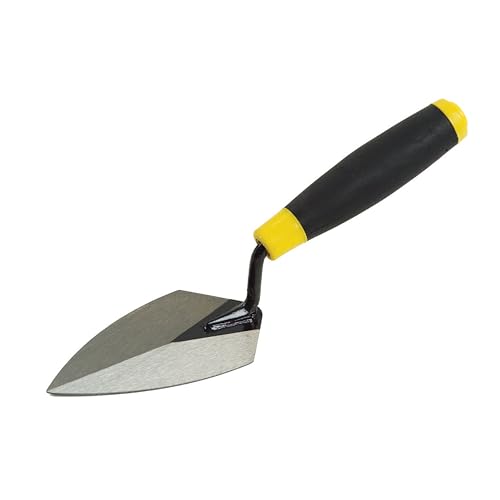
The M-D 49124 takes the opposite approach to steel: its blade is stainless, so it shrugs off the wet conditions that pointing work involves and rinses clean without rust worries if it sits in a damp bucket. The 5-1/2 x 2-7/8 inch blade is a touch wider at the heel than most, which helps it carry mortar to the joint, and the pointed tip still reaches into corners and narrow head joints for repair work. The thermoplastic rubber handle in black and yellow is easy to spot in a tool bag and gives a secure grip with wet hands. The tool is notably light in the hand, which suits long sessions of tuckpointing-style repairs and small patching jobs on floors and walls. It is the low-maintenance pick of this group.
Specs
- Blade size: 5-1/2 x 2-7/8 inches
- Blade material: Stainless steel
- Handle: Thermoplastic rubber (TPR), black and yellow
- Overall dimensions: 9.62 x 3 x 1.25 inches
- Weight: 0.64 ounces
- Model: 49124
4. Edward Tools Brick Trowel, Pro Line Pointing Trowel, 10 Inch High Lift

Edward Tools builds its Pro Line pointing trowel for heavy use: the blade is hardened and tempered high carbon steel, forged into a single piece with the tang for extra strength at the neck, the point where lesser trowels fail. This is the large 10-inch high-lift model, and the raised handle design keeps your knuckles clear of the wall when you are laying mortar flat or working deep joints, while carrying more material per load than a short detail trowel. The Ergo-Soft comfort handle is shaped to reduce hand fatigue over long sessions. Edward Tools backs its tools with a lifetime guarantee, which matches the forged build. Choose this one if your pointing work shades into small brick and block laying, or if you simply prefer a bigger, stronger trowel that can also scrape and dig.
Specs
- Size: 10 inches (high-lift model)
- Blade material: High carbon steel, hardened and tempered
- Construction: One-piece forged
- Handle: Ergo-Soft comfort grip, high-lift design
- Warranty: Lifetime guarantee
5. HOGARD Pointing Brick Trowel, 5 Inch, Stainless Steel

The HOGARD pointing trowel pairs a corrosion-resistant stainless steel blade with a soft grip handle, making it a practical pick for wet pointing, plaster and concrete repair work. The 5-inch triangular blade is stiff and sturdy, with a pointed tip that makes applying material in corners and along edges easy, and the stainless construction means it can be cleaned under hot water and put away without rust concerns. A distinctive detail is the metal end cap on the handle, which doubles as a light striking surface for tapping units into line or knocking loose lumps of hardened material. The soft grip keeps the tool comfortable during longer repair sessions. For homeowners who want a stainless pointing trowel with a few thoughtful extras, this one covers the brief well.
Specs
- Blade size: 5 inches
- Blade material: Stainless steel
- Construction: Stiff one-piece blade
- Handle: Soft grip with metal end cap
- Care: Rinses clean under hot water
Comparison Table
| Product | Blade Size | Blade Steel | Construction | Handle |
|---|---|---|---|---|
| MARSHALLTOWN 45 5S | 5 x 2-1/2 in | High carbon steel | One-piece forged, stiff | Hardwood |
| Goldblatt G06023 | 5-1/2 x 2-3/4 in | Tool steel | Two-piece welded, taper-ground | Hardwood |
| M-D Building Products 49124 | 5-1/2 x 2-7/8 in | Stainless steel | Welded | TPR soft grip |
| Edward Tools Pro Line 10 in | 10 in | High carbon steel | One-piece forged | Ergo-Soft, high lift |
| HOGARD Pointing Trowel | 5 in | Stainless steel | One-piece, stiff | Soft grip with metal end cap |
FAQ
What is a pointing trowel used for?
It packs and finishes mortar in the joints between bricks, stones and blocks. Masons use it for repointing weathered walls, filling cracks, shaping joints so they shed water, and small patching jobs in concrete and plaster where a full-size brick trowel is too large to control.
What is the difference between a pointing trowel and a margin trowel?
The blade shape. A pointing trowel has a triangular blade that tapers to a point, made for pushing mortar into narrow joints and cutting it cleanly. A margin trowel has a flat rectangular blade, made for scooping material from a bucket and spreading it in tight flat areas. Most masonry kits include both.
What size pointing trowel should I buy first?
A blade around 5 x 2-1/2 inches is the best first choice. It fits standard joints, reaches into corners, and handles repair work on brick, stone and block. Add a smaller blade later for very narrow joints, or a longer high-lift model if you move on to laying units.
Should I choose carbon steel or stainless steel?
Carbon steel is harder and holds a sharper working edge, and forged carbon blades are the strongest option for scraping and prying. Stainless steel resists rust and needs almost no care, which suits wet work and occasional use. Either way, rinse the blade clean after use and dry it before storage.
How do I keep a pointing trowel in good condition?
Wash off mortar before it hardens, dry the blade fully, and store the tool somewhere dry. A light wipe of oil on a carbon steel blade prevents rust between jobs. Check the edges now and then and smooth any nicks with a file so the blade keeps cutting joints cleanly.
Verdict
For most people, the MARSHALLTOWN 45 5S is the pointing trowel to buy: a stiff one-piece forged blade in the classic 5 x 2-1/2 inch size, with a hardwood handle and a long record of hard daily use. The Goldblatt G06023 is the traditional alternative, a taper-ground blade with a touch of flex for smooth joint work. If rust is your main enemy, the stainless M-D 49124 and HOGARD models rinse clean and ask almost nothing in upkeep, with the HOGARD adding a handy metal strike cap. And if your work runs bigger, the Edward Tools 10-inch high-lift model brings forged strength and knuckle clearance to larger joints. Match the blade to the joints you repair most, and any of these five will make repointing and patching work around the home noticeably neater.
Related guides
More from Amazon
Programs that pair well with the guide above. Offers and eligibility are set by Amazon and may change.
A free business account with business pricing and bulk-buying tools for work, shop or home office.
Create a business accountFree shipping on eligible items, Prime Video and more. Eligible new members can start with a free trial.
Start a Prime free trialAudiobooks and podcasts to listen to on the go. Eligible new members can start with a free trial.
Try Audible freeAd-free music streaming. Eligible new subscribers can start with a free trial.
Try Music Unlimited freeAs an Amazon Associate we earn from qualifying purchases.








