What's inside
As an Amazon Associate I earn from qualifying purchases. This post may contain affiliate links at no extra cost to you.
The best season for an outdoor furniture project depends on whether you are building, finishing, or both. Summer gives glue, paint, and finish the warm temperatures they need, while fall often provides better working comfort and more stable conditions for assembly. The mistake is treating the calendar as the deciding factor. Temperature, humidity, rain, and the time available for curing matter more than the month.
As an Amazon Associate we earn from qualifying purchases at no extra cost to you.


Contents
Why summer is usually better for building
Summer is the easiest season for cutting and assembling outdoor furniture. Longer daylight makes it practical to break a project into several sessions, and warm temperatures are generally easier on adhesives and finishes. If you are building a bench, Adirondack chair, picnic table, or planter box from a detailed plan, summer gives you more flexibility when parts need to be adjusted.
Outdoor lumber also dries faster after a wet spell. That matters because construction lumber can arrive with moisture content high enough to cause movement as it dries. If you build a table from damp boards, the boards may shrink across their width, open joints, or cup after assembly. Let the lumber sit under cover with stickers between the layers for at least a few days. For ordinary home projects, a week of acclimation is safer than assembling boards straight from a rain-soaked rack.
Summer has drawbacks. Direct sun can make a board too hot to handle comfortably and can cause stain or paint to flash-dry before it levels. A dark surface in full sun may be far hotter than the surrounding air. Work in shade when applying finish, and follow the product label’s temperature range rather than guessing from the weather forecast.
When fall is the better building season
Fall is often the most pleasant time to build outdoor furniture. Cooler temperatures reduce sweat, glare, and the chance that you rush a layout or sanding step. You can also spend more time checking for twist, correcting uneven legs, and dry-fitting joints before committing with screws or glue.
The main risk is moisture. Fall rain and overnight dew can leave boards damp when you are ready to cut or finish them. Wet wood produces poor results with paint, stain, and many exterior adhesives. Keep lumber off concrete and soil, cover the stack without sealing it in plastic, and bring small pieces into a dry shop or garage before machining.
Shorter days are another practical limitation. A project that would take one long Saturday in June may require two weekends in October. Plan the work so the furniture can remain under cover overnight. Do not leave an unfinished chair or table on a lawn where dew can soak end grain and unprotected joints.
Summer versus fall at a glance
| Factor | Summer | Fall |
|---|---|---|
| Cutting and assembly | Fast drying and long daylight, but heat can be uncomfortable | Comfortable working temperatures, with more concern about damp lumber |
| Exterior paint and stain | Good if applied in shade during a dry, moderate-temperature window | Good finish quality, but curing may slow and dew can arrive quickly |
| Glue-up | Usually predictable when lumber is dry | Requires a dry workspace and careful temperature checks |
| Best project size | Large builds such as tables, pergolas, and multiple chairs | Small to medium projects that can be moved under cover |
| Primary failure mode | Finish dries too quickly or wood moves after assembly | Finish remains soft, turns cloudy, or is damaged by dew and rain |
The best season for finishing outdoor furniture
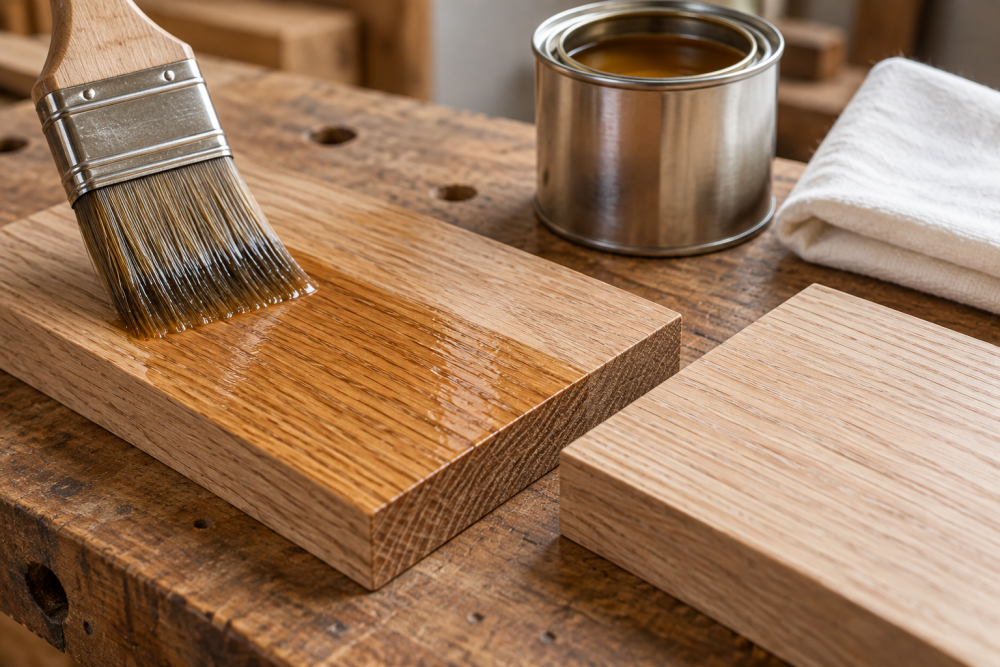
Finish should be scheduled around a weather window, not simply a weekend. For most exterior paint and stain products, aim for at least 24 hours without rain. Some products need longer before they can handle heavy dew or furniture use. Read the label for minimum application temperature, maximum temperature, recoat time, and required humidity conditions.
As a practical rule, apply finish when the surface is dry, the air is roughly 50 to 85 degrees Fahrenheit, and the temperature will remain above the product’s minimum overnight. Avoid finishing late in the day if dew is expected. A surface that feels dry after two hours may still be soft underneath.
Use a moisture meter if you are working with questionable lumber. Many exterior projects finish more reliably when the wood is around 12 to 15 percent moisture content, though the product instructions and local climate take priority. At minimum, the boards should feel dry, show no dark damp patches, and have clean, dry end grain.
For painted furniture, use an exterior primer where the paint system calls for one, especially over fresh cedar, redwood, or oily wood. These species can bleed through light colors. For stained furniture, test the color on an offcut. Sanding to 120 grit is usually enough for outdoor softwood; sanding much finer can reduce absorption and leave the stain looking uneven.
Tools and materials that make seasonal work easier
A covered work area is more valuable than an expensive tool. A garage, carport, or temporary canopy lets you work through light weather and protect a finish while it cures. Keep the sides open enough for ventilation, particularly when using solvent-based products.
If you are buying a saw for occasional furniture projects, a corded circular saw is often the cheaper and perfectly adequate choice for cutting dimensional lumber and sheet goods. A cordless saw is more convenient when building away from an outlet, but batteries and chargers raise the initial cost.
For cleaner joinery, a set of woodworking clamps is a better investment than buying specialty hardware too early. Use enough clamps to keep joints closed without forcing parts out of square. Check diagonals on table frames and chair assemblies before tightening every screw.
Exterior screws should be corrosion-resistant. Galvanized fasteners are fine for many sheltered projects, while stainless steel is safer near salt air or consistently wet conditions. A box of stainless steel exterior screws costs more, but replacing rust-stained fasteners later is harder than paying for them once. For a basic backyard bench away from the coast, quality coated exterior screws are usually enough.
A practical build-and-finish schedule
In summer, spend the first day milling, drilling, and assembling. Let the completed piece sit overnight so you can catch wood movement or loose joints. Sand and apply the first finish coat on the next dry morning, then allow the full label-specified recoat period. Do not place the furniture into service just because it feels dry to the touch.
In fall, build under cover and finish only when the forecast provides a reliable dry period. If temperatures are marginal, assemble the project first and postpone finishing until a warmer day. Unfinished furniture can be protected temporarily with a breathable cover, but plastic touching the wood traps condensation and can cause raised grain, mildew, and cloudy finish.
For most beginners, the best plan is to build outdoor furniture in late summer or early fall, then finish it during the first dependable warm, dry window. That schedule gives you comfortable working conditions without forcing paint or stain to cure through cold nights and wet weather.