What's inside
- The low-cost safety kit at a glance
- Eye protection: spend $10 before spending more on anything else
- Hearing protection: earmuffs versus earplugs
- Respiratory protection: the most important upgrade for sanding
- Gloves: useful for lumber, risky around rotating tools
- Foot protection: choose the floor and workload, not the logo
- Decision guide for different workshop budgets
- How to keep a budget kit economical
- The low-cost safety kit at a glance
- Eye protection: spend $10 before spending more on anything else
- Hearing protection: earmuffs versus earplugs
- Respiratory protection: the most important upgrade for sanding
- Gloves: useful for lumber, risky around rotating tools
- Foot protection: choose the floor and workload, not the logo
- Decision guide for different workshop budgets
- How to keep a budget kit economical
As an Amazon Associate I earn from qualifying purchases. This post may contain affiliate links at no extra cost to you.
The best budget workshop safety gear is a properly fitted pair of safety glasses, reusable hearing protection, a NIOSH-approved respirator for dusty work, task-specific gloves, and protective-toe footwear chosen for your actual machines—not the most expensive kit on the shelf.
As an Amazon Associate we earn from qualifying purchases at no extra cost to you.


Contents
- The low-cost safety kit at a glance
- Eye protection: spend $10 before spending more on anything else
- Hearing protection: earmuffs versus earplugs
- Respiratory protection: the most important upgrade for sanding
- Gloves: useful for lumber, risky around rotating tools
- Foot protection: choose the floor and workload, not the logo
- Decision guide for different workshop budgets
- How to keep a budget kit economical
The low-cost safety kit at a glance
| Protection | Good budget specification | Typical market range | Best for |
|---|---|---|---|
| Eye | ANSI Z87.1-marked polycarbonate lenses; indirect ventilation for dusty work | $5–$25 | Every woodworking task |
| Hearing | NRR 24–31 dB earmuffs or NRR 25–33 dB disposable/reusable plugs | $3–$45 | Routers, planers, saws, sanders |
| Respiratory | NIOSH-approved half-mask with P100 filters; elastomeric, reusable facepiece | $30–$75 initially; $10–$25 per filter pair | Sanding, routing, sawing engineered wood |
| Hands | Thin, snug cut-resistant or general-purpose work gloves; no loose cuffs | $8–$30 | Material handling, finishing, cleanup |
| Feet | Slip-resistant footwear with ASTM F2413 protective toe where impact or compression is possible | $50–$150 | Moving lumber, machinery, heavy workpieces |
Prices are broad 2026 market ranges and vary by size, certification, and replacement parts. The sensible way to save money is to spend first on fit and certification, then add features only where your workshop needs them.
Eye protection: spend $10 before spending more on anything else
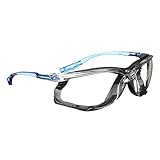
Basic clear safety glasses are the best value in a woodworking shop because eye injuries can result from a small chip, not just a dramatic machine failure. Look for the ANSI Z87.1 marking on the lens or frame. Polycarbonate lenses are light and impact resistant, while anti-fog coatings are useful in an unheated or humid shop.
For routine cutting and sanding, economical glasses such as Pyramex Ztek, 3M Virtua, and Uvex by Honeywell A700 are sensible types to consider. Choose a wraparound shape if chips can approach from the side. For heavy routing, compressed-air cleaning, or dusty demolition, sealed or indirectly vented goggles provide more coverage than ordinary spectacles.
What matters more than lens tint
- Fit: The frame should not slide when you look down or turn your head.
- Coverage: Side shields or a wraparound lens reduce gaps near the temples.
- Fog control: Anti-fog treatment helps, but ventilation and a clean lens matter too.
- Prescription users: Use approved over-glasses eyewear or prescription safety glasses rather than placing ordinary glasses under a tight pair.
Keep a spare pair near the door. A $10 replacement is cheaper than the common mistake of starting a “quick” cut without eye protection.
Hearing protection: earmuffs versus earplugs
Woodworking machines can be loud enough that hearing protection should be routine, especially with routers, thickness planers, shop vacuums, and portable saws. Earplugs are inexpensive and compact, but they require careful insertion. Earmuffs are easier to put on correctly and are convenient for short jobs.
| Situation | Better budget choice | Reason |
|---|---|---|
| Occasional hobby work | Reusable plugs or basic NRR 24–27 dB muffs | Low ownership cost and quick setup |
| Long sessions with a planer or router | Comfortable over-ear muffs, often NRR 25–31 dB | Less dependent on insertion technique |
| Very loud machines or shared shop | Plugs plus muffs | Two barriers provide more practical protection than either alone |
3M Peltor X-series muffs are widely available in different attenuation levels, while Howard Leight and 3M offer common disposable and reusable plug designs. Do not choose solely by the largest number on the package: a badly fitted plug can protect less than a correctly worn lower-rated plug. Replace dirty foam plugs, wash reusable plugs as directed, and inspect muff cushions for cracks or flattening.
Respiratory protection: the most important upgrade for sanding
A disposable dust mask is better than nothing for a brief cleanup, but a reusable half-mask respirator with NIOSH-approved P100 filters is the more useful budget choice for frequent sanding, routing, and cutting. P100 filters are designed for high-efficiency filtration of particulates; they do not automatically protect against every vapor, solvent, or finish chemical.
The 3M 6000-series half mask with suitable P100 cartridges or pancake filters is a common, replaceable system. Moldex 7000-series half masks are another established option. Select the exact filter or cartridge from the manufacturer’s approval and compatibility information rather than mixing parts casually.
Fit and maintenance determine performance
- Choose the correct facepiece size and adjust the straps evenly.
- Perform the manufacturer’s positive- and negative-pressure seal checks each time you put it on.
- Keep facial hair out of the sealing area; a professional fit evaluation may be needed if a seal cannot be achieved.
- Wipe the facepiece after use and store it in a clean, sealed bag away from dust and sunlight.
- Replace filters when breathing becomes difficult, filters are damaged, or the manufacturer’s schedule requires it.
A respirator is not a substitute for dust extraction. A shop vacuum with a suitable fine-dust filter, a correctly fitted hose, and local collection at the machine reduces the amount the respirator has to handle. For unknown materials, heavy mold contamination, or chemical exposure, seek advice from a qualified safety professional.
Gloves: useful for lumber, risky around rotating tools
Gloves are not automatically safer in a woodworking shop. Loose fabric can catch in a drill press, router, lathe, or other rotating machinery. Remove gloves before operating equipment whenever the machine’s instructions or risk assessment identifies an entanglement hazard.
For carrying rough boards, a thin nitrile-coated general-purpose glove improves grip and protects against splinters. For handling sheet goods or sharp-edged hardware, consider a close-fitting cut-resistant glove marked with its applicable EN 388 or ANSI cut rating. Thin gloves preserve dexterity; bulky “impact” gloves often make it harder to control small workpieces.
Gloves also wear out sooner than many buyers expect. The fingertips and palm coating usually fail first. Replace them when the coating is smooth, torn, contaminated with finish, or no longer gives a secure grip. Never use gloves as a reason to hold a small workpiece closer to a blade.
Foot protection: choose the floor and workload, not the logo
Closed-toe shoes with slip-resistant soles are the minimum sensible choice for light bench work. If you regularly move hardwood, sheet goods, machinery parts, or heavy assemblies, protective-toe footwear marked ASTM F2413 is a worthwhile upgrade. Composite toes are lighter and do not conduct cold as readily; steel toes are durable and often less expensive.
Look for a firm sole, stable heel, and tread that can be cleaned of sawdust. Waterproofing is helpful in a garage shop, but it does not replace ventilation or a change of socks. A comfortable work shoe that stays securely fastened is safer than a heavy boot you avoid wearing.
Decision guide for different workshop budgets
| Your situation | Buy first | Reasonable next upgrade |
|---|---|---|
| Under $40, occasional hand-tool work | ANSI safety glasses, reusable plugs, closed-toe shoes | Basic dust collection and a half-mask respirator |
| $75–$150, regular hobby sanding and cutting | Glasses, earmuffs, P100 half-mask, snug work gloves | Protective-toe footwear or better source capture |
| Small, dusty shop with limited ventilation | Sealed eye protection, P100 respirator, dust extractor, hearing protection | Air filtration and improved machine enclosures |
| Frequent production or heavy lumber handling | Comfortable long-wear protection in every category | Fit evaluation, documented maintenance, and professional safety advice |
How to keep a budget kit economical
Assume a $12 pair of safety glasses lasts six months, $30 earmuffs last two years, and a $55 respirator uses a $16 pair of P100 filters every three months. Over one year, the approximate cost is:
$12 × 2 + $30 ÷ 2 + $55 + $16 × 4 = $155.
That is about $13 per month for eye, hearing, and respiratory protection, before footwear and gloves. Buying replacement filters on schedule, storing equipment away from dust, and replacing only worn components costs less than repeatedly buying complete disposable kits.
The best budget workshop safety gear is therefore not one bargain bundle. It is certified eye protection that fits, hearing protection you will actually wear, a maintained P100 respirator for fine dust, gloves used only where they cannot entangle, and footwear suited to falling-object and slip risks. Spend on the hazards your tools create, and your safety kit will remain both affordable and usable.