
Our Top Picks


As an Amazon Associate I earn from qualifying purchases. This post may contain affiliate links at no extra cost to you.
A router cuts a hinge gain in seconds, but it leaves every corner rounded to the radius of the bit, and a square hinge leaf will never sit flush in a round-cornered recess. A corner chisel exists to fix exactly that last step: it shears the rounded corner into a crisp 90-degree corner with one or two taps, so the hinge, lock faceplate or strike plate drops in with no gaps and no rocking. The tools in this guide are the spring-loaded squaring punches that dominate door and cabinet work, and each one below was chosen for its cutter steel, its alignment design and how honestly its maker publishes the numbers that matter.
Disclosure: As an Amazon Associate, I earn from qualifying purchases. Product details were verified at the time of writing.
How to Choose a Corner Chisel
Know the two families. Classic corner chisels are hand tools with an L-shaped blade cross-section: two flat cutting faces meet at a right angle, the tool is registered in the corner by eye and hand, and it is driven with a mallet or pared by hand pressure. Spring-loaded corner punches hide a square-section cutter inside a small body; you seat the body in the routed recess, strike the top with a hammer or mallet, and an internal spring drives and retracts the cutter. The classic L-section tool handles deep joinery mortises and heavy timber corners, while the spring punch is faster and more repeatable across a run of identical hinge gains. Every pick in this roundup is a spring-loaded punch, because that is the format sold for hinge and lock work today; the buying points below apply to both families.
Match the cutter to the corner radius. Most hinge punches carry a 3/8 in cutter and square a corner radius of 3/8 in or smaller, which covers the corners left by the small straight bits used in hinge jigs. If your jig uses a larger bit, confirm the punch can swallow that radius before you buy, because an undersized cutter leaves a sliver of round corner behind.
Check the cutting depth. Spring punches are shallow tools. A typical published limit is 1/4 in of cut, which is plenty for squaring the corner of a hinge gain that is already routed to full depth, but it means the punch finishes corners rather than excavating them. Rout or chop the recess to depth first, then square the corners.
Look at the steel. High-speed steel cutters hold an edge through MDF, plywood and door after door of hardwood jambs, and they tolerate the heat of repeated striking. High carbon and alloy steels sharpen a touch more easily and suit lighter, occasional use. Hardened steel with no further detail published sits between the two; treat it as a general-purpose choice.
Judge the alignment design. The whole point of the punch format is repeatability, so the body should register positively against the walls of the recess. Self-aligning bodies that sit down inside the mortise footprint give the most consistent corners; a recessed cutter edge protects the edge in the toolbox and keeps the tool from skating as you position it.
Plan for sharpening. A square cutter is honed on its flat faces with a stone or diamond plate, never ground freehand on the inside corner. Models that disassemble for sharpening make this a two-minute job; sealed bodies take more patience.
1. ATLIN Corner Chisel
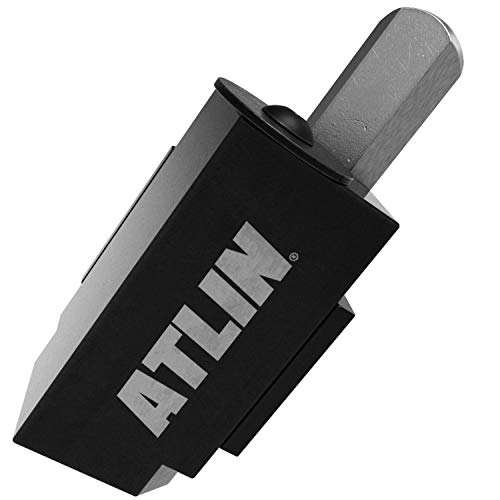
The ATLIN takes the top spot because its maker publishes the full geometry of the tool, and the geometry is right. The high-speed steel cutter measures 3/8 x 3/8 in, squares a corner radius of 3/8 in or smaller, and cuts to a maximum depth of 1/4 in. The body that registers in the recess has a 7/8 x 7/8 in footprint, so it sits down inside a standard hinge gain and aligns itself against the mortise walls before you strike; the 1 x 1 in upper body keeps the tool tracking straight in deeper recesses. The body is aluminum, which keeps the tool light in an apron pocket, while the working cutter is high-speed steel chosen for edge retention across long runs of doors. Place it in the corner, one firm hammer tap, and the corner is square. For framers, door hangers and cabinet installers who square corners all day, this is the most completely specified punch in the group.
Specs
- Blade width: 3/8 in cutting edge (3/8 x 3/8 in)
- Blade shape: Square-section corner cutter, two cutting faces meeting at 90 degrees
- Steel type: High-speed steel cutter; aluminum body
- Strike style: Spring-loaded punch, struck with a hammer or mallet
- Guide/alignment design: Self-aligning body; 7/8 x 7/8 in footprint registers inside the mortise; maximum cut depth 1/4 in; squares radii up to 3/8 in
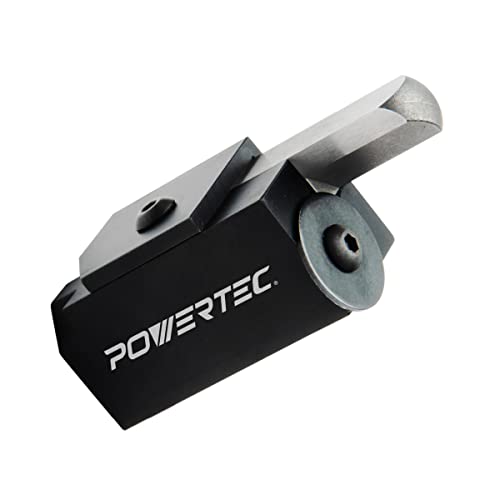
2. POWERTEC 71036 Square Corner Chisel
The POWERTEC 71036 is the pick for heavy, repeated use. Its 3/8 in blade is high-speed steel, the grade that shrugs off the abrasive glue lines in MDF and manufactured door cores, and the body is anodized aluminum, so it resists the knocks and damp air of a job site without corroding. The spring-loaded cutter auto-aligns in the recess when you tap the top with a hammer or mallet, producing a clean 90-degree corner for hinges, lock faceplates and strike plates. The detail that sets it apart for long-term ownership is serviceability: the tool disassembles so the cutter can be honed properly on its flat faces and dropped back in, which keeps the edge geometry true instead of gradually rounding it over on a stone. If your corner chisel will live in a door-hanging kit rather than a drawer, this is the durable choice.
Specs
- Blade width: 3/8 in
- Blade shape: Square-section corner cutter, 90-degree cutting faces
- Steel type: High-speed steel blade; anodized aluminum body
- Strike style: Spring-loaded punch, struck with a hammer or mallet
- Guide/alignment design: Auto-aligning (self-aligning) body registers in the recess; tool disassembles for sharpening
3. PORTER-CABLE 42234 Corner Chisel
Porter-Cable’s 42234 comes from the power-tool-accessory world of door hardware, and it is built around a 3/8 in high carbon steel cutter. High carbon steel is the traditional chisel material: it hones quickly to a keen edge on an ordinary stone, which suits installers who touch up edges on site rather than sending tools out. The mechanism is the familiar spring-loaded, self-aligning layout, so the body seats in the routed recess, registers against the walls, and one hammer tap shears the corner square. A rubber-and-plastic comfort grip gives the top of the tool a secure striking cap and keeps it comfortable across a full house of hinges, and at well under four ounces it disappears into a tool belt. For hinge gains, door lock recesses and strike plates, it is a proven, no-fuss punch from a long-established door-hardware line.
Specs
- Blade width: 3/8 in cutter edge
- Blade shape: Square-section corner cutter, 90-degree cutting faces
- Steel type: High carbon steel cutter
- Strike style: Spring-loaded punch, struck with a hammer
- Guide/alignment design: Self-aligning body seats in the recess and registers against the mortise walls; rubber-and-plastic comfort grip
4. Milescraft 2220 CornerChisel
The Milescraft 2220 is the compact option, a pocket-sized punch about 2.5 in long that squares hinge mortises after routing with the same spring-loaded action as its larger rivals. The blade is hardened steel, and Milescraft builds in a recessed edge: the cutter sits protected inside the body until the moment it is driven, which guards the edge in a crowded toolbox and helps the tool sit still while you line it up. The body is self-aligning for accuracy, and the whole tool is light enough to ride in an apron or belt pouch through a day of fitting doors, then come out for the ten seconds each corner needs. One honest note: Milescraft does not publish a nominal cutter width for the 2220, listing it by its hinge application instead, so if your jig leaves unusually large corner radii, confirm the fit against your recess before relying on it for a whole project.
Specs
- Blade width: Hinge-mortise size; the maker does not publish a nominal cutter width
- Blade shape: Square-section corner cutter with recessed edge
- Steel type: Hardened steel blade
- Strike style: Spring-loaded punch, struck with a hammer or mallet
- Guide/alignment design: Self-aligning body; compact 2.5 in tool length for pouch carry
5. Peachtree Woodworking Supply Corner Chisel (Fulton 2221)
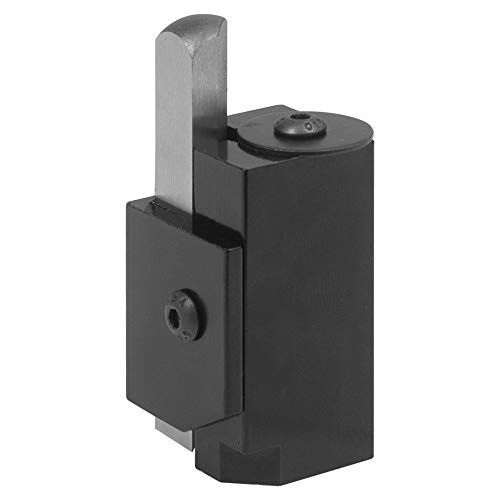
Peachtree Woodworking Supply sells this spring-loaded punch under its Fulton tooling line as model 2221, and it is a straightforward, metal-bodied take on the format. The cutter is 3/8 in alloy steel, sized to create a 3/8 in square corner in hinge recesses, door lock recesses and picture frame mortises. You place the tool in the recess, tap the top with a hammer or mallet, lift out the waste, and the inside corner is left clean, sharp and smooth. The all-metal construction gives it a solid, planted feel while you position it, and the self-aligning action removes the measuring and test-fitting that make hand-squaring corners slow. Woodworkers who buy their jigs and fixtures from woodworking suppliers rather than hardware brands will find this a natural fit alongside the rest of the door-hanging kit.
Specs
- Blade width: 3/8 in
- Blade shape: Square-section corner cutter, 90-degree cutting faces
- Steel type: Alloy steel blade; metal body
- Strike style: Spring-loaded punch, tapped with a hammer or mallet
- Guide/alignment design: Self-aligning body seats in any recess or corner and registers against the mortise walls
Comparison Table
| Tool | Blade width | Blade shape | Steel | Strike style | Alignment design |
|---|---|---|---|---|---|
| ATLIN Corner Chisel | 3/8 in | Square-section cutter | High-speed steel | Spring-loaded punch | Self-aligning; 7/8 in footprint in mortise |
| POWERTEC 71036 | 3/8 in | Square-section cutter | High-speed steel | Spring-loaded punch | Auto-aligning; disassembles for sharpening |
| PORTER-CABLE 42234 | 3/8 in | Square-section cutter | High carbon steel | Spring-loaded punch | Self-aligning; comfort grip |
| Milescraft 2220 | Hinge-mortise size | Square-section cutter, recessed edge | Hardened steel | Spring-loaded punch | Self-aligning; compact 2.5 in body |
| Peachtree (Fulton 2221) | 3/8 in | Square-section cutter | Alloy steel | Spring-loaded punch | Self-aligning; all-metal body |
FAQ
Why do routed hinge mortises always have rounded corners?
A router bit is round, so the inside corner of any recess it cuts keeps the radius of the bit. Hinges, lock faceplates and strike plates are square, so the corner has to be squared afterward, which is the single job a corner chisel is made for.
Can a spring-loaded corner punch cut a mortise from scratch?
No. These punches cut shallowly, around 1/4 in at most on published figures, and they are finishing tools. Rout or chop the recess to its full depth first, then use the punch to square the corners at the surface.
How is a corner punch different from squaring a corner with a bench chisel?
A bench chisel can do the job, but each corner is lined up by eye and pared or struck in several cuts, and one slip can scar the recess wall. A punch registers against the mortise walls and shears the whole corner in one strike, so a run of identical hinges comes out consistent.
How do you sharpen a square corner cutter?
Hone the flat outer faces of the cutter on a fine stone or diamond plate, keeping them flat so the 90-degree geometry stays true. Do not grind the inside of the corner. Models that disassemble, like the POWERTEC, make this noticeably easier.
Do these tools work on lock faceplates and strike plates too?
Yes. Any shallow recess routed for square hardware, including lock faceplates, strike plates and cabinet hardware, has the same rounded-corner problem, and a 3/8 in punch squares them the same way it squares a hinge gain.
Verdict
For most woodworkers, the ATLIN is the corner chisel to buy first: its high-speed steel cutter, self-aligning footprint and fully published dimensions make it the most predictable punch here. Choose the POWERTEC 71036 if the tool will see daily site work and you want to strip it down for sharpening, and the PORTER-CABLE 42234 if you prefer a high carbon steel edge you can refresh in seconds on a bench stone. The Milescraft 2220 earns its place as the compact pouch tool for fitting doors room to room, while the Peachtree Fulton 2221 suits anyone who favors an all-metal body from a woodworking supplier. Whichever you pick, rout the recess to depth first and let the punch do the one job it is made for: turning round corners square.
Related guides
More from Amazon
Programs that pair well with the guide above. Offers and eligibility are set by Amazon and may change.
A free business account with business pricing and bulk-buying tools for work, shop or home office.
Create a business accountFree shipping on eligible items, Prime Video and more. Eligible new members can start with a free trial.
Start a Prime free trialAudiobooks and podcasts to listen to on the go. Eligible new members can start with a free trial.
Try Audible freeAd-free music streaming. Eligible new subscribers can start with a free trial.
Try Music Unlimited freeAs an Amazon Associate we earn from qualifying purchases.








