What's inside
As an Amazon Associate I earn from qualifying purchases. This post may contain affiliate links at no extra cost to you.
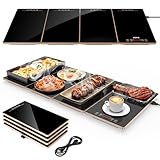
The best food warming trays for hosting are electric buffet servers with adjustable thermostats, even heating, and standard full-size pans; for most homes, a three-pan unit around 24–27 inches wide offers the best balance of capacity, control, and storage.
As an Amazon Associate we earn from qualifying purchases at no extra cost to you.


Contents
Our Top Picks


Quick picks by hosting situation
- Best for regular family gatherings: A three-pan electric buffet server with a 200–450°F temperature range, stainless-steel pans, and a removable water tray.
- Best for large holiday meals: A full-size 1200–1800-watt warming cabinet or countertop buffet warmer that accepts 2.5- to 4-quart chafing dishes.
- Best for occasional use and small kitchens: A slim electric warming tray, usually 20–24 inches wide, with a glass or stainless-steel surface and a simple adjustable dial.
- Best for potlucks: A portable insulated food carrier or electric server with locking lids. A warming tray alone is useful at the destination but does not protect food during transport.
- Best budget choice: A basic 100–200-watt countertop tray for keeping already-hot dishes warm, provided it has enough surface area for your serving platters.
What separates the best food warming trays
A warming tray is not a substitute for cooking. Its job is to maintain food that has already reached a safe serving temperature, and different designs do that with very different results.
Temperature range and control
Look for either a thermostat with a marked temperature scale or at least low, medium, and high settings. Simple glass-top trays commonly operate roughly between 140°F and 200°F, while buffet servers with covered pans may offer settings from about 150°F to 450°F. The higher range is useful for reheating, but it does not automatically mean better warming. A low, stable setting is more important for preventing sauces, rice, vegetables, and casseroles from drying out.
For hosting, a tray that holds food at about 160–200°F is usually more practical than one that only has a very hot surface. Use a food thermometer to verify the temperature of the food rather than relying on the dial position.
Heat distribution
Thin metal trays with one central heating element can develop hot spots. This is most noticeable with shallow platters: food near the middle dries out while food at the edges is merely warm. Better units use a broad heating element, an aluminum heat-spreading plate, or a water pan that buffers temperature changes.
Water-bath buffet servers are particularly useful for gravy, mashed potatoes, curry, and other moist foods. The water moderates direct heat, although it also adds setup time and requires careful emptying after the meal. Dry-heating trays are simpler for baked dishes and serving platters but demand more attention to prevent scorching.
Pan compatibility
“Three-pan” does not always mean three full-size pans. Many countertop servers use three small pans of approximately 1.5 to 2.5 quarts each. Full-size chafing dishes use pans around 20¾ by 12¾ inches, while half-size pans are commonly about 12¾ by 10⅜ inches. Measure the tray’s recesses and your existing pans before buying.
Removable pans made from stainless steel are the most versatile: they can be carried to the table and are generally easier to clean than permanently attached inserts. Check whether the lids are included, whether each compartment has its own lid, and whether the pan depth leaves room for food without touching the lid.
Head-to-head comparison
| Type | Typical footprint | Typical power | Temperature range | Useful capacity | Best for | Main limitation |
|---|---|---|---|---|---|---|
| Electric buffet server | 24–27 in. wide × 14–16 in. deep | 200–400 W | 150–450°F | 4.5–7.5 qt total | Three separate dishes | Small pans and bulky storage |
| Flat countertop warming tray | 20–28 in. wide × 12–16 in. deep | 100–300 W | 140–200°F | One or two platters | Casseroles and serving dishes | Limited portion control |
| Full-size chafing warmer | 23–26 in. wide × 14–18 in. deep | 400–1,800 W if electric | 150–450°F | 8–9 qt per pan | Large parties and catering-style service | Heavy, expensive, and storage-hungry |
| Insulated food carrier | 15–25 in. wide × 10–18 in. deep | 0 W | No active heating | One or two pans | Transporting hot food | Cannot restore lost heat |
Strong product categories and examples
Three-pan electric buffet servers
Models such as the Oster Buffet Server and Elite Gourmet EWM-6171 represent the familiar countertop format: a heated base, water pan, several removable stainless-steel pans, and clear lids. They are convenient when you want vegetables, a main dish, and a side dish available at once. Their separate containers also reduce serving-dish clutter.
Choose this format when your gatherings usually involve four to ten people and you value portion separation. Before buying, confirm the wattage and control arrangement. A single thermostat is less flexible than independently controlled sections, because delicate food and dense food may need different heat levels.
Flat warming trays
Cuisinart and NutriChef both sell countertop warming products in this general category, although the exact layout and controls vary by model. A flat tray is the better choice when you already own attractive casserole dishes or platters and do not want to transfer food into small buffet pans.
Check the usable heated area rather than the outside dimensions. A 24-inch tray may have only 20 inches of practical surface after the cool-touch edges and controls are excluded. A 9-by-13-inch casserole occupies 117 square inches, so two such dishes need at least 234 square inches of clear heating surface, with extra room for handles.
Electric chafing dishes and warming cabinets
For large holiday meals, a full-size electric chafing setup is more capable than a domestic three-pan server. It accepts larger pans and holds more food, but its footprint can approach the width of a small dining table. Commercial-style equipment also tends to use thicker metal and stronger hinges, while costing more and weighing roughly 15–30 pounds depending on the design.
This category makes sense for frequent entertaining, community events, or anyone who routinely serves more than ten people. It is excessive for occasional use if you lack a permanent storage shelf.
Decision matrix: match the warmer to your kitchen
| Your situation | Recommended format | Specifications to prioritize | What to avoid |
|---|---|---|---|
| One or two gatherings per year | Flat tray or entry-level buffet server | Under 25 in. wide, removable cord, easy-clean surface | Large commercial units |
| Monthly hosting for 4–8 guests | Three-pan buffet server | 200–400 W, adjustable thermostat, stainless pans | Units with permanently attached food wells |
| Frequent parties for 10+ guests | Full-size electric chafing warmer | Half- or full-size pan compatibility, 1,000 W or more, sturdy lid hinges | Small 1.5-quart compartments |
| Small apartment kitchen | Slim flat tray | Under 14 in. deep, vertical storage option, cool-touch handles | Bulky frames with fixed legs |
| Food must travel to another location | Insulated carrier plus destination warmer | Pan retention, leak-resistant lid, compatible dimensions | Assuming a nonpowered tray will keep food hot in transit |
Worked sizing example
Suppose you are serving eight guests and plan on 6 quarts of food: 2 quarts of entrée, 2 quarts of potatoes, 1 quart of vegetables, and 1 quart of sauce. Three 2-quart pans provide 6 quarts of nominal capacity, but filling them completely leaves little room for stirring and increases spill risk. A better choice is a server with three 2.5-quart pans, giving 7.5 quarts of capacity and roughly 20% headroom.
If the main dish is dense or contains large pieces, allow more space. A 2.5-quart pan may hold less usable food than its stated volume once stirring clearance and a lid are considered. For a buffet, capacity should be judged by comfortable serving volume, not the maximum amount that can physically fit.
Setup and cleaning practices that extend service life
- Preheat before filling. Allow about 10–20 minutes for the base or water bath to stabilize. Starting with a cold tray encourages food to sit in the lukewarm range.
- Use hot food and shallow portions. A deep, cold casserole warms slowly and unevenly. Divide large quantities between pans when possible.
- Keep lids on between servings. Lids retain heat and moisture, reducing drying. Open pans only when guests are actively serving.
- Stir thick foods periodically. Move food from the hotter edges toward the center, especially in dry-heating pans.
- Unplug before cleaning. Never immerse the electrical base, thermostat, plug, or cord. Wipe the base with a damp cloth after it has cooled.
- Dry every part completely. Water left beneath a pan can cause corrosion, odors, or uneven heating over time.
The parts most likely to wear are the thermostat, power cord, lid hinges, silicone feet, and plastic handles. Replacement pans and lids are not universal, so confirm that the manufacturer sells spares before treating a low-cost unit as a long-term investment. Avoid abrasive cleaners on polished stainless steel and never place a hot glass lid directly on a cold stone counter, where thermal shock can cause cracking.
Final buying recommendation
For most hosts, choose a three-pan electric buffet server with a 200–400-watt heating system, removable stainless-steel pans totaling at least 6 quarts, clear lids, and a marked adjustable thermostat. Select a flat tray instead if you primarily serve large casseroles or already own compatible platters. Move up to full-size electric chafing equipment only when pan capacity, frequent use, or large gatherings justify its storage and cost.
Whatever format you choose, prioritize even heating, usable dimensions, and cleanability over the highest advertised temperature. A warmer that fits your dishes and holds a steady serving temperature will be more useful than a hotter model that dries food, wastes counter space, or remains boxed in a closet.