
Key takeaways
- Compare pipe insulation by tube size, wall thickness and material, with the measure-your-pipe-first rule and tape-every-joint habit for pipes kept safe.
What's inside
- 1. Duck Brand Foam Pipe Covers, 0.75 in x 1 ft, 6 Sticks
- 2. Frost King Rubber Tubular Pipe Insulation, 3/4 in x 1/2 in Wall x 6 ft (RS511XB/6)
- 3. Armacell Armaflex Lap Self-Seal Pipe Insulation, 1-1/8 in x 1 in Wall (IPBST11810)
- 4. Frost King Foil Backed Fiberglass Pipe Wrap, 3 in x 1 in x 25 ft (SP42X/16)
- 5. Frost King Foam and Foil Pipe Insulation Tape, 2 in x 1/8 in x 15 ft (FV15H)
- How to Choose
- Safety Notes
- Verdict
As an Amazon Associate I earn from qualifying purchases. This post may contain affiliate links at no extra cost to you.
Pipe insulation is the foam, rubber, or fiberglass layer you fit around water pipes so the water inside holds its temperature longer — hot lines arrive hot instead of warming the basement on the way, and cold lines in an unheated crawl space gain hours before the water in them can turn to ice. Every pick below is a passive wrap or tube: pre-slit foam sticks, rubber tubes, a fiberglass wrap roll, and a foam-and-foil tape. Powered heat cables, the plug-in products that warm a pipe with electricity, are a different class and none appears here; neither do duct wraps or wall batts. What separates the five picks is format and material. Foam tubes are the light indoor staple. Closed-cell rubber shrugs off damp. Fiberglass wrap bends around valves and odd shapes no tube can follow. Tape finishes the joints and elbows the straight runs leave behind.
Disclosure: As an Amazon Associate, I earn from qualifying purchases. Product details were verified at the time of writing.
Four habits decide whether any of these products do their job. Measure your pipe first. Tube sizes are sold by the pipe they fit, and nominal names hide real diameters: a half-inch copper line measures 5/8 inch across the outside, and a 3/4 inch copper line measures 7/8 inch. Buy by the outside diameter you actually measured, not the name on the fitting. Tape every joint and elbow. A tube run is only as warm as its thinnest gap, and the gaps live at butt joints, tees, and elbows — mitre the foam at corners or wrap them in tape so no bare copper shows anywhere along the run. Keep insulation clear of flues and heat sources. Foam and rubber stay on water lines and off furnace flues, boiler vents, and recessed fittings, at whatever spacing the maker prints. And hold the honest limit in view: insulation slows freezing; it does not replace heat. A wrapped pipe in a hard freeze with no water moving through it will still freeze eventually — the wrap buys time, and in a deep cold snap a slow faucet drip plus insulation is the combination that works.
Contents
- 1. Duck Brand Foam Pipe Covers, 0.75 in x 1 ft, 6 Sticks
- 2. Frost King Rubber Tubular Pipe Insulation, 3/4 in x 1/2 in Wall x 6 ft (RS511XB/6)
- 3. Armacell Armaflex Lap Self-Seal Pipe Insulation, 1-1/8 in x 1 in Wall (IPBST11810)
- 4. Frost King Foil Backed Fiberglass Pipe Wrap, 3 in x 1 in x 25 ft (SP42X/16)
- 5. Frost King Foam and Foil Pipe Insulation Tape, 2 in x 1/8 in x 15 ft (FV15H)
- How to Choose
- Safety Notes
- Verdict
1. Duck Brand Foam Pipe Covers, 0.75 in x 1 ft, 6 Sticks

The short-run specialist, and the easiest first project in the group. These are closed-cell foam tubes pre-slit down one side with a self-sealing adhesive edge, cut into one-foot sticks — you open the slit, press the stick over the pipe, peel, and squeeze the seam shut, with no cutting for straight runs and no separate tape for the seam. The 0.75 inch tube fits half-inch and 3/4 inch household pipe, the sizes that make up most basement and crawl space water lines. Six sticks give six feet of coverage, which suits the classic jobs: the exposed run above a laundry sink, the cold line crossing an outside wall, the hot line leaving the water heater. The maker gives an R-value of 3.6 and a service limit of 212°F, so the same sticks work on hot and cold lines alike. For a whole basement you will want the longer tubes below; for a weekend fix on a short run, nothing here is simpler.
Specs
- Format: Pre-slit foam tubes, 1 ft sticks
- Tube size: 0.75 in, fits 1/2 in to 3/4 in pipe
- Pack: 6 sticks, 6 ft total coverage
- Material: Closed-cell foam
- Closure: Self-sealing adhesive edge
- Maker figures: R-3.6; service up to 212°F
- Part: 288235
- ASIN: B0CJXFLQV5
2. Frost King Rubber Tubular Pipe Insulation, 3/4 in x 1/2 in Wall x 6 ft (RS511XB/6)

The damp-location pick. Where the Duck covers are polyethylene foam, this is a closed-cell rubber tube, and rubber is the material that keeps its insulating value in the places pipes actually sweat — crawl spaces, well pits, and basements that stay humid all summer. The closed cells do not drink in moisture, so the tube does not turn into a wet sponge against the pipe the way a torn foam seam can. This size fits 3/4 inch copper tube with a half-inch wall around it, the middleweight combination for most homes: thick enough to matter in an unheated space, slim enough to fit between joists and alongside a second line. The six-foot length covers a real run per piece, so a supply line from the meter to the heater takes a handful of tubes instead of a box of sticks. Tape the seam and every butt joint as you go, and mitre or tape-wrap the elbows.
Specs
- Format: Rubber tube, 6 ft length
- Fits: 3/4 in inside diameter (3/4 in copper tube)
- Wall thickness: 1/2 in
- Material: Closed-cell rubber foam
- Model: RS511XB/6
- UPC: 077578052014
- ASIN: B003B5PAZQ
3. Armacell Armaflex Lap Self-Seal Pipe Insulation, 1-1/8 in x 1 in Wall (IPBST11810)

The heavy-wall, whole-house pick, sold the way the trade buys it: a carton of six-foot tubes totalling 72 lineal feet. The wall here is a full inch of closed-cell elastomeric rubber, the thickest insulation in this guide, and wall thickness is the lever that buys the most time in a freeze and loses the least heat on a long hot run. The tubes fit 1-1/8 inch outside-diameter line — one-inch copper — so this is the size for main runs rather than branch lines. Each tube carries Armacell’s lap self-seal closure, an adhesive flap that overlaps the seam and seals it along its full length, which keeps the vapor barrier continuous on cold lines that would otherwise sweat at every joint. A carton is more than a single repair needs; it is the right quantity for insulating every accessible line in a house in one pass, or for the outbuilding whose pipes freeze every year. Measure the full run before ordering so the carton lands once.
Specs
- Format: Self-seal tubes, 6 ft lengths
- Fits: 1-1/8 in outside diameter tube (1 in copper)
- Wall thickness: 1 in
- Coverage: 72 lineal ft per carton
- Material: Closed-cell elastomeric rubber foam
- Closure: Lap self-seal adhesive flap
- Model: IPBST11810
- UPC: 803014143578
- ASIN: B074RNS5Z5
4. Frost King Foil Backed Fiberglass Pipe Wrap, 3 in x 1 in x 25 ft (SP42X/16)
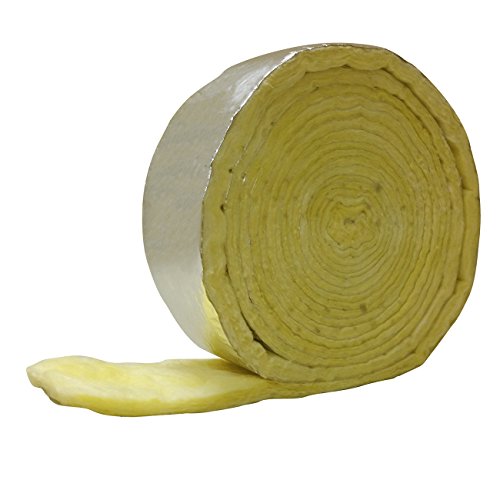
The shape-follower. Tubes only work where a pipe runs straight and round; valves, pressure tanks, pump fittings, and clustered manifolds are none of those, and that is where a wrap earns its shelf space. This roll is fiberglass a full inch thick and three inches wide, backed with foil that serves as the vapor barrier, and you spiral it around whatever you are covering, overlapping each turn so the layer stays continuous. The 25-foot roll handles a boiler-room cluster or a long irregular run, and the foil face cuts heat loss on hot lines while keeping cold lines from sweating in summer. Fiberglass asks for gloves and long sleeves while you handle it — the fibers itch — and the wrap needs tape or wire at the ends to stay put, since there is no adhesive doing the work. Around steam-adjacent fittings and hot manifolds where foam would soften, fiberglass is also the material that belongs.
Specs
- Format: Wrap roll, spiral application
- Size: 3 in wide x 1 in thick x 25 ft long
- Material: Fiberglass with foil backing
- Vapor barrier: Foil face, built in
- Fits: Any pipe diameter; valves and irregular fittings
- Handling: Gloves and long sleeves while fitting
- Part: SP42X/16
- ASIN: B000BQSMCG
5. Frost King Foam and Foil Pipe Insulation Tape, 2 in x 1/8 in x 15 ft (FV15H)

The finishing roll every tube job ends up needing. This is a self-adhesive tape of vinyl foam faced with aluminum foil, two inches wide and fifteen feet long, and its work is everything a straight tube cannot do: sealing butt joints between tubes, wrapping elbows and tees, patching a torn seam, and insulating the short awkward stubs around shutoff valves and hose bibbs. Spiral it with a half overlap and the thin foam layers build up while the foil face sheds radiant heat on hot lines and keeps cold lines from dripping. On its own, an eighth-inch tape layer is a light defense — in a hard freeze it is a supplement to tubes and wrap, not a substitute for them — but as the joint-and-fitting layer over the other four picks it is what turns a run of tubes into a continuous insulated line with no bare metal showing. Keep a roll with the plumbing tools; it also seals the ends of fiberglass wrap.
Specs
- Format: Self-adhesive tape roll, spiral application
- Size: 2 in wide x 1/8 in thick x 15 ft long
- Material: Vinyl foam with aluminum foil face
- Fits: Joints, elbows, tees, valves, and short stubs
- Closure: Self-adhesive backing
- Part: FV15H
- ASIN: B001AZYTGA
How to Choose
Begin with the tape measure, because fit decides everything else. Measure the outside diameter of the pipe and match the tube to that number; a loose tube leaves an air gap that convects heat away, and a tight one splits at the seam. Then choose wall thickness by exposure: a half-inch wall is the working standard for indoor runs in a heated or semi-heated basement, while a one-inch wall belongs on lines in vented crawl spaces, garages, and exterior walls — the coldest run in the house sets the standard for the whole job. Material comes next. Polyethylene foam is light, quick, and fine indoors. Closed-cell rubber takes more hunting to find in the right size but holds up in damp locations and on cold lines that sweat. Fiberglass wrap covers the shapes tubes cannot, and tape closes every system at its joints. Finally, count elbows and tees before you buy, and add tape or wrap for them to the same order — the fittings are where uninsulated metal concentrates, and a guide rule worth keeping is that a run is finished only when no bare pipe shows anywhere along it.
Safety Notes
Fit insulation on cool pipes with the water off where the line allows it, and never wrap a pipe that is leaking — fix the leak first, because insulation hides drips while the damage spreads behind it. Keep every foam and rubber product clear of furnace and water-heater flues, boiler vents, and chimney connectors, following the spacing on the maker’s packaging; these are water-line products, not flue products. Wear gloves and long sleeves when handling fiberglass wrap, and wash up after. Outdoors, foam and rubber degrade under direct sun over time, so exposed exterior runs last longer with a protective jacket or paint the maker approves. And keep the central limit in front of you all winter: insulation delays freezing, it does not prevent it forever. In a hard freeze, add moving water — a pencil-thin drip at the far faucet — and know where your main shutoff is before you ever need it.
Verdict
For a short straight run, the Duck Brand foam sticks are the fastest fix in the group. For damp crawl spaces and everyday full runs, the Frost King rubber tube is the dependable middle. The Armacell carton is the whole-house, thick-wall answer for main lines. The Frost King fiberglass wrap covers the valves and clusters nothing else reaches, and the Frost King foam-and-foil tape is the joint sealer that finishes every one of those jobs. Measure first, tape every joint, and your lines hold their heat through the cold months.
Related guides
More from Amazon
Programs that pair well with the guide above. Offers and eligibility are set by Amazon and may change.
A free business account with business pricing and bulk-buying tools for work, shop or home office.
Create a business accountFree shipping on eligible items, Prime Video and more. Eligible new members can start with a free trial.
Start a Prime free trialAudiobooks and podcasts to listen to on the go. Eligible new members can start with a free trial.
Try Audible freeAd-free music streaming. Eligible new subscribers can start with a free trial.
Try Music Unlimited freeAs an Amazon Associate we earn from qualifying purchases.








