
Our Top Picks
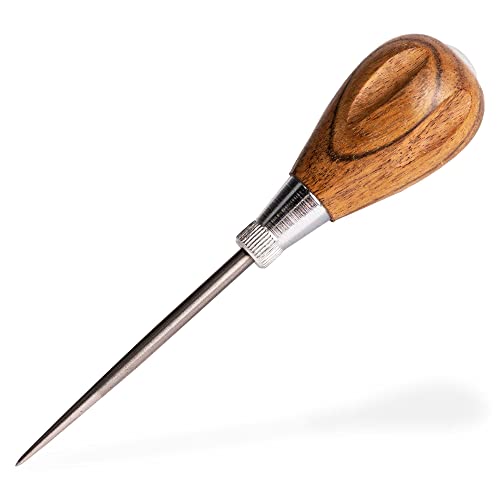 General Tools Scratch Awl Tool with Hardwood Handle8.75 x 3.75 x 3.25 inches0.2 poundsCheck on Amazon
 Klein Tools 650 Scratch Awl with 3-1/2-Inch ShankPack of 112.2 x 4.41 x 1.97 inches0.25 poundsCheck on Amazon

As an Amazon Associate I earn from qualifying purchases. This post may contain affiliate links at no extra cost to you.
A scratch awl is one of the smallest tools in the shop, and one of the hardest to work without once you get used to it. The fine steel point scribes layout lines that stay visible in raking light, marks hole locations exactly where you put them, and starts screws and drill bits so they begin on the mark instead of wandering across the grain. A pencil line is wide and sits on top of the surface; an awl line is a shallow groove cut into the fibers, and a saw tooth or chisel edge can drop into that groove and register against it. The same tool pierces leather, canvas and gasket material, aligns holes in stacked parts, and cleans out grooves and corners.
Disclosure: As an Amazon Associate, I earn from qualifying purchases. Product details were verified at the time of writing.
Awls look simple, but the details matter: blade length controls how the tool handles, the steel decides how long the point stays sharp, and the handle shape decides whether the tool feels like an extension of your hand or a nail you are trying to push. This guide explains what to look for, then covers five scratch awls that span the main designs — a traditional hardwood layout awl, a one-piece forged model, a bolstered cushion-grip awl, an acetate-handled shop standard and a short precision pick.
How to Choose a Scratch Awl
Blade length and tip shape. Most scratch awls run between 3 and 4 inches of exposed blade. A shorter blade gives you close control for fine layout work and for guiding the point along a straightedge, while a longer blade reaches into corners, across wide boards and through stacked parts when you are aligning holes. Look for a point ground to a smooth, even cone. A fine, gradual taper scribes a thin line and starts holes cleanly; a stubby point tears fibers instead of parting them.
Blade steel and construction. The blade takes side loads every time you lean on it, so steel quality and mounting matter more than size. Heat-treated alloy steel and high carbon steel hold a point well and can be resharpened on a stone. Construction falls into three camps: a through tang that runs the full length of the handle and is pinned or capped at both ends, a socket or ferrule mounting on turned wood handles, and one-piece forged tools where blade and grip are a single piece of steel. Through-tang and one-piece designs shrug off mallet taps and prying slips that can loosen a shallow-set blade.
Handle material and shape. Hardwood handles are the woodworking classic: a rounded or fluted hardwood grip fills the palm and lets you push with body weight behind the point, which is exactly what scribing across end grain needs. Acetate handles, borrowed from screwdriver design, resist solvents and take torque well when you twist the awl to open a starter hole. Cushion grips add padding for long sessions, and molded tri-lobe grips index in the hand so the tool does not roll. Pick the shape that matches your grip: palm-pushers want a fat, rounded end; fingertip workers want a slimmer, shorter handle.
Caps, ferrules and strike ends. A steel ferrule where the blade enters the handle keeps the wood from splitting under pressure. Some awls add a steel end cap so the butt can take a light mallet tap for starting holes in dense stock. A protective tip cap is worth having if the awl lives loose in an apron pocket or tool tote — it protects the point and everything the point would otherwise poke. If a model ships without one, a wine cork does the same job.
Match the awl to the work. Fine furniture layout rewards a mid-length blade and a palm-filling handle. Metal scribing and heavier piercing favor forged or bolstered blades that tolerate side force. Leather and craft work often suits a shorter, finer point that you steer with your fingers. Many woodworkers end up with two: a long layout awl at the bench and a short pick in the apron.
The 5 Scratch Awls
1. General Tools 818 Hardwood Handle Scratch Awl
The General Tools 818 is the traditional layout awl most woodworkers picture first. Its fluted hardwood handle is contoured to fill the palm, so you can bear down and pull a clean scribed line along a straightedge or square without your hand tiring. The alloy steel blade runs through the handle and is fastened at both the plated steel ferrule and the end cap, which keeps the blade from working loose when you twist it to widen a starter hole. At 6-1/2 inches overall it balances reach and control well, and it handles the full range of bench jobs: scribing cut lines, marking hinge and hardware locations, starting screws, and piercing soft material.
Specs
– Blade material: Alloy steel
– Construction: Through tang, fastened to plated steel ferrule and cap
– Handle: Fluted hardwood, contoured grip
– Overall length: 6-1/2 in
– Weight: 3.2 oz
2. DASCO PRO 7-Inch Scratch Awl (431-0)
DASCO PRO builds the 431-0 as a single piece of drop-forged high carbon steel, so there is no handle to split, loosen or pull off — blade and grip are one forging. The knurled steel grip gives purchase even with dusty hands, and the 7-inch length reaches across wide stock and into assemblies where a shorter awl runs out of travel. It marks and scribes wood, starts holes in soft stock, and also handles sheet metal layout and leather piercing without complaint. This is the awl to keep in the toolbox or truck for rough work where a wooden handle would suffer, and it shrugs off being tossed in with heavier tools.
Specs
– Construction: One-piece drop forged
– Material: High carbon steel
– Overall length: 7 in
– Grip: Knurled steel
– Model: 431-0
– Origin: Assembled in the USA
3. Klein Tools 650 Cushion-Grip Scratch Awl
The Klein 650 is built for tradespeople who use an awl hard, and it shows in the shank design: the one-piece forged steel blade has a full reinforcing bolster where it meets the handle, with internal flanges anchoring the shank so the handle can take impact without working loose. The tempered steel shank is chrome plated to resist rust, and the cushion-grip handle lets you apply real torque when starting holes or scribing metal. With a 3-1/2 inch shank and 7-7/8 inches overall, it is the longest and stoutest awl in this group — a good fit for larger hands and for workshops where the awl doubles as a general piercing and aligning tool.
Specs
– Shank length: 3-1/2 in
– Overall length: 7-7/8 in
– Blade: One-piece forged tempered steel, chrome plated
– Shank reinforcement: Bolster at handle with internal flanges
– Handle: Cushion grip, yellow and black
– Weight: 4 oz
4. CRAFTSMAN CMHT65012 Acetate Scratch Awl
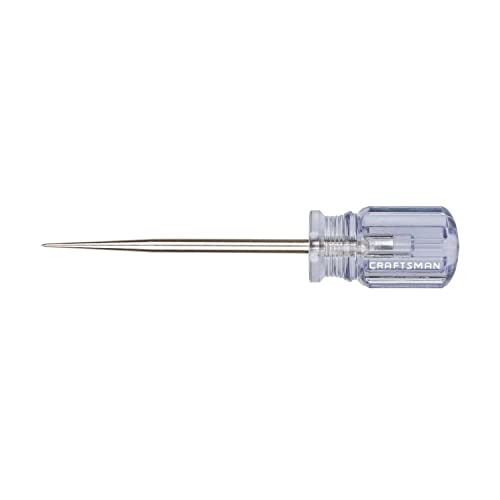
The CRAFTSMAN CMHT65012 takes the screwdriver approach: a heat-treated alloy steel blade with a satin-nickel finish set into an acetate handle shaped for both high and low torque work. Acetate shrugs off the solvents, oils and finishes that get splashed around a workshop and that can swell or stain a wooden handle, and it wipes clean in seconds. The handle profile will feel familiar to anyone who owns acetate screwdrivers, and the awl makes a sensible second awl for the assembly bench, the finishing area or a site kit where it may be borrowed and knocked around. It scribes wood and sheet metal, starts screw holes, and needs no looking after.
Specs
– Model: CMHT65012
– Blade: Heat-treated alloy steel
– Finish: Satin nickel
– Handle: Acetate, shaped for high and low torque work
– Tip cap: Not included
5. Channellock SAW3H Professional Scratch Awl Pick
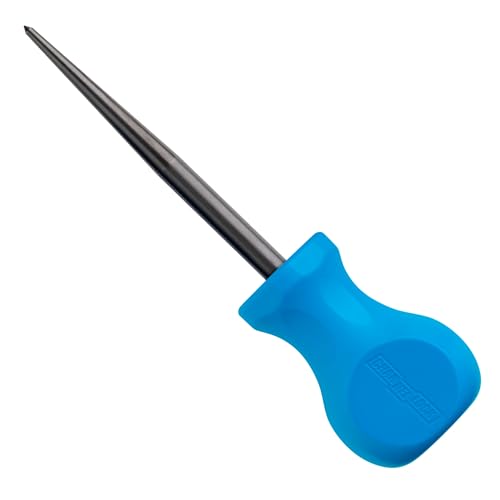
The SAW3H is the compact specialist of the group. Its 3-inch shank is precision machined and non-magnetic, and the short blade puts the point close to your fingers for the finest control in this lineup — the setup you want for scribing small parts, marking out dovetail baselines, and detail work in leather and crafts. The molded tri-lobe grip locks into the hand without needing a tight squeeze and keeps the tool from rolling off the bench. It is made in the USA and sized to live in an apron pocket, where a full-length awl would be in the way.
Specs
– Shank length: 3 in
– Tip: Precision machined, non-magnetic
– Handle: Molded tri-lobe grip
– Model: SAW3H
– Origin: Made in the USA
Comparison Table
| Awl | Blade / Shank | Handle | Overall Length | Construction |
|---|---|---|---|---|
| General Tools 818 | Alloy steel | Fluted hardwood | 6-1/2 in | Through tang, ferrule and cap |
| DASCO PRO 431-0 | High carbon steel, 7 in tool | Knurled steel | 7 in | One-piece drop forged |
| Klein Tools 650 | Tempered steel, 3-1/2 in shank | Cushion grip | 7-7/8 in | Forged blade, bolstered shank |
| CRAFTSMAN CMHT65012 | Heat-treated alloy steel | Acetate | Not stated | Set blade, satin-nickel finish |
| Channellock SAW3H | Precision machined, 3 in shank | Molded tri-lobe | Not stated | Non-magnetic pick |
FAQ
What is a scratch awl used for in woodworking?
Its main jobs are scribing layout lines along a rule or square, marking exact points for holes and hardware, and starting screws and drill bits so they begin on the mark. The scribed groove also gives a saw or chisel a track to start in, which makes cuts cleaner.
How is a scratch awl different from a center punch?
A center punch has a shorter, blunter point ground at a wide angle, made to dent metal so a drill bit stays centered. A scratch awl has a long, fine point made to draw a line and pierce wood fiber. Using a punch to scribe wood tears the surface; using an awl as a punch on steel will blunt or bend the tip.
How do I sharpen a scratch awl?
Hold the point against a fine bench stone or slip stone and rotate the tool slowly as you draw it across, keeping the cone even all the way around. A few turns restore a dull point. Work evenly — a point ground off-center will skate sideways instead of tracking a line.
Can a scratch awl start a screw hole on its own?
Yes, for small screws in softwood and sheet goods, pushing and twisting the awl opens a starter hole deep enough to guide the screw. In dense hardwood, use the awl to mark the spot and follow with a small drill bit for the pilot hole.
Verdict
For everyday bench layout, the General Tools 818 is the natural first choice: the through-tang blade and palm-filling hardwood handle do exactly what a woodworking awl should. If your awl takes abuse — metal scribing, prying slips, toolbox duty — the forged Klein 650 and the one-piece DASCO PRO 431-0 are built for that life, with the Klein adding comfort and the DASCO adding reach and simplicity. The CRAFTSMAN CMHT65012 is the low-maintenance spare every shop benefits from, and the Channellock SAW3H earns its place as the short, precise pick for fine marking and detail work. Whichever you choose, keep the point sharp and capped, and it will quietly make every other tool in the shop more accurate.
Related guides
More from Amazon
Programs that pair well with the guide above. Offers and eligibility are set by Amazon and may change.
A free business account with business pricing and bulk-buying tools for work, shop or home office.
Create a business accountFree shipping on eligible items, Prime Video and more. Eligible new members can start with a free trial.
Start a Prime free trialAudiobooks and podcasts to listen to on the go. Eligible new members can start with a free trial.
Try Audible freeAd-free music streaming. Eligible new subscribers can start with a free trial.
Try Music Unlimited freeAs an Amazon Associate we earn from qualifying purchases.








