
What's inside
As an Amazon Associate I earn from qualifying purchases. This post may contain affiliate links at no extra cost to you.
The best random orbital sander for woodworking balances smooth operation, good dust collection and comfortable control. The Bosch ROS20VSC and Makita BO5041K are excellent corded all-rounders, the DeWalt DWE6423K is a durable workhorse, the Festool ETS 125 REQ-Plus is the premium option, and the Milwaukee M18 Fuel offers cordless freedom.
| Pick | Best for | Key feature |
|---|---|---|
| Bosch ROS20VSC | Smooth, comfortable sanding | Low vibration and an efficient dust canister |
| DeWalt DWE6423K | Value and durability | Variable speed and a hook-and-loop pad |
| Makita BO5041K | Power at a moderate cost | Strong motor with a well-sealed switch |
| Festool ETS 125 REQ-Plus | Dust-free professional sanding | Excellent extraction and a refined feel |
| Milwaukee 2648-20 M18 Fuel | Cordless convenience | Brushless motor on a battery platform |
| Mirka Deros 5650CV | Low-vibration, long sessions | Compact body with a light feel |
Contents
Our Top Picks
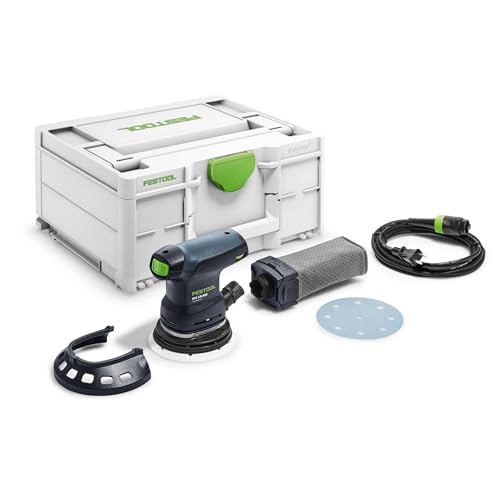 Festool 576070 Random Orbital Sander ETS 125 REQ-Plus1327.5 cubic inches15.59 x 11.65 x 7.36 inches8.23 poundsCheck on Amazon


1. Bosch ROS20VSC
The Bosch ROS20VSC random orbital sander is often recommended for its smooth operation and comfortable shape. Reviewers like its low vibration, which reduces hand fatigue, and the dust canister collects a fair amount of dust. Variable speed lets you tailor the pace to the wood. The dust canister clogs on fine dust, so a vacuum hookup is a good addition. A great choice for general-purpose sanding.
2. DeWalt DWE6423K
The DeWalt DWE6423K orbital sander is a solid, durable choice. It has a variable-speed dial, a hook-and-loop pad and a decent dust bag. It is a little more vibration-prone than premium models, and the dust bag is not as efficient as a vacuum connection. For hobbyists who want a robust sander at a moderate cost, it makes sense.
3. Makita BO5041K
The Makita BO5041K orbital sander has a strong motor and a dust-sealed switch, which helps longevity in a dusty shop. It is comfortable to hold and removes material quickly. The shape is a bit bulkier than some competitors, and the pad brake is basic. A good option for hobbyists who sand a lot of boards.
4. Festool ETS 125 REQ-Plus
The Festool ETS 125 REQ-Plus sander is known for excellent dust extraction when used with a compatible vacuum, along with smooth operation and a refined feel. It is the choice for woodworkers who want a clean shop and are willing to pay for it. The price is high, and the best results need a Festool-compatible extractor and abrasives. A premium tool for serious work.
5. Milwaukee 2648-20 M18 Fuel
The Milwaukee 2648-20 M18 Fuel random orbital sander is a cordless tool that works with the M18 battery system. It offers freedom from cords and a brushless motor for good runtime. It is sold as a bare tool, so you need batteries and a charger, and it is heavier than corded models. A good fit if you already own M18 tools.
6. Mirka Deros 5650CV
The Mirka Deros 5650CV sander is a compact electric sander with a low-vibration design and a light feel, which makes it comfortable for long sessions. It works well with dust extraction. It is a premium product, and its small size may feel unfamiliar if you are used to a traditional shape. A fine choice for finishing work.
How to choose a random orbital sander
Size and pad type
Five-inch pads are common and abrasives are widely available. Six-inch sanders cover more area, which suits larger surfaces. Hook-and-loop pads make changing discs quick.
Dust collection
Dust ruins finishes and harms lungs. A vacuum connection collects far more dust than an onboard bag, so choose a sander with a good port and use it with a vacuum.
Vibration and comfort
Low vibration saves your hands on long sessions. Look at the grip shape, weight and switch position.
Variable speed
Slower speeds avoid swirl marks and burning on delicate work, while higher speeds remove material quickly.
Corded or cordless
Cordless saves hassle but needs batteries. Corded tools deliver consistent power and are lighter.
Common mistakes
- Pressing too hard. It slows the sander and leaves swirl marks.
- Skipping grits. Jumping from coarse to very fine leaves scratches.
- Keeping dull discs. Replace them when they stop cutting.
- Sanding across the grain. Follow the grain for final passes.
- Not wearing a dust mask. Wood dust is harmful.
A simple sanding sequence
Start with a coarse grit only if you need to remove marks or flatten surfaces. For most projects, begin at 80 or 120, move to 150 and finish at 180 or 220. Move the sander slowly and steadily, overlapping passes and letting the tool do the work. Wipe the surface between grits to remove dust, since leftover coarse particles can scratch the next stage. Raise the grain with a damp cloth before the final pass if you plan to use a water-based finish.
Caring for your sander
Blow out the dust from vents, check the pad for wear and replace it if the hook-and-loop surface stops gripping. Store the sander in a dry place and keep spare pads and discs on hand.
Choosing abrasives and accessories
A sander is only as good as the paper on it. Quality discs cut faster, last longer and clog less, so they are worth the extra cost. Match the hole pattern to your sander and your dust extraction, since a pattern that does not align with the pad will reduce dust collection. Keep a variety of grits in a labeled box, and replace discs before they are completely worn out.
Interface pads and soft backing
For curved surfaces and edges, a soft interface pad between the sander and the disc helps conform to the shape and reduces sanding through veneers. It can also soften the aggressive feel of a stiff pad. Do not use one when you need to keep surfaces dead flat.
Vacuum hose and adapters
Connecting the sander to a shop vacuum is the most effective way to reduce dust. Use a hose designed for sanding, which is lightweight and flexible, and an adapter that fits both the sander and the vacuum. A small cyclone separator or filter bag extends the life of the vacuum filter.
Personal protection
Wear a respirator or a good dust mask suited to fine wood dust, plus eye and hearing protection. Fine dust lingers in the air for a long time after sanding, so ventilate the shop and wipe down surfaces with a damp cloth rather than blowing them off.
Sanding by project type
Flat panels and tabletops benefit from a firm pad and steady, overlapping passes. Chairs, spindles and carved edges are easier to sand by hand or with a soft interface pad, since a rigid pad can flatten curves. For furniture with veneer, use fine grits and light pressure, because veneer can be sanded through quickly. Before painting, scuff the surface with a fine grit to help the paint grip, and vacuum away dust. Take your time with the final grit, because finishes tend to highlight any scratches you leave behind.
Frequently asked questions
What is the difference between an orbital and a random orbital sander?
A random orbital sander spins the pad and moves it in an elliptical motion, which reduces visible scratch patterns compared with a basic orbital sander.
Do I need a six-inch sander?
Not usually. Five-inch models cover most hobby work.
Can I use a random orbital sander for removing paint?
Yes, with suitable abrasives and dust control. Be careful with older paint that may contain lead, and use proper protection.
Is a cordless sander as good as a corded one?
Modern brushless models are very capable. The trade-offs are weight and battery runtime.
Conclusion
For most woodworkers, the Bosch ROS20VSC or Makita BO5041K offers an excellent balance. The DeWalt DWE6423K is a durable value, the Festool ETS 125 REQ-Plus is premium, and the Milwaukee M18 Fuel suits cordless fans. Pair your sander with a vacuum and a good set of abrasives.
As an Amazon Associate we earn from qualifying purchases.
Related guides
More from Amazon
Programs that pair well with the guide above. Offers and eligibility are set by Amazon and may change.
A free business account with business pricing and bulk-buying tools for work, shop or home office.
Create a business accountFree shipping on eligible items, Prime Video and more. Eligible new members can start with a free trial.
Start a Prime free trialAudiobooks and podcasts to listen to on the go. Eligible new members can start with a free trial.
Try Audible freeAd-free music streaming. Eligible new subscribers can start with a free trial.
Try Music Unlimited freeAs an Amazon Associate we earn from qualifying purchases.








